Hidden Lions in London Hotels
Part of a colourful trail of painted statues
Hidden Lions in London Hotels
Part of a colourful trail of painted statues

Credit: Author
Introduction
The free public art trail of colourful lion statues around central London led us to some hidden lions. In a symbolic form, they celebrate community, culture and creativity, alongside this summer’s FIFA international football (soccer) World Cup.
Most sculptures are outdoors. The first hotel lion was helpfully parked outside the hotel, but the other two were well hidden inside the two other hotels. However, we weren’t beaten by them and successfully found them.
Here they are with explanations of what they represent.
St Ermin’s Hotel
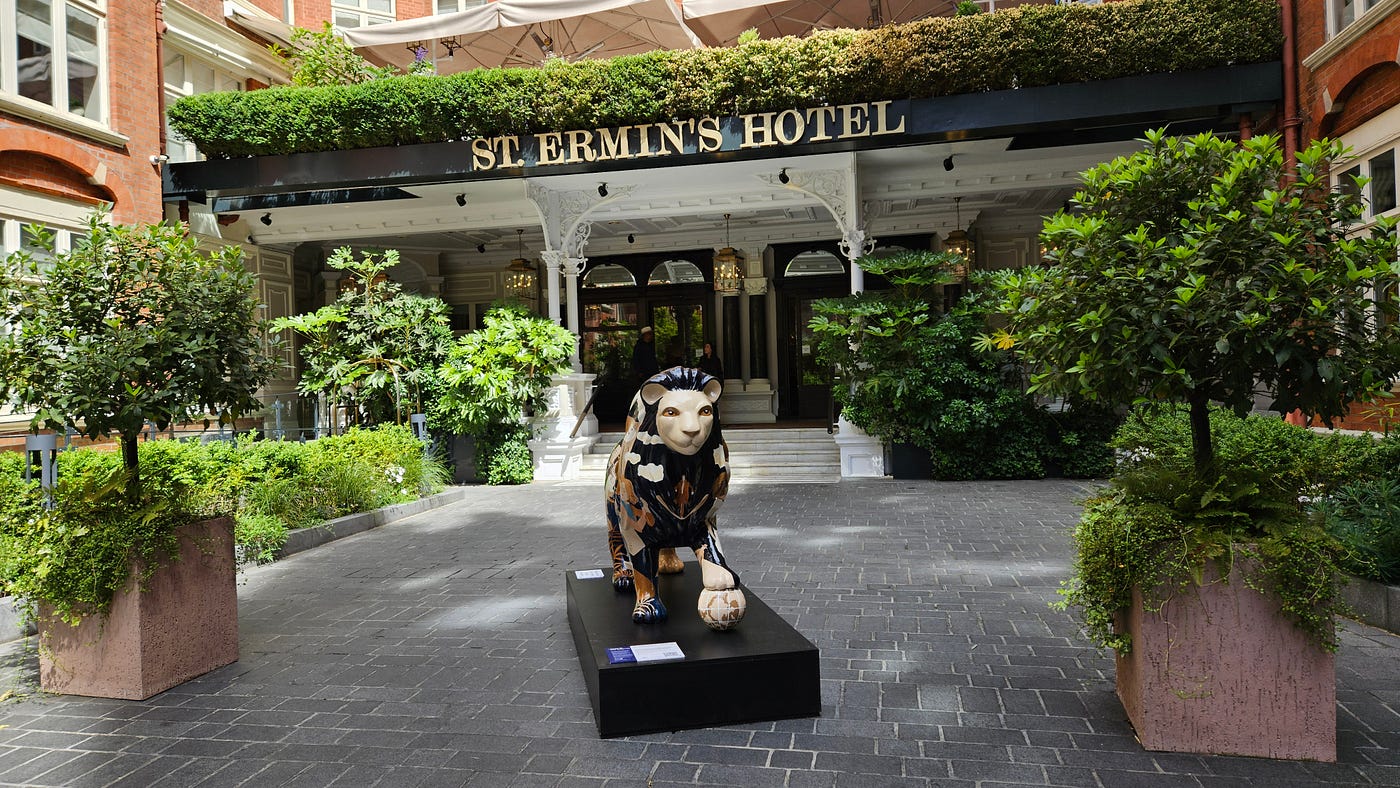
Lion in front of St Ermin’s Hotel — Credit: Author
The first hotel lion was outside St Ermin’s Hotel and a very intriguing backstory it has, too. Titled Whispers at St Ermin’s, it was inspired by the origins of British Intelligence and the hotel’s link to a history of espionage.
The lion explores two very different worlds. One world is of covert meetings hidden within a luxury hotel; the other of high-risk operations developing across the city.
So, on one side you see spies exchanging information beneath Big Ben (see below), while the other side has depictions of coded transmissions, motorcycles and parachutes, with the Tower of London in the background (see main picture).
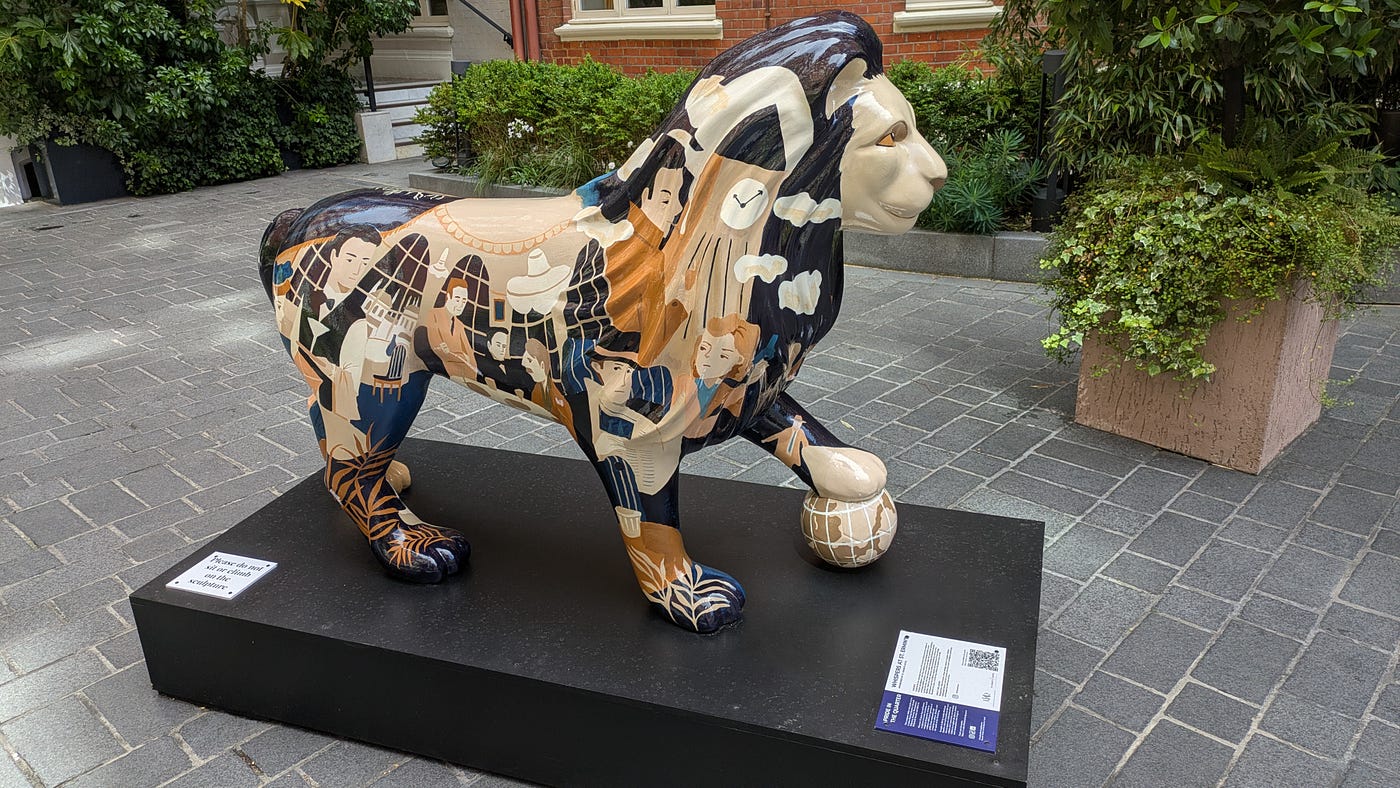
Credit: Andy Read
Under its front-left paw is a world map that reflects the global reach of the British Intelligence service.
Not only does the lion portray London’s hidden espionage history, but it also explores the tension between quiet intelligence gathering and dangerous field operations.
As an aside for the eagle-eyed among you, the British way of contracting Saint is to write St with no full-stop or period after it. However, many times you still see it followed by a full-stop/period in the North American way, as in St. Ermin’s Hotel.
Following on from the theme of hiding, perhaps they were trying to hide their location by using the American way!
The Royal Horseguards Hotel

Hotel entrance — Credit: Author
The second hotel lion was well-hidden inside. So much so that we had to go to the front desk to explain we were looking for the lion statue. We were pointed towards a corridor around the corner to find it positioned in front of a big mirror.
And there he was, Scout the lion in golden tones with a football under his front paw. But what about those stickers or badges on his body?
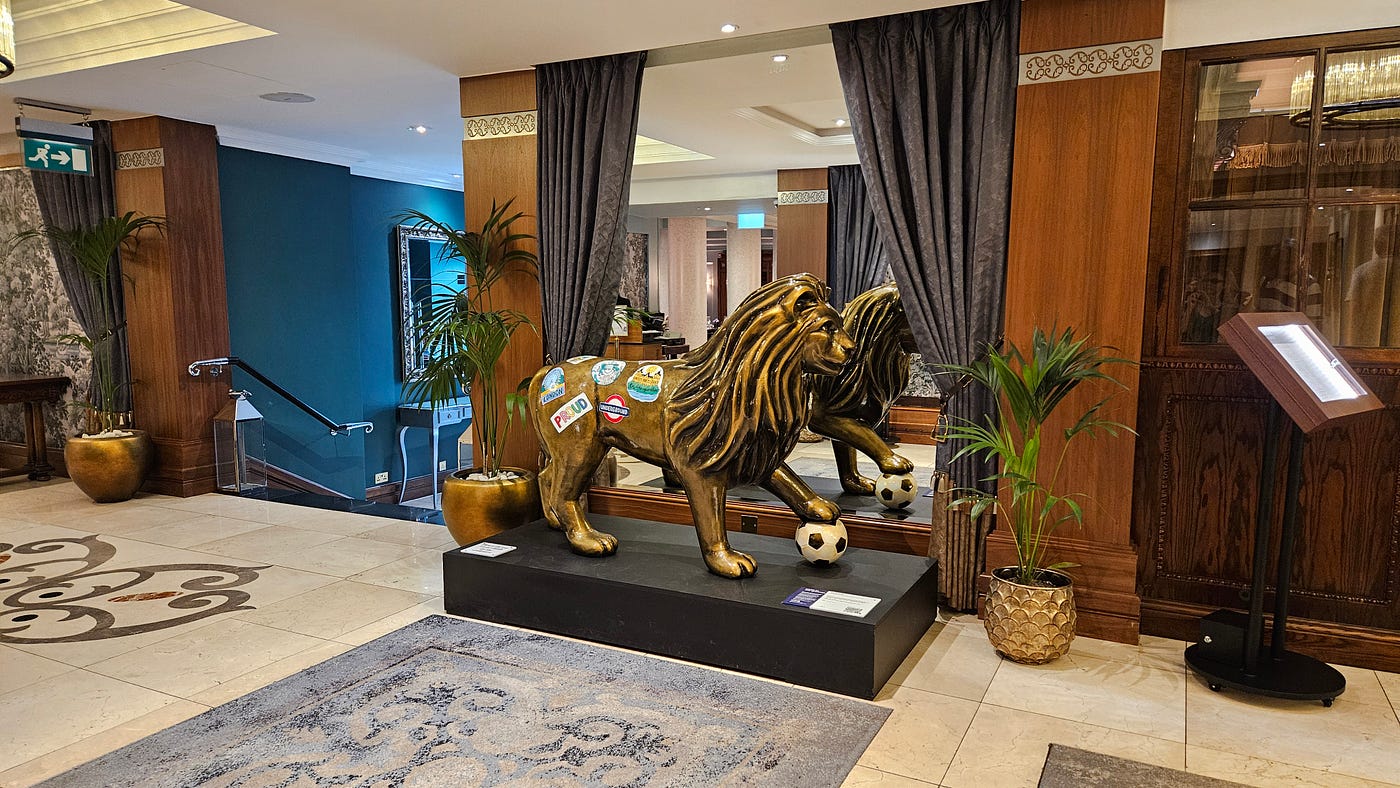
Credit: Author
You can probably recognise the roundel of the London Underground (red circle with a white centre and a blue line across the middle. For the others, you need to look a little closer.
Continuing from our previous lion, this one has a badge for MI6 (that’s ‘Em Eye Six’ not ‘Em Sixteen’), also known as the Secret Intelligence Service.
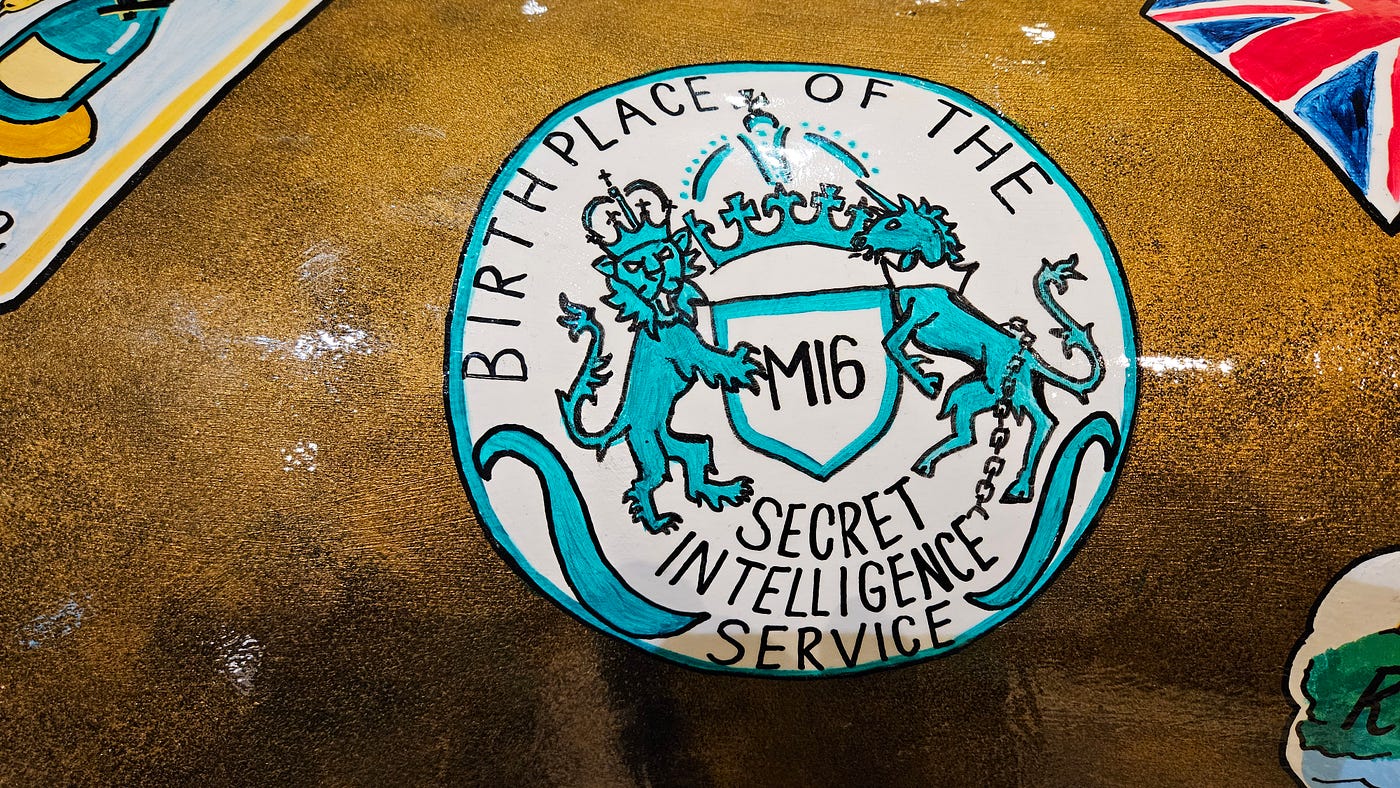
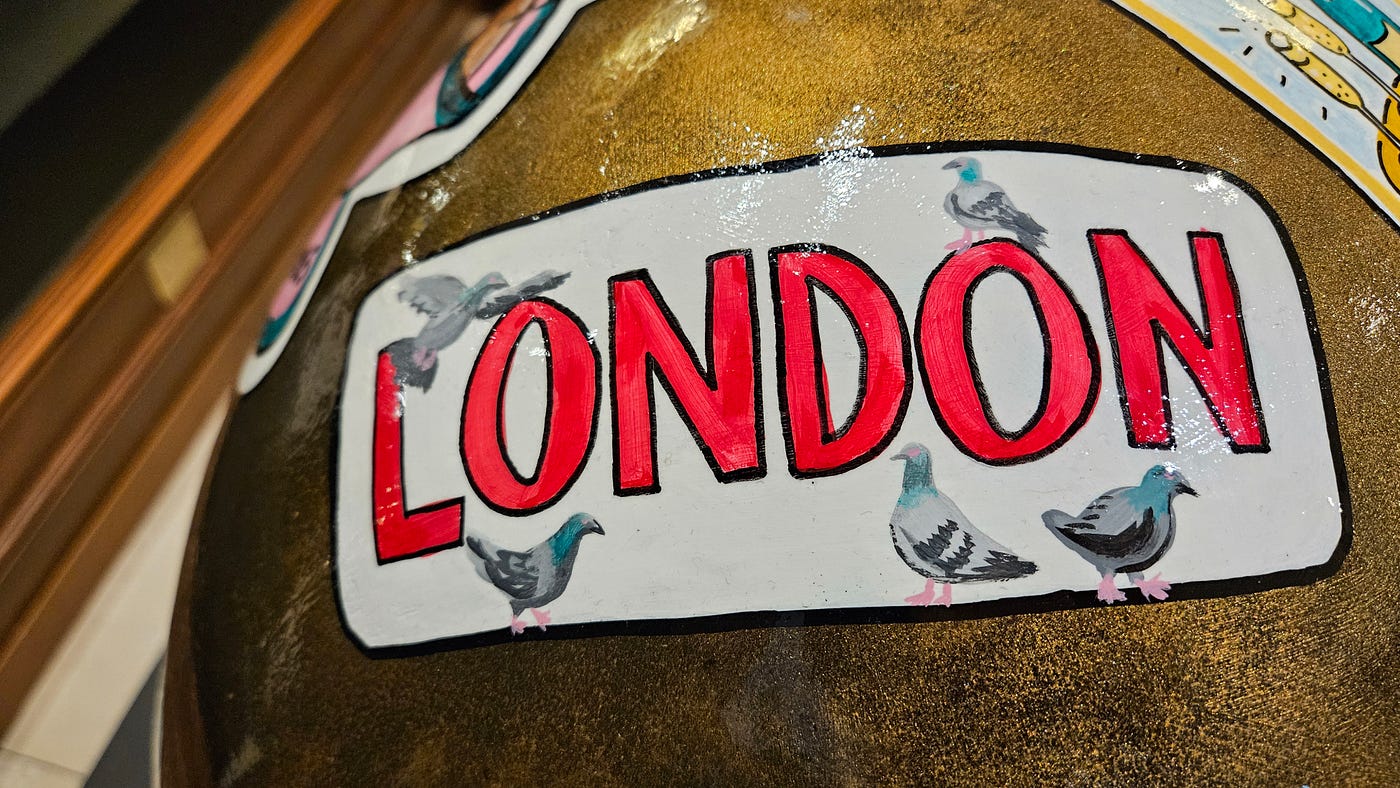
The different illustrated badges tell the story of a love for London and the celebrated experiences associated with London from afternoon tea to football (soccer).
Here’s one celebrating the pigeons of London:
Credit: Author
Let’s not overlook the badge that celebrates the hotel behind the creation of Scout:

Credit: Author
There’s one for the iconic Trafalgar Square with Nelson’s column, the lion statues at its base, the fountains and the National Gallery that overlooks it.

Credit: Author
The idea is that this sculpture offers a warm welcome to visitors from around the world, celebrating London as a place of culture, connection and belonging.
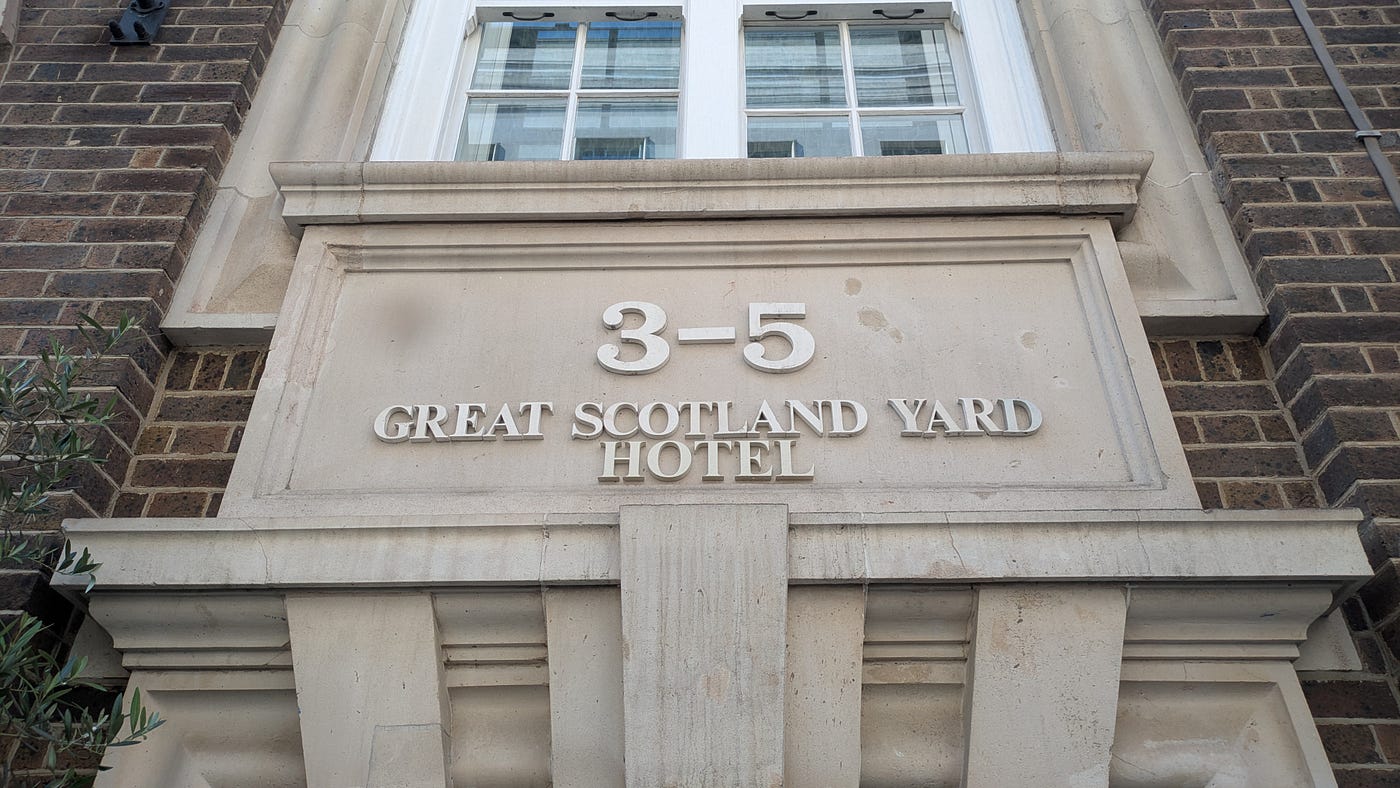
Great Scotland Yard Hotel

Credits: Andy Read & Author
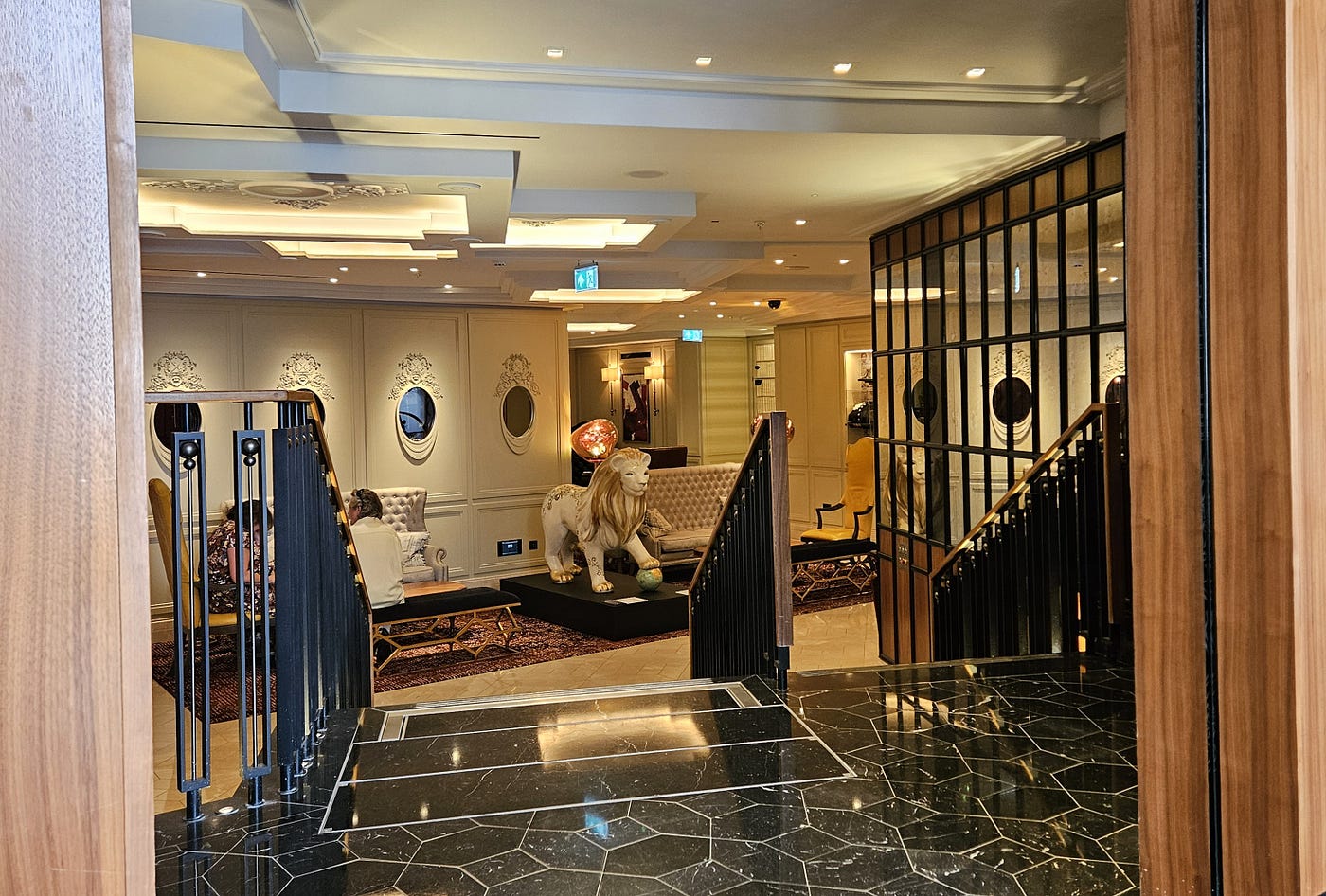
Fortunately, the lion inside the Great Scotland Yard Hotel wasn’t as well hidden as the one in the Royal Horseguards Hotel. As soon as we walked into the lobby of the hotel, there it was in all its splendour.
Credit: Author
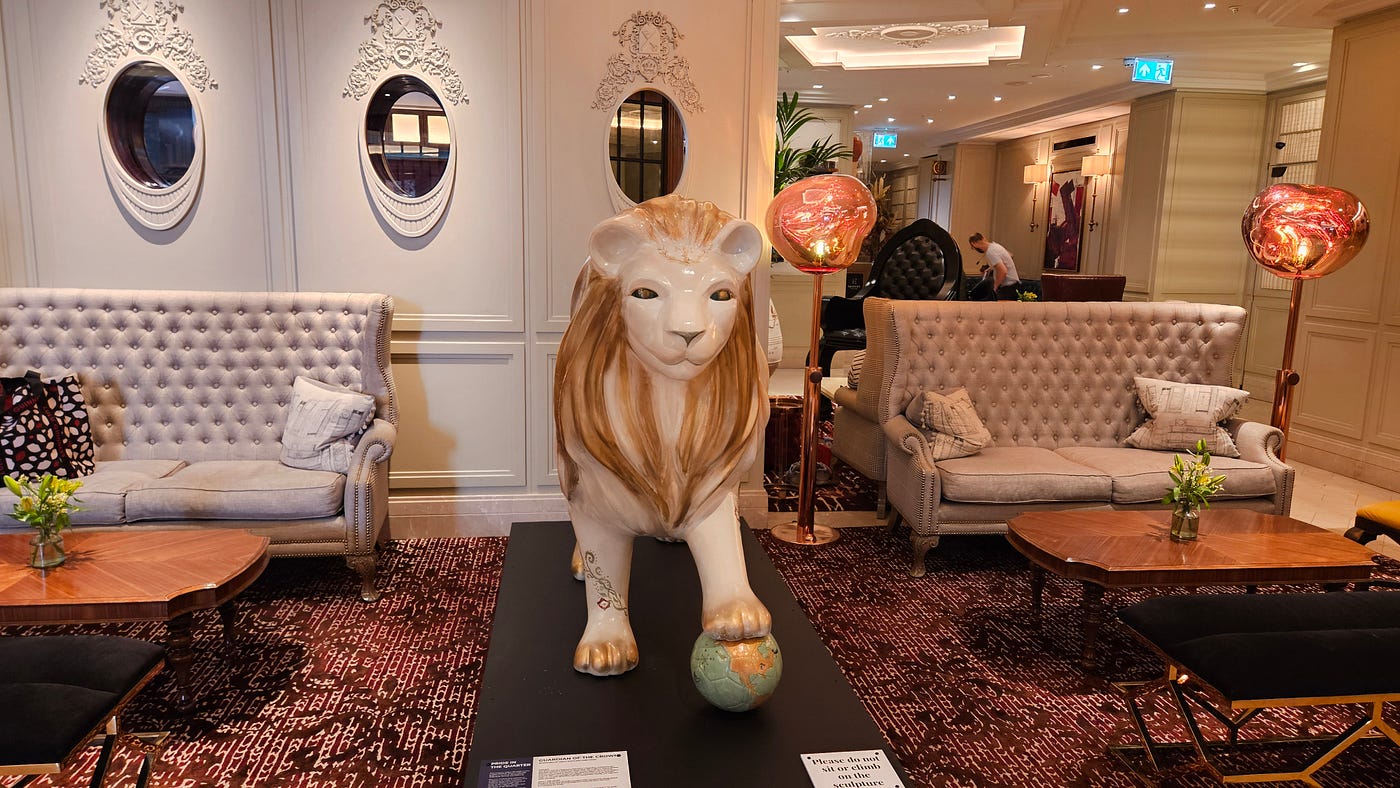
This one was titled Guardian of the Crown. On the plinth it states:
the white lion has long been regarded as a legendary symbol of hope

Credit: Author
It goes on to tell us: Standing sentinel at historic Scotland Yard, this lion sculpture reflects themes of justice, fairness and equality while connecting the site’s Victorian policing history with its present-day identity.
References to Oscar Wilde (author, poet and playwright, 1854–1900), who was arrested in 1895 ,acknowledge the complex social history of the location, while the artwork ultimately calls for compassion, courage, and collective understanding.
Credit: Author
Looking at the sculpture from the front, you don’t see much of the artwork, but if you look again more closely at the side, you start to see beyond the floral and leaf designs and even a dragonfly, to the a padlock and the Victorian tobacco pipe.
Finally…
We met quite a few people trying to find the lions on this art trail, but none in or around the hotels the lions were hiding in. Some people might just have been beaten by the hidden lions.
Happily, we weren’t beaten, which is why I’m able to share them with you.
Do you have sculpture art trails in your town or city?
Thank you for reading
People, who’ve asked to be tagged: Aidan Gerard Patrick McCarthy Lu Skerdoo
[embed]Be Part of the “Tourist in My Own Country” Directory Highlight Your Home Adventures Heremedium.com
메타데이터
- post_id
- abdf0a9a9031
- slug
- hidden-lions-in-london-hotels-abdf0a9a9031
- url
- https://medium.com/tourist-in-my-own-country/hidden-lions-in-london-hotels-abdf0a9a9031
- canonical_url
- https://medium.com/tourist-in-my-own-country/hidden-lions-in-london-hotels-abdf0a9a9031
- author_url
- https://medium.com/@ella_58865
- status
- ok
- fetched_at
- 2026-07-17 05:24:22