An Introduction to Data Modelling and Normalization
Data modeling is a process that determines how data will be organized and how their relationships will be defined within a system…
An Introduction to Data Modelling and Normalization
Data modeling is a process that determines how data will be organized and how their relationships will be defined within a system. Normalization plays a key role in this process. It ensures that data is stored logically by eliminating redundancy and ensuring data integrity. By applying normalization techniques, we can make databases more efficient and easier to manage.
Data Modelling Basics:
Data modeling is the practice of creating a visual representation of a database structure. It involves defining how data is organized and how different pieces of information interact with each other. This model acts as a blueprint for designing and managing databases, ensuring that they are both functional and scalable.
Key components of data modeling include:
- Entities: These are objects or concepts that have a distinct existence within the system. For example, in an e-commerce database, entities might include “Product,” “Customer,” and “Order.” Each entity represents a real-world object that the database will store information about.
- Attributes: These are the specific details or characteristics of an entity. For instance, the “Product” entity might have attributes such as “ProductID,” “Name,” “Price,” and “Category.” Attributes provide additional context and details about each entity.
- Relationships: These define how entities are related to one another. Relationships help illustrate how data in one entity connects to data in another. For example, a “Customer” might place an “Order,” establishing a relationship between the “Customer” and “Order” entities. Relationships can be one-to-one, one-to-many, or many-to-many, depending on how entities interact.
By understanding and defining these elements, data modeling helps create a coherent and efficient structure for storing and retrieving data.
Normalization:
Normalization is a process used in database design to organize data efficiently, minimizing redundancy and dependency. The goal is to ensure that data is stored logically and consistently, which helps maintain data integrity and improves database performance.
Normal Forms: Normalization involves applying a series of “normal forms,” each with specific rules. Here are the first three normal forms, which are commonly used:
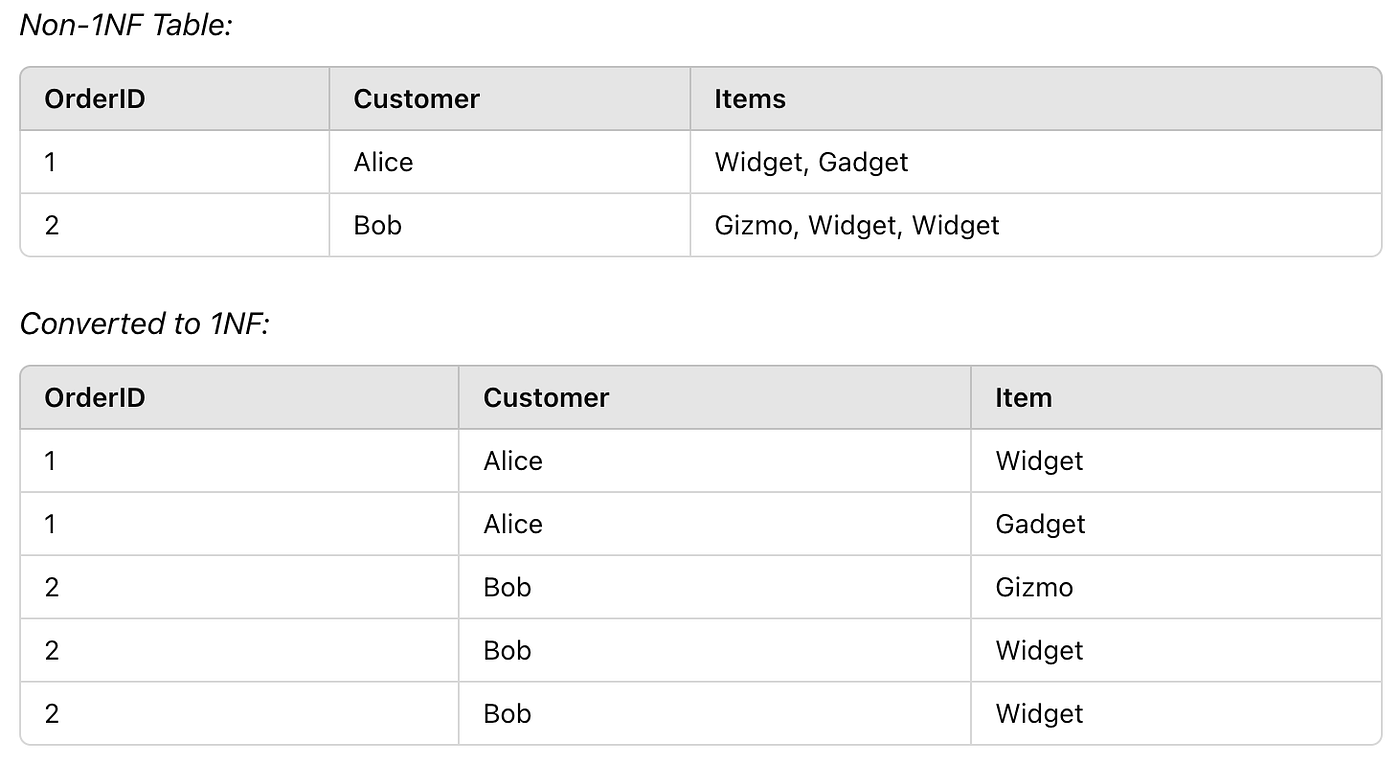
- First Normal Form (1NF):
A table is in 1NF if it only contains atomic (indivisible) values and each column contains unique values.
- Second Normal Form (2NF):
A table is in 2NF if it is in 1NF and all non-key attributes are fully functionally dependent on the entire primary key.

- Third Normal Form (3NF)
A table is in 3NF if it is in 2NF and all the attributes are only dependent on the primary key, not on other non-key attributes.

Impact on Performance:
Normalization improves data integrity and reduces redundancy by organizing data into structured tables where each piece of information is stored only once. This prevents duplication and inconsistencies, making the database easier to maintain and less prone to errors. For example, in a product database, separating product details (like product name, description, and price) from supplier information into distinct tables avoids storing the same product details multiple times when dealing with different suppliers.
Conclusion:
Data modeling and normalization are essential for creating well-organized, efficient databases. They help ensure data integrity, reduce redundancy, and make data management simpler. If you have questions or want to discuss your experiences with data modeling, feel free to leave a comment!
메타데이터
- post_id
- abe72f71d827
- slug
- an-introduction-to-data-modelling-and-normalization-abe72f71d827
- url
- https://medium.com/@aslisemagultekin/an-introduction-to-data-modelling-and-normalization-abe72f71d827
- canonical_url
- https://medium.com/@aslisemagultekin/an-introduction-to-data-modelling-and-normalization-abe72f71d827
- author_url
- https://medium.com/@aslisemagultekin
- status
- ok
- fetched_at
- 2026-06-27 23:56:40



