The Age of Dinosaurs
The Age of Dinosaurs
Dinosaurs dominated Earth during the Mesozoic Era, a long period of geological time often referred to as the “Age of Dinosaurs.” This era is divided into three major periods: the Triassic (252 — 201 million years ago), the Jurassic (201 — 143 million years ago), and the Cretaceous (143 — 66 million years ago). Each of these periods represents a different stage in the rise, dominance, and eventual disappearance of dinosaurs.
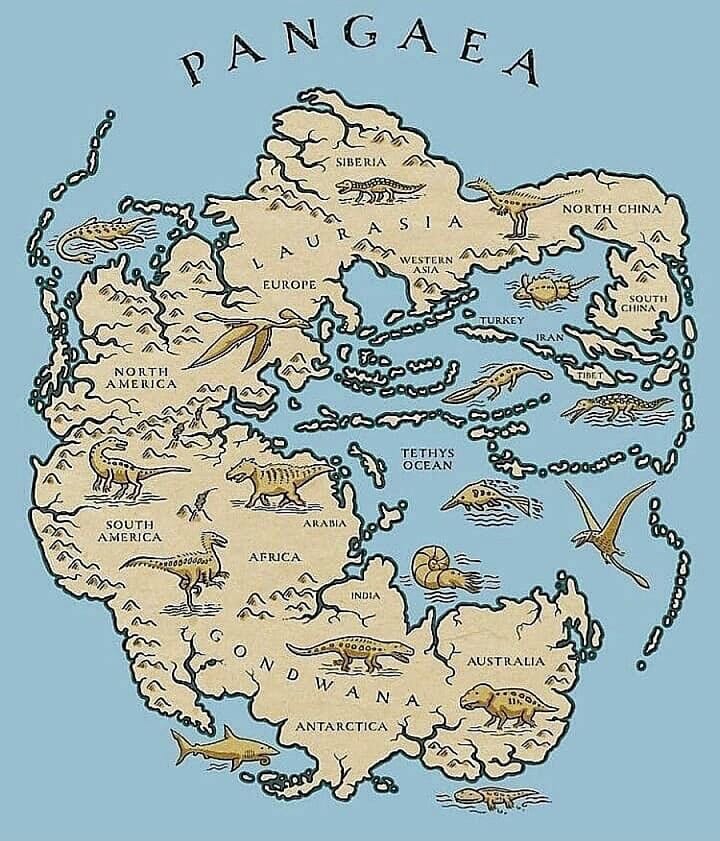
The Triassic Period marks the first appearance of dinosaurs, around 230 million years ago. At this time, Earth’s continents were joined together in a massive supercontinent called Pangea, which contained almost all of the planet’s landmass. The climate was generally warm and dry, creating vast deserts and open landscapes. In these environments, dinosaurs began to emerge and evolve.
One of the key reasons dinosaurs became so successful was a crucial anatomical innovation. Unlike many earlier reptiles whose legs spread outward from the body, dinosaurs had legs positioned vertically beneath their bodies. This upright posture gave them better balance and allowed them to move more efficiently. As a result, dinosaurs could run faster and travel longer distances, giving them a major advantage over other animals. Thanks to this efficient body structure, dinosaurs quickly spread across Pangea and began to dominate many ecosystems.
For centuries, people occasionally discovered enormous fossil bones buried in the ground, but they did not understand what they were. These mysterious remains were often attributed to mythical creatures, such as dragons or griffins. It was not until the 18th and early 19th centuries that scientists began to understand their true origin. The French naturalist Georges Cuvier played a crucial role in this discovery. He realized that many fossil bones belonged to animals that no longer existed, demonstrating that extinction was a real phenomenon in Earth’s history.
Dinosaurs belong to a broader group of reptiles known as archosaurs. This group later divided into two major evolutionary lineages: dinosaurs and crocodiles. While dinosaurs eventually disappeared, crocodiles survived and still exist today, making them distant relatives of the ancient reptiles that once ruled the planet.
As dinosaurs evolved, they adapted to a wide range of environments and lifestyles. Some became extremely large, while others remained small. During the Jurassic Period, dinosaurs truly rose to dominance. Many species grew to enormous sizes, particularly the long-necked herbivores known as sauropods. Famous examples include Diplodocus, Brachiosaurus, and Argentinosaurus.
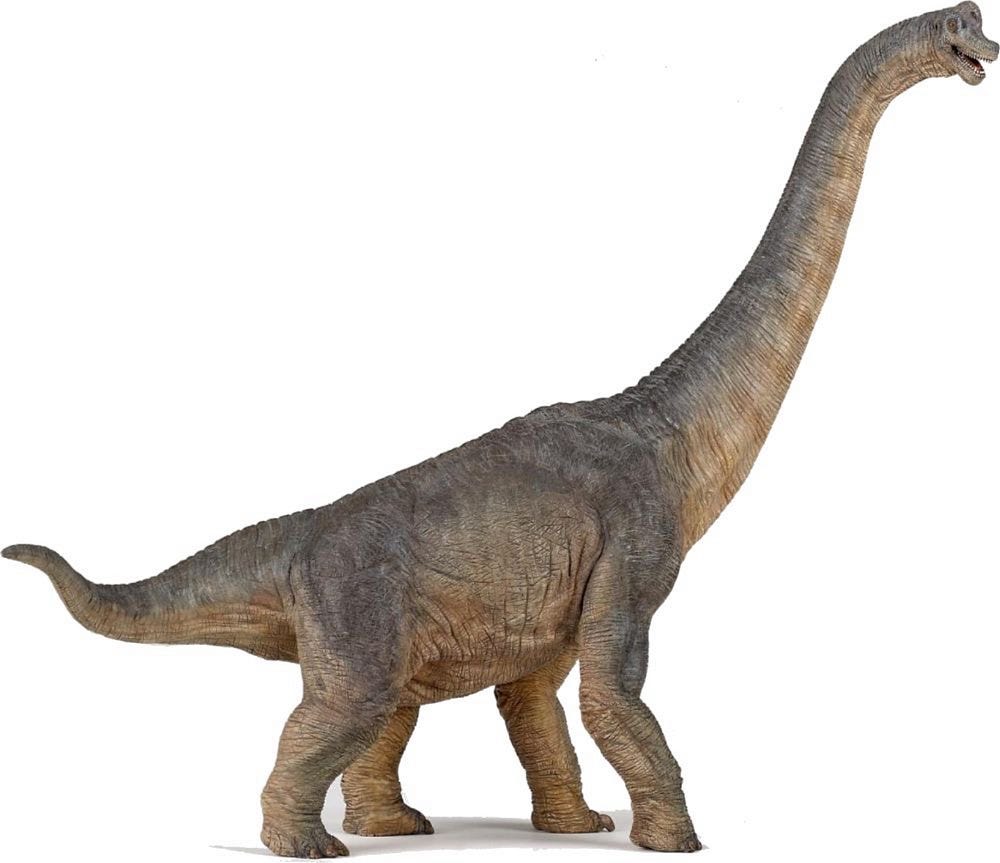
These animals reached astonishing dimensions. Argentinosaurus, the largest confirmed dinosaur discovered so far, is estimated to have reached about 40 meters in length and weighed many tons. Scientists believe that such massive sizes were possible partly because these animals had slow digestive systems, which favored larger bodies, and because they had few natural predators capable of threatening them.
However, not all dinosaurs were giants. Many species were actually quite small, some even smaller than a modern cat. Fossil discoveries continue to reveal remarkable details about these animals. In some exceptionally preserved fossils, scientists have even identified traces of red blood cells, giving researchers valuable insights into the biology of these long-extinct creatures.
Among the most famous dinosaurs is Tyrannosaurus rex, one of the largest and most powerful land predators ever to exist. Living near the end of the Cretaceous Period, the T. rex measured around 12 meters in length and possessed extremely sharp senses that allowed it to detect prey with great precision. Contrary to the popular belief that it was slow, studies suggest that T. rex may have been able to run at speeds of up to 30 kilometers per hour, despite weighing around six tons.

The T. rex also had a relatively large brain, an excellent sense of smell, and stereoscopic vision, which allowed it to judge distances accurately when hunting. These abilities made it one of the most formidable predators of its time. Scientists estimate that T. rex could live up to about 30 years, reaching full adult size at around 20 years of age.
Another surprising discovery about dinosaurs concerns feathers. Many species, especially smaller theropod dinosaurs, possessed feather-like structures. Initially, these feathers likely served practical purposes such as insulation, helping animals retain body heat, or display, attracting potential mates. Over millions of years, however, some feathers evolved into stiffer, more aerodynamic structures that allowed certain species to glide or eventually fly.
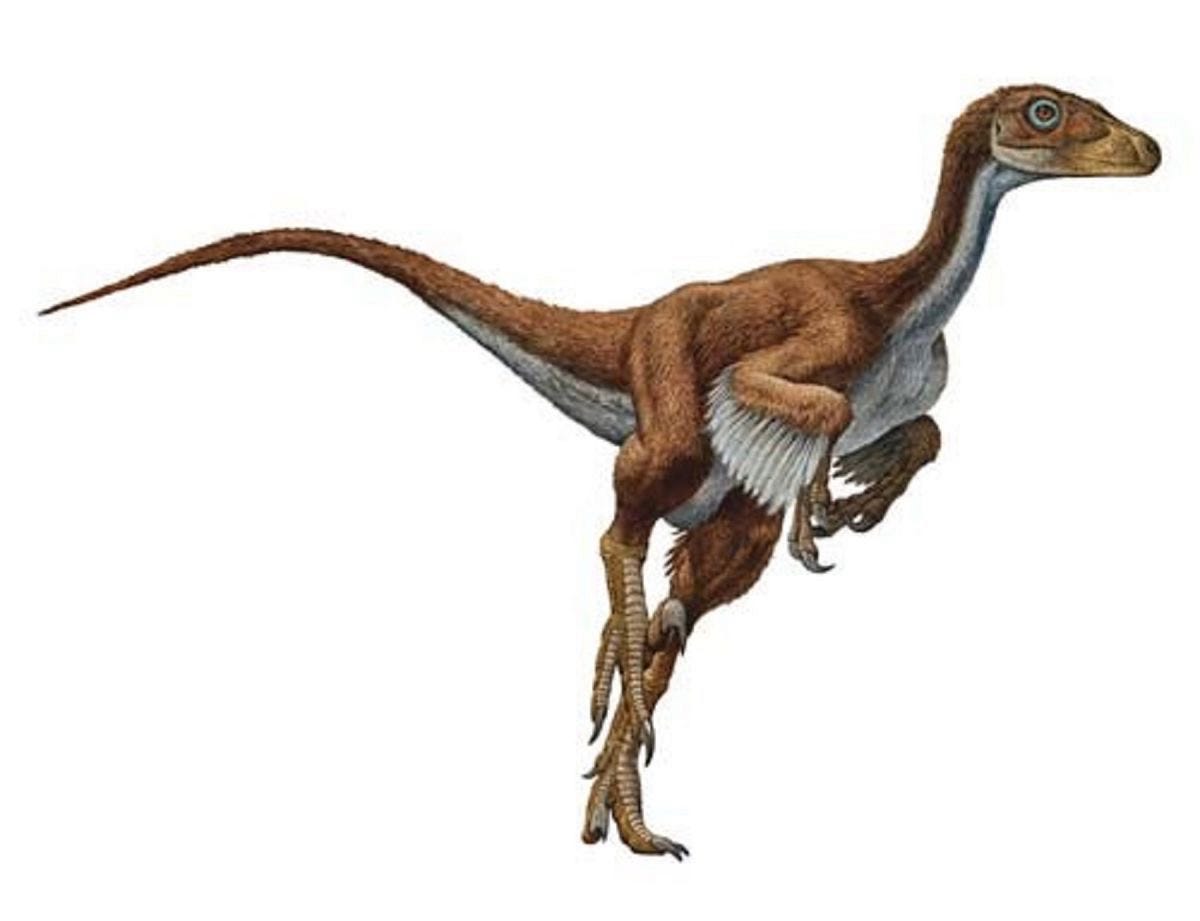
This evolutionary development leads to one of the most fascinating conclusions in modern paleontology: birds are actually dinosaurs. Rather than being merely descendants of dinosaurs, birds are considered living dinosaurs, the surviving members of the dinosaur lineage. Every bird flying in the sky today is a distant continuation of the incredible evolutionary story that began over 230 million years ago.
The age of dinosaurs therefore represents one of the most remarkable chapters in the history of life on Earth. From their origins in the Triassic to their peak dominance in the Jurassic and Cretaceous periods, dinosaurs evolved into an extraordinary diversity of forms. Their fossils not only reveal the immense scale and variety of prehistoric life but also show how evolution can transform ancient reptiles into the birds that still inhabit our world today
메타데이터
- post_id
- abecf71804b9
- slug
- the-age-of-dinosaurs-abecf71804b9
- url
- https://medium.com/@ssdtqxnc/the-age-of-dinosaurs-abecf71804b9
- canonical_url
- https://medium.com/@ssdtqxnc/the-age-of-dinosaurs-abecf71804b9
- author_url
- https://medium.com/@ssdtqxnc
- status
- ok
- fetched_at
- 2026-07-12 00:17:29