Why Altruistic People Can Hurt You More — A Lesson from Service Design
If you ever meet someone who is completely altruistic, keep your distance. The closer you get, the more unhappy you may become. There are…
Why Altruistic People Can Hurt You More — A Lesson from Service Design
If you ever meet someone who is completely altruistic, keep your distance. The closer you get, the more unhappy you may become. There are two kinds of altruistic people:
- Pure Altruists — those who neglect themselves and sacrifice for others.
- Balanced Altruists — those who care for others but also respect boundaries and protect themselves.
Getting close to a pure altruist often leads to suffering. The more intimate the relationship, the more they blur the line between themselves and others. Since they are willing to sacrifice themselves for strangers, they may also sacrifice those closest to them — whom they already perceive as extensions of themselves — for the sake of distant others.
Think of the harshest words you may have spoken to your mother. Our brains register close relationships as overlapping with the self. Mirror neurons and overlapping self–other representations cause us to perceive mothers, spouses, or children as extensions of ourselves. For pure altruists, this boundary collapse is even more severe. Thus, in choosing to help distant strangers, they may wound their closest loved ones.
The brain treats altruistic behavior as its own reward. Research shows that giving or helping releases dopamine, creating pleasure. Pure altruists become strongly dependent on this dopamine reward. The problem is that even in intimate relationships, they feel the greatest reward when making “the most morally valuable choice” — such as sacrificing themselves or loved ones for the sake of strangers. As a result, close relationships suffer, and those nearest to them are left unhappy.
Some might object: “But isn’t altruism the foundation of human society?” Yes — but only when it is balanced with self-care. Balanced altruists activate the prefrontal cortex, which regulates self-protection and social balance. They calculate: If I sacrifice too much, this relationship will collapse in the long run. Pure altruists, however, let moral and cultural beliefs suppress self-protection signals. At the neurological level, the amygdala (emotion) and reward circuits (pleasure) overwhelm the prefrontal cortex (rational regulation).
Others might say: “But wasn’t sacrifice what advanced humanity? Weren’t history’s great figures selfless?” And history itself proves the point. Those who made great sacrifices often neglected their families and left their loved ones in misery. Behind sainthood often lies private tragedy.
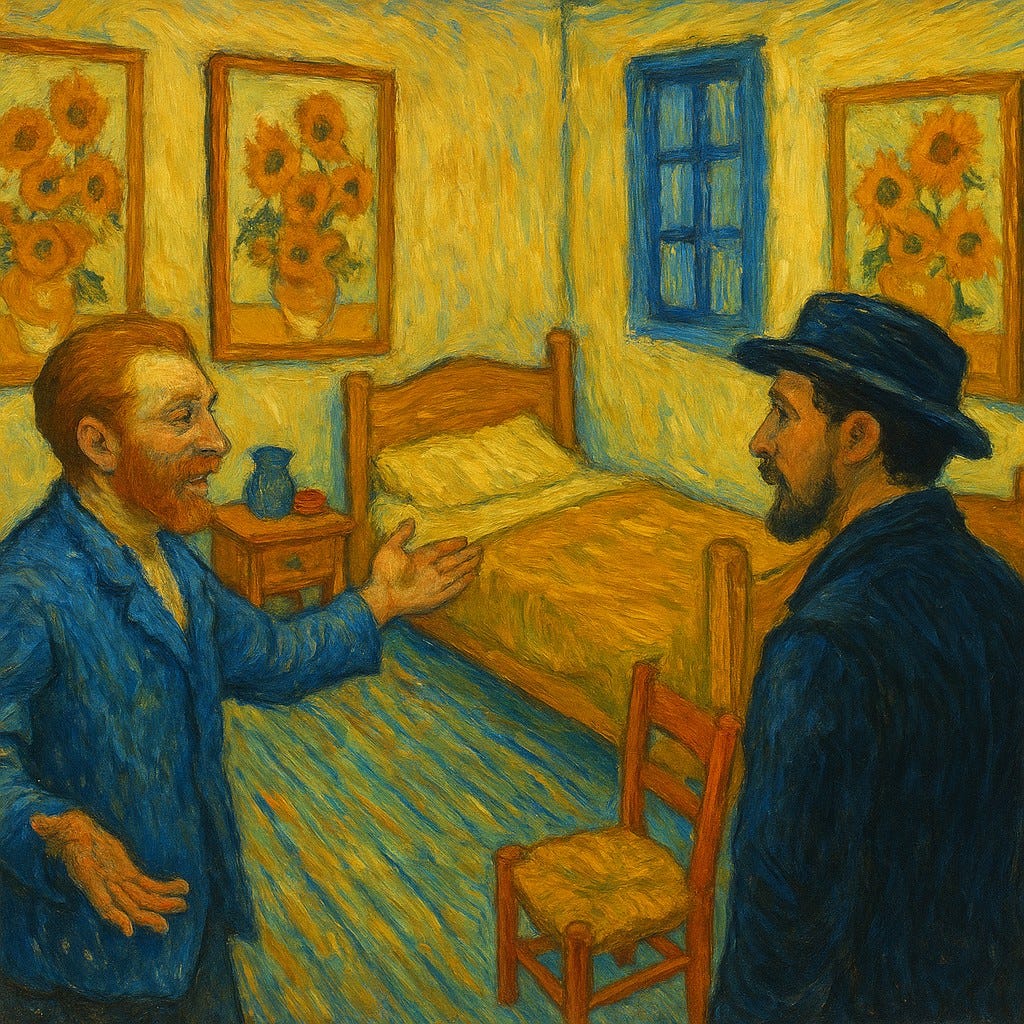
Illustration: ChatGPT
Vincent van Gogh painted sunflowers not only for their beauty but for a friend. In 1888, he filled canvases with sunflowers to decorate the room where Paul Gauguin would stay in Arles. In a letter he wrote, “I know you love sunflowers.” Though he had little money for food, he bought small items to prepare the room. His altruistic spirit is evident. Yet his devotion to others and to art consumed his health and mind, leaving those closest to him in pain. He ended his life in despair, and his brother Theo collapsed under debts and illness soon after. Van Gogh left humanity priceless art — but left his family broken.
Tolstoy preached love for humanity, but his moral intransigence destroyed his wife and children. He sought sainthood for himself, but his home was a place of suffering. Both men left us great legacies, but to their families, they were pure altruists whose sacrifices caused misery.
There are other paths. Chagall, for example, inscribed his love for his wife Bella onto his canvases, weaving together art and family. His paintings radiate both human love and family love. Bach wove faith, music, and education into his household, raising 20 children, four of whom became renowned composers in European music history. His family became an artistic community. They were balanced altruists, protecting both themselves and others.
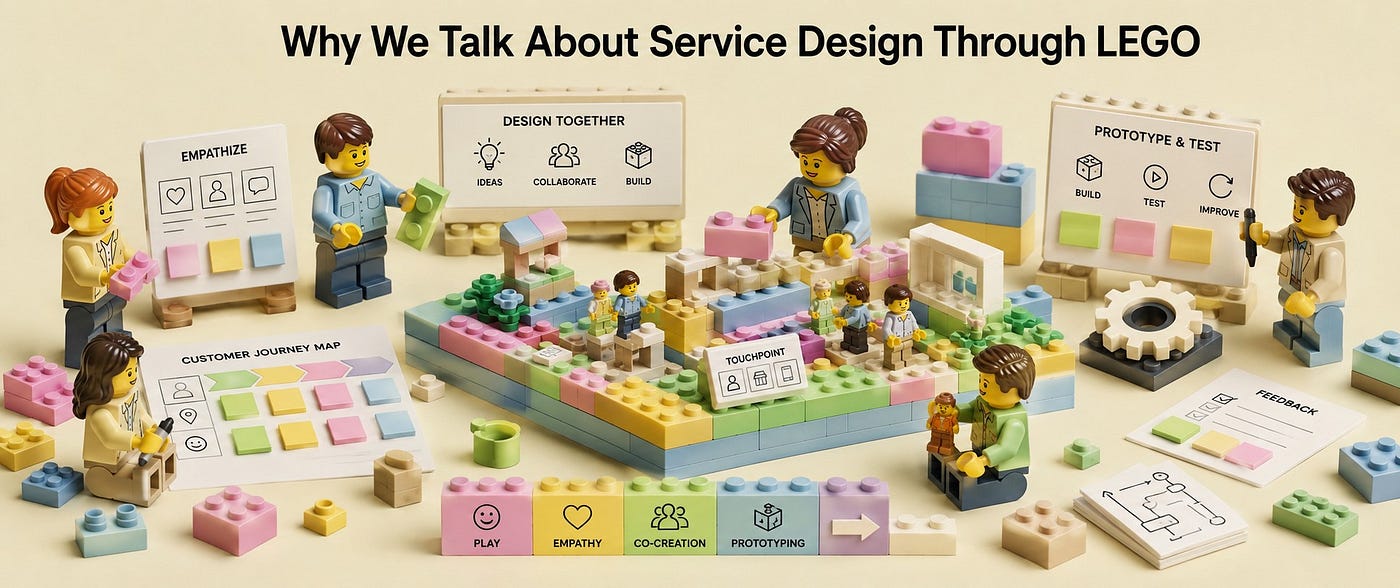
This brings us to service design. “User-centered orientation” is ultimately an expression of altruism, born of good intentions. But in service design, users are not the only stakeholders. Internal clients, colleagues, and partners matter as well. If a designer declares, “I will devote myself entirely to users,” and dismisses the needs of internal teams or commissioning institutions, they fall into the trap of pure altruism. When designers ignore the context and struggles of close internal stakeholders for the sake of the public, services risk collapsing amid distrust and resistance.
That is why service design must follow the path of balanced altruism. It respects the constraints and voices of internal stakeholders while also delivering value to citizens. Honoring the experiences of those closest to the service is the balance that makes sustainability possible.
Pure altruism breeds misery. Balanced altruism leaves both greatness and happiness. In life, as in service design, balance is essential to protect those closest while still serving others.
As we approach Thanksgiving, let us pause and ask: Am I sacrificing myself too much for distant others, at the cost of my family and colleagues? The same is true in service design. If we sacrifice nearby stakeholders for lofty goals, the entire system may collapse.
October 3, 2025 Seongwon Yoon
메타데이터
- post_id
- abfea8ca1e18
- slug
- why-altruistic-people-can-hurt-you-more-a-lesson-from-service-design-abfea8ca1e18
- url
- https://medium.com/@usable/why-altruistic-people-can-hurt-you-more-a-lesson-from-service-design-abfea8ca1e18
- canonical_url
- https://medium.com/@usable/why-altruistic-people-can-hurt-you-more-a-lesson-from-service-design-abfea8ca1e18
- author_url
- https://medium.com/@usable
- status
- ok
- fetched_at
- 2026-06-18 07:02:39