Thousands of Florida Families Losing Homes: Foreclosure Rates Climb to Second-Highest In U.S.
Rising mortgage rates, soaring insurance costs, and economic strain drive housing distress across the state. Florida Foreclosures are…
Thousands of Florida Families Losing Homes: Foreclosure Rates Climb to Second-Highest In U.S.
Rising mortgage rates, soaring insurance costs, and economic strain drive housing distress across the state. Florida Foreclosures are hitting the state’s middle class hard.
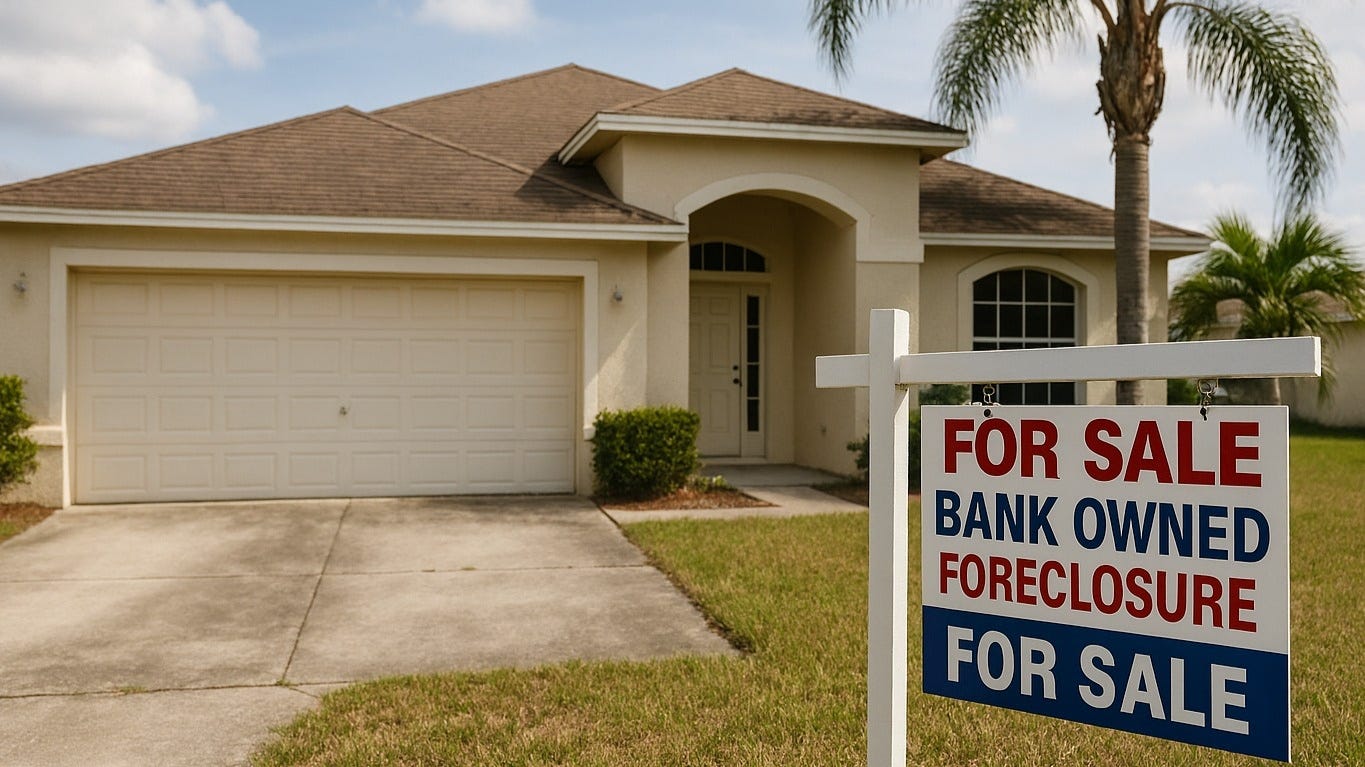
OmniComMultiMedia.com
By Senior Staff Writer, Edmond Thorne: 08/27/2025 11:41 EST Fla. News Network — Florida’s housing market is encountering a sharp rise in foreclosures this year, positioning the state as the second-highest nationally for foreclosure activity. According to July 2025 data from ATTOM, a property data and analytics firm, foreclosure filings were reported for 1 in every 2,420 housing units across Florida. That reflects more than 4,100 homes affected by foreclosure filings in a single month, placing the state just behind South Carolina.
Nationwide, foreclosure activity rose 13 percent year-over-year as of July, reflecting one of the steepest increases in recent years. The increase marks a turning point for Florida, which only a few years ago benefited from surging property values and a rush of inbound buyers during the pandemic. Today, many homeowners are finding themselves unable to keep up with higher payments, buckling under the weight of mortgage resets, taxes, and insurance that continue to climb.
Pressure from Rising Mortgage Costs: Mortgage affordability is playing a major role in the wave of defaults. Adjustable-rate mortgages (ARMs), which were popular during periods of low interest rates, are now resetting at much higher rates. For some homeowners, monthly mortgage payments have jumped hundreds of dollars, straining budgets at a time when wage growth has slowed.
According to the Federal Reserve Bank of St. Louis, the average 30-year fixed mortgage rate topped 7 percent earlier this year, pushing many owners with variable loans into unfamiliar territory. Families that had stretched financially to buy during 2020–2022 now face payments they can no longer cover, while refinancing is not a realistic option for many given current borrowing costs.
Inflation, Insurance, and Property Taxes Add to the Burden: Inflation continues to weaken household budgets, with prices for necessities outpacing income growth. Yet in Florida, the heavier blows are coming from property taxes and the soaring cost of homeowners’ insurance. Many insurers have either pulled out of the state or significantly raised premiums, leading to triple or quadruple rates in some areas.
Data from the Insurance Information Institute identifies Florida as having the highest average annual homeowners’ insurance premium in the nation at over $6,000, nearly four times the U.S. average. Mandatory condominium safety recertification requirements, introduced following the 2021 Surfside building collapse, have also led to large unexpected assessments. For many condominium residents, monthly dues and insurance have doubled, making foreclosure all but inevitable without substantial financial reserves.
Regional Hotspots of Housing Distress: South Florida counties are among the hardest hit. Miami-Dade, Broward, and Palm Beach have posted some of the state’s highest foreclosure start rates, while Clay, Bradford, and Osceola counties in Central and North Florida are not far behind. Local legal aid organizations report growing caseloads of residents seeking help to understand foreclosure notices and options for repayment plans.
Because Florida is a judicial foreclosure state, lenders must go through the court system to finalize foreclosures. While that process can take a year or more, the increase in pre-foreclosures, short sales, and bank-owned listings illustrates the financial strain is already evident in neighborhood housing markets.
The Market Impact: Stress for Owners, Openings for Investors: Foreclosure filings typically ripple into housing values. Some sellers pursuing short sales are being forced to accept lower offers, adding downward pressure on the market. In regions where demand remains high, investors and out-of-state buyers are circling, seeking deals on distressed properties. While presenting opportunities for buyers, this trend underscores the uneven impacts of the foreclosure surge. Lenders are attempting to mitigate losses with loan modifications, repayment plans, and forbearance options. Yet many homeowners remain ineligible due to income documentation, credit flaws, or prior assistance usage.
The Federal Program Expiration Looming: Experts are warning that late 2025 could worsen conditions. Temporary federal loan modification programs, such as those offered through the Federal Housing Administration (FHA) and Department of Veterans Affairs (VA), are scheduled to sunset after September 30, 2025. These safety nets allowed struggling borrowers to extend loan terms or reduce interest. Once expired, defaults are expected to rise further in high-risk states like Florida, where household debt levels and insurance costs are already higher than much of the country.
Forward Together: Florida’s foreclosure surge signals broader affordability challenges that affect long-time residents as well as newcomers who bought at peak market prices. Rising foreclosures will almost certainly increase the stock of available homes, but at significant cost to families who are losing theirs. Moving forward, residents, lenders, and policymakers must navigate the difficult balance between stabilizing the housing market and addressing the financial pressures that make owning a home increasingly unattainable.
Whether Florida can slow or reverse this trend will depend greatly on interest rates, insurance reform, and wage growth. Without meaningful change in those areas, the state is likely to see foreclosures climb further, reshaping communities and unsettling the broader real estate landscape into 2026.
Thank you for reading our article! We would love to hear your thoughts, so join the conversation. Please like, share, and follow if you enjoyed this content. We encourage everyone to research topics and form their own opinions. You can contact us at EdmondThorne@proton.me. Thank you! More articles can be found at https://medium.com/@edmondthorne.
Copyright & Fair Use Issues: Contact OmniComMultiMedia@gmail.com
*This article was reviewed and edited with Grammarly to improve clarity and accuracy. No other A.I. was used for creation or fact-checking. A.I. May Have Been Used to Create Article Thumbnails or Graphs.*
메타데이터
- post_id
- ac0edf5b95bb
- slug
- thousands-of-florida-families-losing-homes-foreclosure-rates-climb-to-second-highest-in-u-s-ac0edf5b95bb
- url
- https://medium.com/@edmondthorne/thousands-of-florida-families-losing-homes-foreclosure-rates-climb-to-second-highest-in-u-s-ac0edf5b95bb
- canonical_url
- https://medium.com/@edmondthorne/thousands-of-florida-families-losing-homes-foreclosure-rates-climb-to-second-highest-in-u-s-ac0edf5b95bb
- author_url
- https://medium.com/@edmondthorne
- status
- ok
- fetched_at
- 2026-08-04 14:22:07




