Daredevil: Born Again Season 2 Review: The Devil Goes Public
An improved sophomore season takes risks that pay off in compelling ways
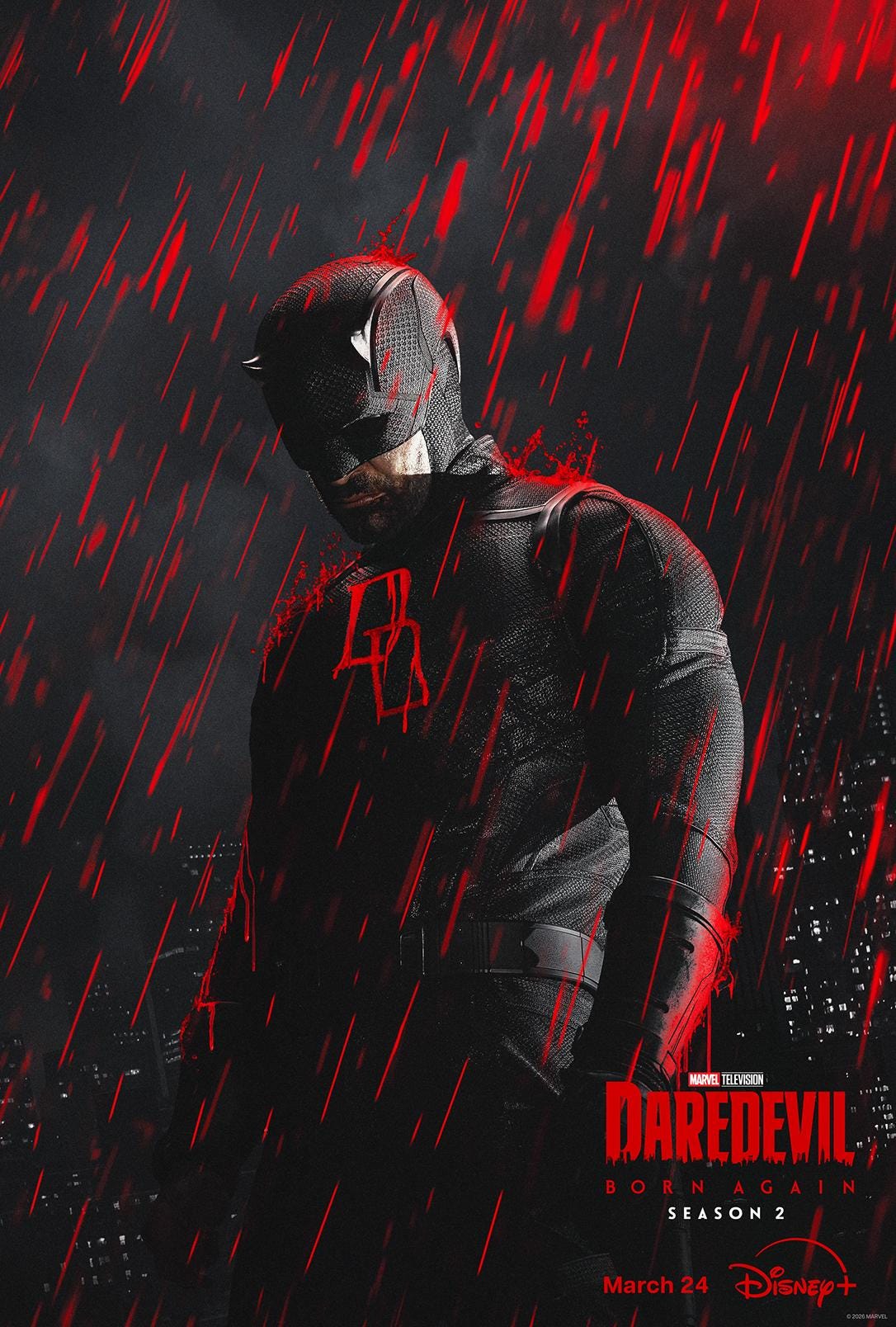
Daredevil: Born Again Season 2 Review: The Devil Goes Public An improved sophomore season takes risks that pay off in compelling ways
Daredevil: Born Again finds its footing in its second season, delivering significant improvements over a first season that struggled with engagement. This iteration ensures viewers remain invested through well-choreographed action sequences, compelling character moments, and—most crucially—a renewed focus on the characters who made the Netflix era exceptional. While Disney's polished production values inevitably contrast with the grimy aesthetic of its predecessor, transforming what was once a character study of a lawyer with superpowers into an MCU superhero show about a lawyer who happens to fight crime, the series manages to recapture much of the original's excitement, if not its exact tone or storytelling approach.
Thematic Depth and the Identity Question
Season 2 culminates in a seismic moment: Matt Murdock publicly reveals his identity as Daredevil in a packed courtroom—a decision he cannot reverse. Unlike Spider-Man's identity reveal in the MCU, which was magically erased, the showrunners have confirmed there will be no "buybacks"—no Purple Man mass brainwashing to restore the secret. This brings Matt in line with most MCU heroes whose identities have always been public, from Iron Man to Captain America. Daredevil had been one of the few remaining secret identities in the franchise—now that distinction is gone.
This revelation serves as more than mere shock value—it represents the show's sophisticated engagement with questions of justice, accountability, and moral consistency. Where Season 1 was defined by suffocating guilt born of loss and regret, Season 2 explores penance, redemption, and second chances, leaning into philosophical questions: What is a vigilante? What is a hero? The season presents justice as a spectrum, with Fisk's corrupt political weaponry at one extreme, Bullseye's wayward vigilantism in the middle, Karen's furious desire for revenge, and Daredevil at the other end.
Matt's arrest following his revelation reinforces the season's central thesis: justice must apply to everyone, including him. He cannot spend an entire season arguing for accountability and then refuse it for himself. The series explores what happens when the people writing and enforcing laws are unequivocally evil, forcing Matt to confront whether there's any point in respecting a corrupted system.
The season ultimately examines how Fisk and Murdock both hate and need each other, telling a "big New York City story" about crime and politics that narrows to "what matters most" in the finale. Fisk embodies familiar authoritarian leadership: a capricious narcissist exhibiting no real interest in governance, focused solely on wreaking vengeance on Daredevil through his ironically named "Safer Streets Act".
Cox, D'Onofrio, and the Ensemble
The enduring appeal of the series rests squarely on the shoulders of Charlie Cox and Vincent D'Onofrio, whose performances as Matt Murdock and Wilson Fisk remain as compelling as they were in 2015. Their rivalry anchors the show, and their ultimate confrontation delivers genuine satisfaction. Cox himself expressed shock when told about the identity reveal, noting "you can't put that genie back in the box," but embraced the bold storytelling choice.
The return of Deborah Ann Woll as Karen Page proves particularly welcome, especially given the devastating off-screen death of Foggy Nelson (Elden Henson) prior to Season 1—killed by Bullseye in an event that initially drove Matt to abandon his vigilante identity. Woll praised the writers for making such a bold move that opens entirely new storytelling territory, calling it "an exciting evolution".
Margarita Levieva's Heather Glenn represents one of the season's most ambitious narrative risks. Initially underwhelming as Matt's romantic interest in Season 1, her character trajectory takes a shocking turn in Season 2. Following a complete psychological breakdown stemming from her Season 1 encounter with the serial killer Muse, Heather herself becomes the new Muse by the finale, donning the mask of the very villain who traumatized her. The way the show delivers this reveal makes it seem as though Heather is either embracing her true identity by wearing the mask or trapping the human part of herself away. It's a dark, unexpected transformation that adds genuine tragedy to the proceedings.
Krysten Ritter's return as Jessica Jones injects fresh energy into the series, and her fight sequences alongside Matt stand out as highlights. The season explores Jones as a mother, with her powers—which include superhuman strength and limited flying—stopping working intermittently since becoming pregnant with her daughter Danielle. The action choreography throughout remains exceptional—the prison escape and boxing match sequences particularly impress.
Wilson Bethel's Bullseye continues to elevate the unpredictability factor; his presence ensures no character feels safe. His actions carry devastating consequences this season, most notably when a thrown glass souvenir shatters and fatally wounds Vanessa Fisk. The writers have framed this as narrative symmetry—Vanessa's death mirroring Foggy's, both orchestrated by Bullseye. Bullseye effectively replaces Punisher's role this season, allowing the story to explore his brand of bloody justice in parallel and contrast with Matt Murdock's restraint, with the added complexity of forgiving the killer of your best friend.
Michael Gandolfini acquits himself admirably as Daniel Blake, carving out his own performance rather than attempting to replicate his father's legendary presence. The supporting cast expands effectively with Matthew Lillard as the mysterious Mr. Charles and the welcome return of Toby Leonard Moore as James Wesley from the original Netflix series.
Visual Choices and Pacing Compromises
The visual presentation proves somewhat divisive. The decision to use a reduced aspect ratio that doesn't fill the entire screen feels like a misstep, though the choice to expand to full screen during Daredevil's heightened sensory moments provides an interesting visual cue. However, using the older aspect ratio for flashbacks creates jarring transitions that occasionally pull viewers out of the narrative.
The pacing reflects the reduced episode count—9 episodes in Season 1 and 8 in Season 2, compared to the original series' 13-episode seasons. This compression results in scene-to-scene momentum that prioritizes excitement over the slow-burn character work that defined the Netflix iteration. While this approach maintains engagement, it sacrifices some of the contemplative depth that made the predecessor distinctive.
The absence of the original main title sequence remains conspicuous. While the reboot attempts homage to its predecessor, the original theme possessed a gravitas that the new version hasn't quite matched.
Prison, Exile, and the Defenders' Return
The finale's aftermath finds Matt arrested for his years of vigilante actions, while Fisk is offered exile and ultimately accepts, leaving New York. The image of Kingpin stranded alone on a beach while Daredevil sits in a prison cell represents one of the show's most striking reversals—the crime lord powerless and free while the hero is locked away but finally unburdened.
The Mayor Fisk arc concludes here, with future seasons returning to grittier, street-level storytelling reminiscent of Frank Miller's comic runs rather than continuing political machinations. Season 3 is expected to adapt elements from "The Devil in Cell Block D" by Ed Brubaker and Michael Lark, and potentially Chip Zdarsky's prison storylines, where Matt must confront inmates he helped put away.
Set photos from the currently-filming third season confirm the return of Mike Colter as Luke Cage and Finn Jones as Iron Fist, promising a full Defenders reunion nearly a decade after their last team-up. Showrunner Dario Scardapane confirmed "Luke Cage is a big part of season three," hinting at comic storylines where Power Man runs for New York Mayor. Luke Cage returns home to Jessica Jones and their daughter Danielle at Alias Investigations, while Angela del Toro's use of the White Tiger amulet during the courthouse battle suggests she may help fill the power vacuum in Matt's absence.
Daredevil: Born Again Season 2 represents a marked improvement, delivering visceral action and bold narrative choices while honoring its Netflix roots. The decision to permanently reveal Matt's identity and explore complex questions of justice, accountability, and moral consistency elevates the series beyond typical superhero fare. Though it may never fully recapture the original's distinctive atmosphere, it succeeds in crafting compelling superhero television that stands confidently within the MCU framework while maintaining the willingness to take genuine narrative risks.
메타데이터
- post_id
- ac4542eaaaed
- slug
- daredevil-born-again-season-2-review-the-devil-goes-public-ac4542eaaaed
- url
- https://medium.com/@mitul.tupe/daredevil-born-again-season-2-review-the-devil-goes-public-ac4542eaaaed
- canonical_url
- https://medium.com/@mitul.tupe/daredevil-born-again-season-2-review-the-devil-goes-public-ac4542eaaaed
- author_url
- https://medium.com/@mitul.tupe
- status
- ok
- fetched_at
- 2026-06-09 15:37:30