Why So Many Scientists Called Themselves Philosophers of Nature
And the tragedy that came after they stop doing it
Why So Many Scientists Called Themselves Philosophers of Nature
And the tragedy that came after they stop doing it
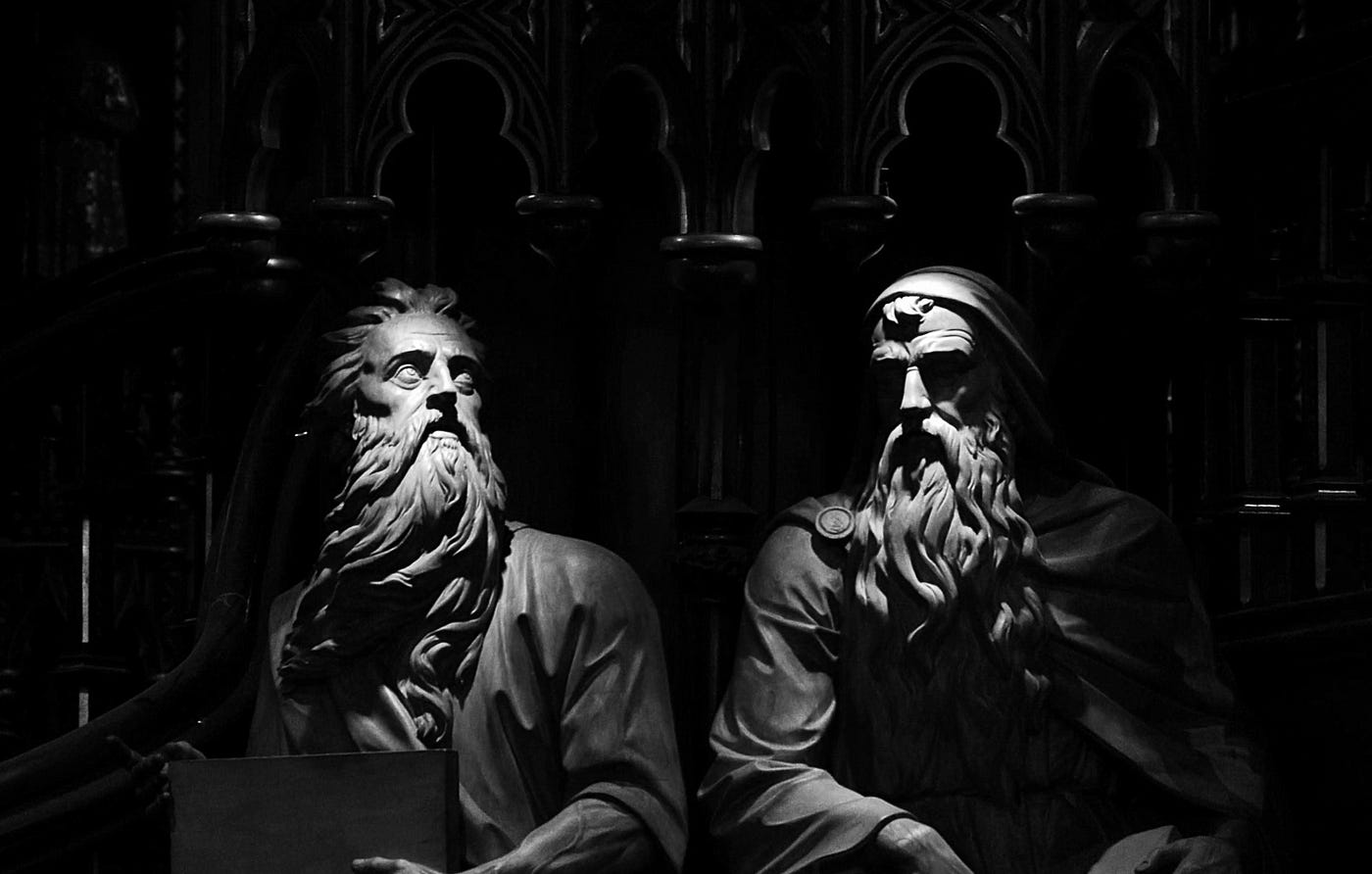
By Sneha Cecil on Unsplash.
Introduction
Newton called himself a natural philosopher. So did Leibniz, Descartes, and Faraday. The word “scientist” didn’t exist until 1833 — and its invention was not innocent. Something was lost in the rename.
In 1833, the polymath William Whewell coined the word “scientist” at a meeting of the British Association for the Advancement of Science. Before that, the people we now call scientists called themselves natural philosophers.
When they renamed the discipline, people quietly agreed that its job was not to speculate wildly about nature anymore. The job was to build an archive.
A Dangerous Split
The split between science and philosophy happened gradually, then all at once. By the late nineteenth century, the professionalization of science had created institutions, journals, and careers that rewarded narrow specialization.
Philosophy retreated to the humanities. Science retreated to the laboratory. Each developed a mild contempt for the other. Especially after Eugnenics and Darwinism.
Darwin’s On the Origin of Species in 1859 is one of the most consequential books in the history of ideas. It is also a book that was immediately overextended by almost everyone who read it.
The problem was not Darwin’s theory. The problem was what people did with it when they decided it was a complete philosophy of nature rather than a theory in biology.
Darwin himself was more careful. But the cultural moment was hungry for a replacement metaphysics, something that would do what theology used to do — explain everything, justify the existing order, provide a narrative from atoms to civilization.
Evolution was recruited for that role before anyone had thought seriously about whether it could bear the weight.
And eugenics is the darkest chapter in this story.
Francis Galton — Darwin’s cousin — coined the term “eugenics” in 1883 and built a program around the idea that human heredity could and should be managed scientifically to improve the population.
Eugenics was treated as applied science. It was taught in universities across the world. It informed immigration policy, sterilization laws, and eventually the ideological framework of the Third Reich.
When data are extended into policy without rigorous examination of the premises involved, the results can be monstrous. It was neither philosophy nor science happening. It was bias and pride getting institutionalized. They call it now “pseudoscience.”
The Issue Underneath
Did philosophical speculation divide the science? I think the honest answer is: doing speculation is where you are most likely to be wrong. That’s why people are avoiding it.
Narrow technical work is safer. You can be right about a lemma without committing to anything about the nature of mathematical objects. You can publish a result without defending a worldview.
But there is a cost. Avoiding speculation does not make them go away. It just means they are answered badly, by default, by people who did not realize they were answering them.
The history of science is largely a history of wild speculation that turned out to be right.
Atomism was wild philosophical speculation for two thousand years before Dalton gave it empirical grounding.
The idea that the Earth moves was so speculative it got Galileo arrested.
Continental drift was dismissed as fantasy until plate tectonics made it obvious.
The notion that light has a finite speed sounded absurd until it didn’t.
What we call wild speculation today has a name in academia: it is called a conjecture, a hypothesis, or — if it is too large and too strange to test yet — a research program. If you pay enough attention, you will realize philosophy is still there, at least in the term “PhD.”
Final Thoughts
According to Feynman, you should: “Study hard what interests you the most in the most undisciplined, irreverent, and original manner possible.”
Philosophy is there along the way of wild speculations.
The separation of philosophy from science did not just impoverish science. It impoverished philosophy too. When philosophers stopped engaging seriously with the empirical world they retreated into pure language analysis, into academic games and conceptual loops.
The scientists who changed everything were rarely the ones who stayed inside the lines. We need more of that. The willingness to be wrong in public, to speculate past where the data run out, to let philosophy and science speak to each other again as they once did,. The word “scientist” is only two centuries old. The conversation it interrupted is two millennia older.
메타데이터
- post_id
- ac45a59a2ca2
- slug
- why-so-many-scientists-called-themselves-philosophers-of-nature-ac45a59a2ca2
- url
- https://medium.com/original-philosophy/why-so-many-scientists-called-themselves-philosophers-of-nature-ac45a59a2ca2
- canonical_url
- https://medium.com/original-philosophy/why-so-many-scientists-called-themselves-philosophers-of-nature-ac45a59a2ca2
- author_url
- https://medium.com/@pedro-barbalho
- status
- ok
- fetched_at
- 2026-06-24 04:09:36