We Are Educating the Wrong Species
Artificial intelligence has triggered an educational debate unlike any we have witnessed before. Around the world, schools, universities…
We Are Educating the Wrong Species
The Book of Homo Somniator
Artificial intelligence has triggered an educational debate unlike any we have witnessed before. Around the world, schools, universities, governments and technology companies are asking how education should adapt to a future in which intelligent machines have become part of everyday life. Most of these discussions, however, begin with the wrong question. They ask how students should use AI, which new technologies classrooms should adopt, or which professions are likely to disappear. These are important questions, but they remain secondary. They assume that education already understands its purpose and merely needs better tools to achieve it.
The real question is far more fundamental.
What if education is no longer developing the kind of human being the future requires?
For more than two centuries, modern education has been remarkably successful because it was designed for a civilization built around knowledge. Information was scarce, expertise was concentrated inside institutions, and economic progress depended on people who could acquire, remember and apply increasingly specialized knowledge. Schools therefore became systems for transferring accumulated understanding from one generation to the next. Universities expanded this process by producing experts whose authority rested largely on the depth of their knowledge. Within that historical context, the model was not only reasonable. It was one of humanity’s greatest achievements.
Today, however, the assumptions upon which that model was built are changing at extraordinary speed. Artificial intelligence can retrieve, organize and generate information on a scale that no individual human being can match. Knowledge has not become unimportant. On the contrary, knowledge remains indispensable for medicine, engineering, science, law and every profession whose decisions affect human lives. What has changed is something far more significant. Possessing knowledge is no longer sufficient to define human value.
This distinction may appear subtle, yet it changes everything.
For centuries, education treated knowledge as both its primary method and its ultimate goal. Students learned because information itself represented power. The person who knew more could solve more problems, occupy more influential positions and contribute more effectively to society. Knowledge was simultaneously the path and the destination.
Artificial intelligence separates these two ideas. It demonstrates that knowledge can increasingly be accessed rather than permanently possessed. As a consequence, the central question of education can no longer be what students should memorize. It must become what uniquely human capacities deserve development once knowledge itself is no longer our defining advantage.
I believe this question forces us to reconsider the very human being education has been trying to cultivate.
For thousands of years we have educated Homo Sapiens, the human whose identity was organized around understanding the world through accumulated knowledge. Homo Sapiens built civilization. Science, engineering, medicine, philosophy and democratic institutions all emerged because humanity learned how to observe reality, preserve discoveries and transmit them across generations. Everything we enjoy today stands upon this extraordinary achievement.
The problem is not that Homo Sapiens failed.
The problem is that education continues optimizing for Homo Sapiens while the conditions that made this educational model successful are rapidly disappearing.
Artificial intelligence has not made schools obsolete. It has exposed that schools are still preparing students for a civilization in which remembering information was humanity’s greatest competitive advantage.
The educational crisis, therefore, is not technological.
It is evolutionary.
If the next stage of civilization demands something different from human beings, education must first understand what that new human being looks like before redesigning classrooms, examinations or curricula.
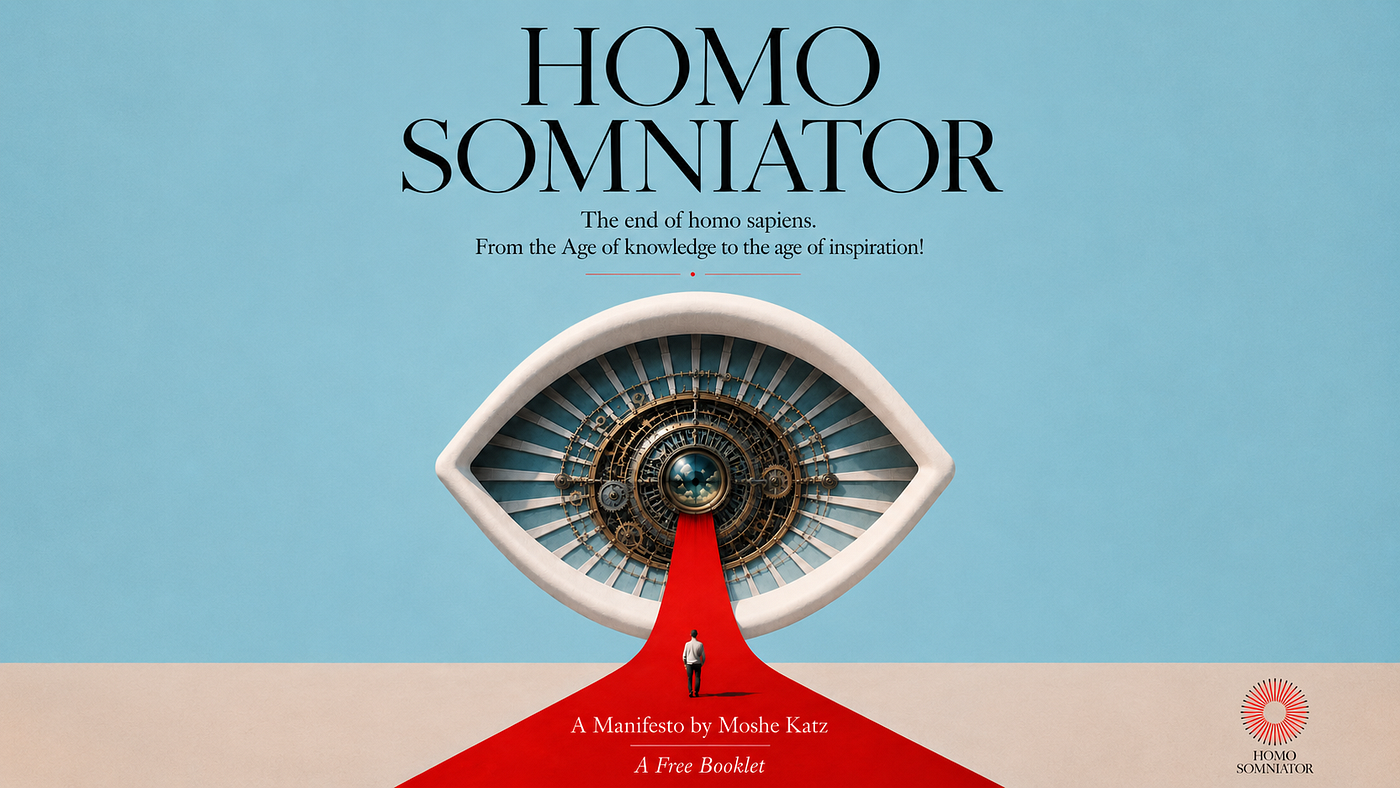
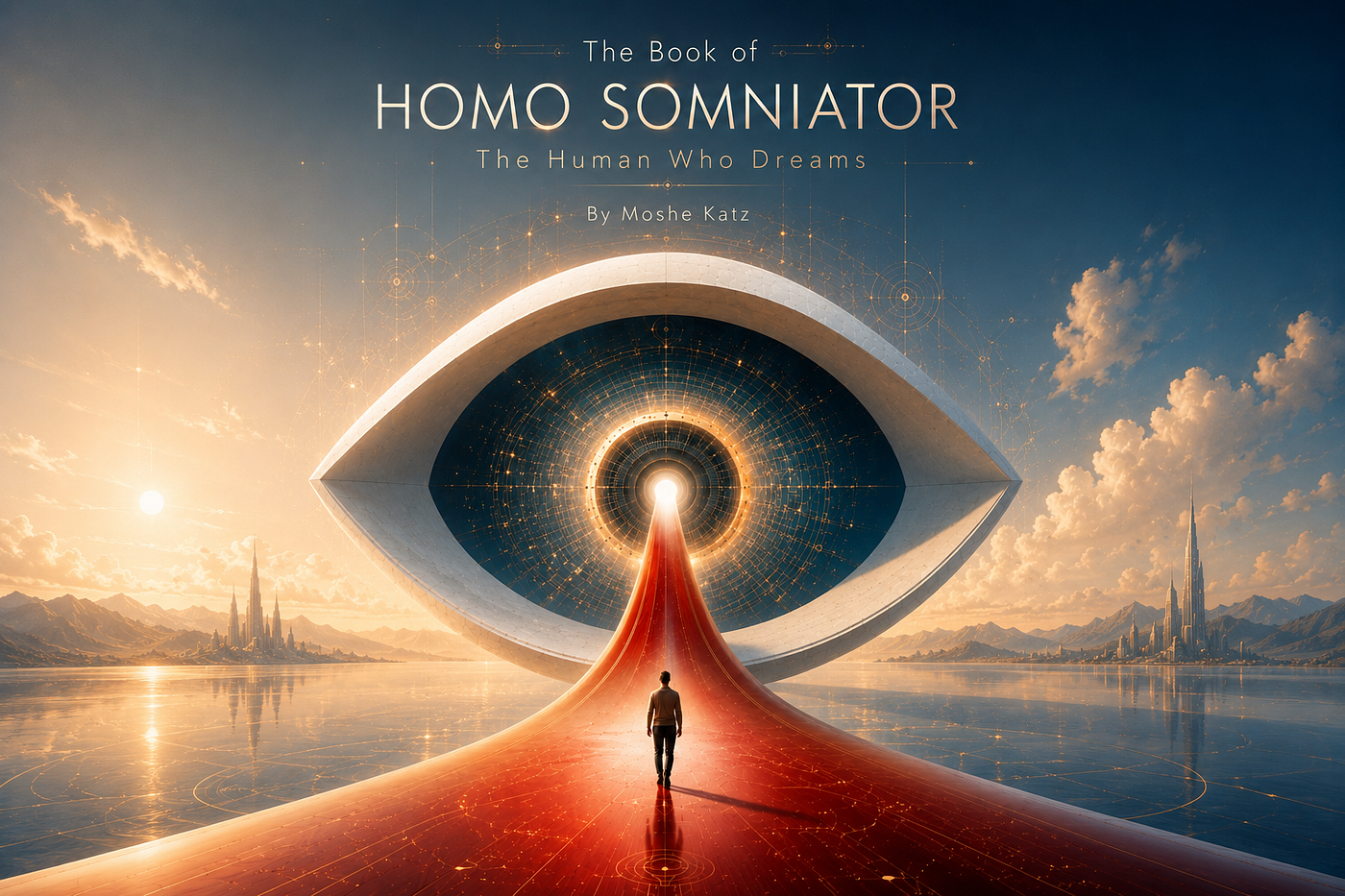
In my work, I describe this emerging human archetype as Homo Somniator, the human who dreams. The word “dream” should not be confused with fantasy or escapism. Dreaming represents the uniquely human ability to perceive possibilities that do not yet exist, to recognize meaning before evidence appears, and to carry inspiration through the difficult process of transforming it into reality. Knowledge remains essential within this process, but it no longer provides direction. Knowledge becomes the material with which creation works. Inspiration determines where creation begins.
This distinction has profound consequences for education.
If the purpose of schooling remains the production of knowledge carriers, artificial intelligence will inevitably appear as education’s greatest competitor. If, however, the purpose of education becomes the cultivation of inspiration carriers, AI becomes one of humanity’s greatest educational resources. The technology can provide information, compare ideas, explain concepts and accelerate research, allowing teachers and students to devote increasing attention to those capacities machines cannot meaningfully replace.
The first of these capacities is curiosity. Traditional education often rewards answers more than questions because answers can be evaluated, standardized and measured. Yet every important scientific discovery, technological breakthrough and philosophical revolution began not with an answer but with a question someone considered worth pursuing. As information becomes increasingly accessible, curiosity becomes more valuable than memory because it determines which knowledge deserves exploration in the first place.
Closely connected to curiosity is perception. Most educational systems teach students how to interpret reality correctly according to existing knowledge. Far less attention is given to helping students notice what everyone else overlooks. Yet history repeatedly demonstrates that transformative discoveries emerge because someone perceives reality differently rather than because they possessed more information. Education should therefore develop perception as deliberately as it develops literacy or mathematics. Students must learn how to observe, recognize hidden relationships and discover possibilities invisible to conventional thinking.
Imagination follows naturally from perception. Once new possibilities become visible, they must be explored before they exist. Imagination is often misunderstood as artistic decoration or childhood entertainment. In reality, it functions as humanity’s laboratory for future realities. Every invention, institution, building and social movement existed first as an imagined possibility. Artificial intelligence can generate countless variations of existing ideas, but deciding which future deserves realization remains an inherently human responsibility.
This responsibility introduces another educational priority that current systems rarely cultivate explicitly: creative courage. Every genuinely original idea initially lacks proof because evidence can only emerge after the idea begins entering reality. Students educated exclusively to avoid mistakes gradually become adults who hesitate whenever certainty disappears. Yet uncertainty is not the enemy of creation. It is its unavoidable beginning. Future education must therefore normalize experimentation, revision and intellectual risk not as exceptions but as essential components of meaningful learning.
Another capacity that deserves renewed attention is interdisciplinary thinking. Modern education separated knowledge into increasingly specialized disciplines because specialization accelerated scientific progress. The greatest challenges humanity now faces, however, climate change, artificial intelligence, urbanization, mental health, demographic transformation and educational reform, cannot be understood through isolated disciplines alone. They require minds capable of connecting architecture with psychology, technology with ethics, biology with philosophy, economics with ecology and education with neuroscience. The future will increasingly belong to those capable of discovering relationships where institutions currently see boundaries.
Perhaps the most neglected educational capacity is inspiration itself. We often treat inspiration as an unpredictable emotional event rather than a human faculty worthy of systematic cultivation. Yet throughout history, every transformative contribution began because someone experienced a direction that could not yet be justified through existing knowledge alone. Inspiration does not replace critical thinking. It provides critical thinking with purpose. Without inspiration, knowledge risks becoming increasingly sophisticated while lacking meaningful direction.
These capacities converge in one final educational responsibility: ethical imagination. Artificial intelligence dramatically increases humanity’s capacity to shape reality. Every new technology expands not only our abilities but also the consequences of our decisions. Future generations will require more than technical competence. They must develop wisdom regarding which futures deserve realization and which should remain unrealized. Education can no longer separate creativity from responsibility because every act of creation now carries unprecedented influence.
These changes inevitably transform the role of the teacher. Teachers will no longer derive their authority primarily from possessing information unavailable to students. Instead, they become mentors of perception, guides through uncertainty and protectors of curiosity. Their responsibility shifts from delivering knowledge toward helping each student recognize the unique questions, sensitivities and possibilities they are capable of carrying into the world. The teacher becomes less a transmitter of information and more a cultivator of human potential.
This transformation also changes how we understand success. Educational systems have long measured achievement through standardized demonstrations of knowledge because knowledge was considered the principal educational outcome. The future will require broader definitions of excellence that recognize originality, interdisciplinary thinking, ethical judgment, creative courage and the capacity to transform inspiration into meaningful contribution. These qualities cannot always be reduced to standardized examinations, yet they increasingly determine whether individuals merely adapt to the future or actively participate in creating it.
The greatest educational mistake of the coming decades would be attempting to preserve yesterday’s educational philosophy by adding artificial intelligence to existing classrooms. Technology alone cannot solve a crisis of purpose. Before deciding how children should learn, we must decide what kind of human beings education intends to develop.
Every civilization educates according to the human being it believes the future requires. Industrial civilization educated disciplined workers. The knowledge economy educated specialists and experts. The emerging age of artificial intelligence demands something different. It demands human beings capable of perceiving possibilities before they become visible, integrating knowledge across disciplines, carrying inspiration responsibly and imagining futures that no algorithm can independently choose.
The greatest educational challenge of the twenty first century is therefore not teaching children how to compete with artificial intelligence. It is teaching them how to become more deeply human than previous generations ever needed to be. Artificial intelligence has not ended the importance of education. It has made education more important than ever because, for the first time in modern history, humanity must consciously decide which uniquely human capacities deserve cultivation.
Perhaps history will remember this moment not as the beginning of the AI revolution but as the moment civilization finally realized that it had been educating the wrong species. The task before us is not simply to redesign schools. It is to redefine what it means to become fully human.
By Moshe Katz founder of Homo Somniator website: www.homosomniator.com
#HomoSomniator #FutureOfEducation #ArtificialIntelligence #Education #Innovation #Leadership #HumanPotential #Creativity #FutureOfWork #Learning #ThoughtLeadership #EducationReform #EdTech #AI #FutureSkills #MosheKatz
메타데이터
- post_id
- ac5796fce01e
- slug
- we-are-educating-the-wrong-species-ac5796fce01e
- url
- https://medium.com/@flymo51/we-are-educating-the-wrong-species-ac5796fce01e
- canonical_url
- https://medium.com/@flymo51/we-are-educating-the-wrong-species-ac5796fce01e
- author_url
- https://medium.com/@flymo51
- status
- ok
- fetched_at
- 2026-08-09 22:03:48