Power Automate for Modern Workflow Automation
Discover how Power Automate streamlines workflows, reduces manual effort, improves productivity, and accelerates digital transformation.
Power Automate: Transforming Workflow Automation for Modern Businesses
Modern businesses are basically operating in an environment that is defined by rapid digital transformation, higher customer expectations, and constant pressure to be more efficient. Like, organizations are no longer competing only on products or services , but also on how quickly and efficiently they operate behind the scenes. In other words it’s not just the surface anymore, it’s that internal rhythm, the orchestration of their daily work.
Traditional manual processes are getting in the way a lot in this environment. They slow down decision making, raise day to day operating costs, and also bring in errors that really were not needed. When organizations scale, these inefficiencies show up even more, and the impact is way bigger. In practice, it’s like everything becomes slightly less agile, more expensive, and a bit harder to keep clean.
To stay competitive , organizations are moving more and more toward automation driven operations that streamline workflows and cut down manual effort, while overall productivity improves across different departments .
What Is Workflow Automation?

Workflow automation is basically the use of technology to put together and run business processes on autopilot, depending on preset rules and those triggers. It is about having systems act automatically, rather than people doing every tiny step manually.
Instead of doing every step by hand, automation tools handle tasks like approvals and notifications, data updates, plus system integrations, so it kind of all runs on its own.
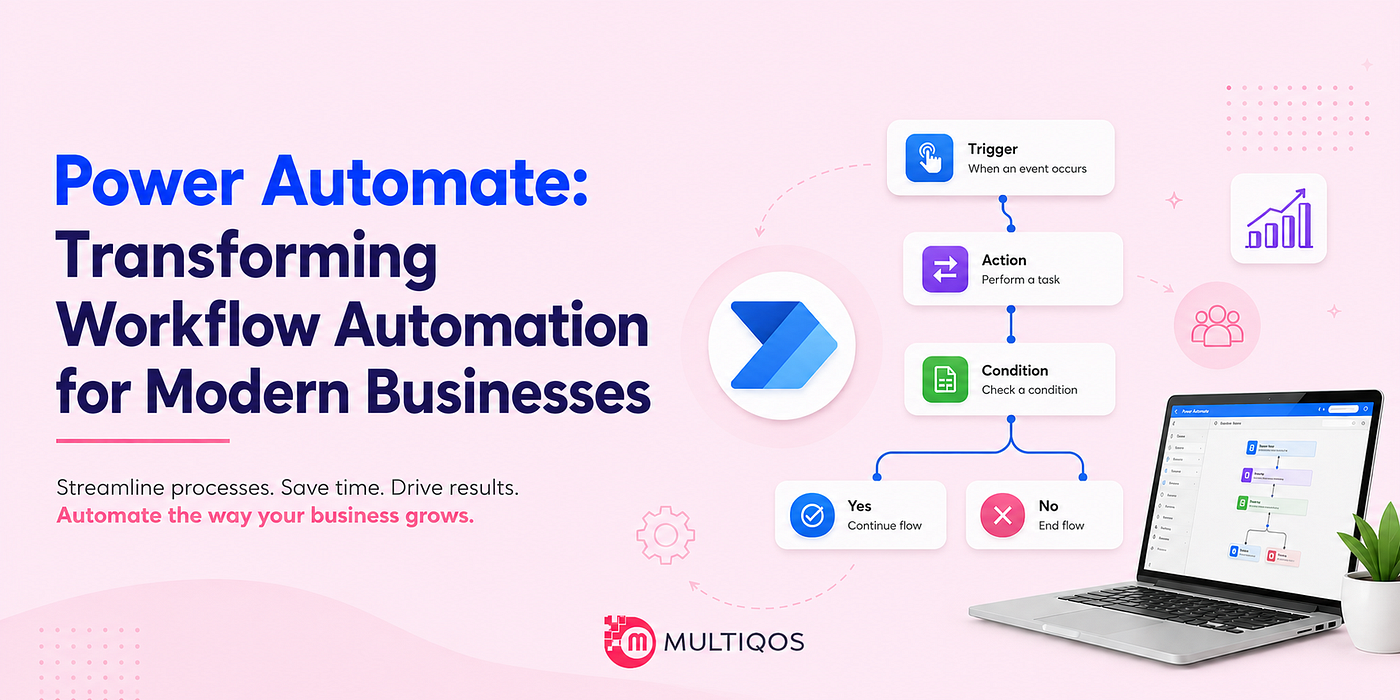
A typical automated workflow includes:
- A trigger that initiates the process
- A sequence of automated actions
- Conditional logic for decision-making
- Data movement between systems
- Notifications or approvals
For example, when a purchase request is submitted, the system can automatically route it for approval, notify stakeholders, and update financial records without manual involvement.
This ensures speed, consistency, and accuracy in business operations.
Key Business Challenges Solved by Workflow Automation
- Repetitive Manual Tasks: Employees often spend a pretty large portion of their day on those repetitive, administrative chores like data entry, email handling, and report updates, and honestly it eats up time. It also lowers productivity in practice, while giving very little strategic value, or maybe none at all.
- Human Errors and Inconsistencies: Manual workflows are kind of prone to mistakes that can mess up business outcomes, you know. Even tiny errors can cause delays , and later on create financial losses. It’s usually small and then suddenly it’s a problem.
- Delayed Approvals and Bottlenecks: Approval processes often slow down operations due to dependency on multiple stakeholders. Automated workflows streamline approvals by instantly routing requests and sending reminders when action is needed.
- Lack of Process Visibility: Without automation, it becomes difficult to track process status or identify inefficiencies. Automation provides real-time visibility into workflows, helping organizations identify and resolve bottlenecks quickly.
Benefits of Workflow Automation for Modern Organizations

- Improved Operational Efficiency: Automation reduces manual effort and speeds up processes, enabling organizations to complete tasks faster and more accurately.
- Enhanced Employee Productivity: Employees can focus on strategic, creative, and high-value tasks instead of repetitive work.
- Faster Decision-Making: Real-time data and automated reporting enable leaders to make quicker and more informed decisions.
- Better Compliance and Accountability: Automated workflows maintain logs, approvals, and audit trails that ensure compliance with internal and regulatory standards.
- Cost Reduction and Resource Optimization: By reducing manual workload and improving accuracy, businesses can significantly reduce operational costs.
Common Business Processes That Can Be Automated
Automation can be applied across multiple business functions, including:
- Employee onboarding and HR workflows
- Finance approvals and invoice processing
- Customer support ticket management
- Sales pipeline tracking
- Document approval processes
These processes are ideal for automation because they are repetitive, structured, and high-volume.
The Role of Workflow Automation in Digital Transformation
Digital transformation isn’t only about grabbing technology, it’s more like reshaping the way organizations work to deliver value, in a new kind of flow. It’s about changing operations, and also how value is shown, day to day.
Workflow automation really helps in this transformation, by tying different systems together, sort of removing silos, and making communication between departments happen in a smoother way. It’s like the threads that glue everything, so there is no stop-and-go between teams, and the whole process feels more coordinated.
Most organizations today rely on multiple tools, like CRM systems, ERP platforms, communication tools and analytics dashboards. Yet, when those systems run on their own, inefficiencies show up because people end up doing manual data transfer and the workflows get disconnected, like a kind of mild chaos that nobody quite notices at first.
👉 Read More: Power Platform Integration highlights how organizations connect **Power Apps, Power BI, and Microsoft 365 **to enable seamless end-to-end automation across business processes and improve overall operational efficiency.
Automation solves this challenge by integrating systems and enabling end-to-end process execution.
This leads to:
- Improved operational speed
- Better collaboration across teams
- Increased data accuracy
- Higher scalability
In modern enterprises, **Microsoft Power Automate Services** play a crucial role in enabling organizations to automate complex workflows across applications and departments while maintaining security and scalability.
Emerging Trends in Workflow Automation

- AI-Driven Automation: Artificial intelligence is making automation smarter by enabling systems to analyze data, predict outcomes, and make intelligent decisions.
- Low-Code and No-Code Platforms: These platforms allow business users to create workflows without requiring deep technical expertise.
- Intelligent Process Automation: This combines AI, machine learning, and workflow automation to manage complex business processes end-to-end.
- Cloud-Based Automation: Cloud systems offer scalability, flexibility, and accessibility from anywhere.
Best Practices for Workflow Automation
- Identify Suitable Processes: Focus on repetitive, rule-based tasks that deliver high automation value.
- Optimize Before Automating: Ensure processes are streamlined before applying automation.
- Choosing the Right Automation Approach: Selecting the right automation method depends on complexity, scalability, and business needs.
While low-code tools work well for many use cases, some organizations require custom-built solutions for advanced requirements.
👉 Read More: **Custom vs Low-Code Automation** explains when businesses should choose Power Automate-based low-code solutions versus fully custom-built workflow development depending on complexity, scalability, and long-term requirements.
How Automation Improves Business Efficiency
Modern automation platforms help organizations streamline operations, cut down on human effort, and make coordination across departments feel more natural, smooth, and yes, a bit faster.
They integrate with cloud applications , synchronize the information in real time, and allow a scalable workflow that kind of keeps up with changing business needs. It’s like it adapts while everything moves forward.
By applying automation in a somewhat strategic way, organizations can cut out certain inefficiencies, and also get better overall agility, in other words faster adaptability, without too much friction.
Conclusion
Workflow automation is now a core component of modern business strategy. It basically helps organizations get more efficient and cut down on operational costs and it also boosts productivity across all levels. In practice it can feel pretty streamlined, like you’re handling repetitive tasks with less friction, more quietly but still reliably.
As digital transformation keeps speeding up, automation will still play a crucial part, in helping businesses scale, adapt and improvise, in a more competitive setting.
Organizations that put money in automation right now are quietly laying down the base for something more efficient, and yeah, more future-ready enterprise. They’re basically turning it into a smoother machine, and looking ahead at what comes next, which is, in a sense, a little like setting the stage before the curtain even moves.
메타데이터
- post_id
- ac8497f85aeb
- slug
- power-automate-for-modern-workflow-automation-ac8497f85aeb
- url
- https://medium.com/@darshilmultiqos/power-automate-for-modern-workflow-automation-ac8497f85aeb
- canonical_url
- https://medium.com/@darshilmultiqos/power-automate-for-modern-workflow-automation-ac8497f85aeb
- author_url
- https://medium.com/@darshilmultiqos
- status
- ok
- fetched_at
- 2026-06-26 21:52:29