Applications for 3D Laser Scanning in Construction
The global 3D scanning market, according to Allied Market Research, was estimated to be worth $3.72 billion in 2020 and is expected to grow…
Applications for 3D Laser Scanning in Construction
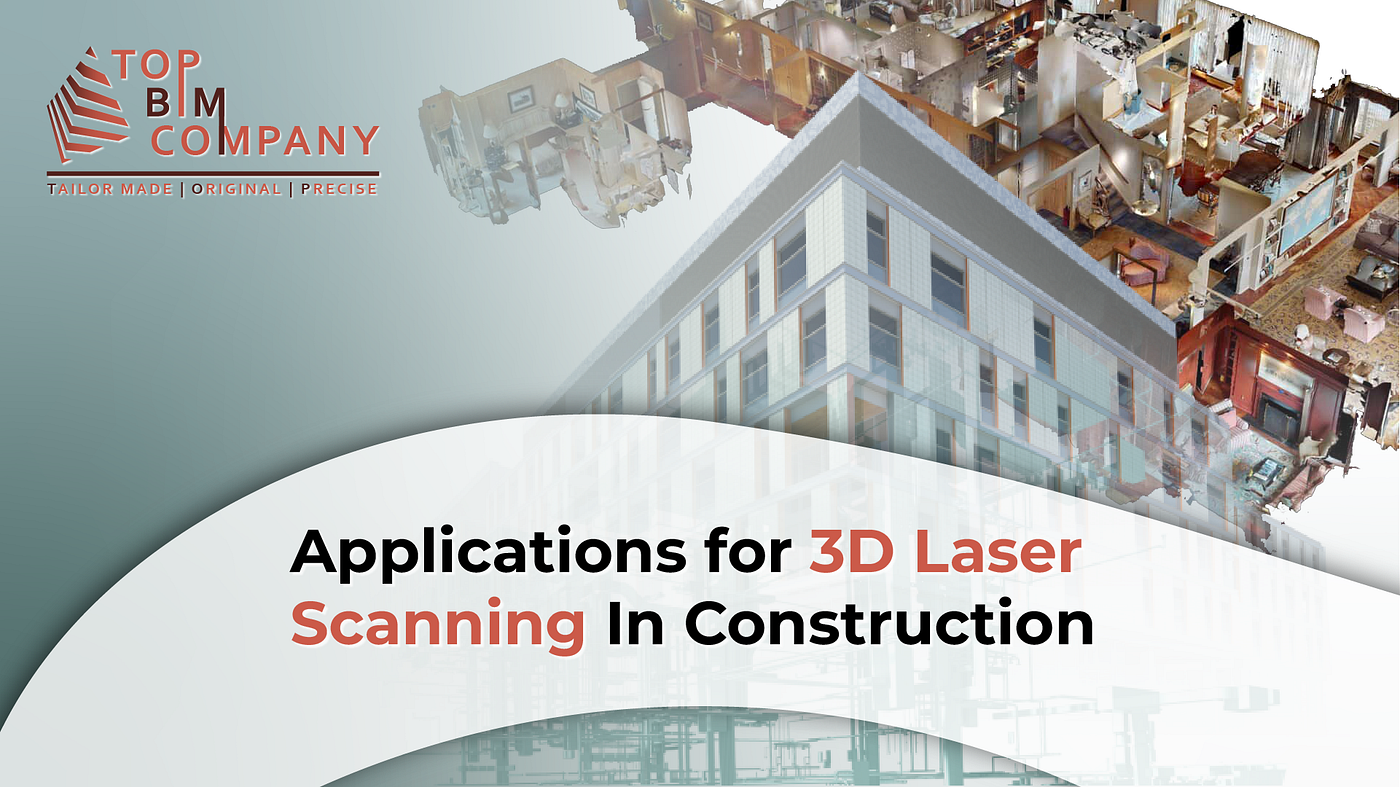
3D Laser Scanning
The global 3D scanning market, according to Allied Market Research, was estimated to be worth $3.72 billion in 2020 and is expected to grow to $16.66 billion by 2030, with a CAGR of 16.3% from 2021.Due to its accuracy laser scanning is frequently employed in construction applications. Compared to conventional mapping techniques, laser scanning in the construction industry provides the advantages of immediate information, increased accuracy and quality, and lower costs. 3D laser scanning also facilitates better decision-making by streamlining project site collaboration. Further, areas in the mechanical, electrical, and plumbing systems that are not evident using conventional measurement techniques can be swiftly captured by laser scanning.
A Brief about Laser Scanning:
The use of a laser in high-definition surveying or laser scanning in construction allows for the accurate recording of every aspect on a construction site. The process uses laser light to measure the size and spatial relationships of items. To correctly recreate the scanned items, the scanner creates a point cloud image. Depending on the scanner’s manufacturer, objects can be scanned from a hundred meters away. To create a 3D model, the data is then exported to a BIM model.
Benefits at a glance:
- Improved accuracy & quality
- Instant information
- Better planning & designing
- Compliance with health & safety measures
- Reduced cost & schedule
- Eliminating the need for manual labor
- Enhanced collaboration & coordination on construction site
- Flexible workflows
- Evaluation of project stages
- Workers’ safety
Applications for 3D Laser Scanning Services In Construction:
Construction sites benefit from laser scanning. However, how is it used?
Let’s take a look at the laser scanning technology being applied to construction projects.
- Design Development — Site design can be aided by laser scanning. To obtain detailed information for beginning construction and supervising the process, some architects employ the scan to BIM method. The point cloud data is transformed into a 3D model after scanning. Here, you can choose between intricately detailed MEP models and more complex ones.
- Operation, Renovation, and Retrofit — Since laser scanning catches every detail, you receive an as-built record. The information can be applied to construction, home addition, historical restoration and demolition projects.
- Clash Detection — 3D laser scanning is used for clash detection to lessen conflicts within a project. This can involve using equipment that is too large or placing pipes in the wrong places. You can spot potential problems with the help of these scans.
- Construction Coordination — While it comes to avoiding conflicts amongst different building systems like HVAC, electrical, and plumbing, laser scanning is often used in construction coordination. The parties then exchange data to aid in remote coordination. Any moment along the building timeline, scanning can be done to record milestones and reduce the need for change orders. This helps to identify where mistakes are made and quickly find a fix.

Application for 3D Laser Scanning Services in Construction
- Comparing Design Intent and As-Built Conditions — 3D laser scanning is also utilized for pre-construction as-built, virtual design construction, quality control during construction, and building information modeling to compare design intent to as-built conditions.
- Digital Twining — Using 3D laser scanning technology, digital twins are produced that contain correct as-is information. Engineers use the digital twins to help with construction projects.
- Reverse Engineering — Reverse engineering is a technique which allows users to replicate objects or parts. The most effective method for creating a BIM model from a physical object with any kind of complex or freeform shape is reverse engineering utilizing 3D scan data.
- Prefabrication — Since laser scanning provides the high precision and accuracy needed for manufacturing, it is a preferred method for measuring and ordering prefabricated systems. The construction process is made more effective and accurate by using 3D laser scanning.
- As Built Documentation — Buildings should have thorough and accurate as-built documentation to avoid wasting time and money on unnecessary work. The 3D scanning approach collects building information more precisely, resulting in fewer field corrections and modification requests.
- Water Treatment Plant — A 3D laser survey will accurately describe its surroundings. Accurate 3D models can be partially or entirely produced using point cloud data.
The precise and adaptable technique of point cloud to BIM or scan to BIM modeling is being adopted by more than 45% of the AEC sector. With a lot of data or focus points, point cloud models may precisely create 3D representations of relatively complicated objects and landscapes. It makes sense to invest in the technology since the return on investment is clear and you can see how useful it can be for your initiatives.
메타데이터
- post_id
- acc8d4e4c52b
- slug
- applications-for-3d-laser-scanning-in-construction-acc8d4e4c52b
- url
- https://medium.com/@alishnabrown/applications-for-3d-laser-scanning-in-construction-acc8d4e4c52b
- canonical_url
- https://medium.com/@alishnabrown/applications-for-3d-laser-scanning-in-construction-acc8d4e4c52b
- author_url
- https://medium.com/@alishnabrown
- status
- ok
- fetched_at
- 2026-09-05 17:48:23



