How I Made My First $1,000 Using AI Tools (Without Being a Programmer)
How I Made My First $1,000 Using AI Tools (Without Being a Programmer)
How I Made My First $1,000 Using AI Tools (Without Being a Programmer)
How I Made My First $1,000 Using AI Tools (Without Being a Programmer)
When I first started experimenting with AI tools, I wasn’t chasing a six-figure business or trying to build the next tech startup. I simply wanted to earn enough money online to prove that the technology could become a real income source.
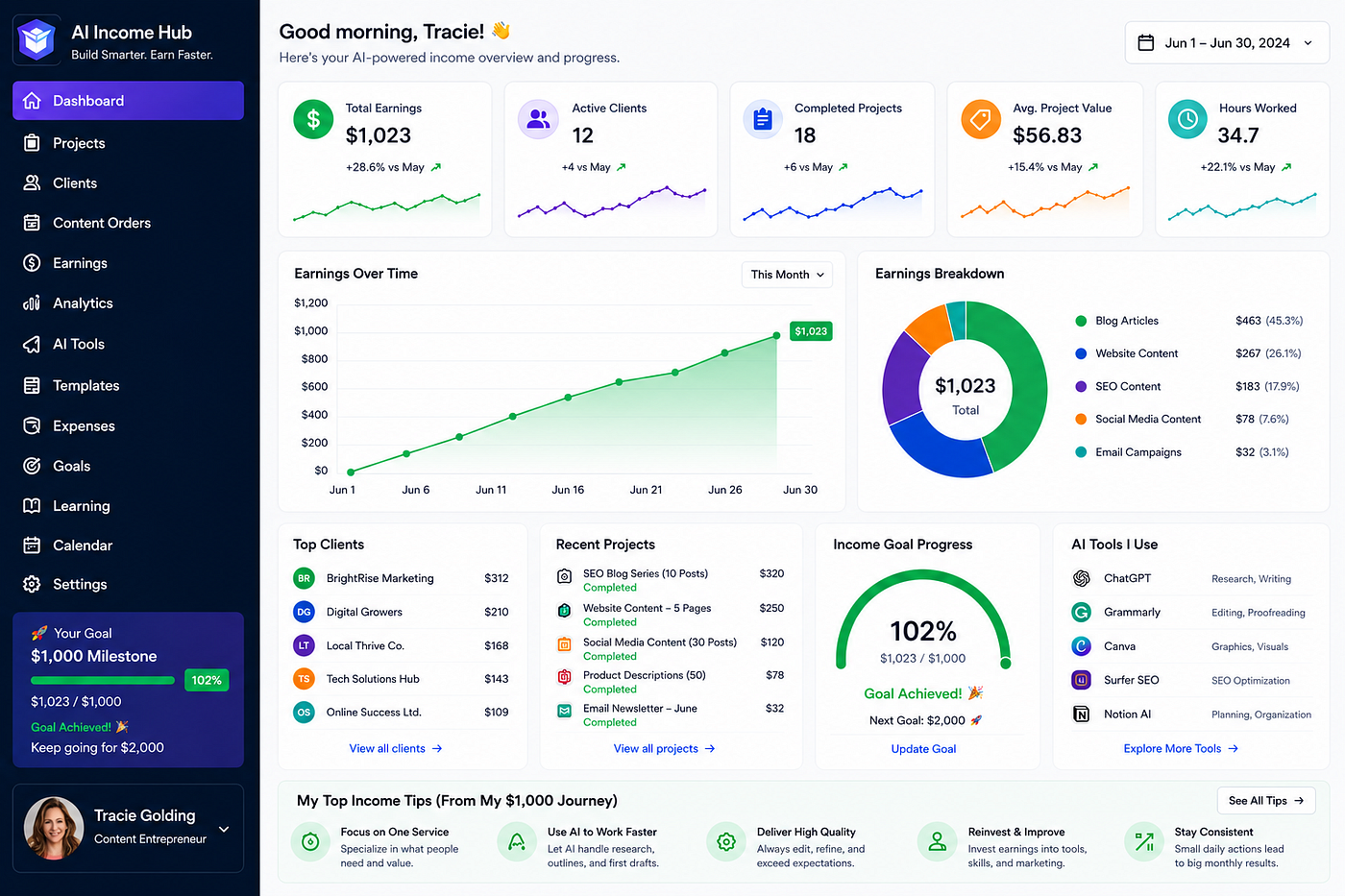
Like many beginners, I watched countless YouTube videos claiming it was easy to make thousands overnight. The reality was very different. Most tutorials skipped the difficult parts, and many strategies were already overcrowded.
Instead of jumping from one trend to another, I decided to treat AI like a business assistant rather than a magic money machine.
That simple shift in mindset eventually helped me earn my first $1,000 online.
Here’s exactly what worked.
The Biggest Mistake Most Beginners Make
Most people think AI makes money by itself.
It doesn’t.
AI speeds up work. It improves productivity. It helps generate ideas. But someone still has to solve real problems for real people.
Once I stopped asking, “How can AI make me rich?” and started asking, “How can AI help me create more value?” everything changed.
That question became the foundation of my first successful online business.
Starting With Almost Nothing
My initial budget was less than $100.
I already had a laptop and an internet connection. Everything else came from free or inexpensive software.
Rather than purchasing every new AI tool I saw advertised, I picked a small collection that handled different parts of my workflow.
I used AI to:
- Brainstorm business ideas
- Research topics
- Improve writing
- Create marketing graphics
- Organize projects
- Speed up repetitive tasks
None of these tools earned money directly.
They simply allowed me to complete work much faster than before.
Finding a Service People Would Actually Pay For
The biggest breakthrough came when I realized businesses don’t care whether AI created part of the work.
They care about results.
Small businesses constantly need:
- Blog articles
- Website content
- Product descriptions
- Social media posts
- Email newsletters
- Marketing ideas
Instead of selling “AI content,” I offered professional content creation with faster delivery and competitive pricing.
Clients wanted finished work, not an explanation of how I produced it.
Building My First Portfolio
At the beginning, nobody knew who I was.
I had no testimonials.
No reviews.
No client list.
So I created sample projects.
I wrote articles about industries I enjoyed.
I redesigned fictional business websites.
I created mock email campaigns.
I built a portfolio that looked like the work of someone already serving clients.
Those examples became my proof of skill.
People often underestimate how powerful sample work can be.
Landing the First Client
Finding the first customer took longer than earning the next ten.
I reached out to local businesses.
I joined freelance platforms.
I participated in online communities where business owners asked questions.
Instead of sending generic sales messages, I looked for specific problems I could solve.
For example:
“I noticed your blog hasn’t been updated for several months. I specialize in creating SEO-friendly articles that help businesses publish consistently.”
That approach felt personal instead of promotional.
Eventually, someone gave me a chance.
The payment wasn’t huge, but it proved the business model worked.
Reinvesting Every Dollar
One lesson changed everything.
I didn’t spend my early earnings.
Instead, I reinvested them.
Each payment went toward better software, improved workflows, online courses, and small marketing experiments.
Better tools meant higher-quality work.
Higher-quality work attracted better clients.
Better clients paid more.
Growth became much easier once I stopped treating early income like profit.
Why AI Made Me Faster
Before using AI, writing a detailed article could take most of a day.
Research alone consumed hours.
Brainstorming headlines took even longer.
With AI assisting my workflow, I could organize ideas quickly, generate outlines, refine drafts, and spend more time editing instead of staring at a blank page.
The final quality still depended on my judgment.
AI accelerated the process, but human editing made the difference.
That’s an important distinction many people miss.
The Importance of Editing
One of the fastest ways to lose credibility is publishing raw AI-generated content.
Readers notice.
Clients notice.
Search engines increasingly notice.
Every project I completed went through multiple editing passes.
I checked:
- Accuracy
- Grammar
- Flow
- Originality
- Readability
- Tone
Sometimes I rewrote entire sections because they didn’t sound natural.
Editing often took longer than generating the first draft.
That investment paid off.
Learning Basic SEO
Another turning point came when I learned search engine optimization.
Creating good content wasn’t enough.
People needed to find it.
I began researching keywords, understanding search intent, improving headlines, writing compelling introductions, and structuring articles for readability.
Those skills increased the value of every project I delivered.
Clients weren’t just buying words anymore.
They were investing in content with the potential to attract visitors.
Small Improvements Added Up
My first month produced very little income.
The second month was slightly better.
The third month felt encouraging.
Then momentum started building.
Each completed project improved my portfolio.
Each satisfied client increased referrals.
Each new lesson made future work faster.
Success didn’t arrive in one dramatic moment.
It arrived through hundreds of small improvements.
Challenges Along the Way
The journey wasn’t smooth.
Some clients disappeared without responding.
Some projects required multiple revisions.
Some marketing ideas failed completely.
There were weeks when I questioned whether the business would ever grow.
Looking back, those setbacks were normal.
Every freelance business experiences slow periods.
Consistency mattered far more than perfection.
What Actually Helped Me Reach $1,000
Several habits made the biggest difference.
Focus on One Service
Instead of offering everything, I became known for content creation.
Specialization made marketing much easier.
Deliver More Than Expected
Clients remembered businesses that exceeded expectations.
Simple extras like improved formatting or additional headline suggestions often led to repeat work.
Keep Learning
AI changes rapidly.
New tools appear constantly.
Rather than chasing every trend, I focused on improving skills that remain valuable regardless of technology.
Clear communication.
Good writing.
Problem solving.
Marketing knowledge.
Those skills continue to pay dividends.
Lessons I Wish I Had Learned Earlier
If I could start over, I’d ignore most overnight success stories.
Building sustainable income takes time.
I’d also spend less money testing random software.
A handful of reliable tools can accomplish far more than dozens of subscriptions.
Most importantly, I’d begin selling sooner.
Many beginners wait until everything feels perfect.
Perfection rarely arrives.
Experience comes from working with real clients.
The Future Looks Even More Interesting
Businesses continue searching for faster ways to create content, analyze information, improve customer communication, and automate repetitive work.
That creates opportunities for freelancers who understand both technology and business needs.
The winners won’t necessarily be the people with the newest software.
They’ll be the people who consistently solve valuable problems.
That’s a timeless business principle.
Final Thoughts
Making my first $1,000 using AI tools wasn’t about discovering a secret trick.
It was about combining technology with practical skills, consistent effort, and a willingness to learn from mistakes.
AI helped me work faster.
It helped me organize ideas.
It helped me become more productive.
But the income came from creating value that clients were happy to pay for.
If you’re hoping to build an online income, don’t spend all your time searching for shortcuts.
Choose one valuable skill.
Use AI to improve your workflow.
Create excellent work.
Keep showing up.
Your first $1,000 may take longer than you’d like, but once you understand how to solve real problems for real people, that milestone becomes much more achievable than it first appears.
Frequently Asked Questions
Can beginners really earn money using AI tools?
Yes. The key is using AI to improve a valuable service rather than expecting it to generate income on its own.
Do I need programming skills?
No. Many successful freelancers use AI for writing, research, marketing, design, customer support, and business organization without writing code.
How long does it take to earn the first $1,000?
It varies widely depending on your skills, niche, pricing, and consistency. Some people reach the milestone in weeks, while others take several months.
What’s the best advice for getting started?
Pick one service, build a small portfolio, improve your skills, and focus on delivering measurable value to clients instead of chasing every new trend.
메타데이터
- post_id
- acd1ccd8b8b0
- slug
- how-i-made-my-first-1-000-using-ai-tools-without-being-a-programmer-acd1ccd8b8b0
- url
- https://medium.com/storyflow-network/how-i-made-my-first-1-000-using-ai-tools-without-being-a-programmer-acd1ccd8b8b0
- canonical_url
- https://medium.com/storyflow-network/how-i-made-my-first-1-000-using-ai-tools-without-being-a-programmer-acd1ccd8b8b0
- author_url
- https://medium.com/@Traciegolding
- status
- ok
- fetched_at
- 2026-07-08 17:17:42