Sick Souls, Healthy Minds — How William James Can Save Your Life.
By Steve K.
Sick Souls, Healthy Minds — How William James Can Save Your Life.
By Steve K.
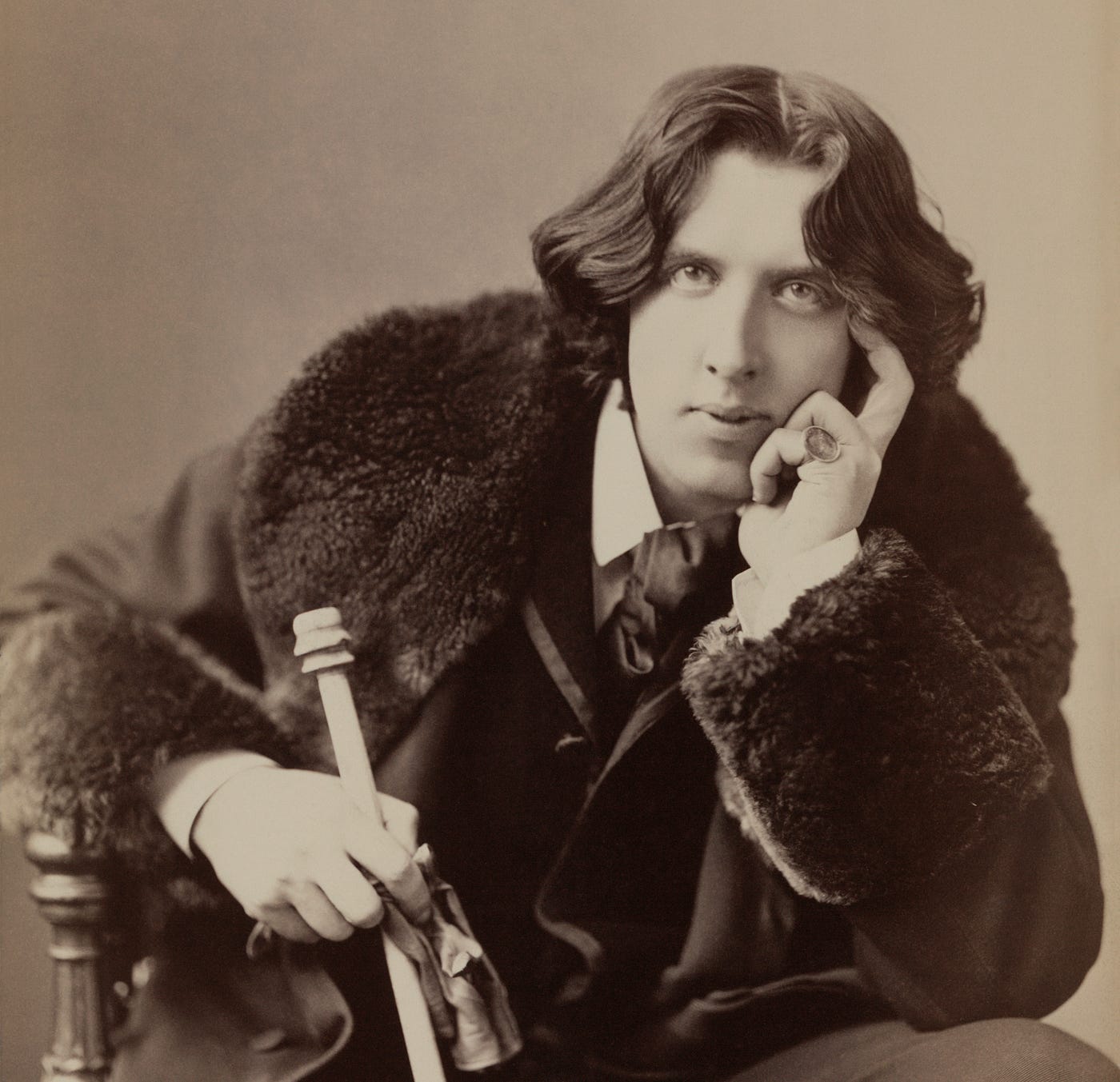
I recently read a fascinating book about the renowned American psychologist and philosopher William James, by the author and philosophy professor John Kaag. (1) The book, the title of which I’ve used for this article, explains James’s philosophy of pragmatism and his life changing choice to believe in free will. A ‘willingness to believe’ despite living in an age dominated by belief in mechanistic determinism. According to Kaag, James made this decision during the spring of 1870 after reading an essay by the French thinker Charles Renouvier, titled “On Liberty in Itself.”
Up to this point in his life, James was prone to debilitating bouts of severe depression, an illness which was endemic within his family. His ‘sick soul’ temperament and the growing dominance of scientific determinism brought him to a point of suicidal despair in relation to his future prospects; with respect to the implications for freedom, a principle he was encouraged to fully value, explore, and engage with during his upbringing due to the philosophical beliefs of his father, Henry James Sr.
After reading Renouvier’s paper in relation to the possibility of chance and free will, James made the decision to not just intellectually believe in free will, but to act upon it too. “My first act of free will, shall be to believe in free will.” ‘With these words, James was reborn [“twice born”] and his life gradually — in fits and starts — transformed.’ (2)
In the realms of social, political, and philosophical thought James believed that the ‘truth’ of a belief was to be found in its practical consequences (its ‘fruits’ or its ‘cash value’) and its subjective lived experience. That without a ‘willingness to believe’ and the determination to act upon this belief (often without satisfactory evidence), we are prevented from realising it in our lives.
It came to mind when reading about James’s belief in free will, despite his thorough knowledge of scientific determinism, that his philosophy suggests a type of ‘soft determinism’, that free will and determinism are compatible — a middle ground between so called ‘hard determinism’ (no choice) and unrestrained free will. Human beings somehow possess the capacity to interact with the determining forces in their lives, creating new direction, purpose and change for themselves and others. I later discovered that James coined the term ‘soft determinism’ in his paper ‘The Dilemma of Determinism’ (1884).

AI Generated Image
Beyond the above discussion, Kaag’s book also explores James’s foundational work in the area of neuroplasticity, the mind/body relationship, and his study of human consciousness and efforts to transcend it. James clearly favoured a holistic and non-dualistic worldview. It’s easy to see his ideas are thriving today within the developing field of science combined with spirituality.
When reading John Kaag’s book you soon begin to realise the significant impact William James and his philosophy of pragmatism and pluralism had on the co-founder of Alcoholics Anonymous (AA), Bill Wilson, and the common sayings heard in ‘the rooms’ of AA. “It works if you work it”, “Whatever works for you”, “God as you understand him/her/it”, “This too shall pass” (from James’s ideas relating to the “stream of consciousness”), “The willingness to believe”, “Act as if”, and many other sayings we hear and practice in recovery can arguably be said to have their ideological origins in William James’s work and ideas.
James’s masterwork ‘The Principles of Psychology’ (1890), as well as his books ‘The Will to Believe’ (1896) and ‘The Varieties of Religious Experience’ (1902), clearly contain the philosophy that guides many in 12 Step recovery today. I can now understand more fully why Bill Wilson is often quoted as counting James as one of the co-founders of AA, along with himself and several others whose ideas and/or support were instrumental in the formation of the 12 Steps and Fellowship.
The following points are some examples of foundational ideas found within James’s work, specifically ‘The Varieties of Religious Experience’, that are also present within the literature and fellowship of AA:
‘1. Humans have an aptitude or ability to have [spiritual] experiences, and thus to dramatically transform themselves. 2. “Medical materialism” or reductionism is an inadequate frame of reference for understanding these transformations. 3. The consequences — the fruits — of these experiences, “how they work on the whole,” is the most valid way to evaluate them.
-
Religious experience, what A.A. would call spiritual experience, is the subjective experience of individuals encountering a higher power.
-
The [spiritual] experience is characterized by intense emotion.
-
The [spiritual] experience does not involve the human will; it comes unbidden. The individual feels passive, acted upon.
-
The [spiritual] experience gives the individual “power” to accomplish seemingly impossible things [like overcoming addiction].
-
There is something MORE than the conscious self that can give an individual power, transformational strength, reassurance, and emotional balance.’ (3)
William James and Bill Wilson both suffered with bouts of severe and debilitating depression, and both made conscious “decisions to seek transformation through spiritual conversion experiences, and to some very real extent were successful in this” endeavour. (4) Both men also engaged in significant amounts of psychological therapy (mind healing in James’s case) and were believers in the ‘New Thought Movement and ‘Mind Cure’ techniques. Wilson no doubt absorbing these ideas in part from James’s writings.
‘The chief tenets of New Thought are:
- Infinite Intelligence or God is omnipotent and omnipresent.
- Spirit is the ultimate reality.
- True human self-hood is divine.
- Divinely attuned thought is a positive force for good.
- All disease is mental in origin. [AA literature suggests that the alcoholic is spiritually sick, and in healing spiritually, the alcoholic also heals mentally, emotionally and physically]
- Right thinking has a healing effect.’ (5)
The more I read about William James’s ideas the greater my understanding of Bill Wilson’s assertion that James was a co-founder of the AA Fellowship. His ideas have significantly shaped its core ethos and philosophy. On a personal level, reading about William James’s work has helped me to understand Twelve-Step philosophy and traditions in a much deeper and more profound way.
References:
-
‘Sick Souls, Healthy Minds — How William James Can Save Your Life.’ By John Kaag, Ph.D.
-
Ibid, p.49.
-
‘William James, Bill Wilson, and the development of Alcoholics Anonymous (A.A.).’ Published by the ‘The Dublin Group, Inc’.
-
‘William James and AA.’ By Bob K. AA Agnostica.
-
Wikipedia.
메타데이터
- post_id
- acdbc79db7ee
- slug
- sick-souls-healthy-minds-how-william-james-can-save-your-life-acdbc79db7ee
- url
- https://medium.com/@stevek65/sick-souls-healthy-minds-how-william-james-can-save-your-life-acdbc79db7ee
- canonical_url
- https://medium.com/@stevek65/sick-souls-healthy-minds-how-william-james-can-save-your-life-acdbc79db7ee
- author_url
- https://medium.com/@stevek65
- status
- ok
- fetched_at
- 2026-09-09 01:15:06