Learning Single-Cell Transcriptomics Through Brain Organoids, Biological Ambiguity, and Public…
#cell_biology #molecular_biology #organoid #omicstudies
Learning Single-Cell Transcriptomics Through Brain Organoids, Biological Ambiguity, and Public Datasets
cell_biology #molecular_biology #organoid #omicstudies
I have recently started teaching myself single-cell transcriptomics using publicly available datasets from the Lancaster Lab and related organoid research groups.
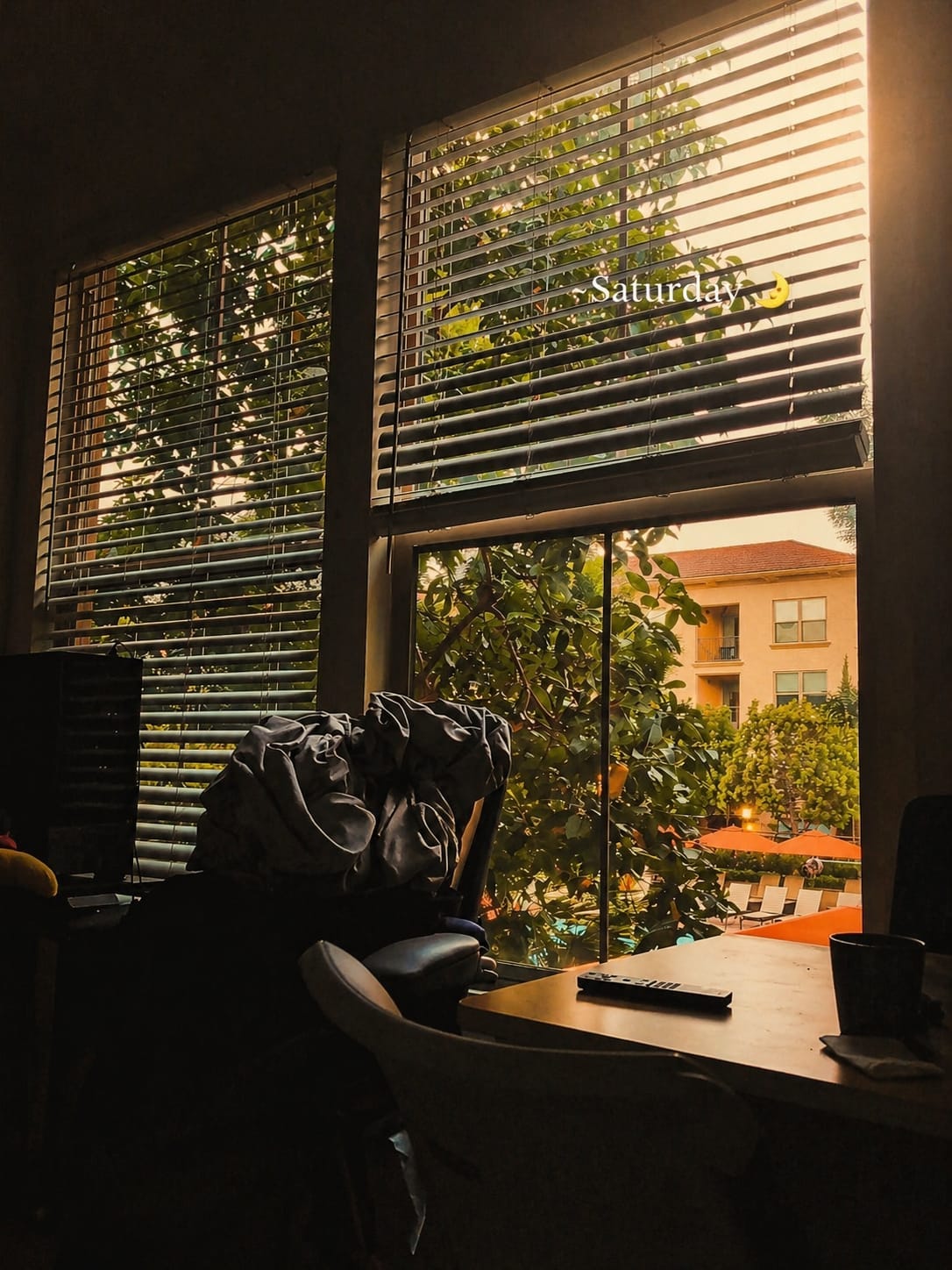
Sunnyvale, California — where I started teaching myself transcriptomics while trying to rebuild a sense of certainty about almost everything else. Credit: Me, Myself & I
At first, this sounded like a fairly straightforward technical upskilling exercise.
Learn Scanpy. Learn clustering. Learn UMAPs. Run notebooks. Generate plots.
But very quickly, I realized this project was becoming about something much larger.
It was becoming about learning how modern biology tries to make sense of incredibly complicated living systems.
And strangely enough, the deeper I go into transcriptomics, the more it reminds me of microscopy.
From Fluorescent Puncta to Transcriptomic State Spaces
Most of my scientific background comes from imaging-based cell biology.
For years, I worked with fluorescence microscopy experiments where the goal was to understand how cells respond to stress, damage, or drugs. A lot of that work involved staring at thousands of microscopy images and trying to determine whether the patterns I was seeing actually meant something biologically important.

Adapted From CELLULAR, A Cell Autophagy Imaging Dataset
The more I worked with biological imaging, the more I realized that measuring biology is rarely as objective as people imagine.
Small analysis choices can quietly reshape interpretation.
A tiny adjustment in image settings can suddenly make stressed cells appear biologically active. Slightly different segmentation parameters can transform what looks like one structure into several separate ones.
Eventually, microscopy stopped feeling like “taking pictures of cells” and started feeling more like trying to simplify something fundamentally messy and alive.
Single-cell transcriptomics feels remarkably similar.
Except now, instead of looking at fluorescent dots inside cells, researchers are trying to understand cells by reading which genes are active inside them.
The technology is different, but the underlying problem feels strangely familiar:
how do we know whether the patterns we see are truly biological, or partly created by the way we analyze the data?
Why I Became Interested in Brain Organoids
One of the reasons I became interested in the Lancaster Lab’s work is because organoids occupy such an interesting scientific space.

This is a cross-section of a brain organoid, showing the initial formation of a cortical plate. Each color marks a different type of brain cell. Credit: Muotri Lab/UCTV
They are simultaneously:
- extraordinarily powerful
- deeply imperfect
- highly variable
- partially self-organizing
- biologically persuasive
- computationally difficult
They are essentially a tiny brain-like structures grown from stem cells in a dish. While they can mimic parts of early brain development surprisingly well, they are messy, variable and difficult to fully understand.
Organoids feel almost symbolic of modern biology itself.
We now have the technology to create astonishingly complex developmental systems in the lab. But the closer these systems begin resembling real biology, the harder they become to interpret neatly.
That tension fascinates me.
Especially because organoids appear to constantly challenge one of science’s favorite instincts:
The desire for neat categorization.
The Question That Keeps Pulling Me In
One question keeps resurfacing as I read papers and browse public datasets:
What actually makes a cell type “real”?
A lot of single-cell plots look beautifully organized. Cells separate into colorful groups that seem very clean and distinct.

UMAP visualization from a brain organoid single-cell analysis dataset. Even without understanding the underlying biology, the human brain instinctively wants to interpret clean separation as meaningful structure. Adapted from Morphodynamics of human early brain organoid development
But biology itself does not behave so discretely.
Some cells may exist in transitional states rather than belonging to perfectly separate categories.
Some apparent differences between clusters may reflect:
- stress adaptation
- metabolic shifts
- developmental timing differences
- culture artifacts
- preprocessing assumptions
Sometimes I wonder whether we unintentionally force biology into neat categories simply because computers work better when boundaries exist.
And this concern feels surprisingly familiar.
A beautifully separated UMAP can feel convincing in the same way a clean microscopy image does — even when small analysis decisions helped create that clarity in the first place.
And I think that is part of what makes the field both exciting and slightly dangerous.
Stress May Be More Important Than We Think
One idea I keep circling back to is the possibility that some organoid transcriptomes may partially encode hidden stress responses that become mistaken for developmental biology.
For example, a stress signature might accidentally be interpreted as a new developmental state or even an entirely new rare cell population.
This does not necessarily invalidate the organoid systems.
In fact, it makes them more biologically interesting.
Organoids are not passive experimental objects. They are living systems attempting to self-organize under artificial culture conditions.

Human midbrain organoids grown under different culture conditions. Even visually similar organoids can contain very different internal states — including the formation of “dead cores” caused by stress, oxygen limitation, or nutrient diffusion challenges. Image adapted from Fluigent expertise review on organoid modeling
Of course they experience stress.
The more interesting question may actually be:
How much of development itself is intertwined with adaptation to stress?
I find myself increasingly interested in signatures involving:
- hypoxia
- ER stress
- metabolic adaptation
- oxidative stress
- unfolded protein response pathways
Partly because these systems feel conceptually adjacent to my earlier imaging work, where toxicity and cellular stress could sometimes masquerade as genuine autophagy induction.
Different assay. Same interpretive tension.
The Strange Familiarity of High-Dimensional Biology
What surprises me most about learning transcriptomics is how emotionally familiar the process feels.
At first, the field appears overwhelmingly computational. There are matrices, embeddings, normalization methods, trajectory analyses, integration pipelines, and entire dictionaries of terminology that initially feel intimidating to navigate.
But underneath all the machinery lies something much older and more human:
Scientists trying to figure out whether the patterns they measure actually mean something real.
That problem seems to exist everywhere in biology.
Whether you are looking at microscope images or analyzing gene expression data, the same issue keeps appearing:
Small analysis decisions can quietly change interpretation.
The technology changes. The ambiguity remains.
What I Actually Want From This Project
I am not approaching this project with the goal of becoming a pure computational biologist overnight.
What I want instead is a deeper understanding of how modern biology interprets complexity.
I want to understand:
- how cells transition between states
- how much biological variation is real versus technical
- how analysis choices shape conclusions
- how messy living systems become simplified into plots and categories
- how imaging and transcriptomics might eventually connect together
Most importantly, I want to learn how to think critically inside high-dimensional biology without becoming seduced by overly clean visualizations.
Because the more advanced our technologies become, the easier it becomes to mistake analytical elegance for biological truth.
And honestly, I think that tension — between complexity and interpretation — might be what makes modern biology so fascinating in the first place.

Somewhere between microscopy images, transcriptomic plots, and California rain, I started realizing that biology — much like life — rarely organizes itself as neatly as we want it to. Credit: Me, myself & I.
메타데이터
- post_id
- acebc3662ff4
- slug
- learning-single-cell-transcriptomics-through-brain-organoids-biological-ambiguity-and-public-acebc3662ff4
- url
- https://medium.com/@manjusri1998/learning-single-cell-transcriptomics-through-brain-organoids-biological-ambiguity-and-public-acebc3662ff4
- canonical_url
- https://medium.com/@manjusri1998/learning-single-cell-transcriptomics-through-brain-organoids-biological-ambiguity-and-public-acebc3662ff4
- author_url
- https://medium.com/@manjusri1998
- status
- ok
- fetched_at
- 2026-06-09 15:37:30