Psyllium Husk Benefits: The One Supplement I Wish I Had Started Taking Years Ago
My Honest Experience, What the Research Says, and the Product Worth Trying
Psyllium Husk Benefits: The One Supplement I Wish I Had Started Taking Years Ago
My Honest Experience, What the Research Says, and the Product Worth Trying
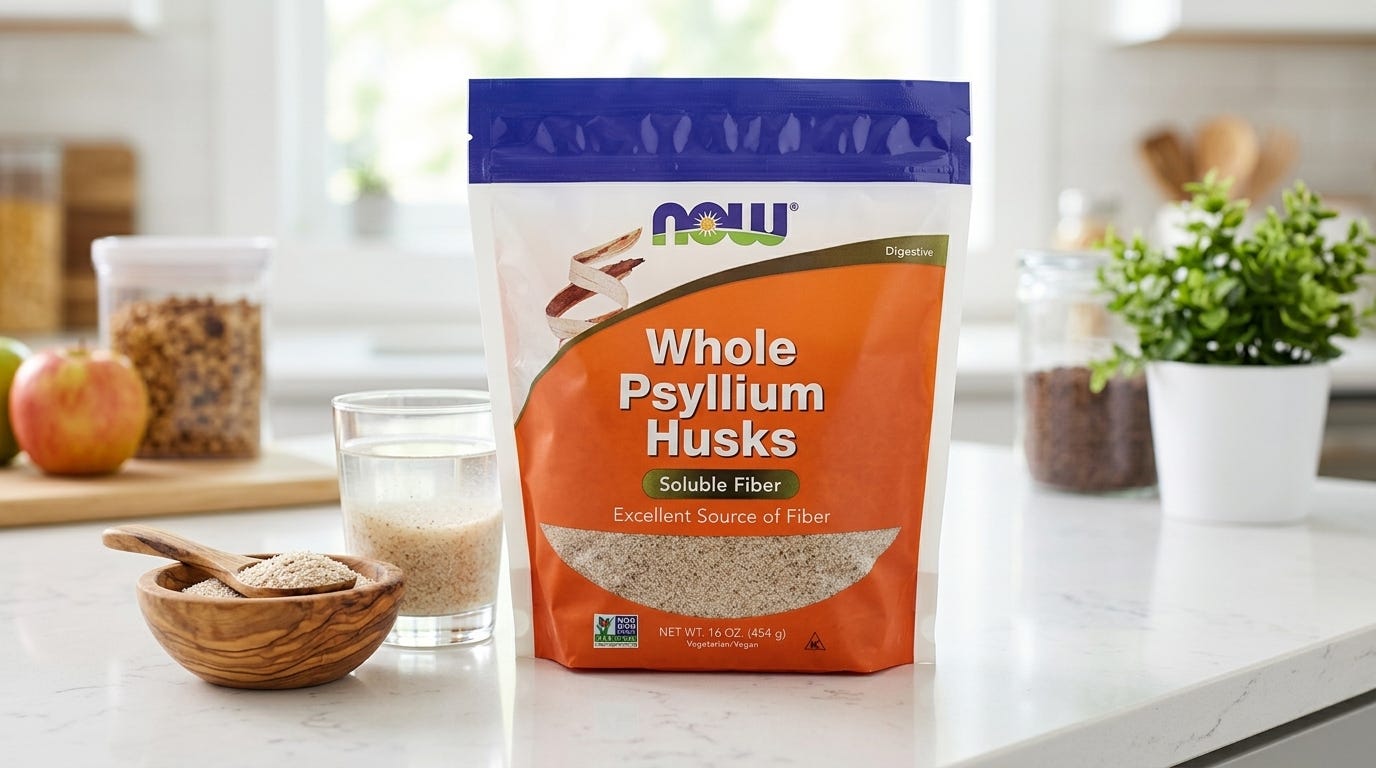
Psyllium husk benefits your gut, your digestion, your cholesterol, and even your blood sugar, but when someone first mentioned it to me I rolled my eyes a little. It sounded like something from a health food store that smells like incense and sells crystals next to the checkout. I was not exactly rushing to try it.
But after weeks of feeling bloated, sluggish, and just generally off in my digestion, I decided I had nothing to lose. I ordered a tub, committed to 30 days, and started paying attention.
What happened surprised me. And now I’m one of those people who tells others about psyllium husk, which means I owe it a proper explanation.
What Is Psyllium Husk and Where Does It Come From?

**Psyllium husk** comes from the seeds of a plant called Plantago ovata, a herb that grows mainly in India and is one of the world’s most concentrated natural sources of soluble fiber. The outer husks of the seeds are ground into a fine powder or left as whole husks, and that’s what you’ll find in most supplements.
When psyllium husk comes into contact with water, something interesting happens. It absorbs the liquid and forms a thick, gel-like substance. That gel is what makes it so useful inside your digestive system. It slows things down, bulks things up, and helps everything move through more smoothly and consistently.
It’s the active ingredient in well-known fiber supplements like Metamucil, but it’s also available on its own in a much cleaner, more versatile form. Which brings me to what I actually use.
NOW Foods Psyllium Husk Review: Why I Keep Coming Back

After trying a couple of different brands, I landed on **NOW Foods Psyllium Husk Powder** and it’s the one I’ve stuck with. Here’s why it stood out to me personally.
NOW Foods has been around since 1968 and has a reputation for producing supplements that are clean, affordable, and third-party tested. Their psyllium husk powder contains one ingredient: psyllium husk. No artificial sweeteners, no fillers, no flavoring, no added sugar. Just pure psyllium husk in a form that dissolves easily into water, smoothies, or oatmeal.
It’s also significantly more affordable than branded fiber supplements that are essentially the same thing dressed up in fancy packaging. You’re paying for the psyllium husk, not the marketing.
I take one rounded teaspoon mixed into a large glass of water every morning before breakfast. The texture takes a little getting used to, you need to drink it quickly before it thickens too much, but once you build the habit it becomes as automatic as making coffee.
One important note: always take psyllium husk with plenty of water. It needs liquid to work properly, and taking it without enough water can actually have the opposite effect of what you’re looking for.
Q: Is psyllium husk good for blood sugar? Psyllium husk may help support healthy blood sugar levels by slowing the rate at which carbohydrates are absorbed into the bloodstream after meals.
Psyllium Husk Benefits: What It Does Inside Your Body

Let me break this down simply because there’s a lot of noise out there about fiber supplements and what they can and can’t do.
It supports digestive regularity. This is the most well-known benefit. The gel that psyllium husk forms helps add bulk to stool and keeps things moving through your digestive tract at a healthier pace. For people dealing with either constipation or irregularity, this can make a significant difference within just a few days.
It feeds your gut bacteria. Soluble fiber acts as a prebiotic, meaning it feeds the beneficial bacteria living in your gut. A healthier gut microbiome is linked to better digestion, better immunity, and even better mood over time.
It supports healthy cholesterol levels. This one surprised me. Psyllium husk has been studied fairly extensively for its effect on LDL cholesterol. The gel it forms in your digestive tract can bind to cholesterol and bile acids, helping to reduce how much gets absorbed into your bloodstream.
It helps you feel fuller for longer. Because psyllium husk slows down digestion, it can help reduce appetite and keep you feeling satisfied between meals, which is part of why it’s become popular beyond just digestive health.
It supports healthy blood sugar levels. The gel slows the rate at which carbohydrates are absorbed into the bloodstream, which can help smooth out the glucose response after meals. This doesn’t mean it’s a treatment for any condition, but it’s a meaningful added benefit for anyone paying attention to what they eat.
Q: How long does psyllium husk take to work? Most people notice improved digestive regularity within three to five days of consistent daily use.
How Much Fiber Do You Actually Need Per Day?

This is where most people get surprised. Most of us think we’re eating enough fiber because we have a salad at lunch or grab an apple as a snack. But when you actually look at the numbers, the gap between how much fiber we need and how much we’re actually getting is significant.
The general recommendation is around 25 grams of fiber per day for women and 38 grams for men. Most people are getting somewhere between 10 and 15 grams. That means a lot of us are walking around at less than half the fiber our bodies actually need every single day.
To help make this easier to understand and actually use in real life, I put together a **Downloadable, printable A4 fiber chart** that shows you exactly how much fiber is in the most common everyday foods, from vegetables and fruits to grains, legumes, nuts, and seeds, all laid out in a clean, simple format you can print and stick on your fridge or keep in your kitchen.
Instead of guessing or googling every time you’re planning a meal, you can glance at the chart and immediately see where your fiber is coming from and where the gaps might be. It takes the thinking out of it completely.
And once you see where psyllium husk sits on that chart compared to most everyday foods, it becomes very clear why it’s such an efficient way to close the fiber gap without overhauling your entire diet. One tablespoon of psyllium husk powder delivers more fiber than most whole foods at a fraction of the serving size, and that number alone tends to change how people think about their daily fiber intake.
If you want a simple, practical reference that helps you track fiber without counting every gram from memory, the printable A4 fiber chart is exactly what it was designed for.
My 30-Day Psyllium Husk Experience: Honest Results
I want to be real about this because I think a lot of supplement articles skip the honest part.
The first few days were a little uncomfortable. Adding fiber quickly can cause some bloating and gas while your gut adjusts. This is completely normal and it’s also why most recommendations suggest starting with a smaller amount and gradually increasing rather than going straight to a full serving.
By about day five or six, things started to shift. My digestion became noticeably more consistent. The bloating after meals that I’d been dealing with started to ease up. I felt less heavy in the afternoons.
By the end of the first two weeks, I was genuinely surprised by how much better I felt overall. Not in a dramatic, overnight transformation kind of way. More like a quiet, steady improvement that made me realize how off things had been before.
By day 30 I was sold. I ordered another tub before the first one ran out, which for me is the real test of whether something actually works.
How to Take Psyllium Husk: Dosage and Best Methods
One of the things I appreciate most about psyllium husk is how easy it is to work into a daily routine once you find your preferred method. Here are a few ways I’ve used it personally and some others that work well:

Mixed into water. The most straightforward approach. Add one teaspoon to a large glass of water, stir quickly, and drink immediately before it thickens. It’s not exactly a flavor experience but it gets the job done.
Blended into a smoothie. This is my personal favorite. The psyllium husk blends in seamlessly and you don’t notice the texture at all. It also thickens the smoothie slightly which actually makes it feel more filling.
Stirred into oatmeal. Add it while the oats are still warm and it dissolves right in. No texture change and it adds an extra fiber boost to an already fiber-rich breakfast.
Mixed into yogurt. Works particularly well with thick Greek yogurt. Stir it in and let it sit for a minute or two before eating.
Added to baked goods. Psyllium husk can be used as a binder in baking, especially in gluten-free recipes. It helps hold things together the way gluten would in traditional flour.
Q: How much psyllium husk should I take per day? Start with half a teaspoon daily and gradually increase to one to two teaspoons. Always take it with a full glass of water.
Psyllium Husk Side Effects and What to Know Before Starting
Start slow. Begin with half a teaspoon and work up over a week or two. Your gut needs time to adjust to the increased fiber and jumping in too fast is what causes most of the discomfort people associate with fiber supplements.
Drink plenty of water. This is non-negotiable with psyllium husk. It needs liquid to work properly and safely. If you take it without enough water it can actually cause more problems than it solves.
Take it away from medications. Psyllium husk can affect how your body absorbs certain medications, so take it at least one to two hours apart from any prescriptions. Check with your doctor or pharmacist if you’re unsure.
Be consistent. Like most things related to gut health, psyllium husk works best when it’s part of a daily routine rather than something you reach for occasionally when things feel off.
Talk to your doctor first if you have any existing digestive conditions, are pregnant, or are managing a chronic health condition. This article is based on personal experience and general information, not medical advice.
Q: What are the side effects of psyllium husk? The most common side effects when starting are bloating and gas as your gut adjusts to increased fiber. Starting slow and drinking plenty of water minimizes these effects.
Why I Keep Coming Back to NOW Foods
I’ve tried a few different psyllium husk products over the past year and I keep returning to **NOW Foods Psyllium Husk Powder** for a few simple reasons.
The ingredient list is one item long. The price is honest. The quality is consistent. And knowing that NOW Foods has been in the supplement space for over 50 years with a strong track record of third-party testing gives me confidence that what’s on the label is actually what’s in the tub.
For something I’m taking every single day, that matters more to me than clever branding or a trendy new format. Sometimes the most straightforward option really is the best one.
The Bottom Line
I went into my psyllium husk experiment skeptical and came out a genuine convert. It’s one of the simplest, most affordable, and most effective things I’ve added to my daily routine, and the research behind it is solid enough that I feel confident recommending it to others.
If you’re looking for a clean, straightforward product to start with, **NOW Foods Psyllium Husk Powder** is what I reach for every morning. One ingredient, no nonsense, and a price point that doesn’t make you wince.
And if you want to get a clearer picture of where fiber fits into your overall diet, the **printable A4 fiber chart** gives you a simple, at-a-glance reference you can actually use in your kitchen every day, so you’re never left guessing whether you’re hitting your fiber goals or falling short.
Start slow, drink your water, be consistent, and give it at least two weeks before you judge it. Your gut will likely thank you.
Related Articles
*The Diet Soda And Blood Sugar Mistake Almost Everyone Makes*
*Why Sugar Free Does Not Automatically Mean Blood Sugar Friendly*
메타데이터
- post_id
- acef4da47f55
- slug
- the-one-supplement-i-wish-i-had-started-taking-years-ago-acef4da47f55
- url
- https://medium.com/@elevateyourgainss/the-one-supplement-i-wish-i-had-started-taking-years-ago-acef4da47f55
- canonical_url
- https://medium.com/@elevateyourgainss/the-one-supplement-i-wish-i-had-started-taking-years-ago-acef4da47f55
- author_url
- https://medium.com/@elevateyourgainss
- status
- ok
- fetched_at
- 2026-06-23 17:05:31