The “Agnostic” Label: Diplomacy or Philosophical Precision?
Why We Should Stop Calling Ourselves “Agnostics” and Embrace “Atheist”
Atheism, agnosticism, religion
The “Agnostic” Label: Diplomacy or Philosophical Precision?
Why We Should Stop Calling Ourselves “Agnostics” and Embrace “Atheist”

[embed]
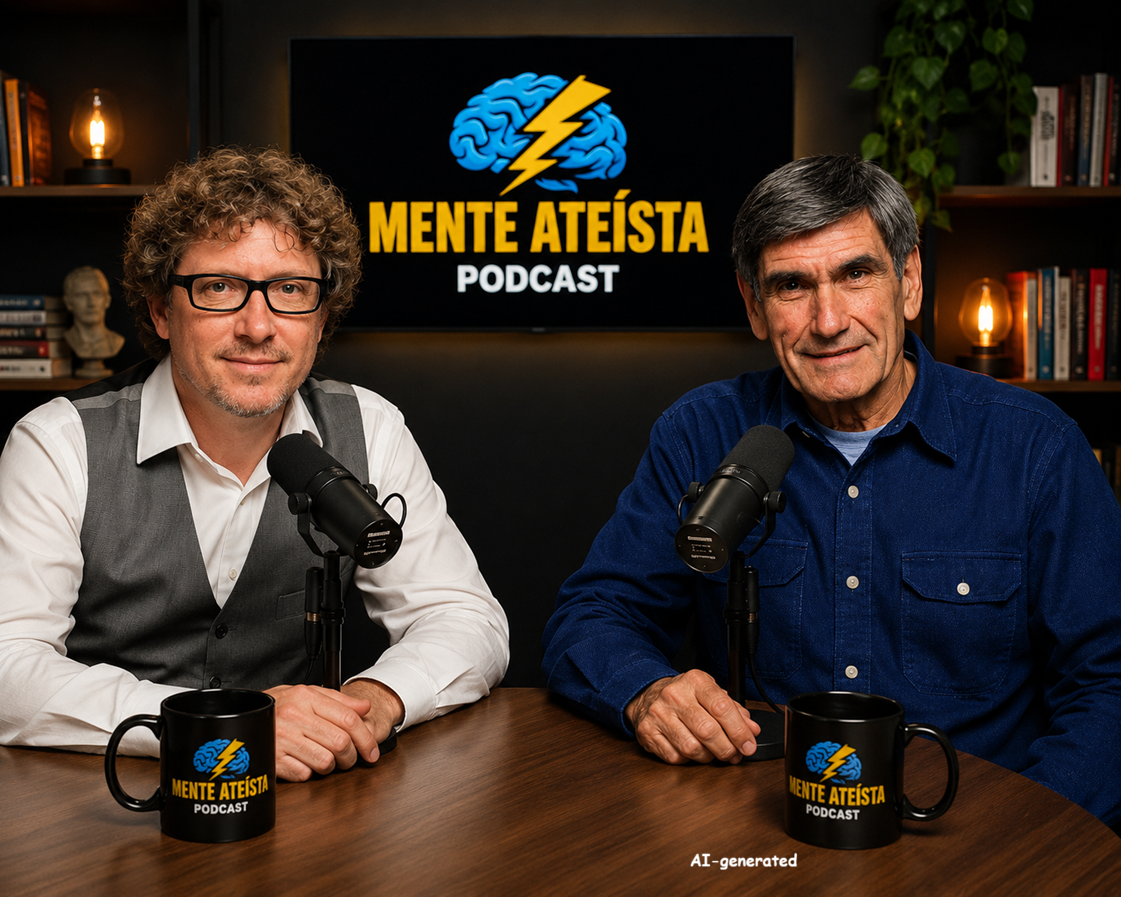
The landscape of non-belief is often divided by a choice of words: atheist or agnostic. For many, this distinction feels less like a deep-seated philosophical rift and more like a tactical decision in communication. This was a central theme in my recent conversation with Daniel Leeroy from Objective Ethics. While Leeroy often identifies as an agnostic — notably in a recent debate against a Muslim opponent — our discussion revealed that his practical stance is indistinguishable from atheism.
[embed]
The Russell Strategy: Adapting to the Audience
This tension between labels brings to mind the famous distinction made by Bertrand Russell. He once noted that when speaking to a general audience, he called himself an atheist because the term was more direct; however, when speaking to a professional philosopher, he preferred the term agnostic.
The problem with this linguistic flexibility is that the general public often hears “agnostic” and interprets it as a balanced 50/50 probability regarding the existence of God. In reality, a philosophical agnostic rarely means they are sitting on a fence with equal weight on both sides. As seen in Leeroy’s perspective, calling oneself agnostic is often a way to acknowledge the limits of human knowledge while maintaining a firm lack of belief in any specific deity.
Leeroy’s Case: Practical Atheism Under an Agnostic Banner
During our live, Leeroy admitted that while he refers to himself as agnostic, the term atheist could certainly be applied to him because he simply does not believe in any gods. He explained that his use of “agnostic” stems from the ancient Greek root a-gnosis, meaning “without knowledge”. For him, it’s an acknowledgement that certain supernatural claims are, by definition, outside the realm of what can be observed or tested.
However, when confronted with the specific gods of organized religion — such as Allah, Yahweh, or Jesus — Leeroy’s stance is much more definitive. He argues that we have enough historical data and scientific understanding to confidently state these specific characters do not exist. This creates a curious middle ground: he is an “agnostic” regarding an abstract, untestable “fundamental consciousness,” but an “atheist” regarding the gods that people actually worship.
The “Spinoza Problem” and the 50/50 Myth
One of the risks of maintaining the “agnostic” label is that it can unintentionally validate the claims of religious fundamentalists. If a brilliant scientist like Michio Kaku identifies as an agnostic, religious individuals may interpret that as a “win” for the possibility of their specific, personal God.
The reality is usually closer to Spinoza’s God, which is essentially just a synonym for the laws of nature. As we discussed, if God is simply another word for the universe, it is a “difference without a distinction” — a poetic way of describing physics that provides no support for a deity who answers prayers or judges human behavior.
Why Clarity Matters
The interview with Leeroy highlighted that the label “agnostic” is often used as a diplomatic tool to avoid being “confrontational” or “arrogant”. Yet, this diplomacy can lead to profound confusion. If an agnostic’s “doubt” is actually a 99.9% certainty that the God of the Bible is a myth, then using a term that suggests a 50% toss-up is a failure of communication.
We need to rethink how we use these terms. For the sake of intellectual honesty, it may be time to move past the diplomatic safety of agnosticism and embrace the clarity of atheism when discussing the specific, anthropomorphic gods of history. As Leeroy’s own positions show, once you apply logic, reason, and science to the claims of the Abrahamic faiths, the “agnostic” uncertainty quickly evaporates into a clear-eyed rejection of those narratives.
[embed]
Q&A
One problem is that there are strong and weak versions of both these terms with a wide variety of stances re. gods. Personally I’m an ignostic and think the concept of “god” is ill defined and debate about it is meaningless and futile.
Again, I have never seen an agnostic making sense. Ill-defined?? really? did you read the Bible? it is clearly defined: an agree man in the sky that answers prayers. If you mean a cosmic god, of course it is ill-defined, like aliens are are ill-defined. You cannot define what does not exist.
I was an agnostic myself, in my case, was ignorant and was not interested in the God question. I used to say: a scientist must be agnostic. I only makes sense if you are considering a generic God. The God of the organized religions are very specific. Yes, I was damn ignorant, I was not interested. I wanted to avoid getting in discussion with Christians, agnostic, they are cool with that. If you say atheist, you are up to a fight, fight that now I am willing to pick.
Agnostic is a form of ignorance in most cases. Most people have no idea how science really works. The fact that something is ill-defined does not make it possible, with a chance. Most of time, it makes it false, a good candidate for not existing. Ill-posed is a symptom, not a diagnosis.
[embed]
메타데이터
- post_id
- acf1891daf1d
- slug
- the-agnostic-label-diplomacy-or-philosophical-precision-acf1891daf1d
- url
- https://medium.com/scientists-free-from-religious/the-agnostic-label-diplomacy-or-philosophical-precision-acf1891daf1d
- canonical_url
- https://medium.com/scientists-free-from-religious/the-agnostic-label-diplomacy-or-philosophical-precision-acf1891daf1d
- author_url
- https://medium.com/@jorgeguerrapires
- status
- ok
- fetched_at
- 2026-07-09 13:13:48