Fermentation of Everyday Food: Partnering Microbes to Make Fluffy Idli
A compost-maker’s initial notes on idli fermentation
Fermentation of Everyday Food: Partnering Microbes to Make Fluffy Idli
Author of this article: Cuifen Pui
If you are not a Medium subscriber, the full article is available here
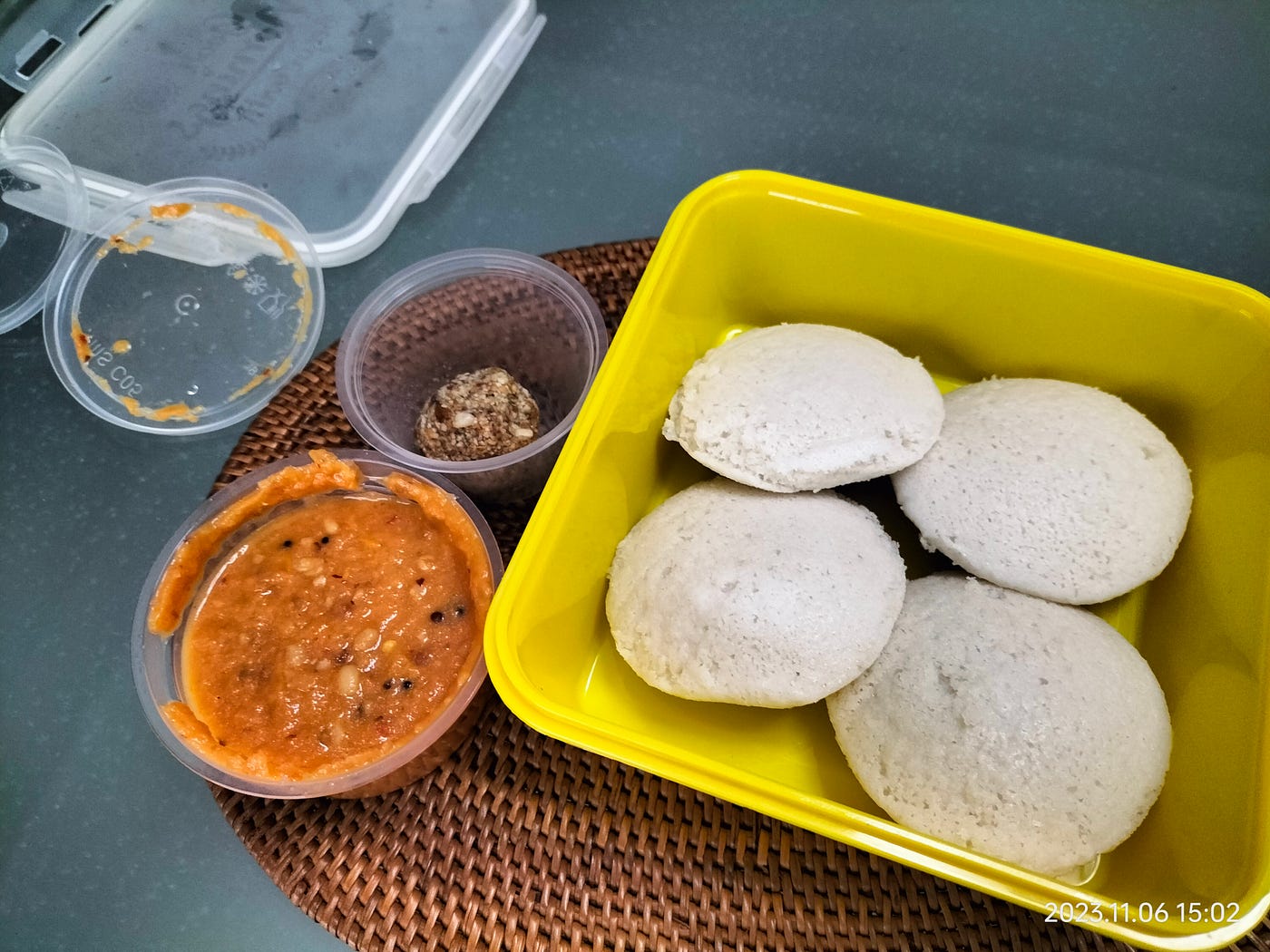
This was possibly my first taste of idli! Made by my friend, Deepa. (Photo credit: Cuifen Pui)
Kitchen Experiments
I was experimenting with making idli in my kitchen. Much of the hard work was completed by my friend, Deepa. She’d prepared the idli batter from raw ingredients, including idli rice and urad dal. She even let me borrow her pot with idli metal pans. All I had to do is to add the fermented batter to the metal pans, steam and enjoy steamed idli as part of my meal.
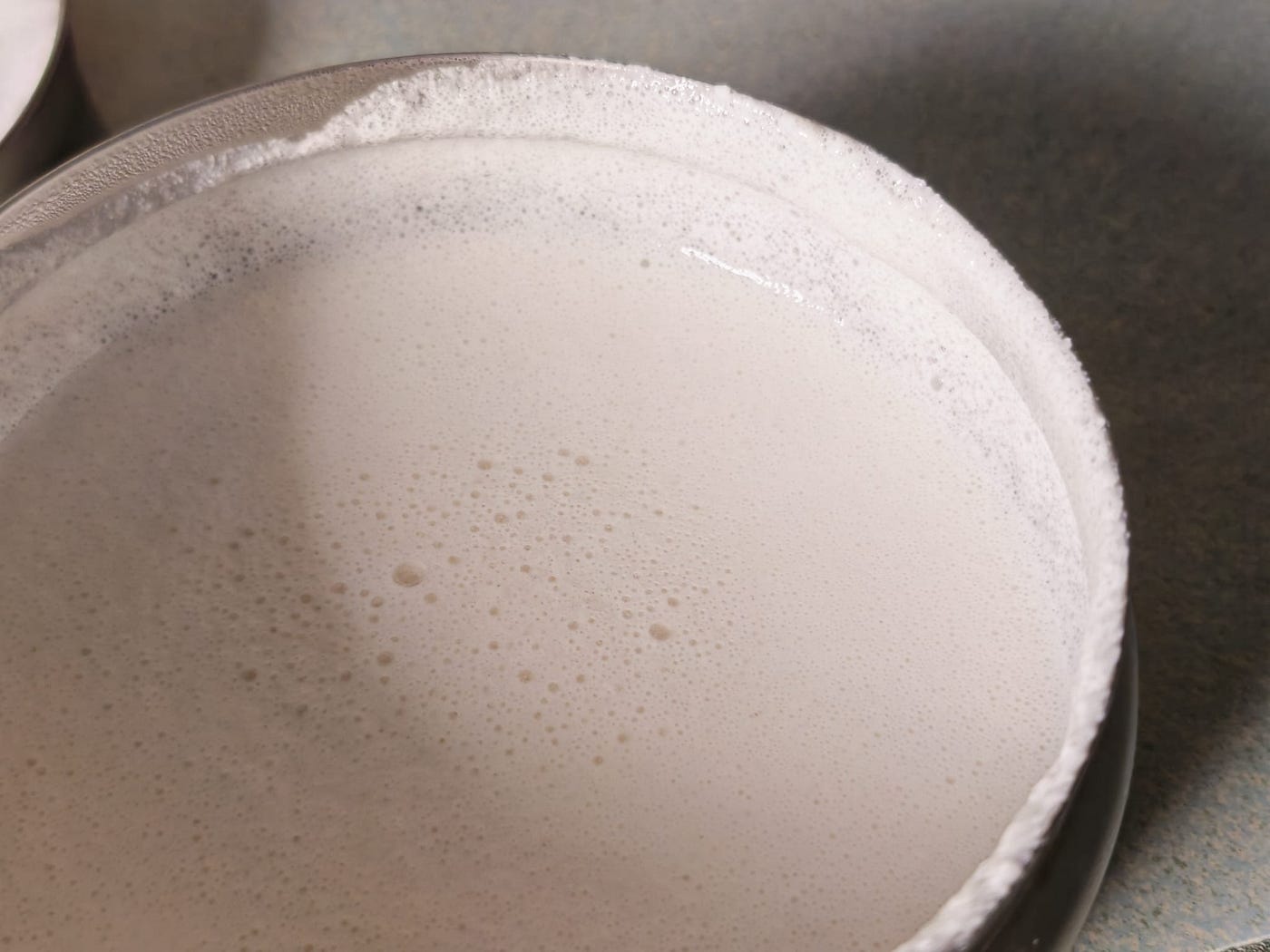
The idli batter before I poured it into the metal pans (Photo credit: Cuifen Pui)
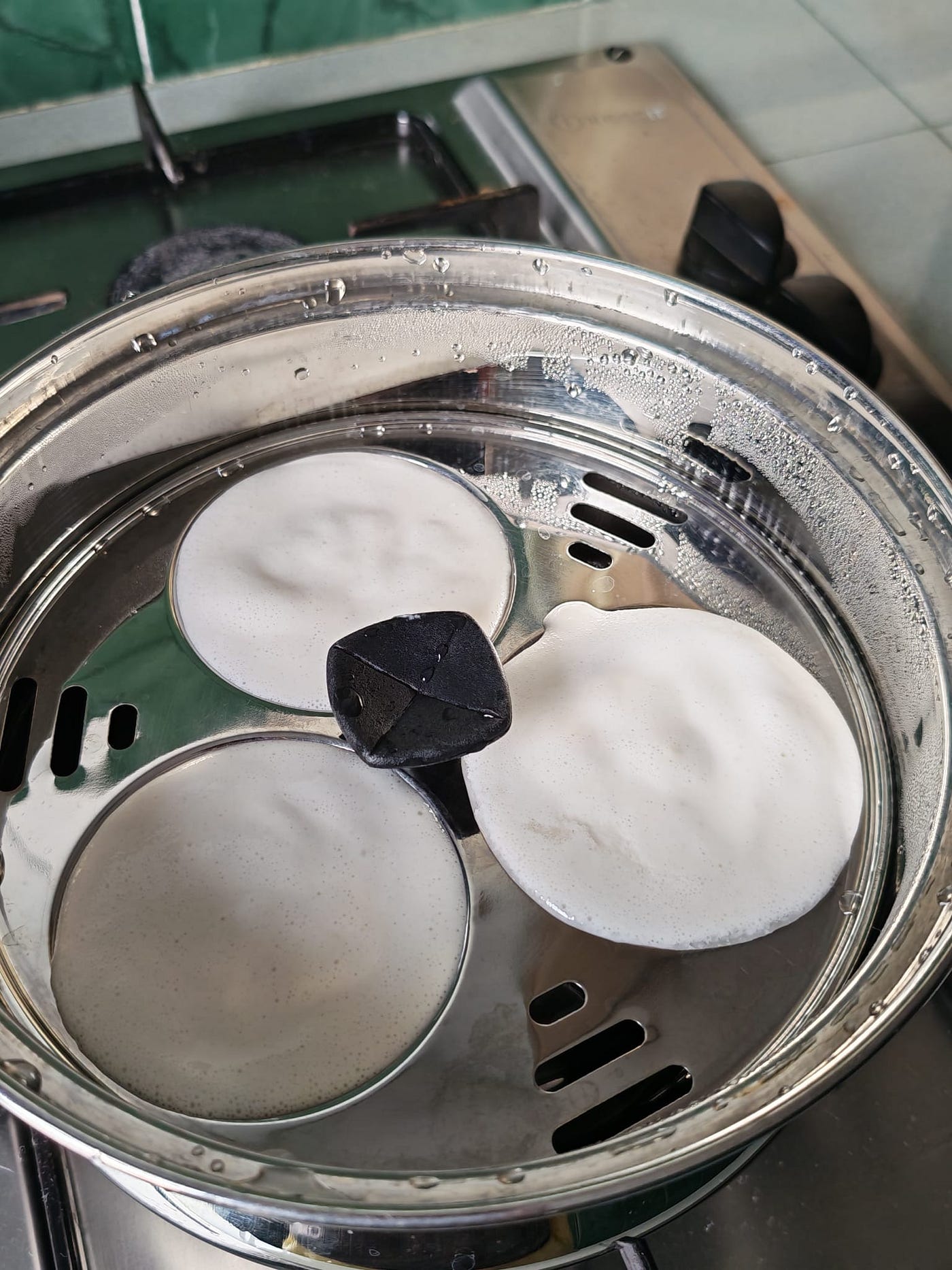
Steaming in progress! Realised too late that I forgot to add a bit of oil to the base of the metal pan. It probably wasn’t wise to open the lid during the steaming stage (Photo credit: Cuifen Pui)
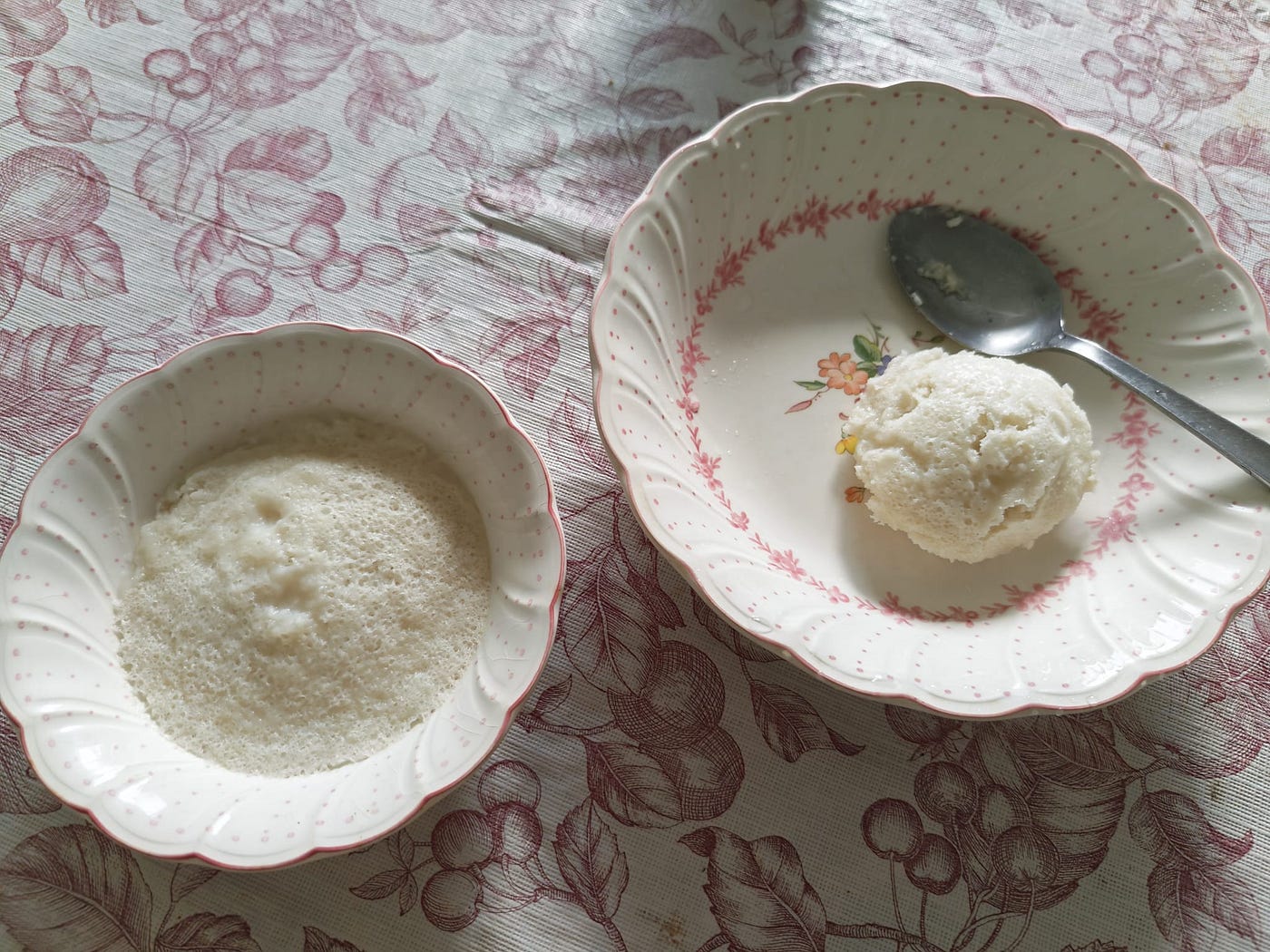
Two idli . Same batter, different steaming conditions. The idli which was steamed in the metal pan had a much drier and chewy texture — I might have left it for too long on the stove. (Photo credit: Cuifen Pui)
I was filled with excitement as I filled the metal pans with batter. As I walked away from the stove, it dawned on me that I’d forgotten to grease the metal pans with oil. The idlis steamed in the metal pans had a texture significantly denser from how I remembered Deepa’s idlis to be.
Another friend, C, had once marvelled at how soft and fluffy Deepa’s idlis were. She mentioned that making soft and fluffy idlis was both a science and an art, which piqued my curiosity.
Idli is a comfort food for Deepa. She makes idli 4 to 5 days a week; to her, idli is everyday food. To me, however, idli is unfamiliar food. Jasmine rice is familiar to me; idli — a steamed rice cake — is not. My curiosity in idli grew when I read that it is a fermented food widely consumed in India.
My interest in ferments had surged after I borrowed a book, ‘Ferment your vegetables: a fun and flavorful guide to making your own pickles, kimchi, kraut, and more’. I haven’t really tried to make fermented food on my own. As a compost maker, I was intrigued by the similarity of science of fermentation to the science of aerobic composting. One process unfolds with low oxygen levels, while the other requires good airflow. Both processes require an understanding of how to partner beneficial microorganisms that are present on the ingredients and in the environment.
Deepa and I were preparing to co-host a cooking session where participants would make and taste idli. I took the opportunity to read about the science of making idli. These are my initial learnings. I may update the article as I learn more.
Making the idli batter
Key ingredients are:
- Idli rice
- Urad Dal
- Fenugreek seeds
- Water
Idli rice
Idli rice is short grain parboiled rice. The parboiling process changes the starch structure, allows the rice to retain nutrients and absorb water more efficiently, creating conditions that allow beneficial microorganisms to thrive, resulting in a more reliable fermentation outcome.
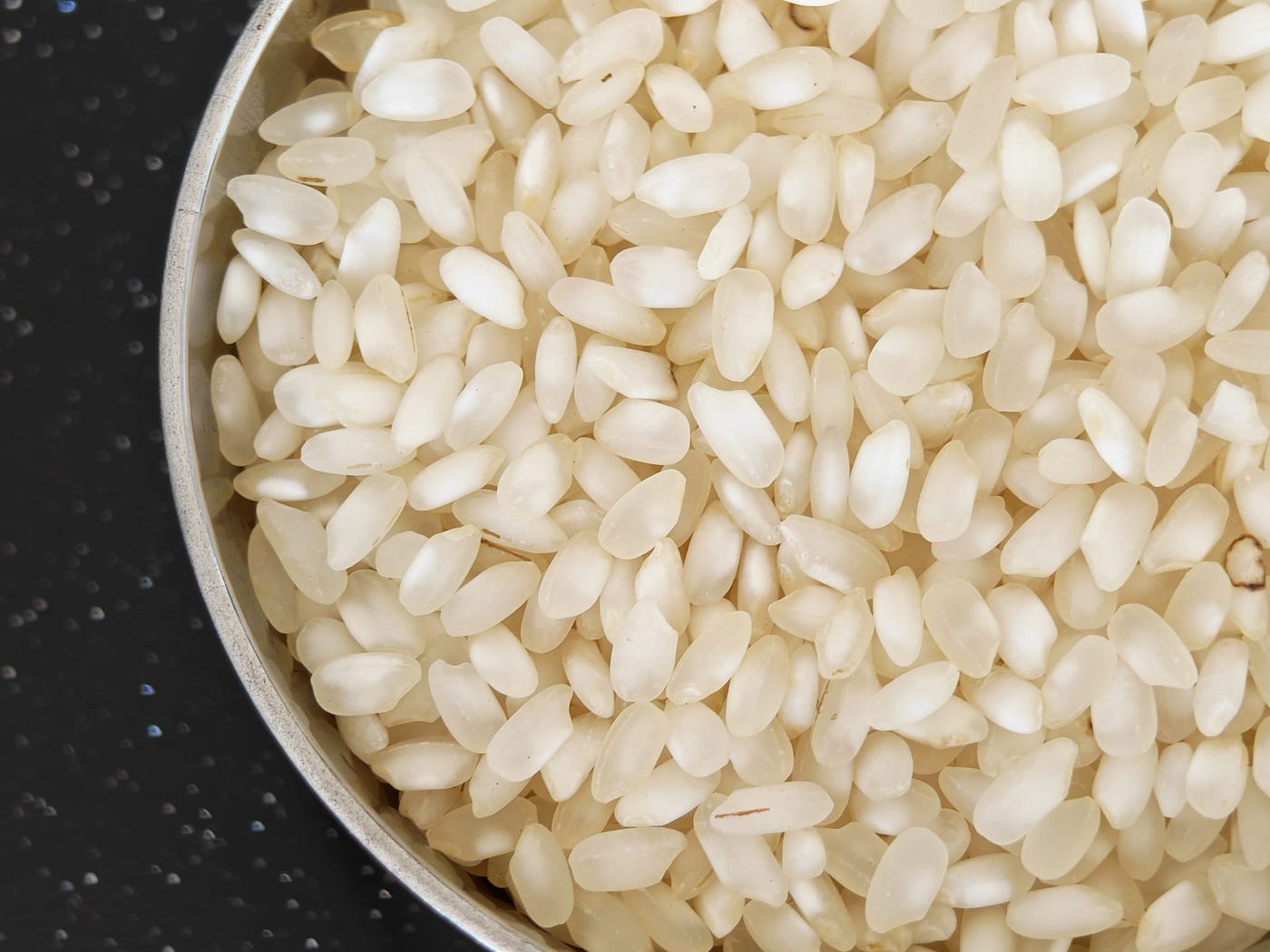
Idli rice (Photo credit: Cuifen Pui)
Urad dal
Also known as black gram, urad dal is the edible black-coated seed from the Vigna mungo leguminous plant. The plant is native to the Indian subcontinent and found in seasonally dry areas. Once harvested, the edible seeds are dried and kept whole or split. Skinned whole urad dal are commonly used to make idli. When cooked or fermented, urad dal add an earthy, savoury flavour to the dish. Freshness of urad dal is a key factor for ensuring successful fermentation. It is also rich in protein, fiber, iron, and magnesium.
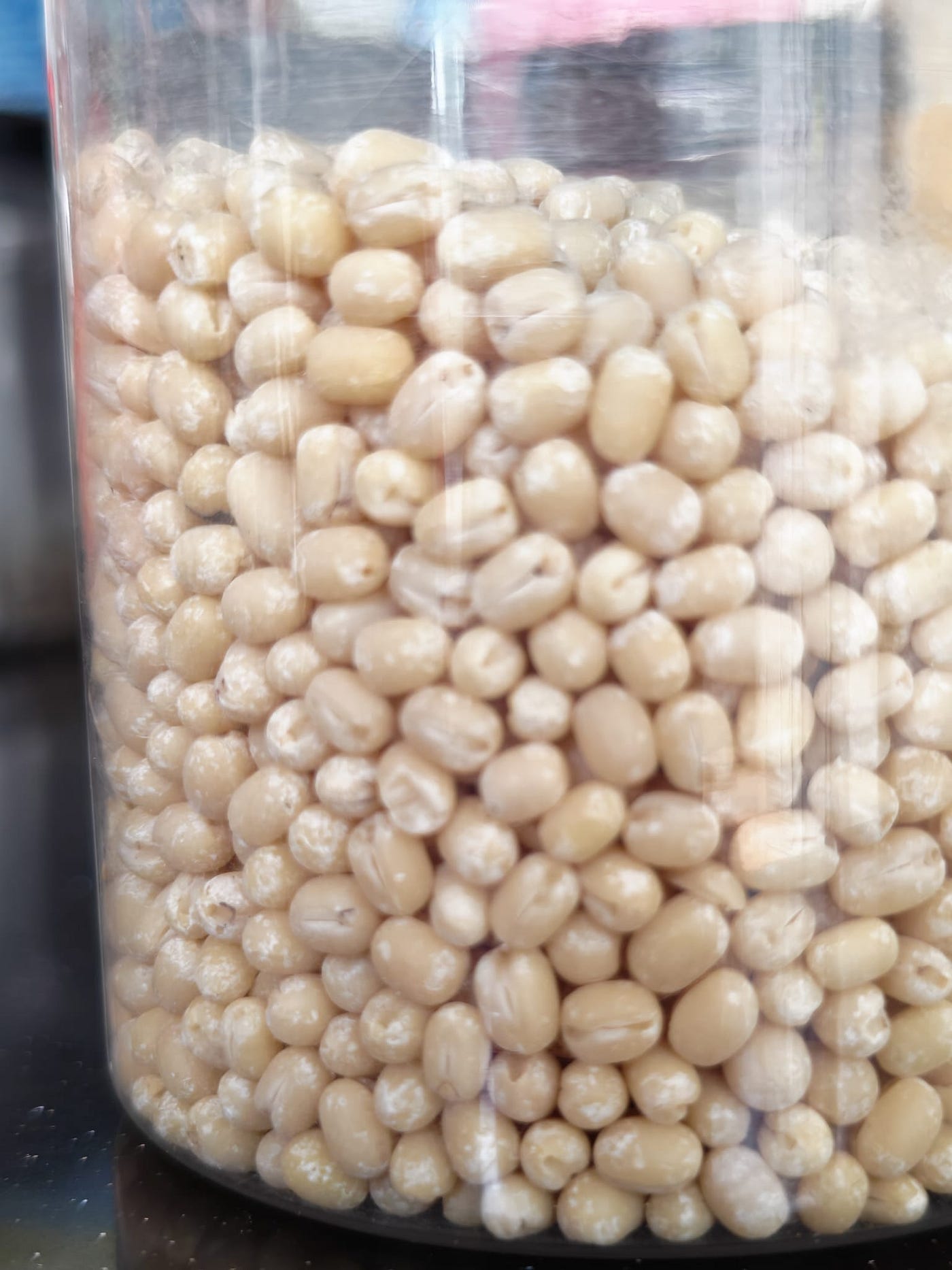
Skinned urad dal (Photo credit: Cuifen Pui)
Fenugreek seeds
Also known as methi, fenugreek seeds are often added in small amounts to idli batter. They serve as an activator for naturally occurring yeasts and contribute to a mild tangy flavour. Fenugreek also helps with moisture retention and improves the texture of the finished idli.
Fenugreek seeds contain polysaccharides similar to those found in urad dal. These compounds help stabilise the batter structure, supporting the making of a softer and fluffier idli. Typically, about 1 teaspoon of fenugreek seeds is added for every 4 cups of urad dal.
Soaking:
Idli rice and urad dal are washed and soaked separately. During soaking, the grains and lentils absorb water, soften, and become easier to grind. Soaking also activates the microorganisms present on the grains.
Deepa would usually soak fenugreek seeds with urad dal, and place the bowl in the fridge for two hours.
Some methods advocate soaking and grinding fenugreek separately to achieve greater fluffiness.
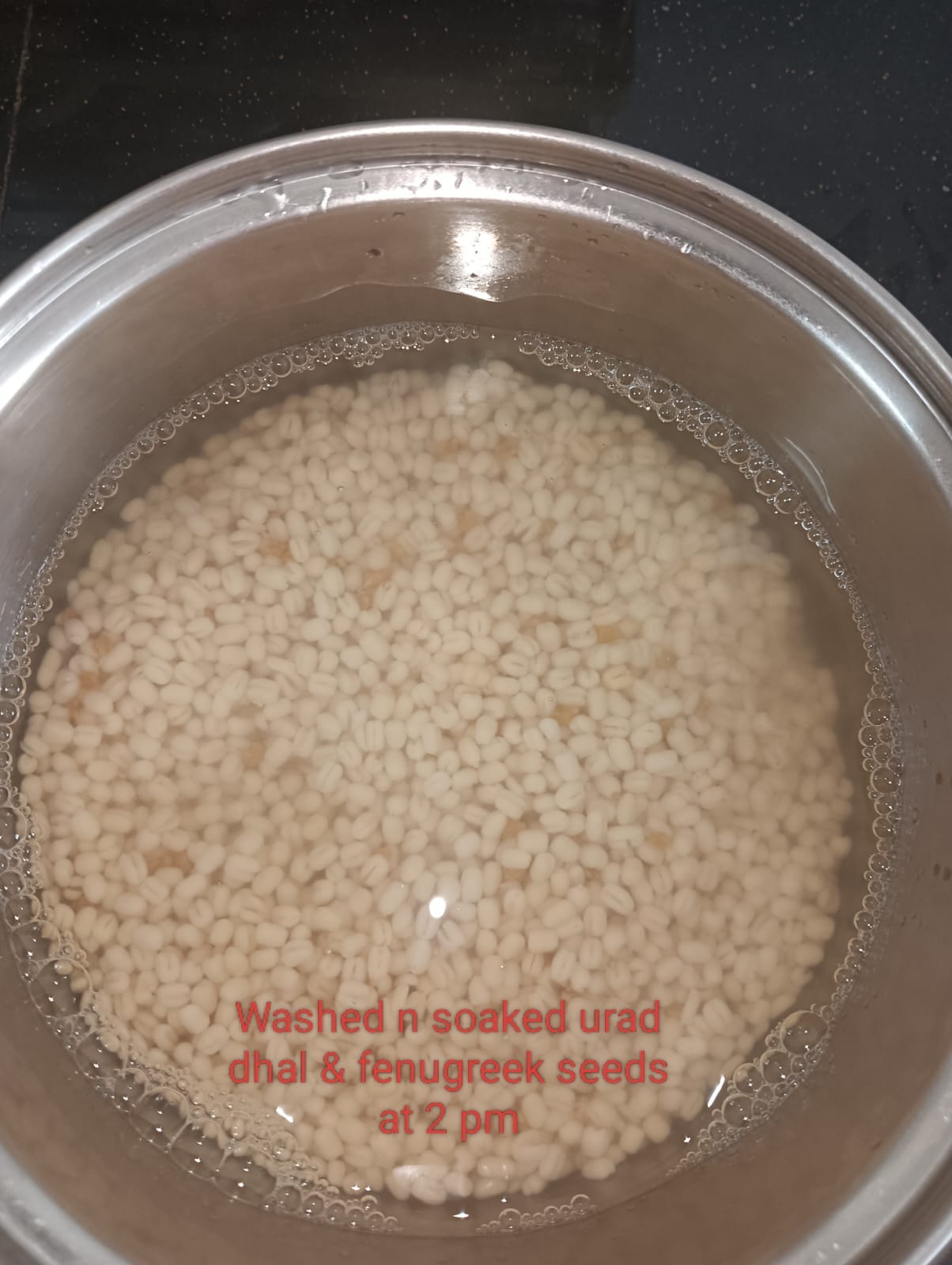
Washed and soaked urad dal and fenugreek seeds (Photo credit: Deepambika T J)
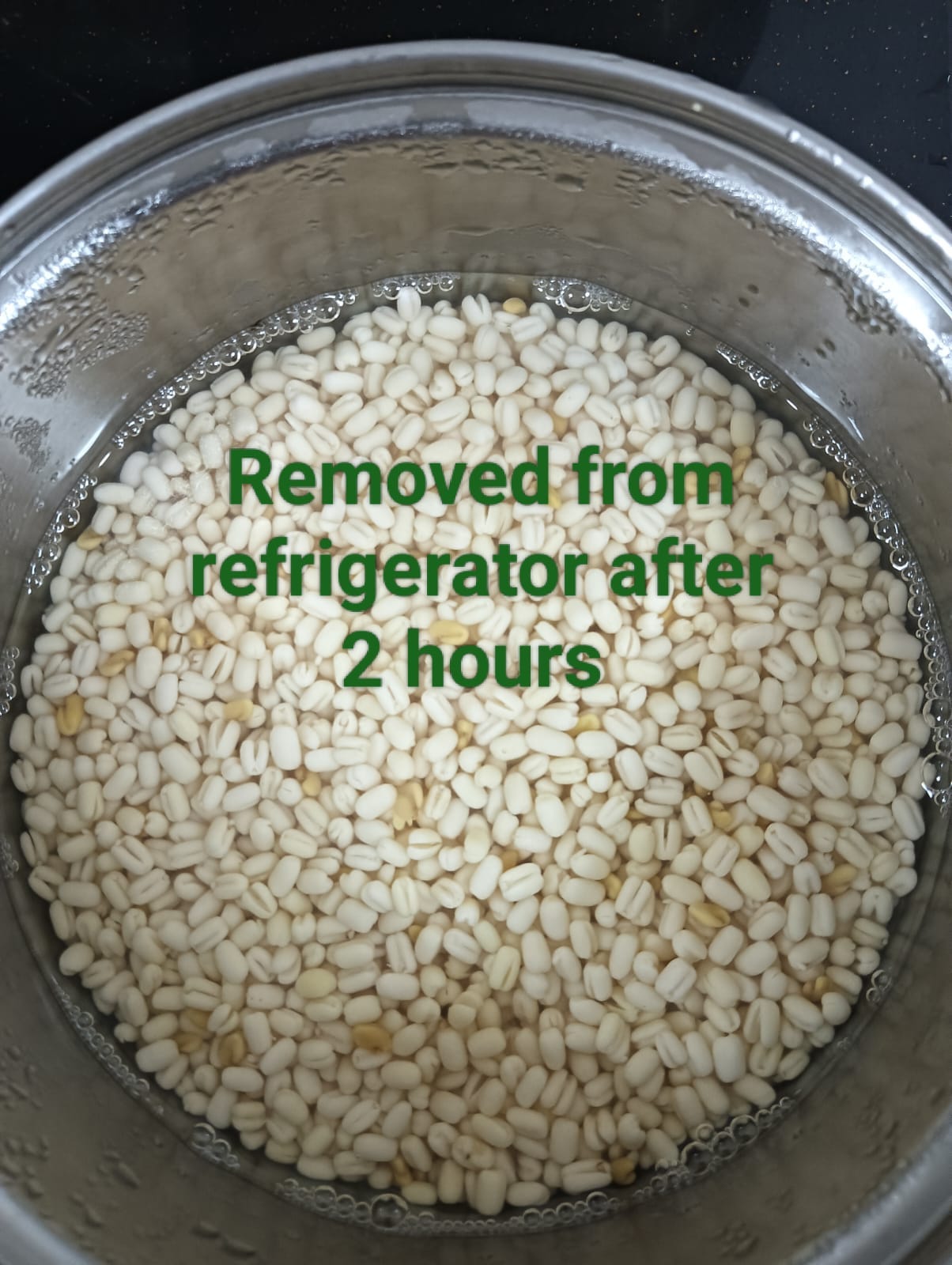
Soaked urad dal and fenugreek seeds after two hours in the fridge (Photo credit: Deepambika T J)
Grinding and Combining:
The soaked idli rice and urad dal are ground separately, with water added gradually and intermittently to achieve a thick yet flowing consistency, similar to pancake batter. Urad dal usually takes longer to grind. While some people may grind both ingredients together to save time, this often results in idli that is less soft and fluffy.
Following individual grinding, the dal and rice batters must be thoroughly mixed. This is best achieved by hand. The batters are usually in a ratio of 4 parts ground idli rice to 1 part ground urad dal. Some prefer a ratio of 3 to 1. A study suggests the 3:1 idli rice to urad dal blend results in optimal levels of vitamin B production by beneficial microbes.
The combined mix is ready for cultivating a desired mix of beneficial microorganisms. The batter is usually left to ferment at room temperature for several hours before being placed in the fridge overnight. The warm temperature in the kitchen supports the growth of these microorganisms during the early stages of fermentation.
A well-fermented batter should visibly increase in volume, typically doubling or even tripling its original size.
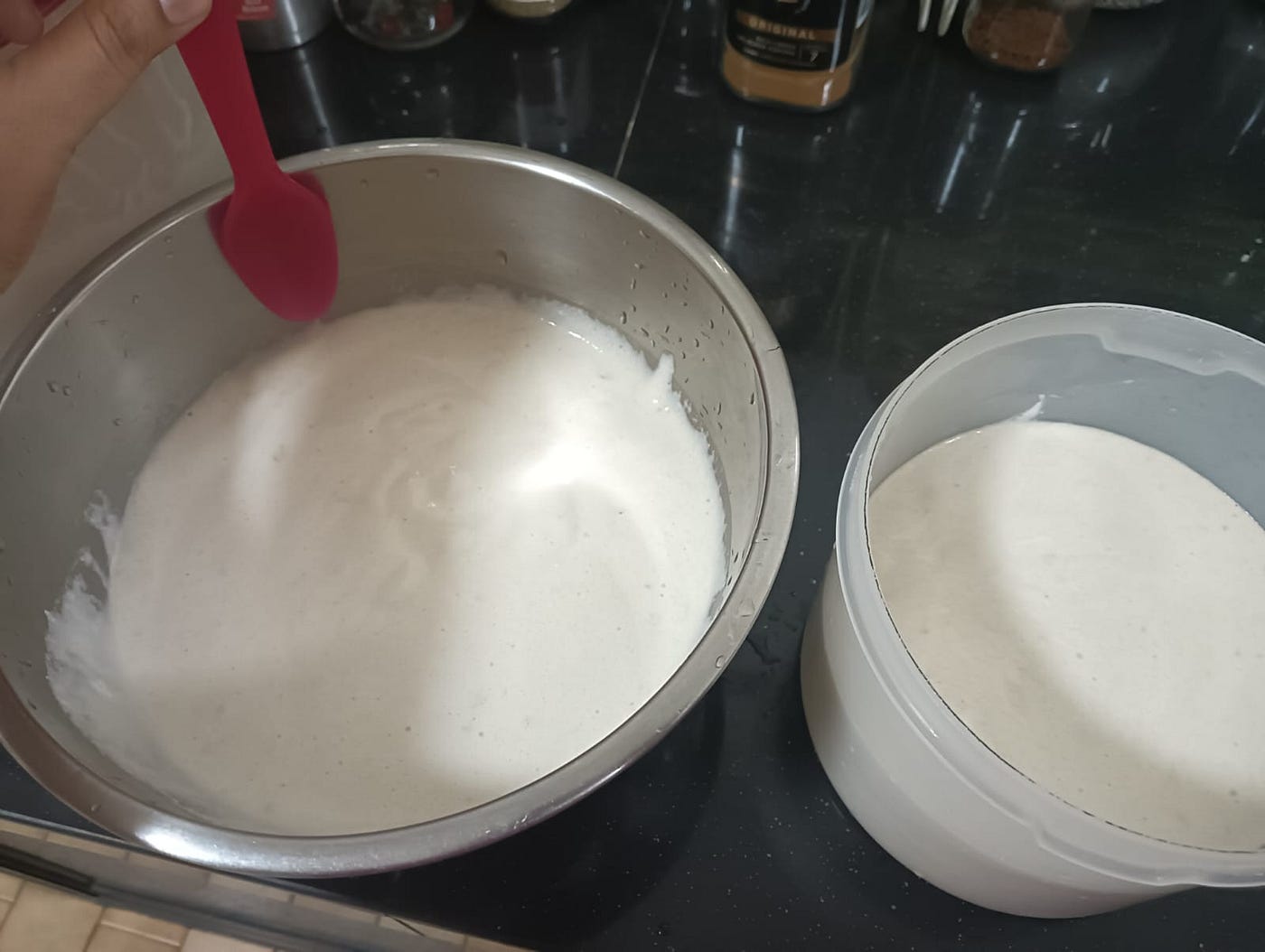
Idli batter before overnight fermentation (Photo credit: Deepambika T J)
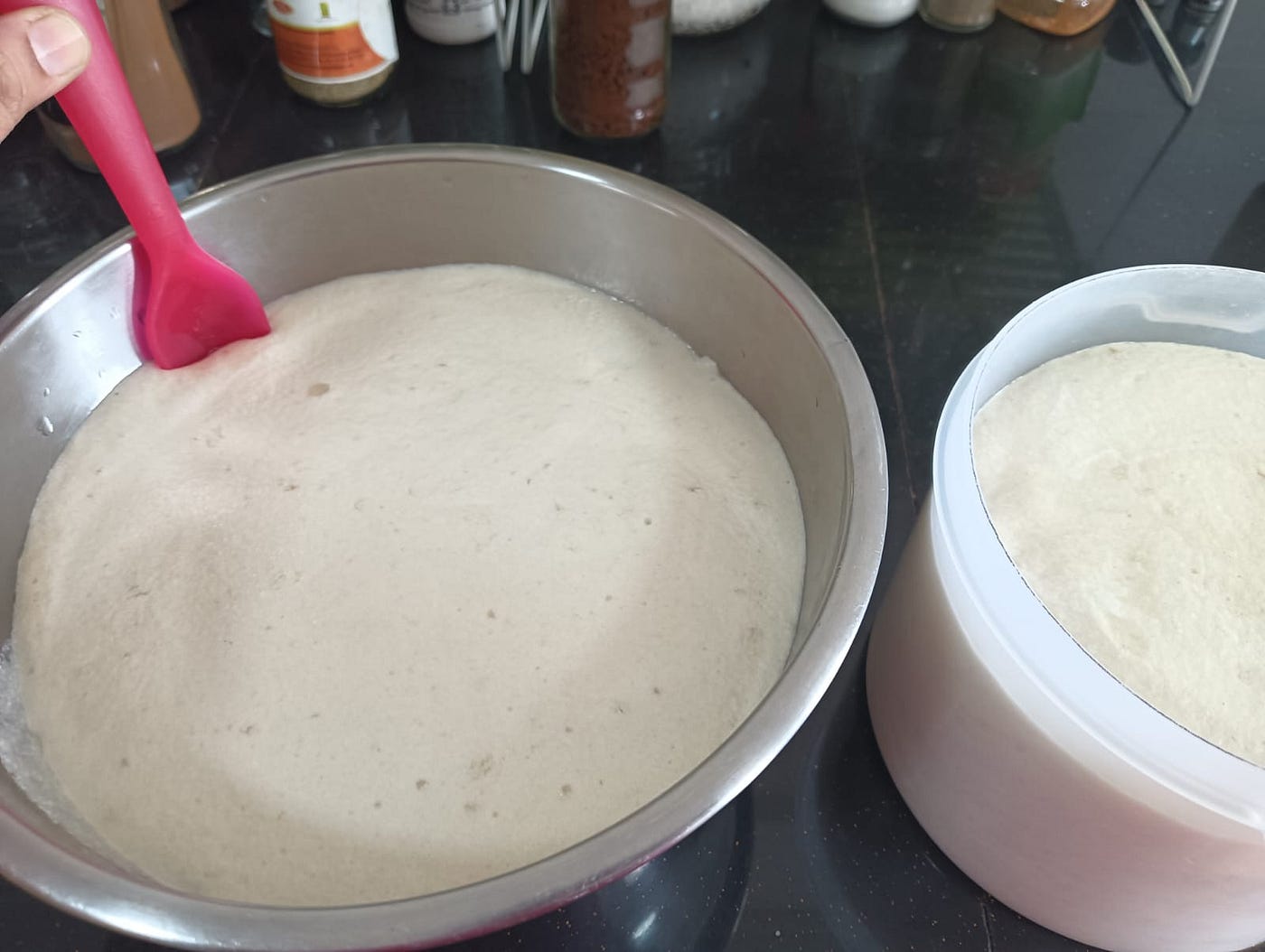
Idli batter after overnight fermentation (Photo credit: Deepambika T J)
Fermentation:
Fermentation is not simply a matter of leaving things to chance, or simply a practice of patience. It is a biochemical transformation shaped by temperature and time. Creating the right conditions to support the growth and shifts of desired mix of microorganisms is key to a successful fermentation. The microorganisms produce gas and acid, creating structure and volume, softening the texture, add nutrients and flavour.
The desired mix of beneficial microorganisms include the facultative anaerobic bacteria, especially lactic acid bacteria (LAB), and naturally occurring yeasts. These microorganisms are present on the idli rice, urad dal, and in the environment.
At the start of fermentation, the batter has oxygen. This allows the initial growth of aerobic bacteria and naturally occurring yeast. Yeasts produce carbon dioxide, along with small amounts of ethanol and esters. The carbon dioxide gas is trapped in the batter, causing it to rise and creating a light, porous structure.
As fermentation progresses, oxygen levels in the batter decrease. The low-oxygen conditions favour the growth of LAB which produce enzymes such as amylase and protease. Amylase breaks down starch content in rice and urad dal into simpler sugars like glucose and maltose, while protease breaks down proteins into peptides and amino acids.
The availability of the simpler compounds support significant increase in LAB. LAB converts simple sugars into pyruvate, which is then transformed into lactic acid. As lactic acid accumulates, the pH of the batter drops. Fresh idli batter usually has a pH of around 6.0 to 6.5. As the fermentation continues, the pH can drop to between 4.0 and 4.5. This acidic environment inhibits the growth of undesirable microorganisms, and contributes to the tangy flavour of idli.
Fermentation reduces anti-nutritional factors such as phytic acid, which is present in rice and lentils and can interfere with absorption of nutrients in our bodies.
Steaming:
The batter is poured into idli metal pans and steamed for 7 to 9 minutes.
Allow the idlis to rest for 2 to 5 minutes after removing from the stove before taking them out of the moulds to prevent them from breaking.
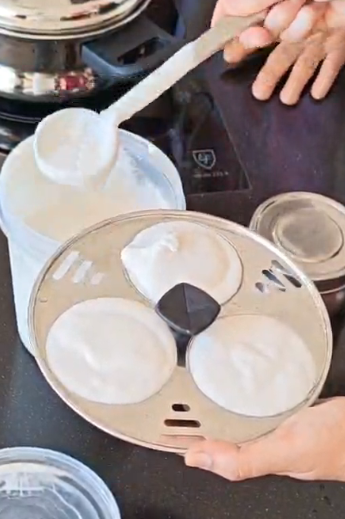
Batter is added to metal pans designed for making idli (Photo credit: Cuifen Pui)
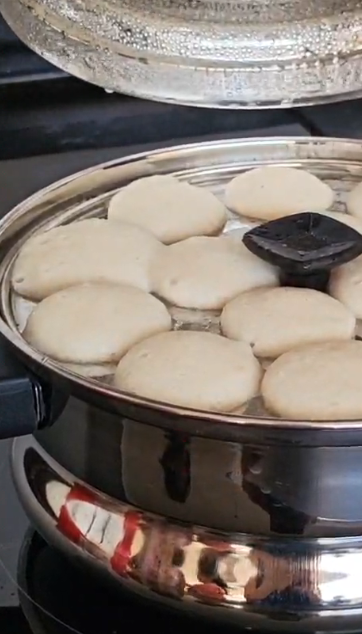
The moment the lid is removed (Photo credit: Cuifen Pui)
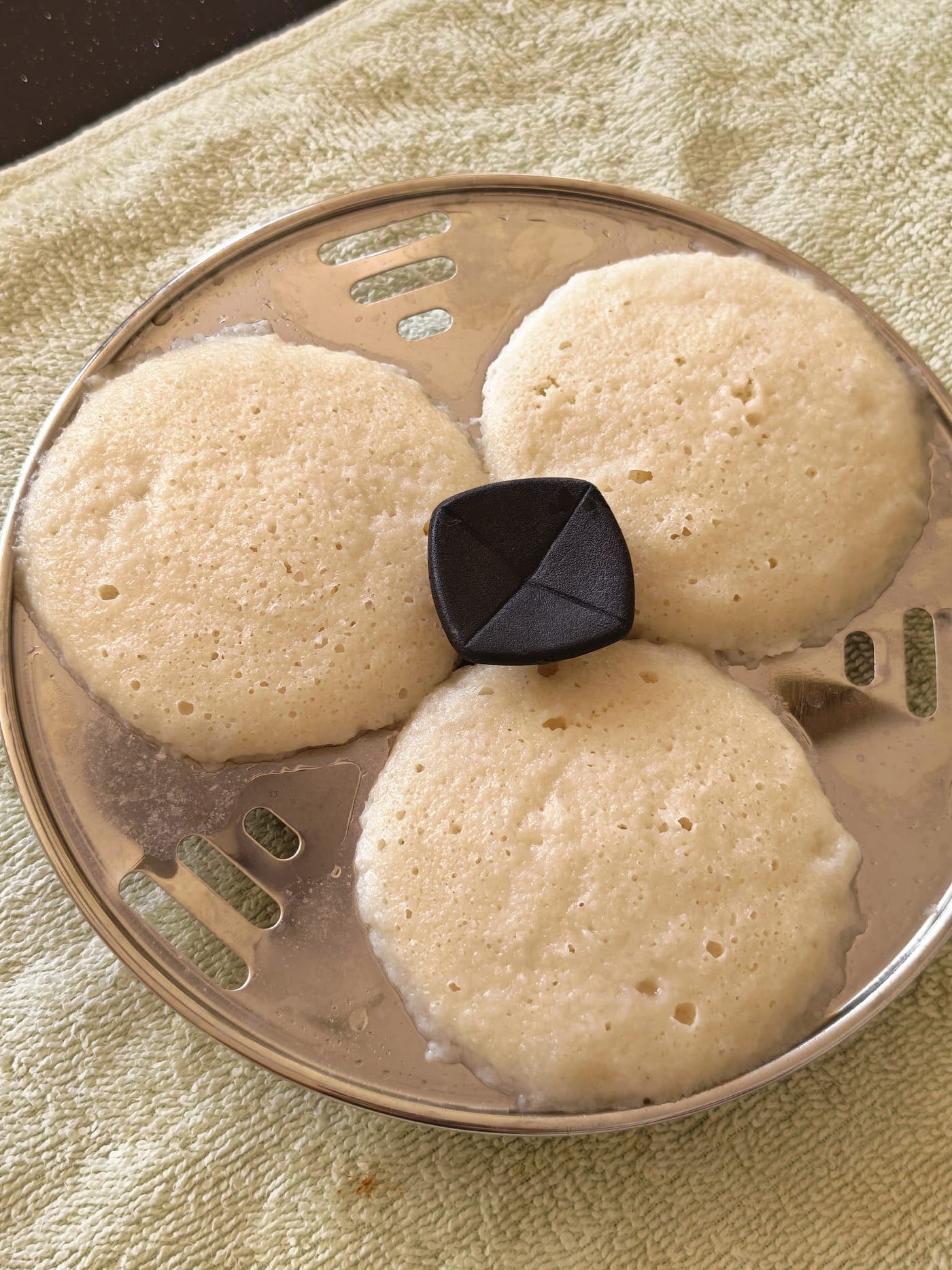
Idli (Photo credit: Cuifen Pui)
Using variations of the batter to make other pancakes
If you are keen on South Indian dishes such as dosa and uttapam, it is useful to know that the batter used to make these dishes is almost the same! Dosa is made from a slightly watered down version of the idli batter. When the batter is a bit more fermented, the batter can be used to make uttapam, which is essentially a thicker version of dosa with vegetable toppings.
(Thanks to Selina for sharing this information! I’m interested to read more about these variations.)
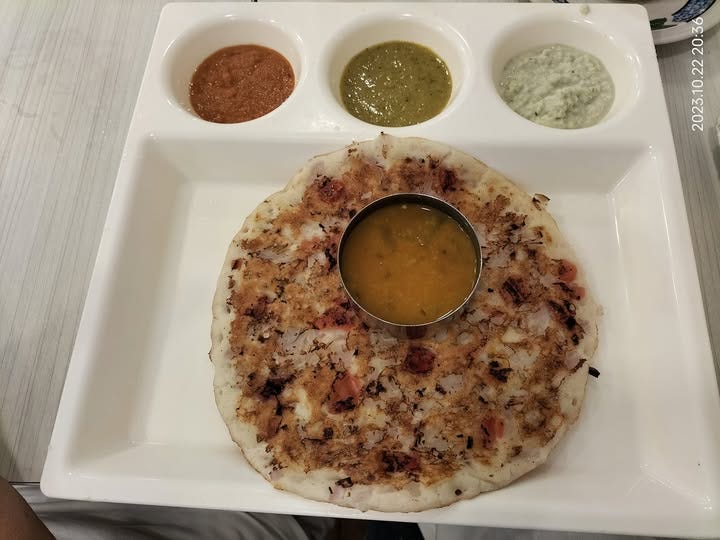
Uttapam served at a local eatery (Photo credit: Cuifen Pui)
Notes by a Compost Maker
Many people I know think of microorganisms as harmful germs. While undesirable microbes may indeed be present, a fermenter with science knowledge understands the importance of creating conditions that support the growth and shifts in beneficial microbial populations, while concurrently inhibiting the growth of the undesirable ones.
I was intrigued to read that successful idli fermentation involves the participation of a succession of beneficial bacterial populations. This is also what I teach about the aerobic hot composting process! During the early part of the fermentation, LAB that contribute to a mild acid production produce gas that make idli fluffy. As fermentation continues, bacterial populations increase sharply and LAB that thrive in low oxygen and produce stronger acids start to dominate. This mirrors what I observe and teach in aerobic hot composting, where the hot stages are dominated by microbial groups adapted to heat, acidic, and low oxygen conditions.
With the pre-digestion of complex carbohydrates and proteins, and the additional synthesis of short-chain fatty acids and Vitamin B by beneficial microbes, fermentation increases the nutritional profile, digestibility, and flavour of idli. This mirrors composting processes, where microbial metabolism converts complex organic compounds into simpler forms that are more readily taken up by plants.
Thank you
The writeup on the idli making process was reviewed by my friends Shreyasi Majumdar, Deepambika TJ, and Selina D’Souza. Any mistakes are my own.
Some online references
Diversity and Succession of Microbiota during Fermentation of the Traditional Indian Food Idli
Fermented batter characteristics in relation with the sensory properties of idli
Microbial Fermentation and Its Role in Quality Improvement of Fermented Foods
Like this story? You can hold down the clap button below for up to 50 claps — this will help the story reach more Medium subscribers. Leave a comment or follow, we would love to hear from you!
About the Writer
Cuifen Pui (Medium, Instagram, LinkedIn)
Cuifen is a compost-maker, food sustainability educator, and regenerative cities advocate. The science of fermented food is one of her growing interests. Beyond making healthier and delicious food, she believes that we can learn so much about being better Earth stewards when we partner with beneficial microorganisms to restore nature’s cycles.
메타데이터
- post_id
- ad253ee90e49
- slug
- fermentation-of-everyday-food-partnering-microbes-to-make-fluffy-idli-ad253ee90e49
- url
- https://medium.com/regenerative-spiral/fermentation-of-everyday-food-partnering-microbes-to-make-fluffy-idli-ad253ee90e49
- canonical_url
- https://medium.com/regenerative-spiral/fermentation-of-everyday-food-partnering-microbes-to-make-fluffy-idli-ad253ee90e49
- author_url
- https://medium.com/@foodcitizensg
- status
- ok
- fetched_at
- 2026-06-14 11:28:49