The Experience Doesn’t Lie. But Someone Has to Be Responsible for the Truth.
Over the past three weeks, we covered why your design system is already obsolete, how AI exposed the broken design handoff, and why design…
The Experience Doesn’t Lie. But Someone Has to Be Responsible for the Truth.

Over the past three weeks, we covered why your design system is already obsolete, how AI exposed the broken design handoff, and why design engineering is a philosophy rather than a job title. This week, the question that runs underneath all three: who is actually responsible for making any of it true?
Here is a diagnostic I have used for 30 years.
You can tell everything you need to know about how much an organization values design quality by asking one question: who in this building loses sleep when the experience ships badly?
If the answer is nobody above a certain level, you already know why the product feels the way it does. Not because the designers are not talented. Not because the engineers do not care. But because the experience was never made into something anyone at the leadership level was responsible for protecting.
That is the accountability gap. And it is the root of almost every design quality problem I have ever seen.
The Gap Between Values and Accountability
Most organizations say they care about the experience. It is in the mission statement. It comes up in all-hands presentations. The word “user” appears constantly in strategy documents.
And then the deadline arrives.
The scope gets cut. The components that were not finished get shipped anyway. The interaction that was not quite right gets marked as a known issue for the next sprint. The design that took three weeks to get right gets reinterpreted in two hours because the engineer needed to move on.
None of this happens because people are careless. It happens because nobody made the experience non-negotiable. It was a preference, not a constraint. And when a preference meets a deadline, the deadline wins every single time.
Research from EY found that 40% of organizations lack clear frameworks to align design approaches with business strategies, primarily because design was not recognized at an executive, decision-making level. That number is not surprising to anyone who has watched how product decisions get made under pressure. Design quality gets cut because cutting it has no consequence that anyone at the top is held accountable for.
The result, in too many organizations, is exactly what we have been watching play out across the industry. Design teams increasingly positioned as production-only functions, supporting the aesthetic look and feel of screens and delivering untested features in direct support of engineering KPIs and sprint-based timelines. That outcome does not happen by accident. It happens when nobody in leadership decides otherwise.
What Leadership Actually Means Here
When I say someone needs to be responsible for the experience, I am not talking about a Chief Design Officer title or a design system governance committee.
I am talking about a decision.
A decision made by whoever has the authority to make it — a VP of Product, a CTO, a CEO, a design leader with real organizational standing — that the experience is a business outcome worth protecting with the same rigor as revenue, reliability, and security.
That decision changes everything downstream when it is made and held under pressure.
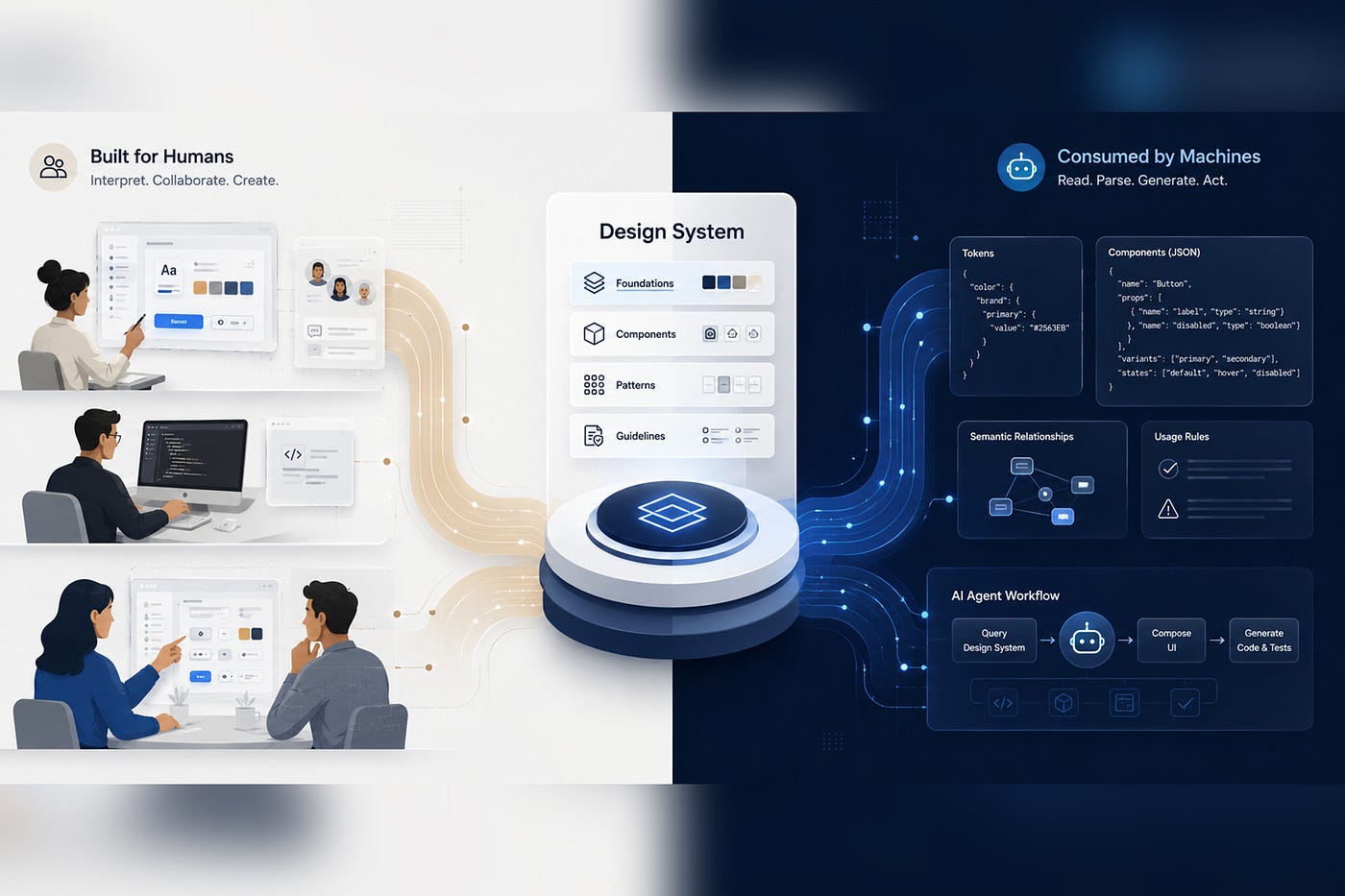
Design systems get funded as infrastructure rather than treated as a nice-to-have project that lives on one designer’s Figma account. Token architecture gets treated as an engineering concern, not a design preference. The definition of done includes whether the thing ships the way it was designed, accessible to the people who need to use it, and consistent with the system it belongs to.
The organizations that will win in 2026 are not the ones that adopt the most technology. They are the ones that align people, process, and accountability around the experience they promise their customers.
That alignment does not emerge organically. It is built deliberately, by leaders who understand what they are building and are willing to protect it when it is inconvenient.
The Pattern Holds at Every Scale
Over 30 years at Cisco, PayPal, Apple, Visa, BigCommerce, and Indeed, one pattern has proven more reliable than any framework or methodology.
The organizations that consistently ship great products are not the ones with the most talented designers or the largest engineering teams. They are the ones where leadership decided the experience mattered and then built the accountability structures to make that true.
The definition of done at those organizations is different. The criteria for shipping is different. The conversation that happens when a deadline arrives and scope needs to be cut is different, because someone in that room has standing to say that the experience is not the thing that gets cut.
The companies that get this right are the ones where design, product, and engineering are partners across all roles. Nobody is trying to hand off work. Everyone is solving the problem together. That environment is not a cultural accident. It is the downstream effect of a leadership decision that the experience is everyone’s responsibility, held accountable to a shared standard.
You do not need to be Apple to get this right. You need a leader who is willing to make the decision and hold it.
Where the Four Weeks Land
This is the fourth post in this series, and the argument across all four is simpler than it might seem.
Design systems give you the infrastructure. AI raises the stakes for getting that infrastructure right. Design engineering is the discipline that holds intent from design to production. And leadership is what makes any of it real rather than aspirational.
None of the four work without the others. A strong design system without leadership accountability becomes shelfware. A design engineering culture without infrastructure has nothing to build on. A team using AI without discipline generates faster chaos. And leadership without the right foundation underneath it is just intention.
The organizations building the best products over the next five years will be the ones getting all four right at the same time. Not perfectly. Not all at once. But deliberately, and with someone in the building who loses sleep when the experience ships badly.
That is the standard worth building toward.
This is the fourth post in an ongoing series on design, design engineering, and the infrastructure behind great products. Start from the beginning: Your Design System Is Already Obsolete, AI Didn’t Kill the Design Handoff, and Design Engineering Is Not a Job Title.
Eddie Lou is a UX and Design Engineering leader with 30+ years of experience at Cisco, PayPal, Apple, Visa, BigCommerce, and Indeed. He is the author of the Design Engineering Handbook (InVision / Design Better) and the founder of EFX Design, a design and development studio specializing in experience platforms, design systems, and custom product development.
Interested in evolving your design system? Let’s talk.
메타데이터
- post_id
- ad495587f2fb
- slug
- the-experience-doesnt-lie-but-someone-has-to-be-responsible-for-the-truth-ad495587f2fb
- url
- https://medium.com/@ed-lou/the-experience-doesnt-lie-but-someone-has-to-be-responsible-for-the-truth-ad495587f2fb
- canonical_url
- https://medium.com/@ed-lou/the-experience-doesnt-lie-but-someone-has-to-be-responsible-for-the-truth-ad495587f2fb
- author_url
- https://medium.com/@ed-lou
- status
- ok
- fetched_at
- 2026-06-11 05:11:55