Avian Flu Fallout: Dead Birds, Seals and Sea Lions
The high cost of cheap food: how factory-farming amplifies a global wildlife catastrophe
Avian Flu Fallout: Dead Birds, Seals and Sea Lions
The high cost of cheap food: how factory-farming amplifies a global wildlife catastrophe

A healthy elephant seal. Nearly all pups born at Península Valdés in Argentina died from H5N1 during the fall 2023 breeding season. (Valeria Falabella)
A beach scattered with dead seabirds is hard enough to witness. A breeding colony of sea lions collapsing beside them is something else entirely.
H5N1 avian flu is no longer a farmyard problem confined to poultry sheds and live-bird markets.
The virus is moving through wild bird populations, crossing into mammals, and exposing the cost of food systems built on crowding animals together.
This is a wildlife crisis, a public-health warning, and an industrial accountability story.
How avian flu became a global wildlife disaster
Not every bird flu is the same. Seasonal strains may circulate with limited visible harm. Highly pathogenic avian influenza H5N1 can cause severe disease and fast death in birds, then jump into mammals under the wrong conditions.
The H5N1 lineage known as 2.3.4.4b spread widely through Europe from 2020.
It reached North America in late 2021 and South America in 2022. By then, the virus was travelling through wild ecosystems as well as poultry supply chains.
The World Organisation for Animal Health, the World Health Organization and the UN Food and Agriculture Organization have recorded outbreaks across an extraordinary geographic range.
“Unprecedented” should be used carefully. Wildlife disease has always existed.
What is unusual here is the reach, the number of affected species, and the scale of marine mammal deaths.
A virus does not need a business plan. It only needs ACCESS.
The birds that carried the virus across continents
Migratory waterfowl, shorebirds and seabirds move along flyways that connect wetlands, farms, breeding colonies and coastlines.
An infected bird may look healthy long enough to carry H5N1 hundreds or thousands of kilometres.
Gulls, terns, albatrosses and penguins have all faced outbreaks.
In North America and Europe, wildlife agencies have reported repeated die-offs in seabirds and waterfowl. In South America, H5N1 reached coastal bird colonies and then marine mammals.
The reported toll is never the full toll.
Carcasses sink, decompose, wash away, or lie unseen in remote nesting areas. Lost adult birds also mean fewer eggs, fewer chicks and weaker breeding seasons.
For a threatened species, one bad season can erase years of slow recovery.
Why seals and sea lions are dying in such large numbers
The scenes along the coasts of Peru, Chile and Argentina were brutal. South American sea lions, fur seals and elephant seals died in and around dense breeding colonies after H5N1 arrived in the region.

This map of Argentina found in the study shows pathways of the spread of H5N1 HPAI (2.3.4.4b) viruses in South America, from 2022–2023.
Testing has confirmed H5N1 in affected marine mammals. Infection may occur through contact with infected birds, contaminated water, or bird carcasses.
Transmission between mammals inside crowded colonies is also a serious scientific concern, though a **mass death event alone does not prove sustained mammal-to-mammal spread**.

Scientists survey a seabird colony for signs of HPAI outbreak in October 2024. This colony was heavily affected in 2023, particularly the terns. Staying vigilant to detect signs of disease is critical for early detection of HPAI cases in wildlife. (Marcela Uhart, UC Davis)
The cost lingers after the outbreak. Dead pups mean a missing generation. Dead breeding adults reduce future births.
Elephant seal colonies in Argentina showed how fast a disease can rip through animals already gathered in close quarters.
A coastline full of carcasses is not nature being dramatic. It is evidence of a system under strain.

Elephant seal carcasses and a dead bird line the beach at Punta Delgada in Argentina on Oct. 10, 2023 following an outbreak of HPAI avian influenza there. (Ralph Vanstreels, UC Davis)
The industrial animal agriculture link is impossible to ignore
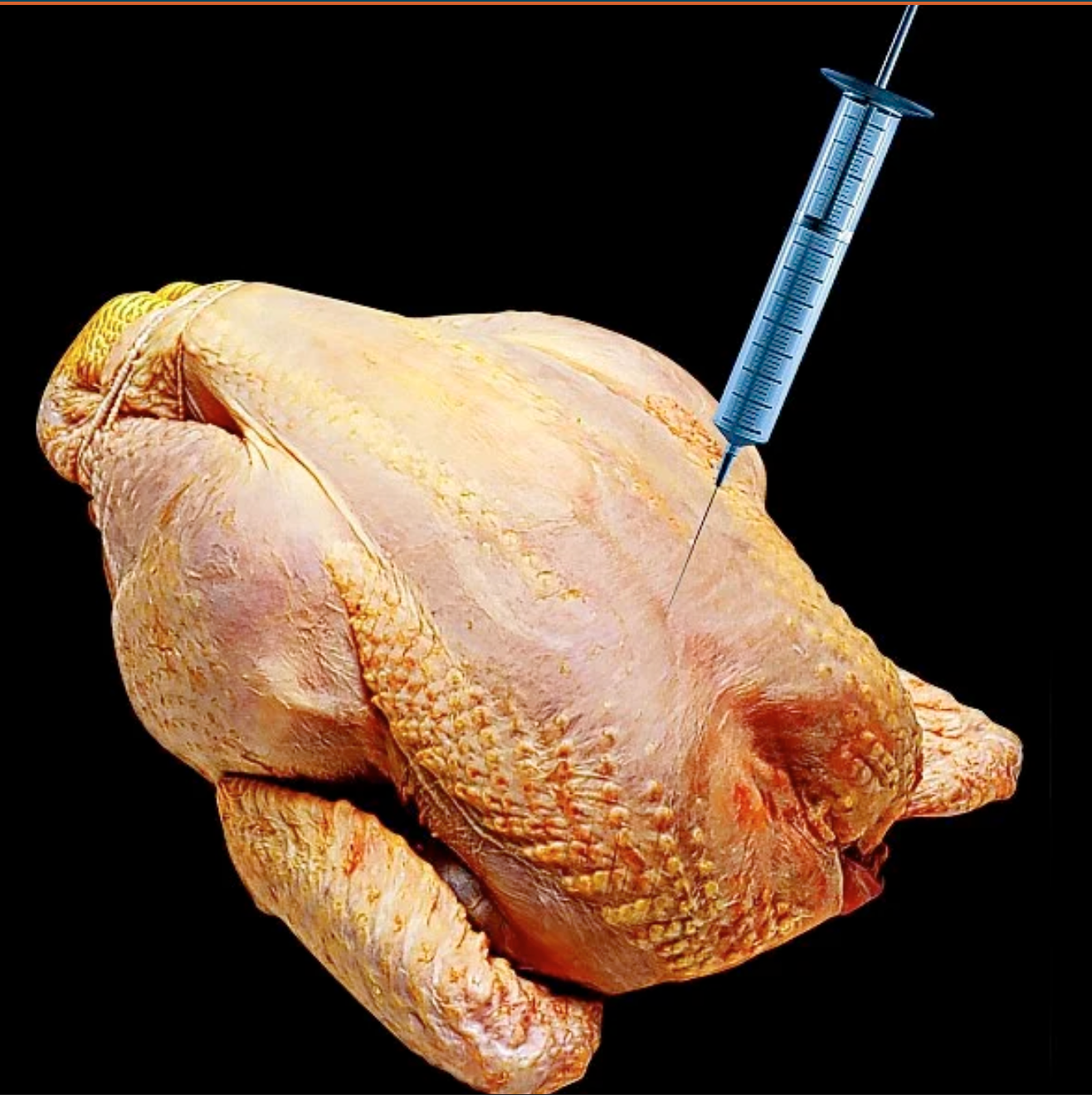
Wild birds did not invent factory farming. But once H5N1 enters a high-density poultry or dairy facility, industrial conditions can turn an outbreak into a multiplier.
Large populations of stressed animals, frequent transport, shared equipment and worker movement create many chances for infection to spread.
Strong biosecurity helps, but it cannot erase the risk created by keeping vast numbers of animals in tight, repetitive systems.
The detection of H5N1 in US dairy cattle in March 2024 was a sharp warning.
The host range is changing. Milk workers were also infected, which made this more than an animal-health issue.
Farms are not the sole source of every wildlife outbreak. Pretending they are irrelevant would be equally dishonest.
The pathogen is the immediate threat. Industrial concentration is the amplification engine.
Animal agriculture, climate and biodiversity risk
Wetland loss, coastal development and habitat destruction push wildlife, livestock and people into closer contact.
Climate disruption can alter migration timing, food availability and breeding ranges. It does not cause every H5N1 outbreak, but it can make disease conditions less predictable.
For business leaders, these are not abstract environmental costs —
Outbreaks bring culling, compensation claims, supply shocks, worker exposure, ecological damage and public distrust.
A serious response means supply-chain transparency, lower stocking densities, independent surveillance and less dependence on animal agriculture.
Efficiency without limits is not efficiency. It is risk moved off the balance sheet and onto animals, workers and taxpayers.
What should happen next, and what can citizens do?
The One Health approach treats human, animal and environmental health as connected. That sounds obvious because it is. Yet policy still treats them like separate departments with separate spreadsheets.
- Governments need transparent wildlife mortality reporting, rapid testing, safe carcass collection, worker protection, better farm biosecurity and shared international data.
- Unnecessary animal movement should face tighter limits during outbreaks.
- Members of the public should not touch dead or visibly ill birds or marine mammals.
- Keep dogs away, avoid beaches or wetlands with clusters of carcasses, and report sightings to the relevant wildlife authority.
In the UK, that may include the Animal and Plant Health Agency or a local wildlife rescue.
Across India, state forest departments, poultry surveillance and South Asian co-operation matter because migratory routes do not stop at a border post.
Why vegan choices belong in a serious response
Veganism will not solve H5N1 through one shopping basket. Anyone claiming that is selling a comforting story.
But REDUCING DEMAND for intensive poultry, eggs and dairy supports food systems that require fewer animals to be crowded, transported and treated as production units.
Personal choices matter, while regulation, research, corporate procurement and public pressure matter more.
If you call yourself an ethical founder, ask a blunt question: does your consumption match the values on your website?
The Warning on the Shore
Dead birds and marine mammals are not an isolated natural tragedy. They are a warning from a connected disease, biodiversity and food-production system that has been allowed to externalise harm for too long.
We need honest uncertainty, properly funded surveillance, and an end to treating mass animal deaths as an acceptable cost of cheap food.
Efficiency without ethics is only better-optimised harm.
For leaders who refuse to live a double life, Join the Better Human Project, where doctoral-level business strategy meets climate urgency and vegan action.
메타데이터
- post_id
- ad5879adade9
- slug
- avian-flu-fallout-dead-birds-seals-and-sea-lions-ad5879adade9
- url
- https://medium.com/the-environment/avian-flu-fallout-dead-birds-seals-and-sea-lions-ad5879adade9
- canonical_url
- https://medium.com/the-environment/avian-flu-fallout-dead-birds-seals-and-sea-lions-ad5879adade9
- author_url
- https://medium.com/@saket-sambhav
- status
- ok
- fetched_at
- 2026-07-16 09:26:33