How to Extract Product Data from Multiple E-Commerce Platforms Simultaneously
To extract product data from multiple e-commerce platforms simultaneously, businesses use automated web scraping solutions that collect…
How to Extract Product Data from Multiple E-Commerce Platforms Simultaneously

How to Extract Product Data from Multiple E-Commerce Platforms Simultaneously
To extract product data from multiple e-commerce platforms simultaneously, businesses use automated web scraping solutions that collect, clean, and organize information from different online marketplaces into structured datasets. The process involves selecting target platforms, identifying required data fields, using scraping technology, standardizing information, and exporting results in formats such as CSV, JSON, Excel, or databases. With a reliable extraction workflow, companies can collect thousands or millions of product records from websites like Amazon, Walmart, eBay, Shopify stores, and other marketplaces while saving significant time compared to manual research.
Why Extract Product Data from Multiple E-Commerce Platforms?
E-commerce businesses operate in a highly competitive environment where product prices, availability, and customer preferences change frequently. Companies need accurate market information to make better decisions about pricing, inventory, marketing, and product development.
Manually collecting product information from multiple websites is slow and difficult to maintain. A team researching 20,000 products across several marketplaces could spend hundreds of hours copying information, checking prices, and updating spreadsheets.
Automated product data extraction solves this problem by collecting information at scale.
Businesses use extracted product data for:
- Competitor price monitoring
- Market research
- Product catalog creation
- Inventory tracking
- Brand monitoring
- Customer review analysis
- Product comparison websites
- Data-driven marketing campaigns
For example, an electronics company tracking competitors may monitor 100,000 product listings across 15 websites to identify pricing changes and new product launches.
What Product Information Can Be Extracted?
The type of information collected depends on business requirements and the target platforms.
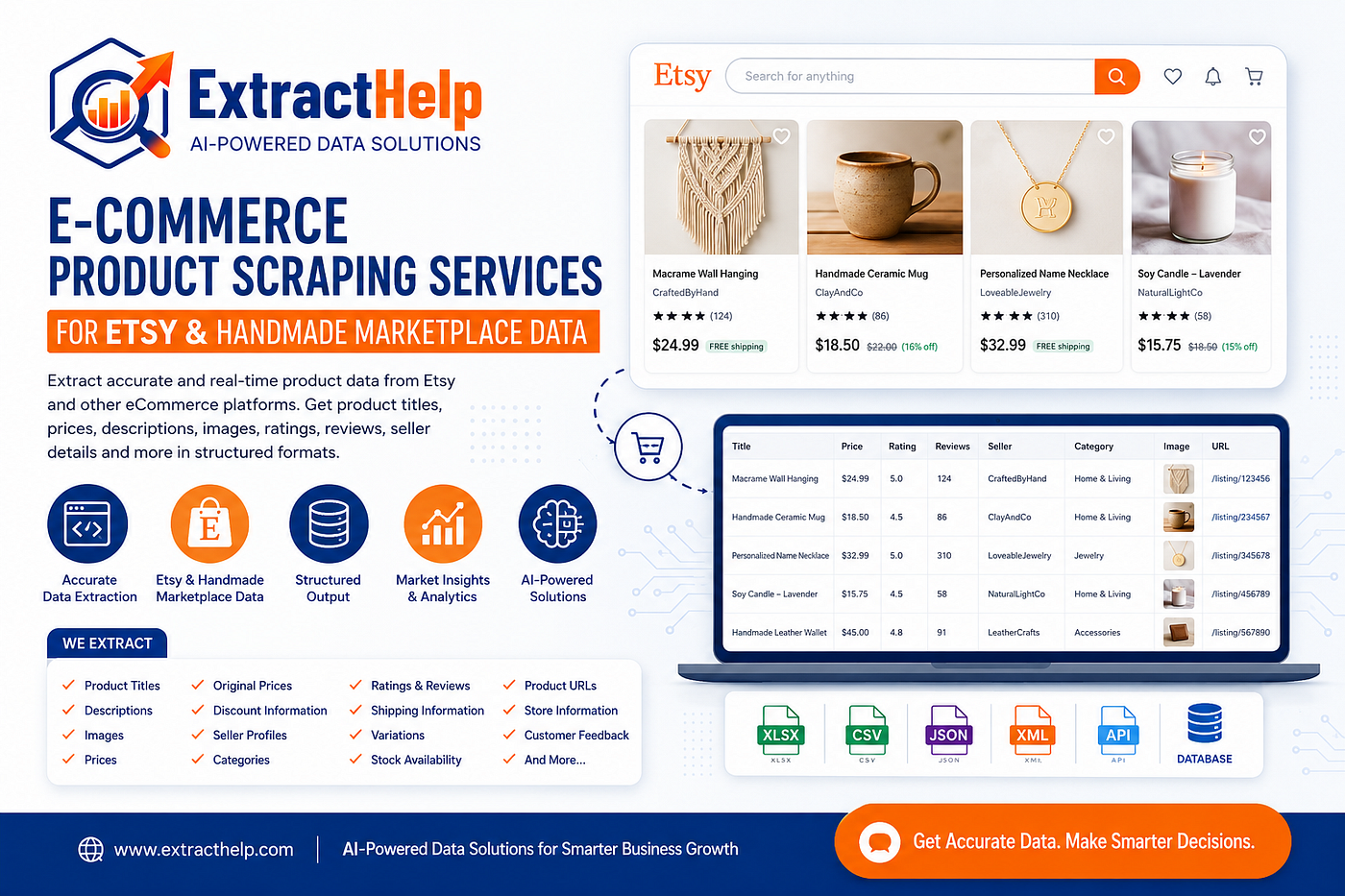
A complete e-commerce dataset may include:
- Product title
- Brand name
- Category
- Product description
- Current price
- Discount price
- Availability status
- Seller information
- Customer ratings
- Review count
- Product images
- Technical specifications
- Shipping details
- Product variations
- SKU numbers
- UPC, EAN, or GTIN codes
- Product URLs
For example, a fashion retailer may collect product names, sizes, colors, prices, reviews, and availability from different online stores to understand market demand.
A technology company may focus on specifications, model numbers, compatibility information, and competitor pricing.
Challenges of Extracting Data from Multiple E-Commerce Websites
Although automated extraction provides valuable insights, collecting data from multiple platforms requires proper planning.
Every e-commerce website has a different structure and data format.
Amazon, Walmart, eBay, Etsy, and Shopify stores may display similar information differently. A product title, price, or specification may appear in different locations on each website.
Different Website Structures
Each platform uses its own page design and coding structure.
A scraper built for one marketplace may not work correctly on another without customization.
For example:
- Amazon may display product variations separately.
- eBay may organize information by seller listings.
- Shopify stores may use different product templates.
A reliable system must understand these differences.
Dynamic Website Content
Many modern e-commerce websites load information through JavaScript.
Important details such as:
- Prices
- Reviews
- Stock availability
- Product options
may appear only after the page loads completely.
Advanced scraping methods help capture this dynamic information accurately.
Anti-Bot Protection
Large marketplaces use security systems to protect their websites from unusual activity.
Professional scraping workflows use responsible techniques such as:
- Request management
- Browser automation
- Proxy rotation
- Data validation
These methods help maintain stable data collection.
Step-by-Step Process to Extract Product Data
A successful product data extraction project follows a structured process.
Step 1: Select Target E-Commerce Platforms
The first step is identifying which websites contain valuable information.
Common sources include:
- Amazon
- Walmart
- eBay
- Alibaba
- Etsy
- AliExpress
- Target
- Best Buy
- Shopify-based stores
The right platforms depend on your industry.
A beauty company may monitor cosmetics marketplaces, while an electronics business may focus on technology retailers.
Step 2: Define Required Data Fields
Before collecting information, decide what data your business actually needs.
For example, a competitor pricing project may require:
Data FieldPurposeProduct NameProduct identificationPricePrice comparisonAvailabilityInventory trackingReviewsCustomer feedback analysisSellerMarketplace comparisonProduct URLSource reference
Defining requirements early improves efficiency and reduces unnecessary data processing.
Step 3: Choose the Right Extraction Method
Businesses usually choose between custom scraping systems, software tools, or professional services.
Custom Web Scraping
Custom solutions are built according to specific business needs.
They are useful for companies requiring:
- Large-scale extraction
- Custom data fields
- Frequent updates
- Integration with internal systems
No-Code Scraping Tools
No-code tools allow users to collect simple datasets without programming.
They are suitable for smaller projects with limited requirements.
Professional Data Extraction Services
Companies handling large amounts of data often choose professional providers because they need accuracy, speed, and ongoing support.
ExtractHelp provides professional web scraping services that help businesses collect structured product information from multiple online sources. The service includes data extraction, cleaning, formatting, and delivery within 24–72 hours with 99%+ accuracy. More information can be added here: [LINK: web-scraping].
Step 4: Collect and Process Product Data
After selecting platforms and data fields, the extraction system collects information automatically.
The workflow usually includes:
Data Collection
The scraper visits selected websites and gathers product information.
Example project:
- 50,000 products from Amazon
- 30,000 products from Walmart
- 20,000 products from eBay
Total: 100,000 product records collected in 48 hours
Data Cleaning
Raw data often contains inconsistencies.
Cleaning removes:
- Duplicate products
- Incorrect values
- Missing fields
- Unnecessary formatting
Data Standardization
Different websites may describe the same product differently.
Example:
Website A: “Apple iPhone 16 Pro 256GB Black”
Website B: “iPhone 16 Pro Smartphone 256 GB”
A normalization process identifies them as the same product.
How Businesses Use Extracted Product Data

How Businesses Use Extracted Product Data
Collecting product information is only the first step. The real value comes from transforming that information into insights that improve business decisions.
Companies use product data extraction for multiple purposes, including competitive analysis, pricing optimization, catalog improvement, and customer research.
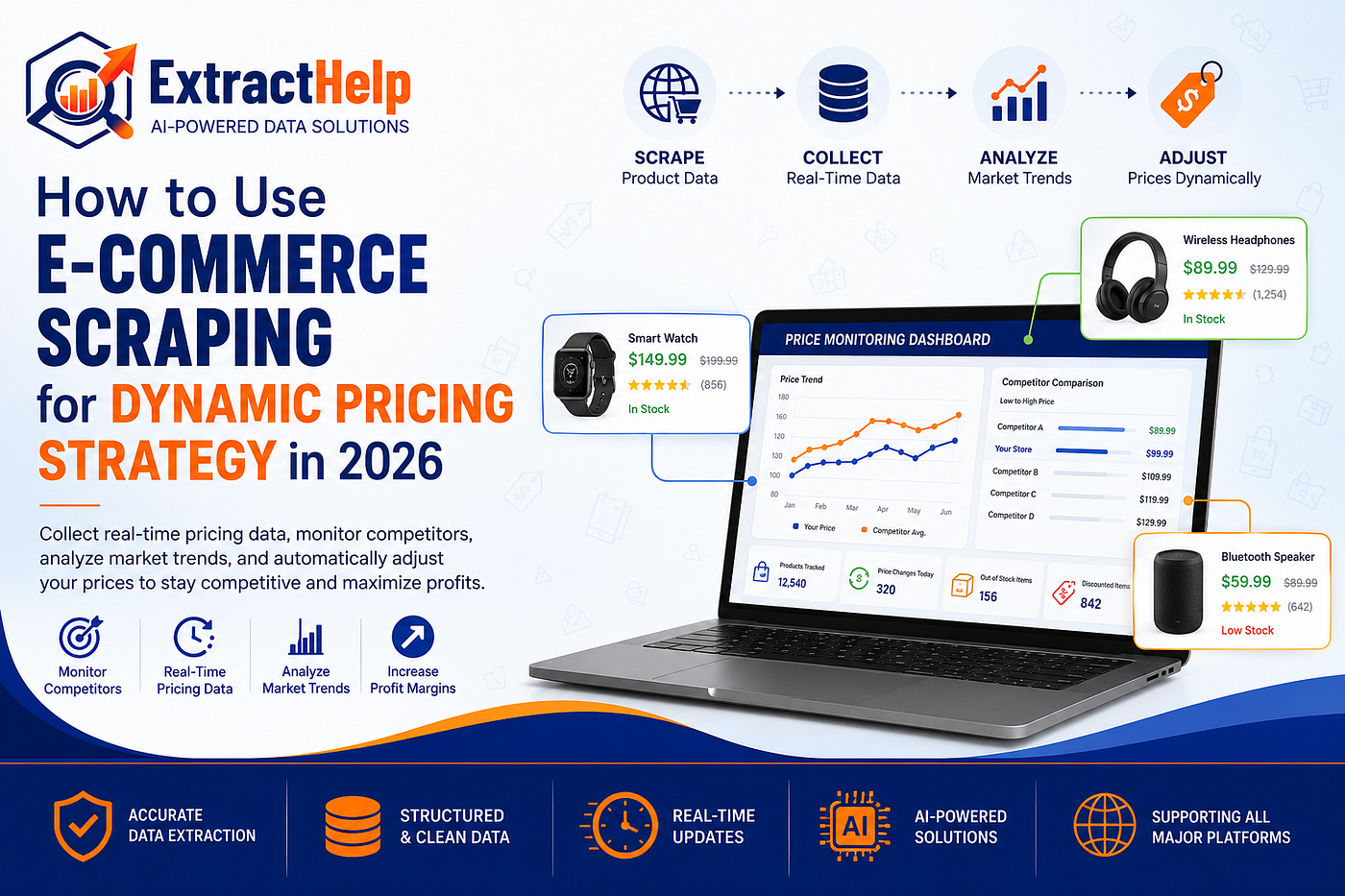
Price Monitoring and Dynamic Pricing
Product prices can change several times per day, especially during sales events and competitive campaigns.
By monitoring multiple e-commerce platforms automatically, businesses can track:
- Competitor price changes
- Discounts and promotions
- Product availability
- Seller price differences
- Historical pricing trends
For example, an online electronics retailer tracking 75,000 products across 10 competitor websites can receive alerts when a competitor lowers prices or launches a promotion.
This allows pricing teams to react quickly instead of relying on manual checks.
Competitive Market Research
Market research becomes more accurate when businesses analyze real marketplace data.
Extracted product information helps companies understand:
- Which products are gaining popularity
- Which brands dominate a category
- How competitors position their products
- What features customers value most
- How pricing changes over time
For example, a home appliance company could analyze 250,000 product listings from different retailers to identify popular features, average selling prices, and market gaps.
These insights help businesses create better products and marketing strategies.
Product Catalog Enrichment
Many companies have incomplete product databases.
A product catalog may contain basic information but miss important details such as:
- Product specifications
- Images
- Categories
- Reviews
- Technical attributes
Product data extraction helps enrich existing catalogs.
For example, an online retailer migrating to a new platform may need to update 100,000+ products with complete descriptions, images, and specifications.
Automated extraction can reduce weeks of manual catalog work.
Customer Review and Sentiment Analysis
Customer reviews provide valuable information about product performance and customer expectations.
Businesses can extract:
- Star ratings
- Review counts
- Customer comments
- Common complaints
- Frequently mentioned features
Analyzing thousands of reviews helps companies identify product improvements and customer preferences.
For example, a skincare company can analyze reviews from multiple marketplaces to understand customer opinions about ingredients, packaging, and product effectiveness.
Best Practices for Accurate Product Data Extraction

Best Practices for Accurate Product Data Extraction
A successful extraction project depends on data quality, consistency, and regular updates.
Create a Clear Data Collection Plan
Before starting any project, define:
- Target websites
- Required product categories
- Data fields
- Update frequency
- Final output format
A clear plan prevents unnecessary data collection and keeps the project focused.
Clean and Normalize Data
Raw scraped information is rarely ready for immediate use.
Data cleaning includes:
- Removing duplicates
- Fixing formatting issues
- Standardizing product names
- Correcting categories
- Validating prices
For example, the same product may appear as:
- “Samsung Galaxy S24 Ultra 256GB”
- “Galaxy S24 Ultra Smartphone”
- “Samsung S24 Ultra 256 GB Phone”
A normalization process connects these listings as one product.
Schedule Regular Updates
E-commerce data changes constantly.
A product price collected today may be different tomorrow.
Businesses should select update schedules based on their goals:
- Hourly updates for price monitoring
- Daily updates for inventory tracking
- Weekly updates for catalog management
- Monthly updates for market research
Regular updates ensure decisions are based on current information.
Scaling Product Data Extraction for Enterprise Projects
Small projects may involve thousands of products, while enterprise companies often require millions of records.
Large-scale extraction requires:
- Reliable infrastructure
- Automated workflows
- Data validation systems
- Scalable storage
- Error monitoring
For example, a marketplace analytics company may collect:
- 1 million product pages
- 100+ categories
- Multiple countries
- Daily updates
A properly designed system can manage this volume efficiently.
Common Mistakes When Extracting E-Commerce Product Data
Many businesses face problems because of poor planning.
Collecting Unnecessary Information
More data is not always better.
Collect only the information required for your business goals.
Extra fields increase storage requirements and processing time.
Ignoring Data Accuracy
Large datasets are valuable only when they are accurate.
Incorrect prices, missing information, or duplicate records can lead to poor business decisions.
Quality checks should always be part of the workflow.
Using One-Time Data Collection
A single data extraction project provides only a snapshot.
Markets change quickly, so ongoing monitoring is often more valuable.
Not Preparing for Website Changes
E-commerce websites frequently update their layouts.
A reliable scraping system should be monitored and adjusted when websites change.
Choosing Between Building Your Own Scraper and Hiring a Service
Businesses often decide whether to create an internal scraping system or work with a professional provider.
Building an Internal Solution
Advantages:
- Complete control
- Custom features
- Direct management
Challenges:
- Requires technical expertise
- Needs maintenance
- Requires server infrastructure
- Must handle website changes
Using a Professional Data Provider
A professional provider manages:
- Data collection
- Scraping infrastructure
- Data cleaning
- Quality checks
- Delivery formats
This allows businesses to focus on analyzing data instead of maintaining scraping systems.
ExtractHelp supports businesses with web scraping, data enrichment, workflow automation, and analytics solutions. The company delivers clean, structured datasets within 24–72 hours and serves marketing agencies, e-commerce companies, SaaS businesses, real estate firms, and enterprises worldwide. You can add your service page here: web-scraping.
Preparing Extracted Data for Business Systems
After collection and cleaning, product data can be connected with different business tools.
Common integrations include:
- CRM platforms
- Business intelligence dashboards
- Inventory systems
- Pricing software
- Machine learning models
- Internal databases
For example, a retailer can connect competitor pricing data directly to a dashboard where managers monitor market changes in real time.
The Future of Multi-Platform Product Data Extraction
The future of e-commerce data extraction will focus on automation, artificial intelligence, and faster decision-making.
Emerging technologies include:
- AI-powered product matching
- Automated category classification
- Real-time price tracking
- Predictive analytics
- Intelligent data validation
Businesses that can quickly convert online product information into actionable insights will have stronger competitive advantages.
ExtractHelp helps companies turn scattered online information into organized, usable datasets through reliable data extraction and analytics solutions
Final Thoughts
- Extracting product data from multiple e-commerce platforms simultaneously gives businesses the information they need to compete, optimize pricing, and understand changing market trends. With the right combination of automation, data cleaning, and regular updates, companies can turn millions of online product listings into valuable business insights.
- Manual research is time-consuming and difficult to maintain, especially when monitoring thousands of products across different marketplaces. Automated product data extraction helps businesses save time, improve accuracy, and make faster decisions based on reliable information.
- Whether you need competitor price tracking, product catalog enrichment, market research, or large-scale data collection, choosing the right extraction approach is essential. ExtractHelp helps businesses collect clean, structured data within 24–72 hours with 99%+ accuracy, allowing teams to focus on analysis and growth instead of manual data collection.
- Get a free sample or consultation from ExtractHelp to explore how professional web scraping solutions can support your product data needs:web-scraping
메타데이터
- post_id
- ad71ccb87f55
- slug
- how-to-extract-product-data-from-multiple-e-commerce-platforms-simultaneously-ad71ccb87f55
- url
- https://medium.com/@ProductScraping/how-to-extract-product-data-from-multiple-e-commerce-platforms-simultaneously-ad71ccb87f55
- canonical_url
- https://medium.com/@ProductScraping/how-to-extract-product-data-from-multiple-e-commerce-platforms-simultaneously-ad71ccb87f55
- author_url
- https://medium.com/@ProductScraping
- status
- ok
- fetched_at
- 2026-09-04 18:21:31