From crisp rules to human-like reasoning: how fuzzy logic helps machines handle uncertainty, learn…
Introduction: The Problem with “Perfect Logic”
From crisp rules to human-like reasoning: how fuzzy logic helps machines handle uncertainty, learn from experts, and make explainable decisions
Introduction: The Problem with “Perfect Logic”
Most software systems are built on a simple assumption: the world is precise.
A condition is either true or false. A number either belongs to a category or it doesn’t. A decision follows a strict, predefined algorithm.
But reality doesn’t work like that.
- Is 39°C “hot”? What about 38.5°C?
- Will it “probably” rain today?
These are not binary questions. They live in uncertainty, ambiguity, and approximation.
And that’s exactly where Fuzzy Expert Systems come in.
From Expert Systems to Human-Like Reasoning
An expert system is designed to mimic how a human expert makes decisions. Instead of relying purely on calculations, it uses:
- Knowledge (facts + rules)
- Inference (reasoning process)
At its core, it answers questions like a human expert would:
“Given what I know, what is most likely true?”
Unlike traditional programs (which combine data and logic tightly), expert systems separate knowledge from control. This makes them:
- Easier to update
- Capable of explaining their decisions
This is a critical shift:
Program = Algorithm + Data
Expert System = Knowledge + Inference
The Limitation: Reality Is Not Binary
Traditional expert systems still struggle with one major issue: they assume facts are either true or false.
But real-world knowledge is often uncertain:
- “It will probably rain.”
- “The patient is slightly sick.”
- “The engine is very hot.”
To handle this, early systems used certainty factors, assigning confidence levels (e.g., 0.7, 0.9).
But even that isn’t enough.
Because uncertainty is not just about belief — it’s also about vagueness.
Enter Fuzzy Logic: Thinking Like Humans
Fuzzy logic changes the rules.

Instead of asking:
“Is this true or false?”
It asks:
“To what degree is this true?”
Membership: The Core Idea
In fuzzy logic, elements can belong to multiple categories at the same time, with different degrees.
For example:
A person with height = 150 cm could be:
- 100% Medium
- 40% Short
- 40% Tall
This is not an error. It’s a feature.
Because humans think this way naturally.
Fuzzy Rules: Capturing Human Knowledge
Fuzzy systems still use rules — but they look more like human language:
IF temperature is high THEN fan speed is fast
But here’s the key:
- “High” is not a fixed number
- “Fast” is not a fixed value
They are fuzzy sets.
This allows systems to operate smoothly instead of jumping between rigid states.
The Inference Engine: Where Decisions Happen
The inference engine is the brain of the system.
It:
- Checks which rules match current inputs
- Activates (fires) those rules
- Generates new conclusions
- Repeats the process until a final decision is reached
There are two main strategies:
1. Forward Chaining
Start with known facts → derive conclusions
2. Backward Chaining
Start with a goal → check if facts support it
Example of Reasoning
- IF car color is black → I like the car
- IF I like the car → I will buy the car
Given:
Car color = black
The system concludes:
I will buy the car
This chain of reasoning is simple — but scalable to complex domains.
Why Fuzzy Expert Systems Matter
Fuzzy systems shine in situations where:
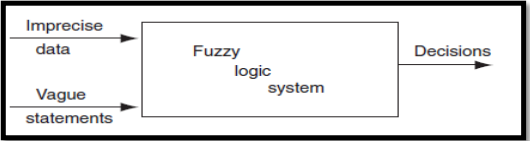
- Data is imprecise
- Rules are linguistic
- Decisions require human-like judgment
They are widely used in:
- Consumer electronics (e.g., washing machines)
- Control systems
- Medical diagnosis
- Decision support systems
Beyond Software: Hardware Acceleration
Fuzzy systems are not limited to software.
They can be implemented in:
- Dedicated processors
- Microcontrollers
- Custom chips
Why?
Because fuzzy inference requires high-speed rule evaluation, often in parallel.
This enables real-time applications like:
- Industrial automation
- Embedded systems
- Smart devices
메타데이터
- post_id
- ad7d998fdaee
- slug
- from-crisp-rules-to-human-like-reasoning-how-fuzzy-logic-helps-machines-handle-uncertainty-learn-ad7d998fdaee
- url
- https://medium.com/@a.gedo03200/from-crisp-rules-to-human-like-reasoning-how-fuzzy-logic-helps-machines-handle-uncertainty-learn-ad7d998fdaee
- canonical_url
- https://medium.com/@a.gedo03200/from-crisp-rules-to-human-like-reasoning-how-fuzzy-logic-helps-machines-handle-uncertainty-learn-ad7d998fdaee
- author_url
- https://medium.com/@a.gedo03200
- status
- ok
- fetched_at
- 2026-06-09 15:37:30

