Filling in the Lean Canvas, One Box at a Time (#8): Cost Structure
Most people approach the Cost Structure box on the Lean Canvas as though it’s a simplified income statement. They fill it with high-level…
Filling in the Lean Canvas, One Box at a Time (#8): Cost Structure
Most people approach the Cost Structure box on the Lean Canvas as though it’s a simplified income statement. They fill it with high-level expense categories — development, marketing, administration — and call it a day. But this approach barely scratches the surface of what this box can do for you.
This is part 8 of my Lean Canvas series, focusing on Cost Structure. If you missed part 7 (Revenue Streams), you can catch up here. If you want to read the next one on Key Metrics, go on ahead here. To explore all the articles in this series, visit the publication page at https://medium.com/thebeatenroad and do the clicky clicky.

Image generated using Midjourney
The Cost Structure box isn’t just about listing expenses. It’s a tool to map out the operational reality of your business, tightly linked to the rest of your Lean Canvas. To use it effectively, you need to think backwards through the other boxes and ask:
“What costs will I incur to achieve the revenue, distribution, and production strategies outlined in my canvas?”
Let’s break this down and explore how to use the Cost Structure box as a powerful strategic tool.
Explanation of the Cost Structure Box
The Cost Structure box captures the key expenses your business will incur as you execute your strategy. But instead of thinking broadly, the goal here is to focus on costs that directly support the decisions made in the Revenue Streams, Channels, Solution, and Customer Segments boxes.
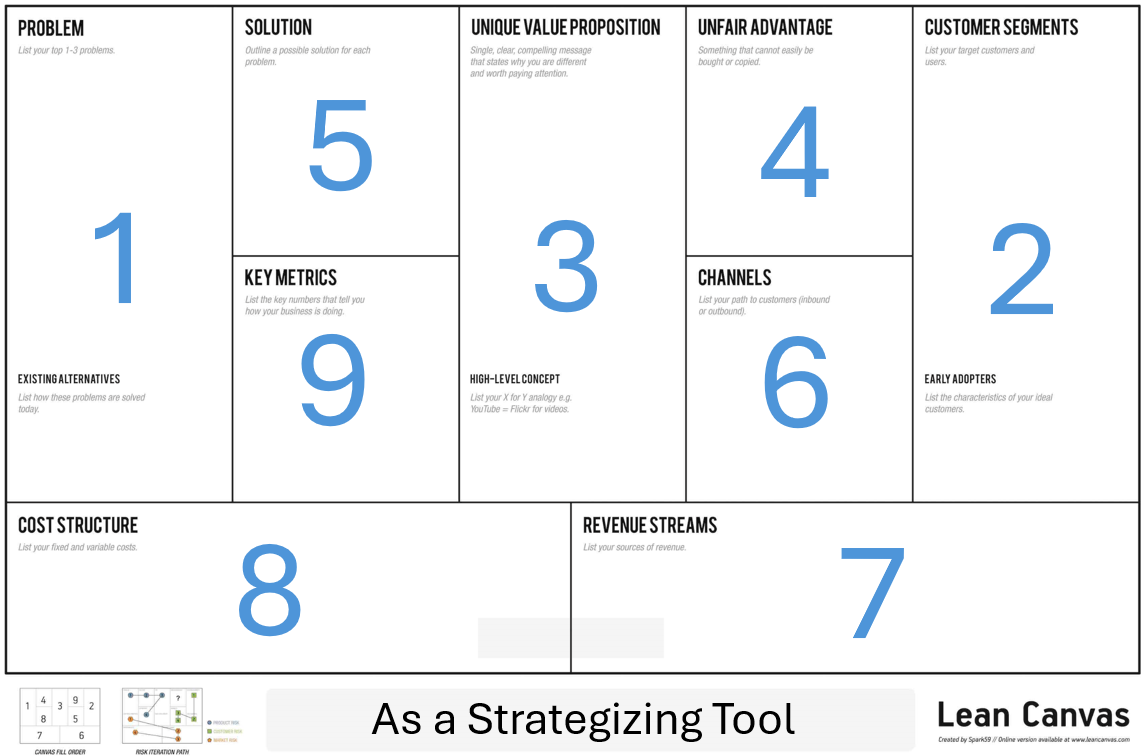
The question to guide you is:
“What operational, marketing, and production expenditures will I incur to deliver my product or service to my target customers via the chosen channels?”
This backwards approach ensures that your costs are aligned with your strategy, rather than being a generic list of expense categories.
Why the Cost Structure Box Matters
The Cost Structure box helps you evaluate the financial viability of your business model. It ensures that:
- Your Costs Align with Your Revenue Model: Every revenue strategy comes with associated costs. A subscription-based SaaS product, for instance, has different cost implications than a one-time purchase model.
- You Can Prioritize Spending: By tying costs to specific strategic decisions, you can identify which expenses are critical and which can be minimized or delayed.
- You Maintain Scalability: Understanding cost implications for growth ensures your business can scale without spiraling expenses.
What to Fill in the Cost Structure Box
To fill this box effectively, work backwards through the Lean Canvas. Here’s how:
1. Start with Revenue Streams
- What costs are associated with your chosen revenue model?
- For example, a SaaS business with tiered pricing might need to invest in modular software development and subscription management tools.
2. Consider Channels
- What costs will you incur to distribute your product or service through your chosen channels?
- For example, selling on Amazon involves platform fees and commissions. Marketing through Instagram requires content creation and ad budgets.
3. Factor in Customer Segments
- What unique costs arise from targeting specific customer groups?
- For instance, reaching price-sensitive buyers might require competitive pricing and volume production to lower per-unit costs.
4. Examine the Solution Box
- What costs are tied to delivering your product or service at the desired quality?
- For example, a premium clothing brand may incur higher production costs to maintain the quality customers expect.
Here’s what the Cost Structure box might look like for different types of businesses:
Example 1: SaaS Platform
- Revenue Streams: Subscription model with $10, $20, and $50 tiers.
- Costs: Modular software development, subscription management software (built or licensed), and server hosting fees.
Example 2: Amazon Seller
- Revenue Streams: One-time sales through Amazon.
- Costs: Amazon platform fees, storage fees, shipping costs, and marketing expenses to stand out in a competitive marketplace.
Example 3: Boutique Clothing Brand
- Revenue Streams: Premium pricing via a physical store.
- Costs: Retail space rent, in-store display and ambiance costs, and small-batch production for exclusivity.
Example 4: Online Course Provider
- Revenue Streams: One-time sales with optional coaching add-ons.
- Costs: Course content production, website hosting, marketing campaigns on social media, and optional live session tools.
Example 5: Food Delivery Service
- Revenue Streams: Per-order payments with optional subscriptions for free delivery.
- Costs: Delivery personnel wages, platform development and maintenance, and promotional discounts to attract initial users.
How to Validate Your Cost Structure
To ensure your Cost Structure is grounded in reality, consider the following steps:
1. Map Costs to Revenue Models
Identify the fixed and variable costs associated with your revenue strategy. For instance, a SaaS product’s fixed costs might include server fees, while variable costs could include customer support as your user base grows.
2. Analyze Industry Benchmarks
Research cost benchmarks in your industry. For example, if you’re launching a D2C brand, study typical costs for logistics, packaging, and digital marketing.
3. Test with Small Budgets
Start with a pilot project or limited launch. For instance, run a small Instagram ad campaign to estimate customer acquisition costs before scaling.
4. Review Scalability
Determine how your costs will scale with growth. For instance, can your production line handle a 10x increase in orders, and what additional costs would that entail?
Common Pitfalls
1. Treating the Box Like an Income Statement
This box is not a place to list broad categories like “marketing” or “development.” Instead, focus on specific costs tied to executing your Lean Canvas strategy.
2. Overlooking Indirect Costs
Don’t ignore costs like training, compliance, or customer support. These often grow with your business and can impact profitability if unaccounted for.
3. Underestimating Costs for Scaling
Many startups assume they can scale without significant increases in costs. For instance, a subscription service might overlook the need for additional customer support or server capacity as users grow.
4. Failing to Prioritize
Not all costs are equal. Focus first on the expenses that directly enable your revenue model, channels, and customer acquisition.
How the Cost Structure Box Affects Other Boxes
The Cost Structure box ties closely to almost every other box on your Lean Canvas:
Revenue Streams: Your costs must align with your revenue model. For example, a freemium SaaS model requires upfront development investment but may yield recurring revenue.
Channels: Costs will vary based on the channels you choose. Selling on Amazon incurs platform fees, while direct sales may require higher marketing spend.
Customer Segments: Targeting different segments often requires tailored strategies, which can increase costs. For example, reaching millennials on social media might involve influencer partnerships.
Solution: The quality and type of product or service you deliver dictate production and operational costs. A premium product will naturally have higher material and production costs.
Final Thoughts
The Cost Structure box is not just about listing expenses — it’s about connecting costs to strategy. By working backwards through your Lean Canvas, you can identify the specific expenses needed to support your revenue model, reach your customers, and deliver your solution.
This approach ensures that your costs are not just accounted for but aligned with the broader vision of your business. Use this box to prioritize spending, plan for scalability, and create a business model that’s both lean and viable. Now it’s your turn — start filling in the Cost Structure box with purpose and precision.
About Me As an entrepreneur, consultant, and trainer, I’ve spent the last dozen years helping startup founders navigate the highs and lows of the investment landscape. My goal is to help entrepreneurs face these challenges while staying true to their purpose. Follow along for candid insights on entrepreneurship, investor dynamics, and creating value that lasts beyond the bottom line.
I am the founder of Funding Pitchcraft and the creator of Impress Every Investor, dedicated to helping entrepreneurs make their best impression at every stage.
👏🏼 if you 🩵 and share if you ❤️ the article. Or drop in a line for a conversation.
메타데이터
- post_id
- ad94efd8a2d2
- slug
- filling-in-the-lean-canvas-one-box-at-a-time-8-cost-structure-ad94efd8a2d2
- url
- https://medium.com/thebeatenroad/filling-in-the-lean-canvas-one-box-at-a-time-8-cost-structure-ad94efd8a2d2
- canonical_url
- https://medium.com/thebeatenroad/filling-in-the-lean-canvas-one-box-at-a-time-8-cost-structure-ad94efd8a2d2
- author_url
- https://medium.com/@raviwarrier
- status
- ok
- fetched_at
- 2026-07-23 00:52:37