The Psychology of the Gatekeeper
Nobody Is Born Holding the Door Closed. The System That Made Her Is the Same System She Replicates. The Research Explains Why. Audre Lorde…
This Is Who Is Protecting You
The Psychology of the Gatekeeper
Nobody Is Born Holding the Door Closed. The System That Made Her Is the Same System She Replicates. The Research Explains Why. Audre Lorde Explains What Comes Next.

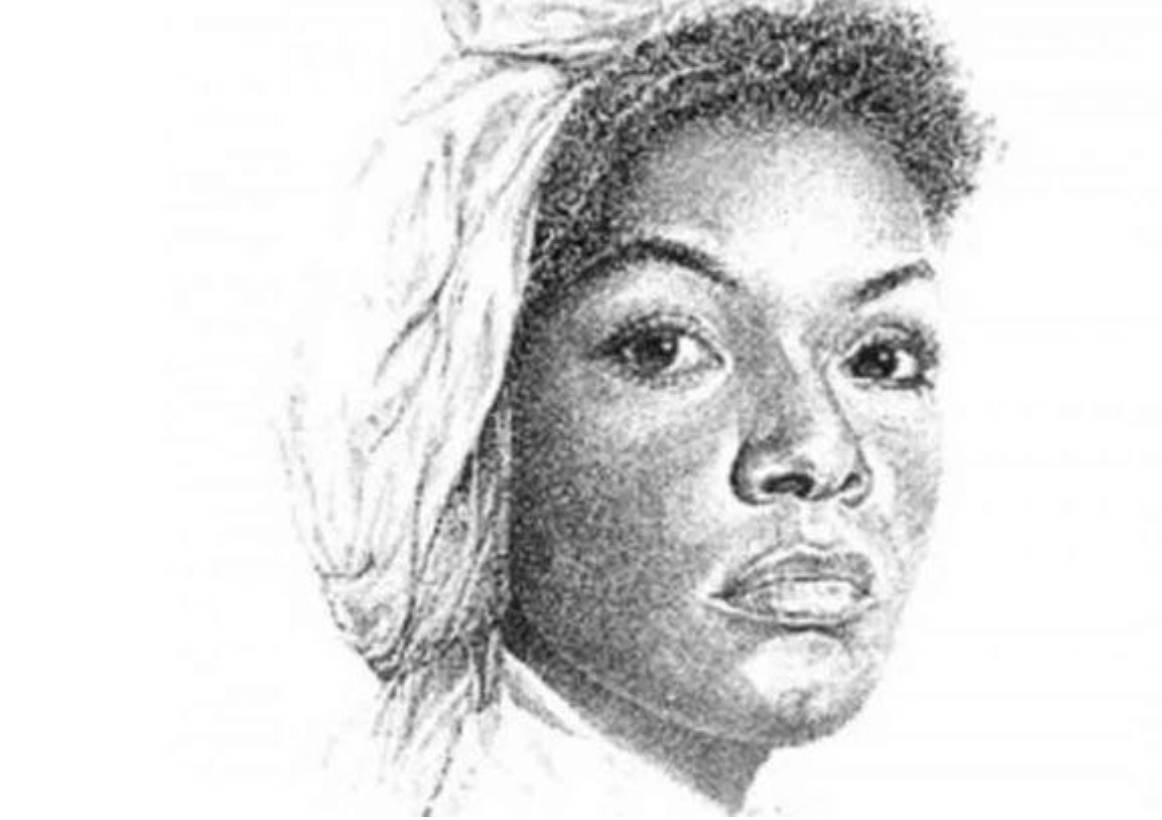
Photo Audre Lorde generated usimg Perplexity AI (2026)
Part V of the Fractured Sisterhood Series
In Part I, I traced the wound from the plantation to the boardroom.
In Part II, the research confirmed what the group chat already knew: sisterhood is infrastructure, and the sister circles work.
In Part III, I named the paradox Audre Lorde saw forty years before the algorithm existed to accelerate it — the way a Black woman who survives a system can become its most reliable enforcer — and traced the gatekeeper’s four-hundred-year root system from the plantation through respectability politics through Patricia Hill Collins’s matrix of domination.
In Part IV, I followed that root system into the platform, the algorithm, and the specific and measurable way that digital gatekeeping operates on the bodies and the careers and the cardiovascular systems of the Black women it excludes.
Part V goes inside the gatekeeper herself.
Not to excuse her. To explain what made her. And to name, with the precision the research demands, why explanation is not the same as exoneration — and why the mechanism that made her is also the mechanism that can unmake what she became.
Nobody is born a gatekeeper.
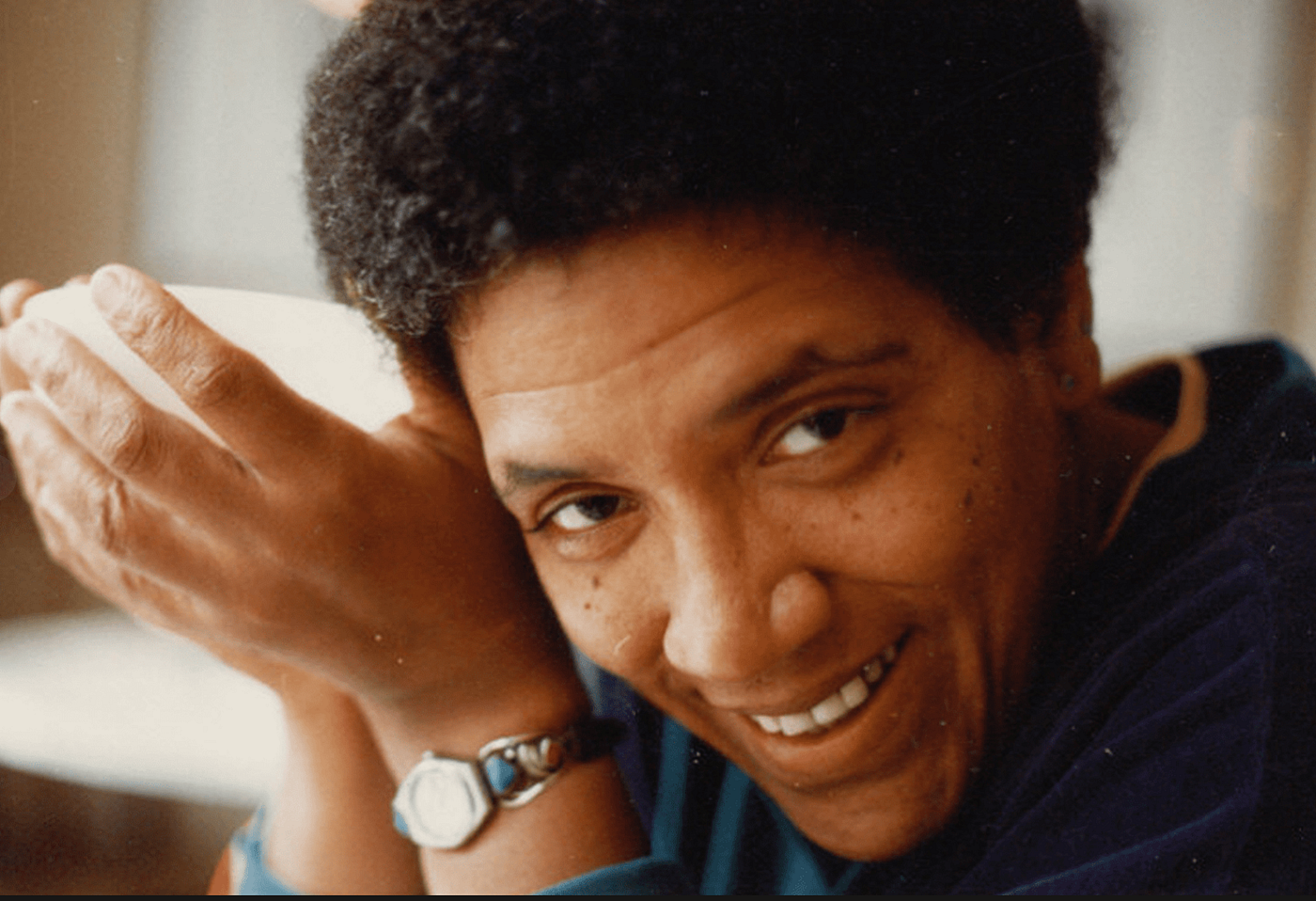
Photo by Look Again Digital on Unsplash
That is the thing that makes this so difficult to write and so necessary to say.
The woman holding the door closed did not arrive on this platform, or in this community, or in this life, with the intention of becoming the thing that was done to her.
She arrived the way most of us arrive.
Hungry. Ambitious. Wounded in ways she had not yet fully mapped.
Determined to build something that could not be taken from her.
And somewhere in the process of building it, the architecture of the house she was building inside got confused with the architecture of the house she was trying to escape.
Lorde named this dynamic with characteristic precision in Sister Outsider.
“Women of today are still being called upon to stretch across the gap of male ignorance,”
she wrote,
“and to educate men as to our existence and our needs. This is an old and primary tool of all oppressors to keep the oppressed occupied with the master’s concerns.”
Lorde was talking about gender. But the principle travels.
When Black women are kept occupied with managing scarcity, performing invulnerability, and surveilling each other for deviations from the code, they are doing the master’s work. Not because they chose to. Because the system was designed to make that work feel like self-preservation.
The psychology of the gatekeeper begins there.
In scarcity.
Not imagined scarcity.
Real scarcity.
The kind that was deliberately engineered into Black women’s experience of American institutional life from the beginning.
There were never enough seats at the table. There was never enough funding for Black women’s research. There was never enough column space for Black women’s writing. There was never enough oxygen in the room for more than one Black woman’s voice to be heard as authoritative at the same time.
That scarcity was a policy. It was enforced by white institutional gatekeepers for generations. It left a mark that does not simply disappear when the gatekeeper’s face changes.
bell hooks understood this in Sisters of the Yam, her most intimate and least celebrated work, a book written directly to Black women about the interior cost of surviving white supremacy.
hooks wrote about the way Black women learn to hoard what little they have been given because the experience of having it taken has been so consistent and so brutal that generosity begins to feel like recklessness.
The woman who shares her platform, her audience, her access, her connections, risks losing the fragile advantage she spent years accumulating inside a system that was never designed to give it to her in the first place.
That is not selfishness in the ordinary sense.
That is a trauma response wearing the clothing of strategy.
Joy DeGruy’s framework in Post Traumatic Slave Syndrome is directly relevant here, though DeGruy applies it to the community level rather than the individual psychology of platform behavior.
DeGruy argued that the behavioral adaptations Black Americans developed to survive chattel slavery did not simply end with emancipation.
They were transmitted across generations as survival strategies that had outlived the specific conditions that made them necessary but remained encoded in behavior, in family systems, in community norms.
The hoarding of advantage. The suspicion of other Black women’s success. The instinct to manage rather than expand the available space. These are not character flaws native to the gatekeeper as an individual.
They are adaptive responses to conditions of genuine scarcity that got transmitted so thoroughly across generations that they now operate even in conditions where the original scarcity no longer fully applies.
The platform is not the plantation.
But the nervous system does not always know the difference.
A 2025 collective case study published in PMC, which I examined in Part II of this series, traced how the Strong Black Woman narrative travels between generations through family socialization with the consistency of cultural inheritance.
The mothers in that study did not teach their daughters to be superwomen out of malice. They taught it because their own mothers had taught it to them, and because the world their daughters were entering still punished Black women who showed cracks.
The gatekeeper received the same inheritance.
She was taught, explicitly or implicitly, that there was room for one. That visibility was a competition with a single winner. That the Black woman who got too close to her lane was not a colleague but a threat.
That generosity was a luxury she could not afford because nobody had been generous to her on the way up and she had survived anyway and that survival was the proof that the scarcity was real.
Natalie Watson-Singleton’s research, which I also cited in Part II, identified the precise neurological and psychological mechanism through which the Strong Black Woman schema operates.
Watson-Singleton found that endorsement of the schema was directly associated with decreased perceived emotional support. Women who had fully internalized the schema did not merely fail to seek support. They could not perceive the support that was available to them.
That finding has a corollary that Watson-Singleton did not explicitly draw but that the Lorde framework makes visible.
The woman who cannot perceive the support available to her also cannot perceive the harm she causes by withholding support from others.
The gatekeeper is not indifferent to other Black women’s pain in the way a sociopath is indifferent.
She is often genuinely unable to fully register the cost of her closed door because her own perceptual apparatus has been so thoroughly shaped by the schema that tells her everyone is operating alone, everyone is protecting their own position, everyone is doing what she is doing.
She has generalized her own survival strategy onto the entire community.
In doing so she has made the community smaller, colder, and more replicative of the hierarchies that damaged her than she will ever fully acknowledge to herself.
Collins named this mechanism in Black Feminist Thought as internalized oppression, the process through which members of marginalized groups absorb and reproduce the dominant group’s assessment of their own inferiority and unworthiness.
But Collins was careful to note that internalized oppression does not operate only downward, as self-hatred. It also operates laterally, as the reproduction of hierarchy within the marginalized group itself.
The gatekeeper has not internalized the belief that Black women are inferior.
She has internalized the belief that Black women’s success is a finite resource that must be carefully managed and controlled.
That is a more sophisticated and more insidious form of the same damage.
Because it allows her to believe she is protecting Black excellence while she is actually rationing it.
It allows her to frame exclusion as curation.
It allows her to experience her own gatekeeping as a service to the community rather than a tax levied on it.
And finally, it allows her, perhaps most devastatingly of all, to genuinely not see the writers she is ignoring.
Not as an act of conscious suppression.
More as the predictable output of a perceptual system that was trained to recognize threat before it recognizes kinship.
Cooper described this in Eloquent Rage with the clarity that only personal experience produces.
“Sometimes I think we hurt each other when we don’t do our own work and our shit gets mixed up in it and we don’t show up for each other.”
The failure to show up, Cooper understood, is not always malice.
It is frequently unexamined damage doing what unexamined damage always does.
Spreading.
Reproducing itself in the next generation of relationships, the next platform, the next community space, the next Black woman who built something and then pulled the ladder up behind her not out of cruelty but out of the unhealed conviction that the ladder was the only one and she had earned the right to decide who deserved to climb it.
Lorde’s answer to this was not forgiveness in the cheap sense.
It was not the kind of understanding that asks the woman on the other side of the closed door to absorb the gatekeeper’s damage without naming it.
Lorde’s answer was accountability rooted in love.
In Sister Outsider she wrote about the difference between guilt and responsibility.
Guilt, she argued, is what keeps us focused on what we have done and feeling bad about it. Responsibility is what moves us toward what we can do differently.
The gatekeeper who remains in guilt, who cannot examine her own gatekeeping without collapsing into defensiveness or self-justification, is still inside the crooked room Harris-Perry described.
She has confused her adaptation to the tilt with the true vertical.
The gatekeeper who moves toward responsibility, who examines the inherited scarcity logic and decides consciously to operate from a different set of assumptions, who uses her platform to open doors rather than guard them, is doing what Lorde called the hard work of self-examination that genuine solidarity requires.
That movement is possible.
The research confirms it.
The mother-daughter dyad study I examined in Part II found that the mechanism of transmission is also the mechanism of repair. If the schema is taught, it can be untaught. If the inheritance is cultural, the intervention must be cultural too.
The gatekeeper was made by a system.
She can unmake what that system made of her.
But only if she is willing to see the door she is holding closed.
Only if she is willing to name the scarcity she inherited and reject the lie that it was ever real enough to justify what she built around it.
Only if she is willing to do what Lorde demanded of every woman who claimed to stand in solidarity while standing on someone else’s oxygen.
Open the door.
Or admit that the house you are guarding is the master’s house with your name on the mailbox.
Part VI will name the way out. Not forgiveness in the cheap sense, not understanding that asks the excluded writer to absorb the gatekeeper’s damage without naming it, but the structural alternative — the Feminist Coalition blueprint, the Sista Circle methodology, and the Lorde-Cooper synthesis that says the house worth building is the one with no door held closed.
Clap once for bell hooks, who wrote Sisters of the Yam for the women who needed it most and watched the academy celebrate everything else she wrote instead. Clap again for Joy DeGruy, who traced the inheritance across four centuries and insisted that naming the wound is the first condition of healing it. Clap again for Natalie Watson-Singleton, who gave the science a name that the living room already knew and whose corollary the gatekeeper has not yet reckoned with. Clap a final time because nobody is born holding the door closed. The system that made her is the same system she replicates. And the research that explains her is also the research that says she can change. If she chooses to. If she is brave enough. If she loves Black women more than she loves the position that surviving without them built.
Further Reading
Books
Sisters of the Yam: Black Women and Self-Recovery — bell hooks (South End Press, 1993). The most intimate text hooks ever wrote. A book addressed directly to Black women about the interior cost of surviving white supremacy and the hoarding behavior that cost produces.
Post Traumatic Slave Syndrome: America’s Legacy of Enduring Injury and Healing — Joy DeGruy (Joy DeGruy Publications, 2005). The intergenerational transmission framework that explains how survival adaptations from chattel slavery remain encoded in behavior, family systems, and community norms long after the original conditions have changed.
Sister Outsider: Essays and Speeches — Audre Lorde (Crossing Press, 1984). The foundational text. The distinction between guilt and responsibility that Part V applies to the gatekeeper’s psychology comes directly from Lorde’s insistence that self-examination is the precondition of solidarity.
Black Feminist Thought: Knowledge, Consciousness, and the Politics of Empowerment — Patricia Hill Collins (Routledge, 1990). Collins’s treatment of internalized oppression as a lateral mechanism, not merely a downward one, is the scholarly anchor for the argument that the gatekeeper reproduces hierarchy within the group rather than simply absorbing self-hatred.
Eloquent Rage: A Black Feminist Discovers Her Superpower — Brittney Cooper (St. Martin’s Press, 2018). Cooper’s observation about unexamined damage is the bridge between the psychological literature and the lived experience of Black women who have watched other Black women fail to show up.
Sister Citizen: Shame, Stereotypes, and Black Women in America — Melissa Harris-Perry (Yale University Press, 2011). The crooked room framework, revisited in Part V to describe the gatekeeper who has confused her adaptation to the tilt with the true vertical.
Scholarly Articles
Strong Black Woman Schema and Psychological Distress: The Mediating Role of Perceived Emotional Support — Natalie N. Watson-Singleton, Journal of Black Psychology (2017). The study whose corollary drives Part V. The woman who cannot perceive the support available to her also cannot perceive the harm she causes by withholding support from others.
Examining the Intergenerational Transmission of the Strong Black Woman Narrative — PMC (2025). The collective case study with mother-daughter dyads that traced how the SBW narrative travels between generations and whose finding that the mechanism of transmission is also the mechanism of repair anchors Part V’s closing argument.
An Integrative Review of Sistah Circles in Empirical Research — Martinque K. Jones, Sharde M. Davis, and Gabriella Gaskin-Cole, Psychology of Women Quarterly 47, no. 2 (2023): 159–179.
From the Fractured Sisterhood Series
Part I: The Wound. The historical diagnosis tracing how American systems were deliberately engineered to divide Black women from each other and how that division persists across contemporary institutions and relationships.
Part II: The Prescription. Twelve peer-reviewed studies and Brittney Cooper’s Eloquent Rage converge on the same conclusion. Sisterhood is not a feeling. It is infrastructure. And it is yours to build.
Part III: The Paradox. Audre Lorde saw the gatekeeper coming forty years before the algorithm existed to accelerate her. Part III names the mechanism that made her and traces its four-hundred-year root system.
Part IV: Platform Power and the New Gatekeeping. The plantation had an overseer. The Black Baptist church had a committee. Medium has an algorithm. Part IV follows the root system into the platform and names the specific and measurable cost of digital gatekeeping on the Black women it excludes.
Part VI: The Way Out. The structural alternative. The Feminist Coalition blueprint, the Sista Circle methodology, and the Lorde-Cooper synthesis that says the house worth building is the one with no door held closed. Coming soon.
메타데이터
- post_id
- add3cff56e2a
- slug
- the-psychology-of-the-gatekeeper-add3cff56e2a
- url
- https://medium.com/the-quiet-awakening/the-psychology-of-the-gatekeeper-add3cff56e2a
- canonical_url
- https://medium.com/the-quiet-awakening/the-psychology-of-the-gatekeeper-add3cff56e2a
- author_url
- https://medium.com/@jusbouey
- status
- ok
- fetched_at
- 2026-08-17 11:58:39