Why Pekoe Trail is a Heritage Trail for the Future?
When you hear the word heritage, what comes to mind?
Why Pekoe Trail is a Heritage Trail for the Future?
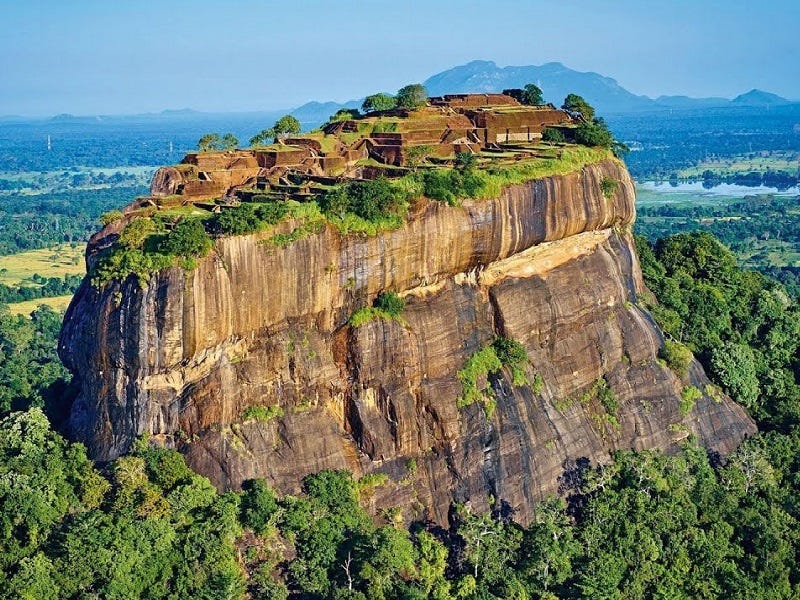
Caption: Historical Sigiriya Rock Fortress in Sri Lanka which is the 8th UNESCO World Heritage
When you hear the word heritage, what comes to mind?
Ancient temples?
Historic monuments?
Old forts?
They’re all part of the picture — but they aren’t the whole story.
Heritage is everything a society chooses to carry forward. It’s the places people protect, the traditions they practise, the food they cook, the songs they sing, the forests they care for, and the stories they continue to tell.
Some of it is tangible. Stone temples. Royal gardens. Colonial railways. Tea factories.
Some of it is intangible. Languages. Festivals. Craftsmanship. Hospitality. Memories passed from one generation to another.
Sri Lanka has both in abundance.
Sources: UNESCO World Heritage Centre
It All Begins in the Last Kingdom
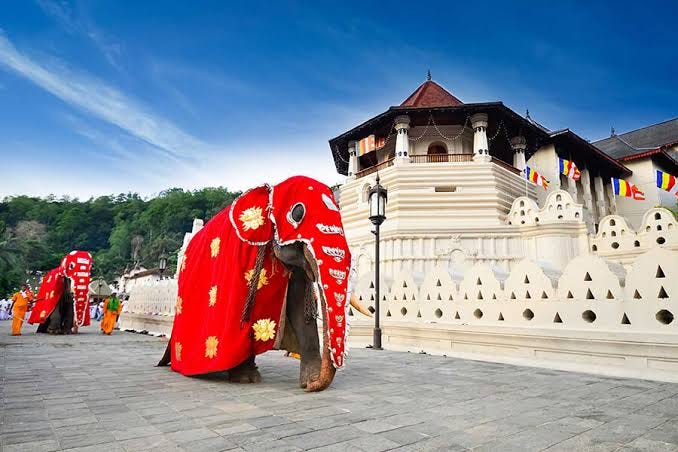
Caption: Temple of the Sacred Tooth Relic (Sri Dalada Maligawa) and majestic tuskers honoring the the puja
Your journey begins near Kandy.
Long before hikers arrived with backpacks and trekking poles, these mountains protected the last independent kingdom of Sri Lanka.
At its heart stands the Sri Dalada Maligawa, home to the Sacred Tooth Relic of the Buddha.
For centuries, this wasn’t only a place of worship.
It represented power itself.
Whoever protected the Sacred Tooth Relic was recognised as the rightful ruler of the island. Kings defended it. Pilgrims travelled for days to reach it. Even today, it remains one of Sri Lanka’s most sacred places.
Standing in Kandy before beginning the trail, you’re already surrounded by centuries of living history.
Source: Airial.Travel
A Landscape Designed by Nature — and People
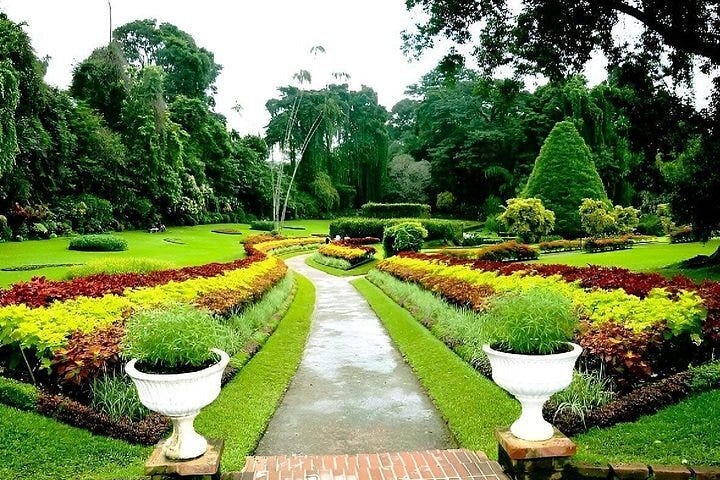
Caption: Royal Botanic Gardens, Peradeniya —traces its roots to 1371 as a royal pleasure garden for the Kingdom of Kandy.
The hill country didn’t become beautiful by accident. Generations shaped it.
The Kandyan kings created royal gardens that blended nature with architecture. Forests were protected because they sustained rivers and villages. Landscapes were designed to work with nature instead of against it.
Later, the British expanded many of these gardens, including the Royal Botanical Gardens at Peradeniya, introducing plants from around the world while reshaping the surrounding landscape.
Then came one of the biggest transformations in Sri Lankan history.
Tea.
Source: Trip Advisor
When Tea Changed Everything
The British annexed the Kandyan Kingdom in 1815.
Coffee plantations spread across the mountains.
Then disease destroyed almost every coffee estate.
Tea replaced coffee.
And the landscape changed forever.
Hills became neat green terraces.
Roads climbed impossible slopes.
Railways crossed deep valleys.
Factories appeared where forests once stood.
Thousands of Indian Tamil workers arrived to build the plantations. Today, their descendants remain an essential part of Sri Lanka’s cultural identity, carrying with them traditions, languages, festivals, and generations of knowledge about life in the tea country.
What visitors admire today isn’t simply a beautiful landscape.
It’s the result of history, migration, engineering, and human resilience.
The Pekoe Trail
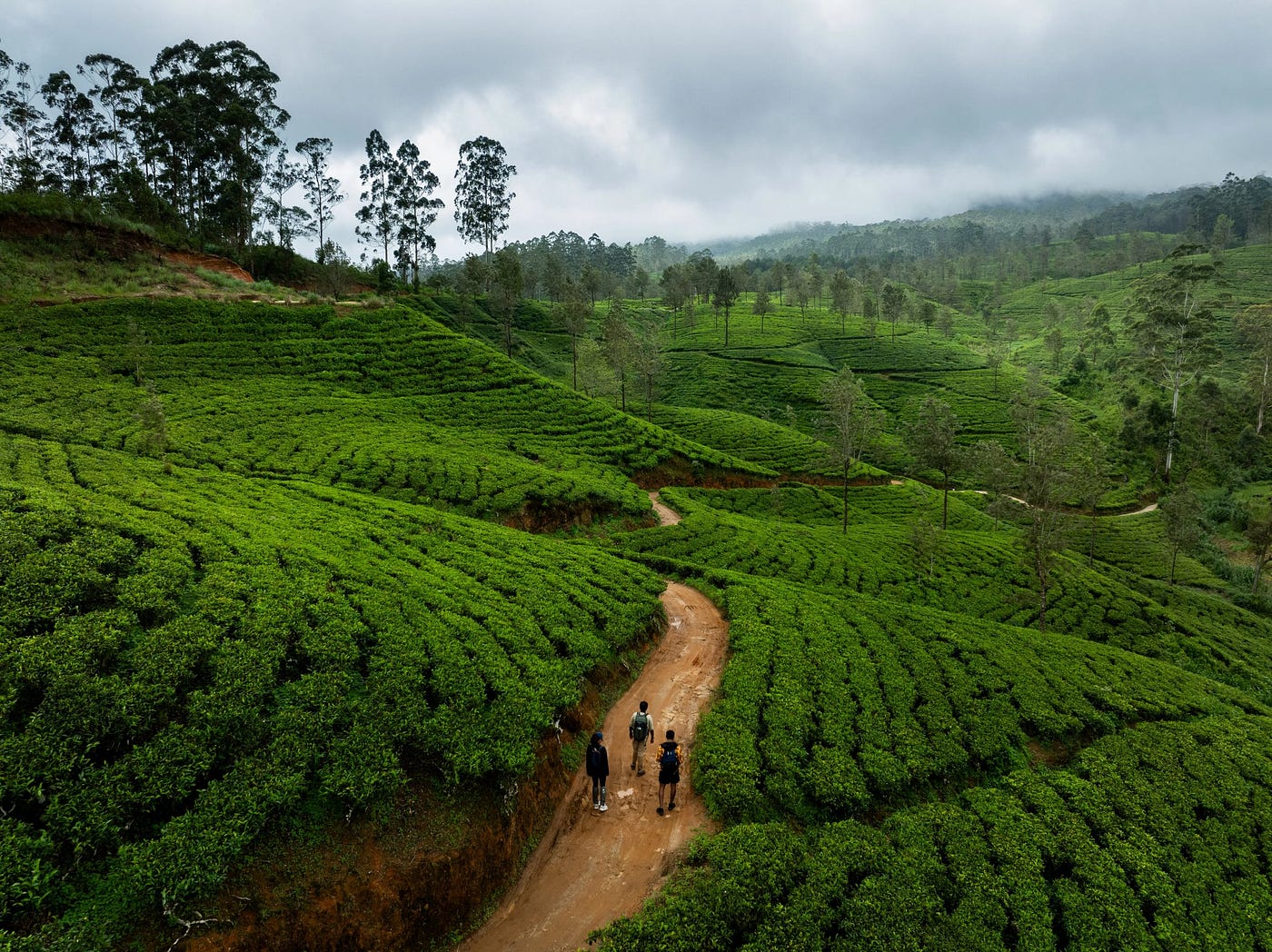
Caption: Trekkers hiking along the Pekoe trail tea estates in the Highlands of Sri Lanka
Most people think of a hiking trail as a way to get from one place to another.
The Pekoe Trail is different.
Here, every step takes you deeper into a story that began centuries before the first tea bush was planted. One moment you’re walking past mist-covered tea fields. The next, you’re standing on a colonial stone bridge, hearing temple bells in the distance, or sharing a cup of tea with someone whose family has lived in these hills for generations.
You don’t just see Sri Lanka’s heritage.
You walk through it.
And that’s exactly what makes the Pekoe Trail one of the country’s greatest heritage trails.
Stretching over 300 kilometers across 22 stages, the trail follows historic estate roads, village footpaths, railway tracks, and forest paths that local communities have used for decades.
As you walk, you’ll pass:
- tea factories still producing world-famous Ceylon Tea
- Buddhist temples, Hindu kovils, churches, and village shrines
- colonial bridges and railway stations
- waterfalls and cloud forests
- villages where daily life unfolds much as it has for generations
Every kilometre reveals another layer of Sri Lanka’s story.
Sometimes the Best View Isn’t the Landscape
The tea fields are breathtaking. The mountain sunsets are unforgettable. The cool air makes every climb worthwhile.
But ask people who have walked the entire Pekoe Trail, and many will tell you something surprising.
The moments they remember most weren’t the viewpoints.
They were the people.
Entrepreneur and tourism advocate Arjuna Samarakoon, who has spent months walking the trail through his 500K Steps initiative, says one of his favourite memories was simply “sharing tea with villagers.” For him, those conversations became just as meaningful as the spectacular mountain scenery.
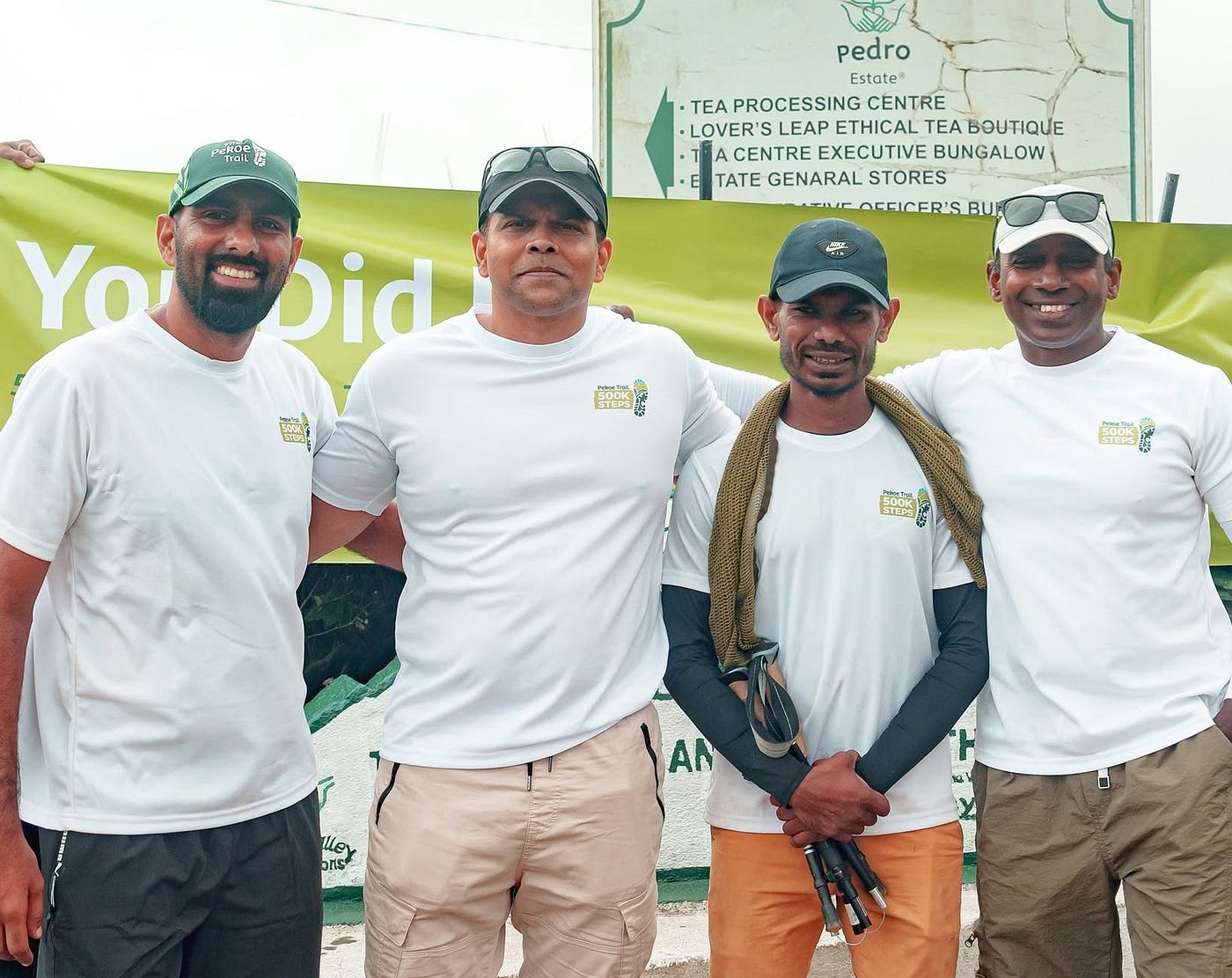
Caption: A moment of Triumph for Arjuna Samarakoon and team after completing the 500K campaign to raise funds for the Pekoe trail
He believes the trail offers something much bigger than outdoor adventure.
“This walk is about reconnecting with the land, with people, and with purpose,” he explains. Through the initiative, Samarakoon hopes each step along the trail contributes to stronger local communities, environmental conservation, and a greater appreciation of Sri Lanka’s cultural landscapes.
His words capture what many visitors discover for themselves.
The Pekoe Trail isn’t only about where you’re walking.
It’s about who you meet along the way.
A Heritage Trail for the Future
The best heritage sites don’t simply preserve history.
They help shape the future.
That’s exactly what the Pekoe Trail is doing.
By encouraging travellers to spend time in small villages, stay in family-run guesthouses, hire local guides, and experience everyday life in the hill country, the trail supports communities while protecting the landscapes that make the region unique.
It proves that tourism and conservation don’t have to compete.
When managed well, they can strengthen each other.
Source: UNDP
Before You Finish the Trail…
When you reach the final stage, you’ll probably remember the mountains.
You’ll remember the endless tea fields disappearing into the clouds.
You’ll remember the waterfalls.
But chances are, you’ll also remember the smile of the tea plucker who greeted you.
The family who invited you in for tea.
The station master who pointed you in the right direction.
The temple bells echoing across the valley.
Because that’s what heritage really is.
Not something locked inside a museum.
Not something preserved only in history books.
It’s something you experience.
Something you share.
Something you carry home with you.
And perhaps that’s the greatest achievement of the Pekoe Trail.
It reminds you that Sri Lanka’s greatest heritage isn’t only found in its monuments.
It’s found in its people, its landscapes, and the stories that continue to unfold with every step.
Read More:
메타데이터
- post_id
- adf9e5da47fd
- slug
- why-pekoe-trail-is-a-heritage-trail-for-the-future-adf9e5da47fd
- url
- https://medium.com/@projectteleglobal123/why-pekoe-trail-is-a-heritage-trail-for-the-future-adf9e5da47fd
- canonical_url
- https://medium.com/@projectteleglobal123/why-pekoe-trail-is-a-heritage-trail-for-the-future-adf9e5da47fd
- author_url
- https://medium.com/@projectteleglobal123
- status
- ok
- fetched_at
- 2026-07-16 14:44:18