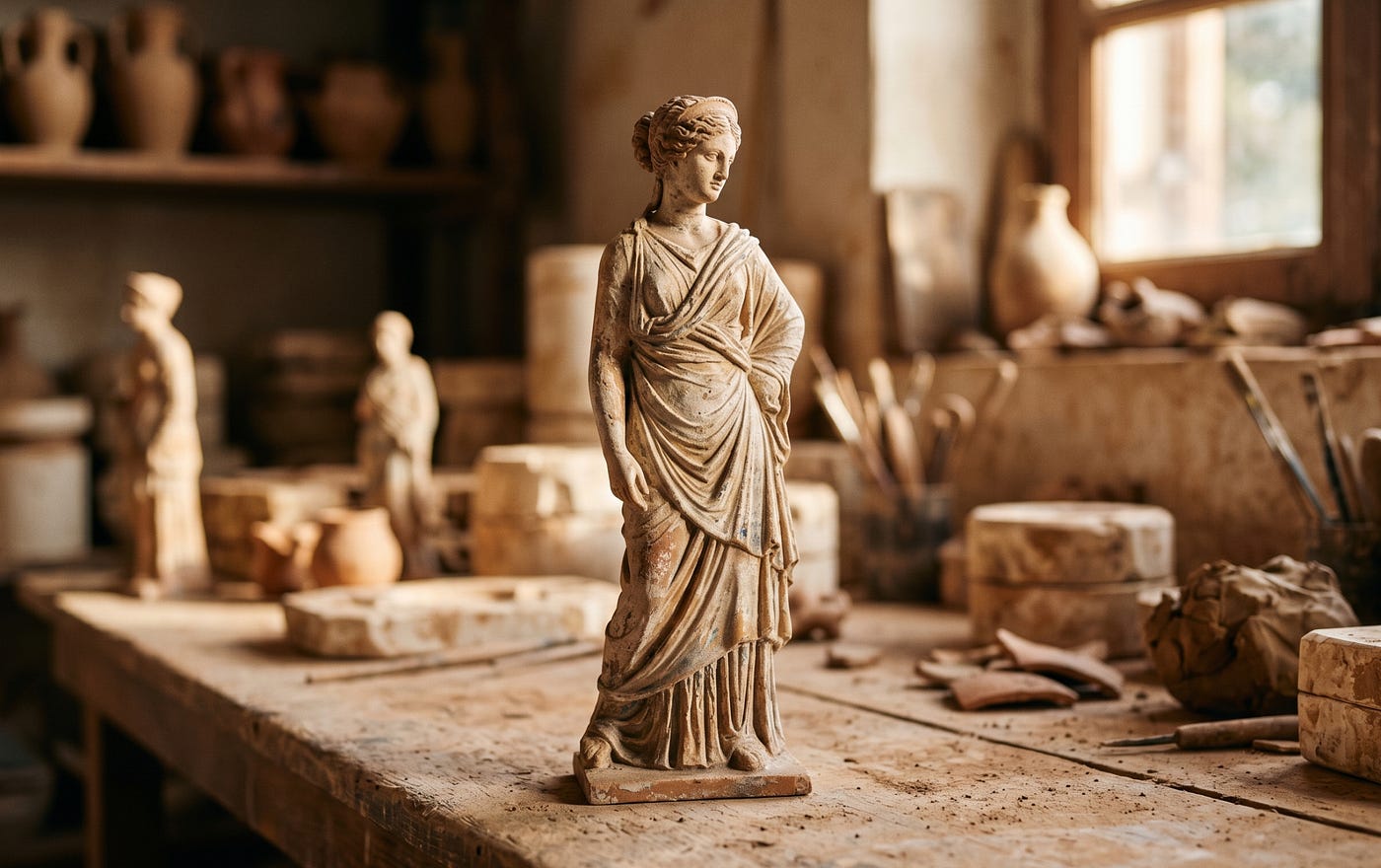
Sgraffito — an ancient technique with modern charm
Discover sgraffito with us — an ancient technique of decorating ceramics by scratching off a layer of engobe or glaze. In our latest…
Sgraffito — an ancient technique with modern charm

Discover sgraffito with us — an ancient technique of decorating ceramics by scratching off a layer of engobe or glaze. In our latest article, you will learn how to make sgraffito step by step, what tools, paints, and glazes are best for this process, as well as how this technique was used in other fields, such as architecture or furniture making, and which famous creators used it. Are you ready to give your ceramics a new, unique look? Click the link below to read more.
Sgraffito — an ancient technique with modern charm
Key information about sgraffito:
- Sgraffito is an Italian technique that involves scratching patterns into engobe or glaze, known since antiquity.
- The process requires clay of a contrasting color, precise tools (needles, lancets) and firing in a ceramic kiln to the final biscuit state.
- The technique is widely used not only in ceramics but also in classical painting, furniture making, and monumental architecture.
Did you know that you can decorate your ceramics in a way that has over 2000 years of history? Sgraffito is a technique that involves drawing patterns on clay by scratching off a layer of engobe or glaze. The effect is extremely attractive and offers many creative possibilities. In this article, you will learn how to do sgraffito step by step, what tools, paints, and glazes to use, and how this technique was applied in other fields, such as architecture and furniture making.
Are you looking for artisanal inspirations for your interior? Check out our original collection in the Ceramics category, created slowly and with attention to every tiny detail.
What are the roots and history of the sgraffito technique?
Sgraffito is an Italian word that means “to scratch, to scrape”. This technique involves applying at least two layers of different colored engobe or glaze to the clay, and then scratching off fragments of the top layer to reveal the color of the layer underneath. This creates a two- or multi-colored pattern that can be geometric, floral, animal, figurative, or abstract.
The sgraffito technique was already known in antiquity, e.g., in Mesopotamia, Egypt, Greece, or Rome. It was particularly popular during the Renaissance, when it was used to decorate the facades and interiors of buildings in Italy, Spain, Portugal, or Germany. Sgraffito was also sometimes used to decorate furniture, equipment, and vessels, often with the use of gilding. In the 19th and 20th centuries, this technique experienced a renaissance, especially in Art Nouveau and Modernism. Sgraffito is still used today, both by professional artists and amateurs.
How can you make sgraffito on ceramics in a home studio?
To make sgraffito on ceramics, you need a few things:
- Clay, preferably white or light, so that it contrasts well with the engobe or glaze.
- Engobe or glaze in various colors, preferably darker than the clay.
- Sgraffito tools, e.g., needles, lancets, styluses, knives, brushes, sponges, etc.
- A sketch or pattern that you want to draw on the clay.
- A kiln for firing ceramics.
Step by step:
- Forming: Form a vessel or other object out of clay. You can use a potter’s wheel, a mold, or hand modeling.
- Drying: Leave the clay to dry to a leather-hard state — when it is still plastic but does not stick to your hands.
- Applying color: Apply a layer of engobe or glaze. Remember not to apply it too thickly to avoid cracking.
- Designing: Place the sketch against the clay and trace it with a needle, marking the contours on the wet color layer.
- Scratching: Scrape the engobe from selected fragments using sgraffito tools. Reveal the color of the clay, creating a contrast.
- Firing: Leave the clay to dry to a biscuit state (completely dry), and then fire it in the kiln according to the recommendations.
If you value original design and careful Polish craftsmanship, discover our unique works. Our offer includes, for example, the exceptional Sgraffio collection, which perfectly fits this aesthetic.
In what other fields of art can we find the application of sgraffito?
The sgraffito technique is not limited to ceramics. It can also be used in other fields:
- Architecture: Decorating facades (e.g., the Wilanów Palace, tenement houses in Warsaw’s Old Town).
- Furniture making: Scratching the patina from a surface covered with gold leaf, creating intricate ornaments (popular in the Renaissance).
- Painting and Graphics: Creating paintings on canvas or graphics on wood by applying and scratching off layers of paint. Masters such as Picasso, Chagall, or Warhol used it.
Frequently Asked Questions (FAQ)
1. What exactly is the difference between sgraffito and classical painting on ceramics? Classical painting involves applying pigment to the surface. Sgraffito is a subtractive technique — first you apply an opaque layer (e.g., engobe), and then you scrape it off to physically reveal the color of the base (clay).
2. Can I do sgraffito after the first firing (on the biscuit)? Technically, sgraffito is done on clay in a leather-hard state. Carving into already fired biscuit is risky — the material is too hard and brittle, which can lead to chipping and damage to tools.
3. What tools are best for scratching fine details? Thin ceramic loops, profiled lancets, and potter’s needles work best. They allow for the precise removal of the engobe layer without tearing the edges of the pattern.
4. Why does the engobe crack while drying? The most common cause is a too thick layer of applied engobe or its application on too dry clay. The key is to apply thin layers to clay in perfect leather-hard state.
Originally published on: Blog Atelier Ardore — Sgraffito — starożytna technika z nowoczesnym urokiem
메타데이터
- post_id
- ae18f4c014b7
- slug
- sgraffito-an-ancient-technique-with-modern-charm-ae18f4c014b7
- url
- https://medium.com/@atelier-ardore/sgraffito-an-ancient-technique-with-modern-charm-ae18f4c014b7
- canonical_url
- https://medium.com/@atelier-ardore/sgraffito-an-ancient-technique-with-modern-charm-ae18f4c014b7
- author_url
- https://medium.com/@atelier-ardore
- status
- ok
- fetched_at
- 2026-06-09 15:37:30