America’s $39 Trillion Debt Crisis And Why the System Is Cracking
Uncover the hidden dangers behind soaring debt and the fragile framework keeping it afloat.
America’s $39 Trillion Debt Crisis And Why the System Is Cracking
Uncover the hidden dangers behind soaring debt and the fragile framework keeping it afloat.
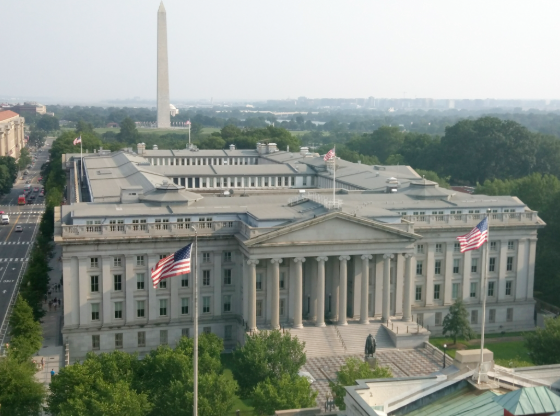
Image used from wikimedia.org
I’ll be honest with you when I first came across the number $39 trillion, my brain just kind of gave up. It’s too big. It doesn’t feel real. It’s the kind of number that belongs in astronomy, not in a conversation about money.
But then someone broke it down for me in a way I couldn’t ignore: if you spent one million dollars every single day, starting from the birth of Christ, you still wouldn’t reach one trillion dollars today. America owes thirty-nine of those.
That’s when I stopped scrolling and started paying attention.
And here’s the thing this isn’t just a number on a government spreadsheet. The way this debt works, and more importantly the way it’s held together, touches your mortgage rate, your grocery bill, your savings, and the kind of future your kids are going to inherit. So let’s talk about it, plain and simple.
The Dollar Illusion
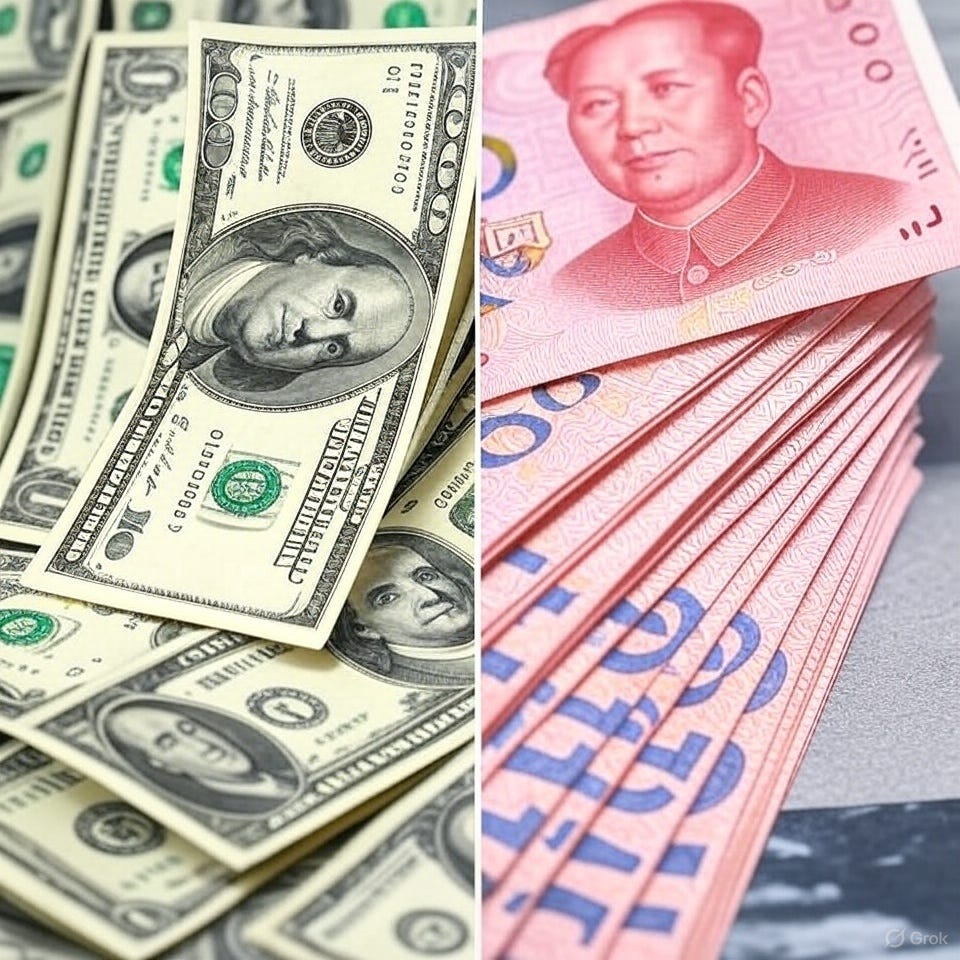
Think about this for a second. There are 180 national currencies on this planet. And yet, nearly 90% of all currency exchanges on Earth involve the U.S. dollar on one side. Nine out of ten times money changes hands internationally, someone is buying or selling dollars.
That’s not an accident. That’s an engineered outcome.
The global oil market worth around $2.5 trillion a year is the engine behind all of this. For decades, if you wanted to buy oil, you had to buy dollars first. A company in Japan buying oil from Saudi Arabia? Dollars. French refineries importing crude from Kuwait? Dollars. Indian power plants buying Iraqi oil? Dollars.
Every one of those transactions created demand for American currency. And that demand did something powerful it absorbed the inflation that America kept exporting every time it printed more money. The reason your groceries aren’t even more expensive than they already are is partly because central banks in Tokyo, Frankfurt, and Mumbai have been quietly soaking up trillions of U.S. dollars each year just to keep their own economies running.
But here’s what I find fascinating and a little uncomfortable. The U.S. is actually the world’s largest oil producer right now. It doesn’t need to buy oil in dollars. What it desperately needs is for everyone else to keep buying oil in dollars. That’s a very different position to be in, and it’s one America is slowly losing ground on.
The 1974 Secret Handshake
To understand how we got here, you have to go back to 1944 first.
After World War II, America held most of the world’s gold, had the strongest factories, and had a military presence that made disagreement uncomfortable.
So it brought 44 countries together in Bretton Woods, New Hampshire and set the rules: every country would peg their currency to the dollar, and the dollar would be pegged to gold at $35 an ounce. A dollar wasn’t just paper — it was a claim on something real.
For about twenty years, it worked.
Then America got expensive. Vietnam. The Space Race. A military budget that kept growing. By the late 1960s, the U.S. was printing dollars faster than it had gold to back them. The Europeans noticed. The French especially noticed — they started sending planes and ships to bring their gold home. Other countries followed. America’s gold reserves, once 80% of the world’s supply, started draining fast.
So in 1971, Richard Nixon went on television and simply… ended it. No vote. No warning. Just a declaration that dollars could no longer be exchanged for gold. The French had a few choice words about it. The global financial system, suddenly untethered from anything physical, wobbled badly.
Then in 1973, OPEC hit America with an oil embargo. Gas lines stretched around city blocks. The economy, already struggling, took a serious hit.
That’s when Henry Kissinger stepped in with an idea that was almost embarrassingly simple: if you can’t back the dollar with gold, back it with oil.
He went to Saudi Arabia and made a deal. The Saudis would sell their oil exclusively in dollars. In return, America would guarantee Saudi Arabia’s security essentially giving them the most powerful military bodyguard in history. Within a year, every major oil producer followed suit.
Here’s what gets me: parts of this deal stayed classified for over forty years. It was only publicly confirmed in 2016. The arrangement that quietly shaped the price of energy, housing, and groceries for half a century was never openly debated or voted on. It was just… done.
Enter the Dragon
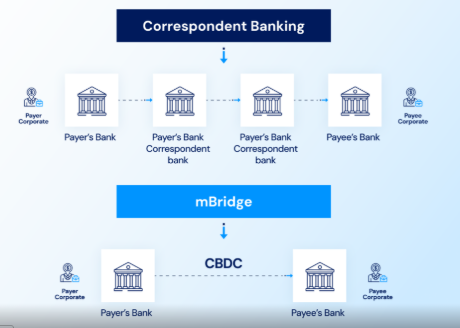
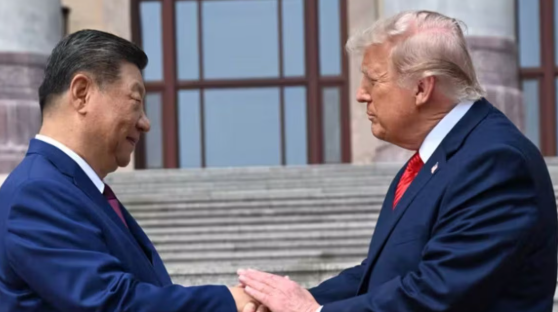
Image used from almabrook.ca
What Kissinger built was brilliant. Once oil was priced in dollars, countries didn’t just use dollars they held them. And when they held them, they invested them, mostly in U.S. Treasury bonds. That meant foreign governments were effectively financing American highways, wars, and the Cold War victory.
It was like putting a toll booth on the global economy and making every country pay just to turn on the lights.
China watched all of this and decided to build a road around the toll booth.
China currently imports nearly 2 million barrels of oil a day from Saudi Arabia alone. For years, every barrel was paid for in dollars, with an invisible fee flowing back into the American financial system because of that deal from the 1970s.
But in 2021, something quietly launched out of Basel, Switzerland. It’s called mBridge a system that lets countries move money directly between each other using their own digital currencies, without going through Western-controlled banks, and crucially, without touching SWIFT.
SWIFT, for context, is the messaging system banks use to talk to each other globally. It processes about $5 trillion a day. And because it operates under Western oversight, the U.S. can essentially use it as a weapon.
And it has. When Russia invaded Ukraine in 2022, the G7 kicked Russian banks off SWIFT and froze $300 billion of Russia’s reserves overnight.
If you’re China, India, or Saudi Arabia watching that happen, one question immediately crosses your mind: what if it’s us next time?
China’s answer wasn’t a strongly-worded letter. It built an exit. mBridge went live in 2024, and by late 2025, it had already processed over 4,000 transactions worth $55 billion. Still small compared to SWIFT but growing. And it’s not trying to replace SWIFT. It’s trying to make SWIFT optional. That’s an entirely different threat.
The Slow Death of the Dollar
In June 2024, headlines claimed Saudi Arabia had let its petrodollar deal expire. The truth is more nuanced the original 1974 bilateral agreement had technically expired back in 2001 anyway. The petrodollar system was never really a legal contract. It was a habit. A structural pattern baked so deeply into global trade that it didn’t need to be renewed.
But that habit is changing, quietly and gradually.
Economist Zoltan Pozsar calls this shift “Bretton Woods III.” His argument is that the world is moving away from paper claims on governments like U.S. Treasury bonds toward physical assets like gold and commodities.
His take: “Commodities are collateral, and collateral is money.” After watching $300 billion of Russia’s dollar reserves vanish overnight, that argument sounds a lot less theoretical.
The dollar’s share of global foreign exchange reserves has dropped from around 85% in the 1970s to roughly 58% today. That drop took 50 years, and 58% is still a dominant number. But it’s also the lowest it’s been in two decades.
Meanwhile, the U.S. now pays over a trillion dollars a year just in interest on its debt more than it spends on defense and education combined. That number stays manageable partly because foreign governments keep buying Treasury bonds. If they stop needing dollars for oil, they have less reason to buy those bonds. Bond prices fall. Yields rise. And mortgage rateswhich track Treasury yields almost exactly follow.
When rates moved from 2.65% to 7.79% between 2021 and 2023, the monthly payment on a $400,000 home loan jumped by nearly $1,300. That’s not an abstract statistic. That’s a family vacation that doesn’t happen, a car that doesn’t get replaced, a financial plan that quietly unravels.
The Final Domino
Every global reserve currency in history has eventually lost that status. Every single one.
The Roman denarius. The Dutch guilder. The British pound sterling. Each one was, in its time, the operating system of global commerce. And each one fell not with a dramatic explosion, but with a slow, grinding erosion that nobody could point to on a single front page.
When Britain lost reserve currency status, British citizens absorbed the cost through decades of inflation, emergency bailouts, and a standard of living that quietly fell behind the rest of the developed world. The pound didn’t crash it slowly became less and less relevant.
That’s the template for what could happen with the dollar.
Right now, BRICS nations represent nearly 36% of global GDP and 44% of global oil production. India is buying Russian oil in Yuan and Rupees. Brazil and China have ditched the dollar in bilateral trade.
Saudi Arabia is running transactions on mBridge while keeping its options open exactly what a country does when it’s hedging its bets.
None of these alternatives are the dollar. None of them replace SWIFT today. But the dollar didn’t take over the world overnight either. It won because the rules were simple: the world runs on oil, and oil runs on dollars.
That’s the rule that’s starting to crack.
My honest opinion? I don’t think this is a reason to panic. Jerome Powell himself has said the debt is “not unsustainable” though he’s also warned it won’t end well without action. The S&P 500 isn’t screaming in alarm. For now, there simply isn’t another asset as liquid and reliable as U.S. Treasuries for global investors to park their money in. China’s bond market doesn’t come close.
But I also think brushing this off entirely is a mistake. The trend is real. The alternatives are growing, slowly but steadily. And history is pretty clear on what happens when the underlying logic that makes everyone want a particular currency stop being true.
The question isn’t whether America faces consequences. It’s whether those consequences land gradually like Britain’s slow decline or all at once. And that depends heavily on decisions being made right now, by policymakers who are largely focused on the next election, not the next decade.
What Should You Actually Do?
Here’s the practical bit, because worrying without action helps nobody.
Don’t panic every time the debt counter ticks past a new trillion-dollar milestone. As long as global demand for Treasuries holds strong, the absolute size of the debt isn’t the immediate crisis it sounds like.
But don’t ignore the trend either. If risk premiums keep rising and fewer countries need dollars to buy oil, markets will eventually care.
That means diversification matters more than it did ten years ago. Not putting everything in U.S. dollar-denominated assets. Thinking about what a world looks like where the dollar is still important but not indispensable.
And stay informed. The conversations happening right now about mBridge, about BRICS expansion, about whether Saudi Arabia stays in the dollar system or quietly steps away these aren’t just geopolitical headlines. They’re early signals about the financial world your kids are going to inherit.
This is one of those topics I keep coming back to, because it sits at the intersection of history, power, and everyday life in a way that most financial news doesn’t.
The petrodollar system was built in secret and held the world together for fifty years. The system replacing it is also being built quietly, one bilateral trade deal and one digital payment at a time.
Whether you find that terrifying or fascinating probably says something about your personality. I find it both. And I think the least any of us can do is understand what’s happening before it lands on our doorstep.
Reference
메타데이터
- post_id
- ae1942ce2f62
- slug
- americas-39-trillion-debt-crisis-and-why-the-system-is-cracking-ae1942ce2f62
- url
- https://medium.com/geopolitics-beyond/americas-39-trillion-debt-crisis-and-why-the-system-is-cracking-ae1942ce2f62
- canonical_url
- https://medium.com/geopolitics-beyond/americas-39-trillion-debt-crisis-and-why-the-system-is-cracking-ae1942ce2f62
- author_url
- https://medium.com/@nairsahil08
- status
- ok
- fetched_at
- 2026-06-09 15:37:30