Coca-Cola’s World Cup Bottles: Genius Marketing or Just Hype?
Because nothing says “I love football” like panic-buying a patriotic soda bottle at 2 AM.
Coca-Cola’s World Cup Bottles: Genius Marketing or Just Hype?
Because nothing says “I love football” like panic-buying a patriotic soda bottle at 2 AM.
When FMCG Meets FOMO
Let’s be honest. You walked into Walmart for toilet paper and almond milk. You walked out with a soccer-ball-shaped Coca-Cola bottle, three bags of chips you didn’t need, and a sudden urge to learn the offside rule.
That’s the magic of what Coca-Cola just pulled off, and honestly? It’s brilliant.
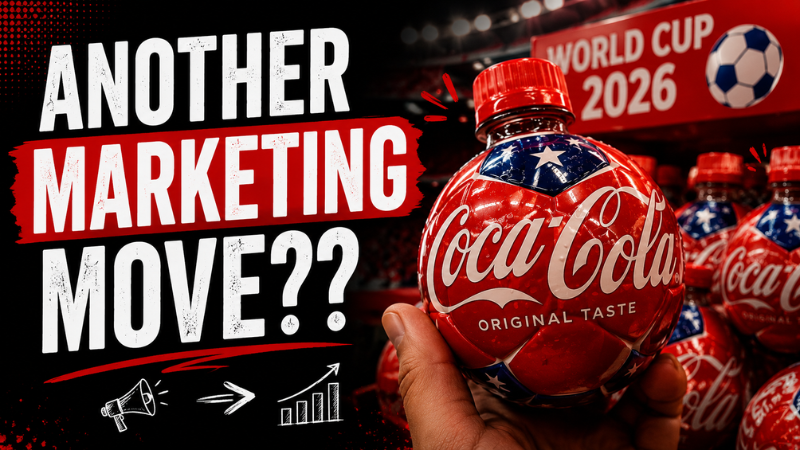
Ahead of the FIFA World Cup 2026, Coca-Cola dropped limited-edition football-shaped bottles in patriotic red, white, and blue at select Walmart stores. No press release. No nationwide rollout announcement. Just poof, suddenly your TikTok feed is full of collectors racing through aisles like it’s Black Friday meets the Champions League final.
The Kicker: These bottles only hold 13.5 fluid ounces. That’s barely a sip for serious Coke drinkers. But that’s not the point, is it? The point is that Coca-Cola just proved something that modern marketers are slowly waking up to: your product isn’t just a product anymore. It’s a collectible. It’s content. It’s culture.
Why This Campaign Is Actually Genius (No, Really)
Let’s break down what’s happening here beyond the cute packaging:
The Scarcity Play
Coca-Cola hasn’t officially announced a full retail rollout. The bottles are “select Walmart locations” only. That’s not poor logistics, that’s manufactured scarcity. It’s the same psychology that makes sneaker drops work. If everyone can get it, nobody wants it. If maybe you can find it at the Walmart in Schaumburg, Illinois? Suddenly you’re driving 45 minutes for sugar water.
The Organic Marketing Multiplier
Social media posts showing the bottles stacked in World Cup-themed displays are already going viral. Coca-Cola didn’t pay for that UGC (user-generated content). They earned it by making something worth photographing. In an era where Instagram’s algorithm is punishing polished perfection and rewarding human signals, raw, excited “LOOK WHAT I FOUND” posts are pure algorithmic gold.
The Merch-ification of FMCG
This bottle is closer to a streetwear drop than soda packaging. It’s designed to sit on a shelf, not in a fridge. It’s a conversation starter. A desk ornament. A “yeah, I was there when” story. Coca-Cola has spent 50 years as an official World Cup sponsor, and they’ve finally figured out how to make that sponsorship feel tangible in your everyday life.
The Bigger Picture: Sports, Fandom, and the “Collectible Economy”
Here’s where it gets interesting for us marketing folks. Sports fandom has evolved. It’s not just about watching the game anymore, it’s about participating in the culture. Jerseys, stickers, limited-edition everything. The overlap between sports, culture, and collectibility is exploding, and smart brands are sliding into that intersection like a perfectly timed slide tackle.
Speaking of stickers, Coca-Cola’s already running a Panini sticker campaign hidden beneath labels on specially marked bottles across the U.S. and Canada. Remember Panini? That childhood joy of peeling and trading? They’ve packaged nostalgia and gamified it. Buy a Coke, get a sticker, complete the album, feel like you’re 12 again. It’s not just marketing; it’s emotional engineering.
And if you think this is just about soft drinks, zoom out. The way we market everything is being rewritten by AI and automation, but campaigns like this prove that human emotion, nostalgia, scarcity, pride, and FOMO still drives the bus. The best AI in the world can’t replicate the dopamine hit of finding a limited-edition bottle in the wild.
What Marketers Can Actually Learn From This
Okay, enough fanboying. Let’s get tactical. Whether you’re selling soda, SaaS, or socks, here’s what to steal from Coca-Cola’s playbook:
1. Make It Physical in a Digital World
We’re drowning in digital. Notifications, emails, NFTs that nobody asked for. A weirdly shaped, patriotic bottle you can hold? That’s analog magic in a digital desert. If your brand can create something tactile and shareable, you win.
2. Scarcity Without Snobbery
Limited drops don’t have to feel elitist. Walmart is about as democratic as retail gets. Coca-Cola made scarcity accessible, you don’t need a Supreme membership or a crypto wallet. You just need to be in the right place at the right time. That’s inclusive exclusivity.
3. Turn Customers Into Content Creators
Those TikTok videos of Walmart displays? That’s free marketing from genuinely excited humans. The trick is giving them something worth sharing. In 2026, Reddit has become the most undervalued ad channel because high-intent communities drive authentic buzz, but nothing beats organic excitement when your product itself is the story.
4. Layer Your Campaigns
Coca-Cola isn’t doing one thing. They’re doing five things at once:
- The custom bottle shape
- The Panini stickers
- Online collectible glass bottles
- World Cup sponsorship activation
- Unannounced localized drops
Each layer reinforces the others. It’s a marketing onion, peel back one, find another, cry tears of joy (or maybe that’s just the soda sugar rush).
The Competition Isn’t Sitting Still
While Coca-Cola is dominating the beverage aisle, others are playing the same game:
🍔 McDonald’s
They teased a FIFA World Cup Happy Meal featuring **Squishmallows** in tiny international jerseys. Because nothing says “global football celebration” like a plush toy wearing a miniature France kit.
👑 Burger King (Mexico)
They teamed up with national team player Alexis Vega for a “Love or Whopper” campaign that literally turns goal celebrations into a debate about emotion vs. craving. It’s weird. It’s funny. It’s meme-ready.
The pattern? Everyone’s trying to own the cultural moment, not just the commercial break. Ambush marketing is alive and well, but when you’re an official sponsor like Coca-Cola, you get to play with the full toybox.
The Bottom Line
Here’s the thing about great marketing: it doesn’t feel like marketing. It feels like fun. It feels like discovery. It feels like being part of something bigger than a transaction.
Coca-Cola’s World Cup bottles are silly. They’re unnecessary. They hold less soda for probably more money. And yet, people are excited. They’re hunting. They’re sharing. They’re collecting.
That’s the lesson. In a world where AI is rewriting every job description, the brands that win will be the ones that remember we’re still human. We still love a quest. We still love a story. We still love holding something cool and saying, “Look what I found.”
So if you’re near a Walmart, maybe take a detour through the soda aisle. You might just find a little piece of World Cup history, or at least a very Instagrammable sugar rush.
Final Whistle
Whether you’re a football fanatic, a casual observer, or just someone who loves a good marketing case study, Coca-Cola’s World Cup drop is a masterclass in fun meets strategy. It’s playful, it’s smart, and it’s proof that the best campaigns don’t just sell products, they create moments.
Now if you’ll excuse me, I have a Walmart to visit. For research. Obviously.
Thanks for reading, fr! Share if you like it enough. Articulated by Priyanshi Khrawade.
메타데이터
- post_id
- ae346b4eef87
- slug
- coca-colas-world-cup-bottles-genius-marketing-or-just-hype-ae346b4eef87
- url
- https://medium.com/@valasys/coca-colas-world-cup-bottles-genius-marketing-or-just-hype-ae346b4eef87
- canonical_url
- https://medium.com/@valasys/coca-colas-world-cup-bottles-genius-marketing-or-just-hype-ae346b4eef87
- author_url
- https://medium.com/@valasys
- status
- ok
- fetched_at
- 2026-06-16 19:09:56




