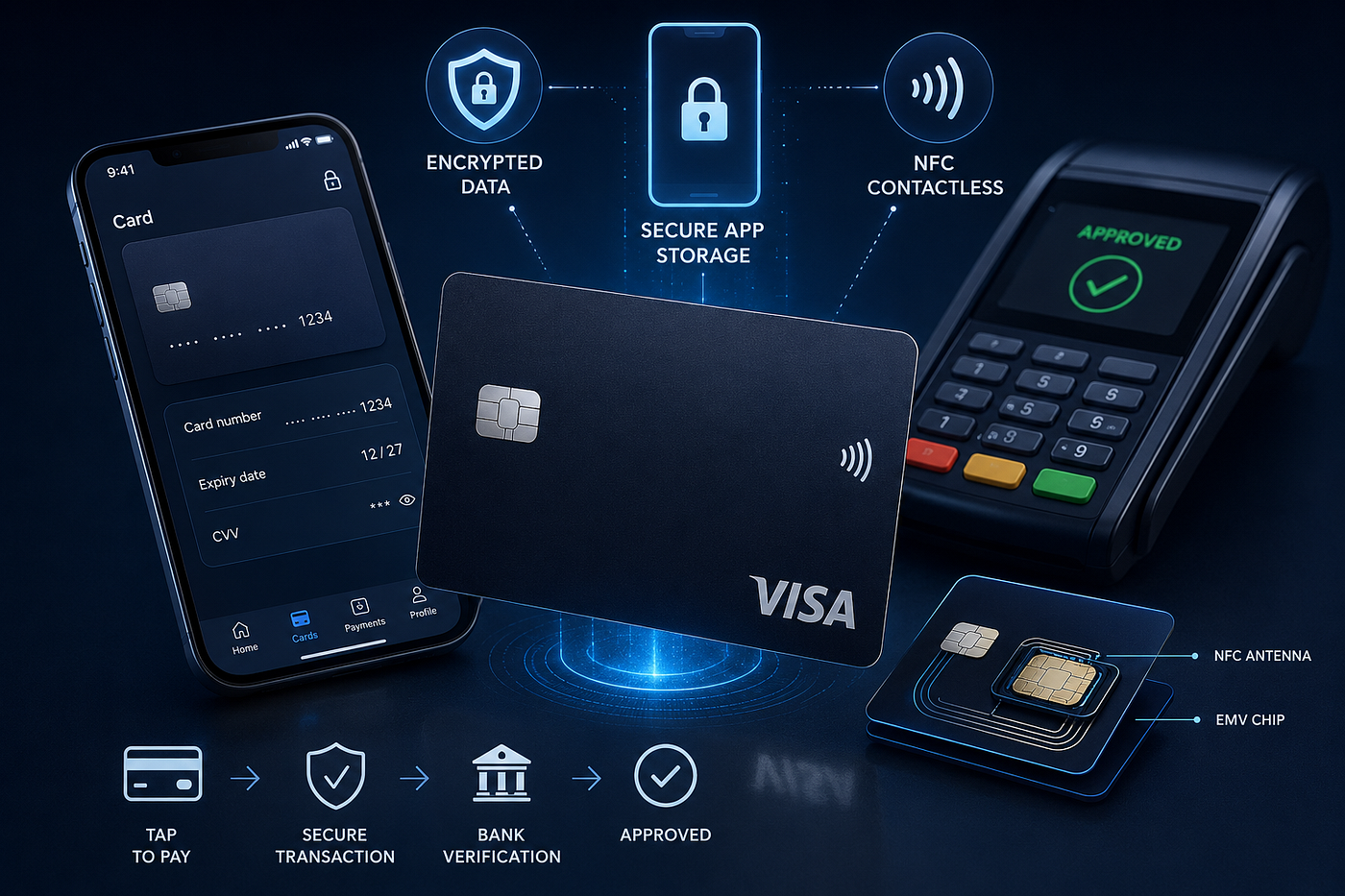
The Evolution of the GDPR: From Early Privacy Frameworks to Global Influence
The General Data Protection Regulation (GDPR) has become one of the world’s most influential data-protection frameworks, shaping how…
The Evolution of the GDPR: From Early Privacy Frameworks to Global Influence

The General Data Protection Regulation (GDPR) has become one of the world’s most influential data-protection frameworks, shaping how organizations collect, manage, and secure personal data. But its story began long before May 2018 — rooted in decades of evolving European legal philosophy, technological disruption, and growing public concern over digital privacy.
📌 1️⃣ Origins and Early Development
The foundation of the GDPR can be traced back not only to the 1995 EU Data Protection Directive (95/46/EC) but even earlier to fundamental European legal traditions. The Convention 108 of the Council of Europe (1981) was the first legally binding international instrument on data protection, establishing core principles such as fairness, purpose limitation, and individual rights — concepts that would later be refined in both the Directive and the GDPR.
The 1995 Directive aimed to harmonize national data protection laws across the EU and ensure the free flow of personal data within the Single Market. However, as the internet matured, cloud computing emerged, and mobile payments proliferated, the Directive’s fragmented implementation and lack of enforcement mechanisms became glaring weaknesses. National data protection authorities interpreted and applied its provisions inconsistently, creating legal uncertainty for businesses — especially those operating across borders.
Recognizing these gaps, the European Commission proposed a comprehensive reform in January 2012. After years of negotiation among EU institutions, the GDPR was formally adopted on April 27, 2016, with a two-year transition period before full enforcement began.
📌 2️⃣ May 25, 2018: The GDPR Takes Effect
The GDPR officially went into effect on May 25, 2018, marking a paradigm shift in data governance. Beyond introducing landmark rights for individuals, it imposed accountability obligations on data controllers and processors alike. Key innovations included:
-
Right to be forgotten (Article 17) — allowing individuals to request erasure of personal data under certain conditions.
-
Data portability (Article 20) — enabling users to obtain and reuse their data across services.
-
Stricter consent requirements (Article 7) — mandating that consent be freely given, specific, informed, and unambiguous.
-
Mandatory breach notification (Article 33) — requiring organizations to report serious data breaches to authorities within 72 hours.
-
Heavy administrative fines — up to €20 million or 4% of global annual turnover, whichever is higher.
Critically, the GDPR replaced the Directive with a regulation, meaning it is directly applicable in all EU member states without requiring national transposition — though countries retained limited room for derogations in areas like employment or journalistic purposes.
📌 3️⃣ Territorial Scope: A Global Reach
One of the GDPR’s most transformative features is its extraterritorial applicability (Article 3). It applies to:
-
Any organization established in the EU, regardless of where data processing occurs.
-
Any organization outside the EU that offers goods or services to, or monitors the behavior of, individuals in the EU — even if no payment is involved.
This provision has forced global tech giants, e-commerce platforms, SaaS providers, and payment service providers (PSPs) worldwide to comply with GDPR standards. Many non-EU companies now appoint EU representatives (Article 27) and update their privacy policies, data processing agreements, and technical infrastructures accordingly.
As a result, the GDPR has effectively become a de facto global standard, influencing privacy laws from California to India, and prompting the development of GDPR-like compliance programs even in jurisdictions with weaker data protection regimes.
📌 4️⃣ GDPR in the Global Privacy Landscape
While the GDPR has inspired numerous data protection laws, significant differences remain:
-
🇺🇸 California Consumer Privacy Act (CCPA/CPRA): Emphasizes consumer control and opt-out rights (e.g., “Do Not Sell My Info”) but lacks GDPR’s foundational principles like data minimization or purpose limitation as hard requirements.
-
🇧🇷 Brazil’s LGPD: Mirrors GDPR’s structure closely but grants more discretion to the national authority (ANPD) in enforcement and lacks the same level of private right of action.
-
🇨🇦 PIPEDA (Canada): Relies on a principles-based, “reasonable purposes” approach and has historically prioritized business flexibility over individual redress.
-
🇦🇪 UAE & 🇸🇦 Saudi Arabia: Newer frameworks like the UAE’s PDPL (2021) and Saudi Arabia’s PDPL (2023) are emerging but remain sector-specific, with stronger state oversight and fewer individual remedies.
Despite this diversity, the EU’s adequacy decisions — which allow data to flow freely to countries deemed to offer “essentially equivalent” protection — have made GDPR compliance a strategic imperative for international data transfers. Post-Schrems II (2020), even transfers to the U.S. now require robust supplementary measures and case-by-case assessments.
📌 5️⃣ GDPR in Electronic Payments and Monétique
In the realm of secure electronic transactions — a field central to your expertise, Mohammad — the GDPR intersects deeply with payment security standards, financial regulation, and consumer trust.
The digital payments ecosystem, governed by standards such as ISO 8583 (for transaction messaging), ISO 20022 (for financial messaging), and PCI DSS (for card data security), must now also align with GDPR’s data minimization and purpose limitation principles.
Key Impacts on Monétique:
- Data Minimization in Payment Flows:
Payment processors must avoid storing unnecessary personal data (e.g., full names, addresses, or transaction histories beyond what’s required for settlement, fraud prevention, or legal retention).
- Privacy by Design & Default:
Banks, issuers, and Acquirers must integrate data protection into system architecture from the outset — encrypting PANs (Primary Account Numbers), masking customer identifiers, and limiting internal access through role-based controls.
- Explicit Consent for Data Sharing:
Under PSD2’s open banking regime, Third-Party Providers (TPPs) must obtain clear, granular consent to access account data. This must be separate from general terms of service and easily withdrawable — aligning with GDPR Article 7.
- Tokenization as a Compliance Enabler:
Tokenization replaces sensitive card data with non-sensitive tokens (per EMVCo standards), reducing the scope of GDPR-regulated data in merchant and processor environments. This synergy between PCI DSS and GDPR has accelerated token adoption across Europe.
- Fraud Detection vs. Profiling:
While fraud prevention is a legitimate interest under GDPR (Recital 47), automated decision-making that profiles users based on behavior must include safeguards — such as human review and transparency — especially when it leads to service denial.
- Cross-Border Data Flows in Payment Networks:
Global card schemes (Visa, Mastercard) must ensure that personal data transferred outside the EEA (e.g., to U.S.-based processors) complies with GDPR transfer mechanisms — Standard Contractual Clauses (SCCs) or Binding Corporate Rules (BCRs).
The convergence of GDPR and PSD2 has thus created a dual regulatory framework that demands both security (via SCA, strong authentication) and privacy (via data rights and transparency) — driving innovation in secure APIs, consent management platforms, and privacy-preserving analytics.
📌 6️⃣ Future Directions: Beyond Compliance
The GDPR is not static. Ongoing developments include:
-
The Data Act (2023) and Data Governance Act: Complementing GDPR by regulating data sharing, reuse, and access in B2B and public-sector contexts.
-
AI Act (2024): Introducing stricter transparency and risk-based obligations for AI systems processing personal data — especially in credit scoring or payment fraud models.
-
ePrivacy Regulation (pending): Set to replace the 2002 ePrivacy Directive, harmonizing rules on cookies, metadata, and electronic communications — closing a key gap in the current framework.
Moreover, the European Data Protection Board (EDPB) continues to issue guidelines clarifying complex issues — such as data processing in loyalty programs, biometric authentication, and real-time payment fraud monitoring.
✨ Conclusion
From its philosophical roots in European human dignity to its operational impact on global data flows, the GDPR has redefined the relationship between individuals, businesses, and data. Far from being merely a compliance burden, it has acted as a catalyst for ethical data stewardship, technical innovation, and consumer empowerment.
In the specialized world of monétique — where every transaction carries sensitive identity and financial data — the GDPR has reinforced the need for privacy-aware engineering, robust tokenization, and transparent consent mechanisms. As digital finance evolves with CBDCs, instant payments, and embedded finance, the GDPR will remain a cornerstone of trust in Europe’s digital economy — and a blueprint for the world.
메타데이터
- post_id
- ae69df5be8de
- slug
- the-evolution-of-the-gdpr-from-early-privacy-frameworks-to-global-influence-ae69df5be8de
- url
- https://medium.com/@olwanmohammad/the-evolution-of-the-gdpr-from-early-privacy-frameworks-to-global-influence-ae69df5be8de
- canonical_url
- https://medium.com/@olwanmohammad/the-evolution-of-the-gdpr-from-early-privacy-frameworks-to-global-influence-ae69df5be8de
- author_url
- https://medium.com/@olwanmohammad
- status
- ok
- fetched_at
- 2026-06-15 20:49:13