Best Time of Year for Tree Trimming in Kansas City
Kansas City homeowners deal with a wide range of tree problems throughout the year, from overgrown branches and heavy summer canopies to…
Best Time of Year for Tree Trimming in Kansas City
Kansas City homeowners deal with a wide range of tree problems throughout the year, from overgrown branches and heavy summer canopies to storm-damaged trees after wind, ice, and severe Missouri weather. Knowing the best time of year for tree trimming in Kansas City can help protect your home, improve tree health, reduce safety hazards, and keep your residential landscape looking clean and well-maintained.
For most trees, late winter through early spring is the best season for major trimming because trees are dormant, branch structure is easier to see, and cuts can heal more efficiently before active spring growth. However, hazardous limbs, dead branches, storm damage, and emergency tree removal situations should be handled right away, regardless of season.
**Omar Tree Services LLC** helps Kansas City homeowners make smart, safe decisions about tree trimming, tree pruning, tree removal, stump grinding, storm cleanup, and year-round tree maintenance.
What Is the Best Time of Year for Tree Trimming in Kansas City?
The best time of year for tree trimming in Kansas City is usually late winter to early spring, before new leaves fully emerge. During this dormant season, trees are not using as much energy for active growth. That makes it easier to perform structural trimming, remove weak limbs, improve airflow, and reduce future risk without putting unnecessary stress on the tree.
In Kansas City, this often means scheduling major tree trimming sometime between late fall and early spring, depending on weather, tree species, and the condition of the tree. Late winter is especially helpful because many trees are still dormant, but the harshest winter conditions may already be passing.
That said, not every tree care need can wait for the perfect season. Dead branches, broken limbs, diseased wood, storm-damaged trees, and hazardous trees should be inspected and addressed as soon as possible. A large cracked limb hanging over a driveway, roof, sidewalk, or power line is a property safety issue, not a seasonal maintenance task.
For homeowners, the simple rule is this:
Major trimming is usually best in late winter or early spring. Safety-related trimming should happen immediately.
Why Homeowners in Kansas City Need Professional Tree Services
Kansas City has a challenging climate for trees. Hot summers, strong winds, thunderstorms, freezing rain, ice storms, and heavy snow can all affect tree health and structural stability. Mature trees add shade, curb appeal, and value to residential landscapes, but they also need proper care.
Professional tree service is important because many problems are not obvious from the ground. A tree may look full and healthy while hiding internal decay, weak branch unions, root damage, disease symptoms, or storm stress. Overgrown branches can rub against roofs, gutters, siding, fences, and nearby trees. Heavy limbs can become dangerous during high winds.
A professional tree service company can evaluate the full condition of your trees, not just the visible branches. This includes tree inspection, crown structure, limb weight, trunk condition, root flare, disease signs, deadwood, and clearance around the home.
For Kansas City homeowners, professional tree services help with:
Tree trimming in Kansas City Tree pruning Tree removal Arborist services Emergency tree service Stump grinding Storm damage cleanup Tree health assessments Residential tree maintenance Property safety planning
Working with an experienced local team matters because Kansas City trees face local weather patterns, local soil conditions, and seasonal stress that generic advice may not fully address.
Common Signs Your Trees Need Attention
Trees often show warning signs before a major failure happens. Homeowners should regularly look at trees after strong winds, heavy rain, ice storms, and seasonal changes.
Dead Branches
Dead branches are one of the clearest signs a tree needs attention. They may appear dry, brittle, leafless, cracked, or lighter in color than healthy limbs. Dead branches can fall without warning, especially during storms.
Small dead branches may not be urgent, but large dead limbs over a house, driveway, patio, fence, or walking area should be inspected quickly.
Leaning Trees
A slight lean is not always a problem, especially if the tree has grown that way for years. A sudden lean, however, can indicate root failure, soil movement, storm damage, or structural instability.
Warning signs include raised soil on one side of the tree, cracking ground near the root zone, exposed roots, or a lean that appeared after a storm.
Disease Symptoms
Diseased trees may show thinning leaves, early leaf drop, fungal growth, bark splitting, cankers, dead sections, or discolored foliage. Some diseases spread from branch to branch or tree to tree if not addressed.
A professional tree health assessment can help determine whether pruning, treatment, monitoring, or removal is the safest option.
Root Damage
Roots are the foundation of the tree. Construction activity, soil compaction, trenching, drainage issues, and heavy equipment can damage roots. Because root problems are often hidden, homeowners may not notice an issue until the tree begins leaning, declining, or dropping branches.
Storm Damage
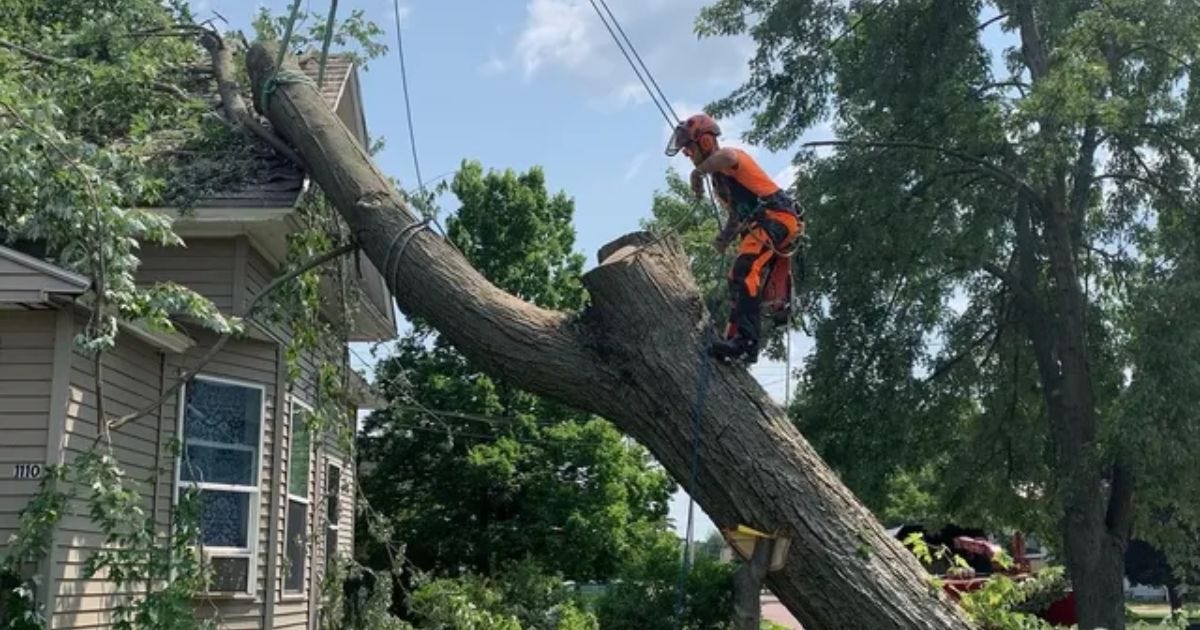
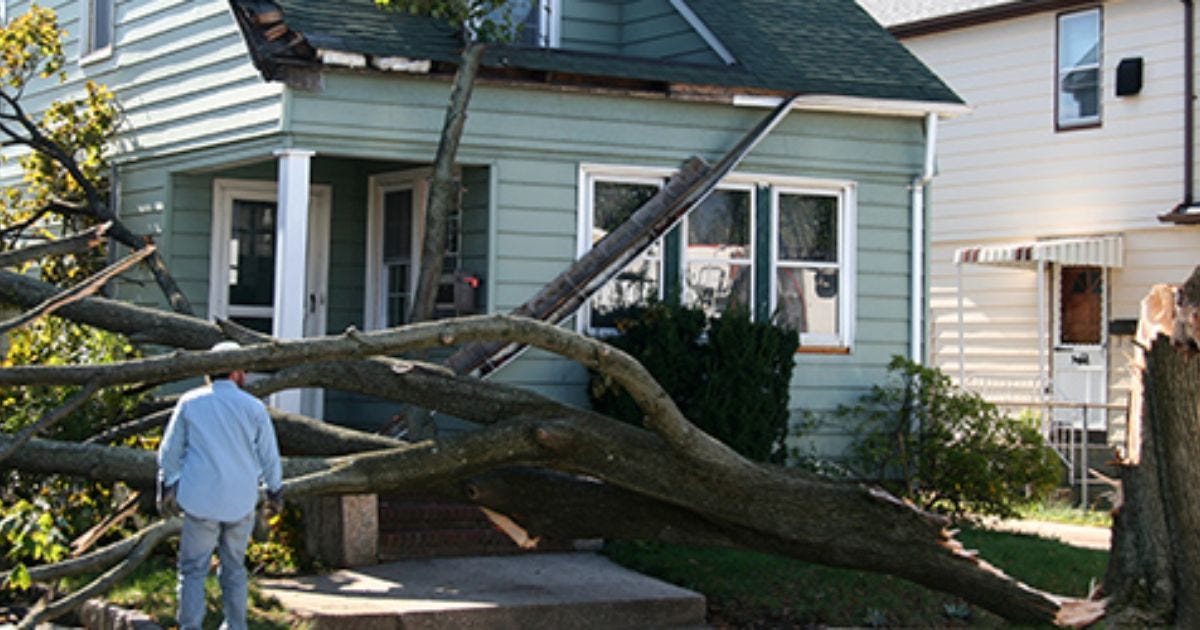
Kansas City storms can break limbs, split trunks, and leave trees unstable. Even if branches do not fall immediately, cracked limbs may fail later. After a wind storm or ice storm, homeowners should inspect trees from a safe distance and call a professional if they see hanging limbs, broken branches, split trunks, or major canopy loss.
Benefits of Professional Tree Service
Professional tree service does more than make trees look neat. It improves safety, supports tree health, protects property, and helps prevent larger problems.
Key benefits include:
Safer removal of hazardous branches Better tree structure Improved sunlight and airflow Reduced roof and gutter damage Lower risk during storms Healthier mature trees Improved curb appeal Cleaner residential landscaping Early detection of disease or decay Professional recommendations for long-term maintenance
Proper tree trimming can reduce the weight of overextended limbs and help the tree maintain a stronger form. Proper pruning can also remove crossing branches, diseased wood, weak attachments, and deadwood before they become serious hazards.
For homeowners, regular maintenance is usually more affordable than waiting for emergency tree removal after a storm.
Tree Trimming vs Tree Pruning: Understanding the Difference
Tree trimming and tree pruning are often used interchangeably, but they are not the same.
Tree trimming usually focuses on appearance, clearance, and managing overgrowth. This may include cutting back branches from roofs, driveways, sidewalks, fences, windows, and utility areas. Trimming helps maintain shape and prevents branches from interfering with the home.
Tree pruning is more focused on tree health, structure, and long-term growth. Pruning may involve removing diseased branches, deadwood, weak limbs, crossing branches, crowded growth, or damaged sections. It requires a better understanding of how trees respond to cuts.
Both services are important, but they should be done correctly. Poor trimming can weaken a tree, create decay points, or encourage unstable regrowth. Over-pruning can stress a tree and make it more vulnerable to disease, insects, and weather damage.
A professional tree care team understands where to cut, how much to remove, and when trimming or pruning is appropriate.
When Tree Removal Becomes Necessary
Tree removal becomes necessary when a tree is dead, severely diseased, structurally unsafe, badly storm-damaged, or growing in a location where it creates serious property risk.
Common reasons for tree removal include:
Dead tree removal Severe trunk decay Large cracks or splits Major root failure Hazardous leaning Storm-damaged trees Diseased trees beyond recovery Branches threatening the home Trees interfering with construction Trees too close to foundations or utility lines
Tree removal should never be treated as a simple DIY project. Large trees can weigh thousands of pounds, and one wrong cut can cause serious injury or major property damage. Professional tree removal requires planning, rigging, equipment, safety procedures, and experience.
After tree removal, stump grinding is often recommended. Stumps can attract insects, create tripping hazards, interfere with mowing, and leave the yard looking unfinished. Stump removal helps restore the space and makes future landscaping easier.
The Importance of Hiring a Professional Arborist in Kansas City
A professional arborist brings technical knowledge to tree care decisions. While not every job requires a full diagnostic report, arborist-level insight is valuable when a tree has disease symptoms, structural concerns, storm damage, or signs of decline.
A trained tree care professional can assess:
Tree species Canopy structure Branch attachments Disease symptoms Decay indicators Root zone problems Soil and drainage stress Risk to nearby structures Best pruning approach Whether removal is necessary
Kansas City homeowners often have mature trees near homes, garages, fences, driveways, and sidewalks. In these settings, tree care is not just about appearance. It is about property safety and long-term health.
Hiring an experienced team helps avoid unnecessary tree removal when a tree can be saved and helps prevent unsafe delays when a hazardous tree needs to come down.
Common Tree Problems in Kansas City
Kansas City trees face several common issues due to weather, soil, age, and seasonal stress.
Wind Damage
Strong winds can break weak limbs, split branch unions, and expose hidden decay. Trees with heavy, unbalanced canopies are more vulnerable during storms.
Ice Storm Damage
Ice accumulation adds significant weight to branches. Weak limbs may crack, hang, or break. After an ice storm, homeowners should avoid standing under damaged trees and should not attempt to pull down hanging branches.
Overgrown Branches
Branches that grow too close to the roof, gutters, siding, or windows can cause repeated damage. They may scrape shingles, clog gutters, and provide pathways for pests.
Diseased Trees
Disease can weaken limbs, reduce foliage, and spread through the canopy. Early inspection helps determine whether pruning or removal is needed.
Deadwood
Deadwood is common in mature trees. Removing it reduces falling limb risk and improves the overall appearance of the tree.
Root Stress
Soil compaction, drainage problems, construction damage, and erosion can affect root health. Root problems often show up as canopy decline, leaning, or reduced growth.
How Regular Tree Maintenance Protects Your Property
Regular tree maintenance protects your property by reducing risk before it becomes expensive. A tree may look fine in calm weather, but weak branches can fail during high winds or ice storms.
Routine maintenance helps prevent:
Roof damage Gutter damage Fence damage Vehicle damage Blocked driveways Fallen limbs Emergency cleanup Dead tree hazards Overgrown landscapes Storm-related property risk
Tree maintenance also supports curb appeal. A properly trimmed tree looks balanced, healthy, and intentional. It can improve the appearance of your home without removing the natural shade and character that mature trees provide.
For Kansas City homeowners, seasonal tree maintenance is especially valuable before storm season and before winter weather. A professional inspection can identify weak limbs, excessive canopy weight, dead branches, and trees that may need corrective pruning or removal.
What to Expect During a Professional Tree Service Visit
A professional tree service visit usually starts with an inspection. The crew evaluates the tree, the surrounding property, access points, hazards, and the safest approach.
During the visit, you can expect:
Tree inspection and condition review Discussion of homeowner concerns Identification of hazardous branches Recommendations for trimming, pruning, or removal Safety planning around structures and utilities Use of professional equipment Controlled cutting and debris handling Cleanup after the work is completed
For tree trimming, the crew may remove dead branches, reduce overextended limbs, improve clearance, and shape the canopy while preserving tree health.
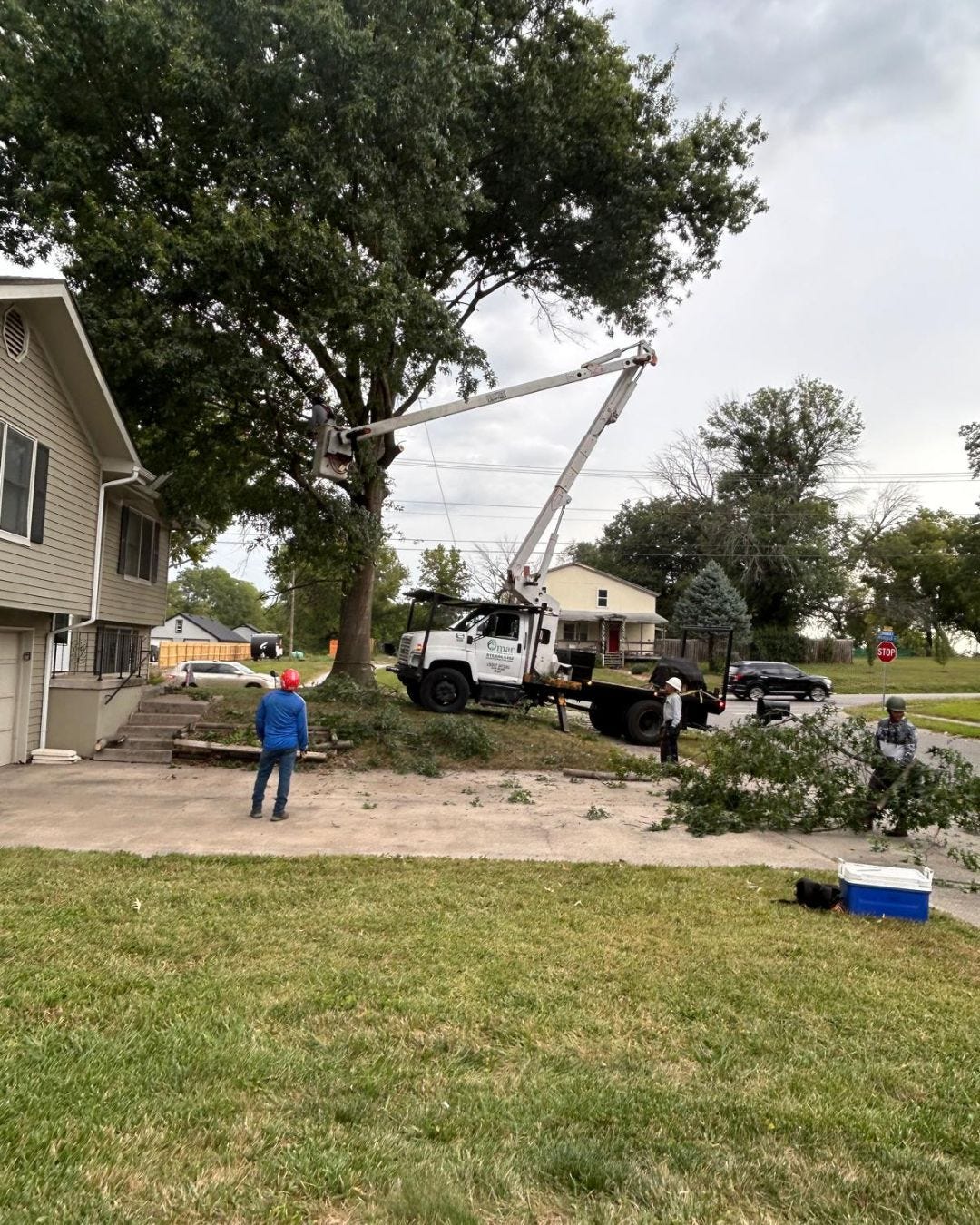
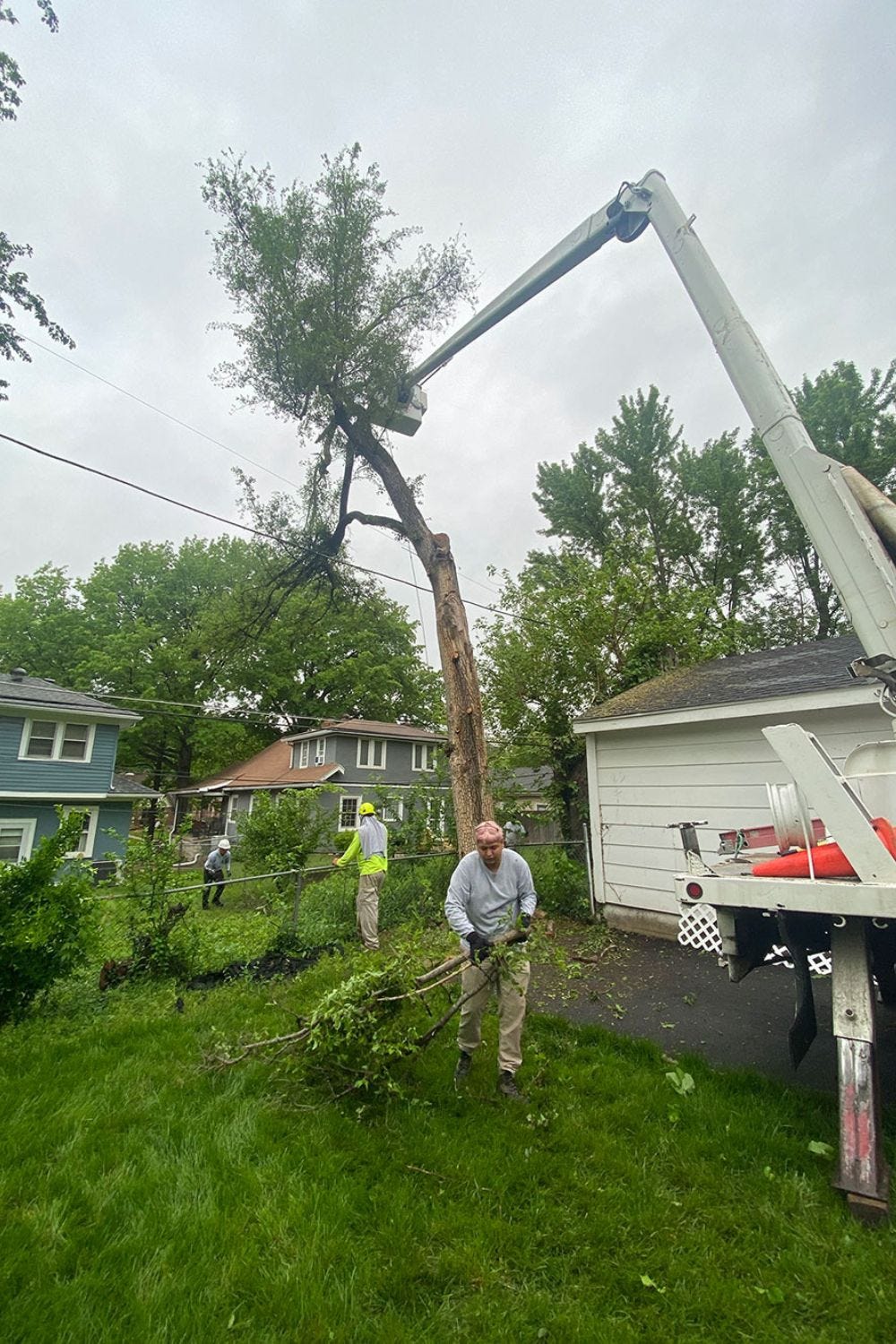
For tree removal, the team may use ropes, saws, rigging, climbing equipment, bucket access, or other professional tools, depending on the size and location of the tree.
For stump grinding, the remaining stump is ground down so the area can be restored, covered, or prepared for new landscaping.
A good tree service company should explain the work clearly before starting and leave the property clean when finished.
Safety Risks of DIY Tree Work
DIY tree work can be extremely dangerous. Even small-looking branches can be heavier than expected. A falling limb can damage a roof, vehicle, fence, or person in seconds.
Common DIY risks include:
Falling from ladders Chainsaw injuries Uncontrolled falling branches Power line contact Incorrect cutting angles Tree trunk splitting Limb kickback Property damage Incomplete removal Hidden decay or instability
Ladder work near trees is especially risky because branches move, ladders shift, and cutting changes weight distribution. Storm-damaged trees are even more dangerous because limbs may be under pressure or partially detached.
Homeowners should never attempt large tree removal, emergency tree removal, or trimming near power lines. These situations require professional equipment and safety training.
Why Homeowners Trust Omar Tree Services LLC
Omar Tree Services LLC is trusted by Kansas City homeowners because the company brings real field experience, local knowledge, and a safety-first approach to every project.
With 30 years of experience, Omar Tree Services LLC understands the tree problems Kansas City properties face throughout the year. From routine tree trimming and tree pruning to tree removal, storm damage cleanup, stump grinding, and emergency tree service, the team focuses on doing the job safely and correctly.
Homeowners choose Omar Tree Services LLC because of:
30 years of professional experience Licensed and insured service Local Kansas City expertise Professional tree care equipment Reliable customer service Fast response times Safe work practices Residential tree service experience Clear communication Customer-focused service
Whether you need seasonal trimming, help after a storm, hazardous tree removal, or a full tree health assessment, working with a local team gives you confidence that your property is being handled by professionals who understand Kansas City conditions.
Frequently Asked Questions
1. What is the best time of year for tree trimming in Kansas City?
The best time of year for tree trimming in Kansas City is usually late winter to early spring, before the tree begins active spring growth. This timing is ideal for many trees because the structure is easier to see, the tree is dormant, and trimming can support healthier growth. However, dead, broken, diseased, or hazardous branches should be removed whenever they create a safety risk.
2. Can trees be trimmed in the summer?
Yes, trees can be trimmed in the summer when light corrective work is needed. Summer trimming may be useful for removing damaged branches, improving clearance, or correcting minor growth problems. Heavy trimming is usually better during dormancy unless there is a safety concern.
3. Should I trim my trees after a Kansas City storm?
If a storm leaves broken, hanging, cracked, or fallen branches, the tree should be inspected as soon as possible. Storm-damaged trees can be unstable even if they appear safe from the ground. Professional storm cleanup helps reduce injury risk and prevents additional property damage.
4. How often should homeowners schedule tree trimming?
Many residential trees benefit from inspection every year and trimming every few years, depending on species, age, growth rate, location, and condition. Trees near roofs, driveways, sidewalks, and power lines may need more frequent attention.
5. What is the difference between tree trimming and tree pruning?
Tree trimming usually focuses on controlling overgrowth, improving appearance, and creating clearance around structures. Tree pruning focuses more on tree health, structure, disease management, and long-term growth. Both should be done carefully to avoid weakening the tree.
6. When should a tree be removed instead of trimmed?
A tree may need removal if it is dead, severely diseased, badly storm-damaged, leaning dangerously, structurally unstable, or located where it creates serious property risk. A professional tree inspection can help determine whether trimming, pruning, or removal is the safest option.
7. Is stump grinding necessary after tree removal?
Stump grinding is strongly recommended after tree removal. A leftover stump can attract insects, create a tripping hazard, interfere with mowing, and make the yard look unfinished. Grinding the stump helps restore the area and allows for future landscaping.
8. Are dead branches dangerous?
Yes, dead branches can fall without warning, especially during wind, rain, snow, or ice. Large dead branches over a home, driveway, walkway, or outdoor living area should be removed by a professional.
9. Can I trim large branches myself?
Homeowners should not trim large branches without proper training and equipment. Incorrect cuts can damage the tree, and falling limbs can cause serious injury or property damage. A professional tree service best handles large limb removal.
10. Does Omar Tree Services LLC provide emergency tree service?
Yes. Omar Tree Services LLC provides emergency tree service for Kansas City homeowners dealing with storm-damaged trees, hazardous branches, fallen limbs, and urgent tree removal needs.
Conclusion
The best time of year for tree trimming in Kansas City is generally late winter through early spring, but safety concerns should never wait. Dead branches, hazardous trees, storm-damaged limbs, and diseased trees should be inspected and handled promptly to protect your home, family, and property.
Professional tree care helps improve tree health, reduce storm risks, maintain curb appeal, and prevent costly damage. For Kansas City homeowners, working with an experienced local company is one of the best ways to keep mature trees safe, healthy, and well-maintained.
Omar Tree Services LLC brings 30 years of experience, licensed and insured service, professional equipment, fast response times, and local Kansas City tree care expertise. Whether you need tree trimming, tree pruning, tree removal, stump grinding, storm cleanup, emergency tree service, or a tree health assessment, the team is ready to help.
Omar Tree Services LLC
3020 Bellaire Ave, Kansas City, MO 64129, United States
+18166946352
Get Directions From Google Maps
[embed]
메타데이터
- post_id
- ae77ea4e5460
- slug
- best-time-of-year-for-tree-trimming-in-kansas-city-ae77ea4e5460
- url
- https://medium.com/@omartreeservice75/best-time-of-year-for-tree-trimming-in-kansas-city-ae77ea4e5460
- canonical_url
- https://medium.com/@omartreeservice75/best-time-of-year-for-tree-trimming-in-kansas-city-ae77ea4e5460
- author_url
- https://medium.com/@omartreeservice75
- status
- ok
- fetched_at
- 2026-07-24 09:12:50