How to Build a CRM for Private Schools in 2026: A Step-by-Step Guide
Private schools are increasingly adopting digital solutions to simplify admissions, improve communication, and enhance student management…
How to Build a CRM for Private Schools in 2026: A Step-by-Step Guide
Private schools are increasingly adopting digital solutions to simplify admissions, improve communication, and enhance student management. In 2026, a Customer Relationship Management (CRM) system has become more than just a tool for managing leads — it’s a complete platform that connects administrators, teachers, parents, and students.
Whether you’re planning to develop a CRM for your own institution or launch an education technology product, understanding the essential features and development process is the first step. This guide explains how to build a CRM for private schools and the key considerations for creating a scalable, user-friendly solution.
Why Private Schools Need a CRM in 2026
Managing admissions, inquiries, fee collections, parent communication, and academic records manually can consume significant time and resources. A well-designed CRM centralizes these processes, enabling staff to work more efficiently while delivering a better experience for parents and students.
Some of the major benefits include:
- Faster admissions management
- Better communication with parents
- Centralized student records
- Automated reminders and notifications
- Improved reporting and analytics
- Reduced administrative workload
As competition among educational institutions grows, adopting a CRM helps schools provide a more organized and responsive experience.
Define Your School’s Requirements
Before starting development, identify the specific goals of the CRM.
Ask questions such as:
- How many students will use the system?
- What admission process should be automated?
- Which departments need access?
- Should parents have their own portal?
- Will the CRM integrate with existing software?
Having clear objectives helps reduce development time and ensures the final product meets operational needs.
Core Features Every Private School CRM Should Include
A modern CRM should support every stage of the student lifecycle, from initial inquiry to graduation.
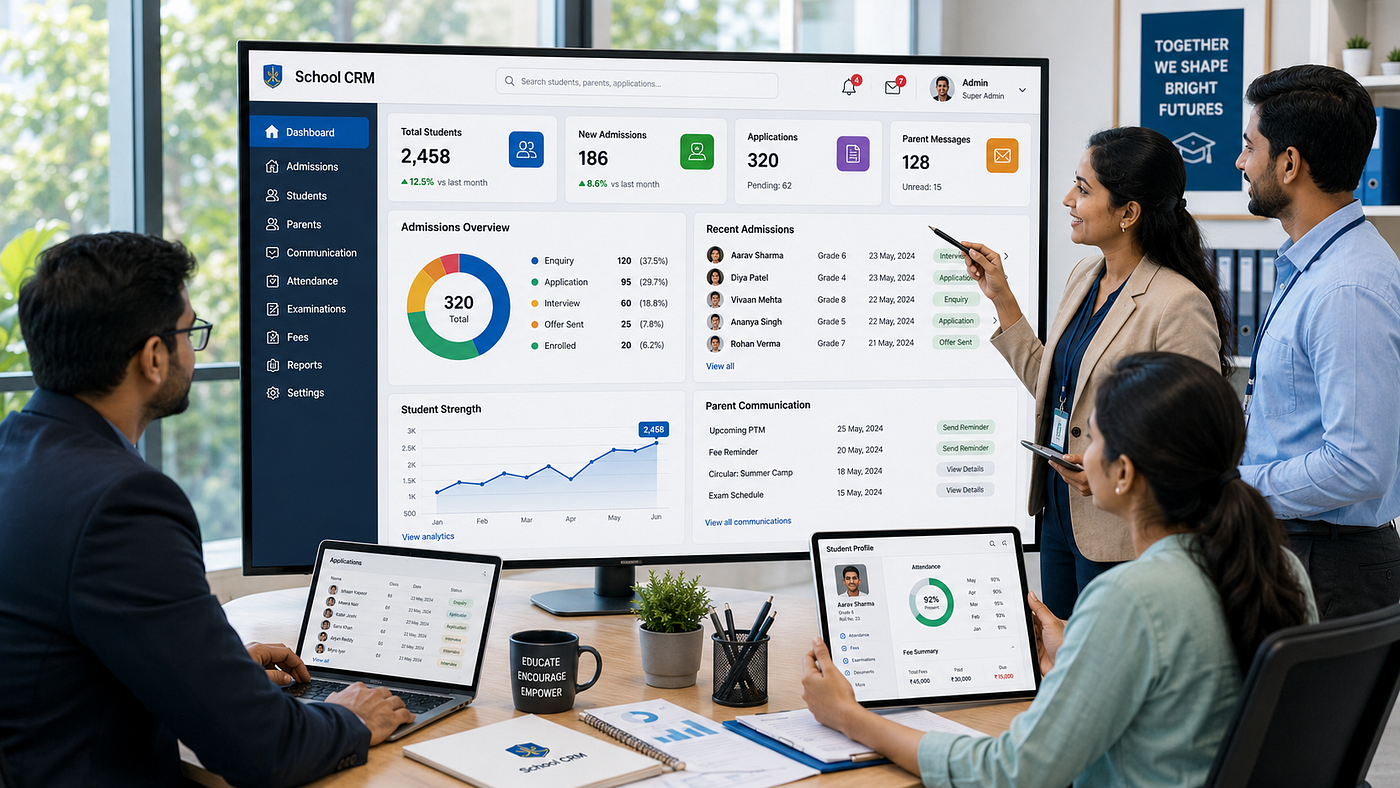
1. Admission Management
The admissions module should help schools manage inquiries and applications efficiently.
Key features include:
- Online admission forms
- Lead tracking
- Application status updates
- Document uploads
- Interview scheduling
- Enrollment management
Automating admissions reduces paperwork and improves response times.
2. Student Information Management
Maintain a centralized database containing:
- Student profiles
- Academic records
- Attendance history
- Medical information
- Parent details
- Fee records
Quick access to student information helps staff provide better support.
3. Parent Communication Portal
Strong communication improves trust between schools and families.
Useful features include:
- Push notifications
- SMS alerts
- Email communication
- Event announcements
- Homework updates
- Parent-teacher meeting schedules
Keeping parents informed enhances engagement throughout the academic year.
Build Essential Administrative Modules
Beyond admissions, private schools require tools that simplify everyday operations.
4. Fee Management
An integrated fee module can automate:
- Online payments
- Payment reminders
- Receipt generation
- Outstanding balance tracking
- Financial reports
Digital payment options improve convenience for parents and administrators.
5. Attendance Tracking
Attendance management becomes much easier with automation.
Features may include:
- Daily attendance
- Biometric integration
- QR code check-ins
- Leave requests
- Attendance reports
Accurate attendance records also help improve compliance and reporting.
6. Academic Performance Management
Schools need a centralized place to monitor student progress.
Include tools for:
- Exam scheduling
- Grade management
- Report cards
- Performance analytics
- Teacher evaluations
This information enables educators to identify learning gaps early.
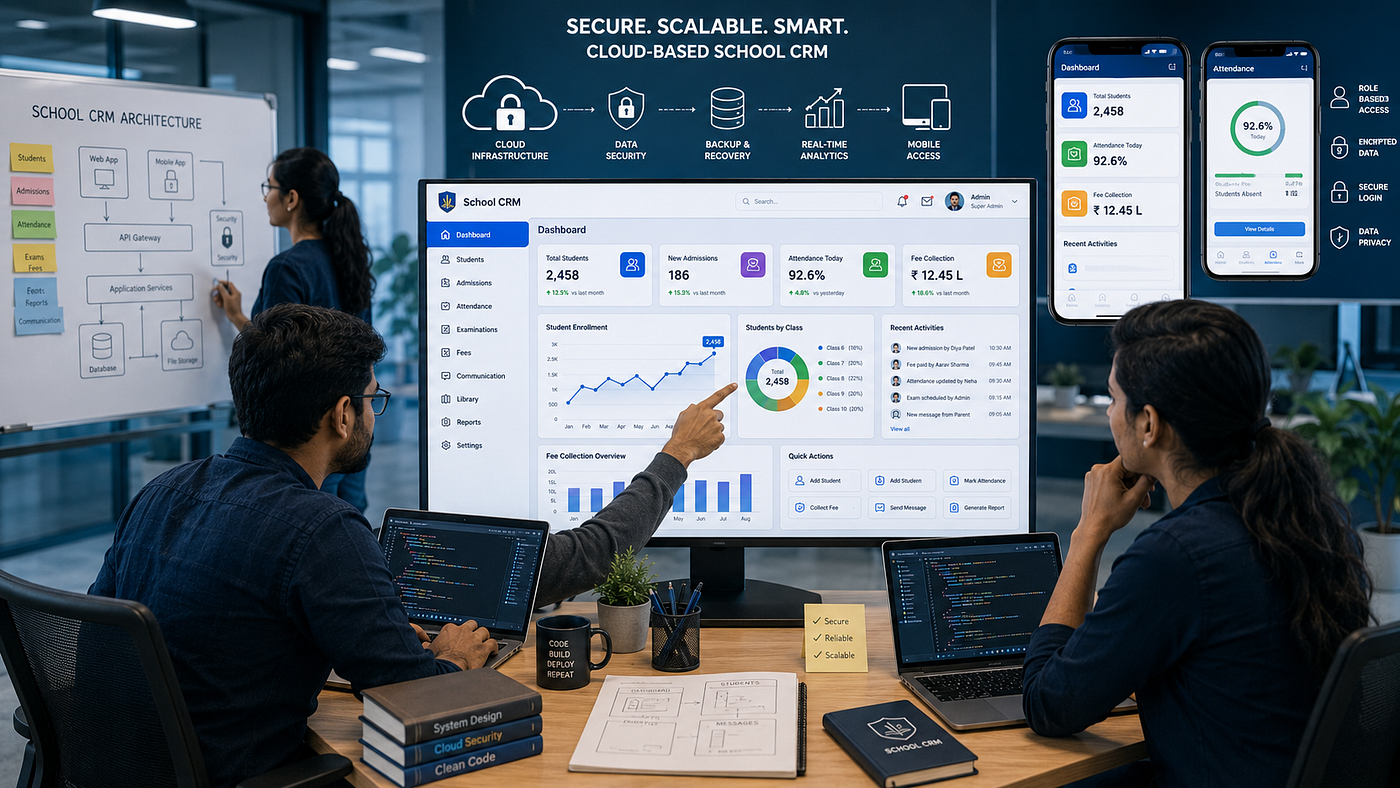
Prioritize Security and Compliance
Educational institutions handle sensitive personal information, making security a top priority.
Important security measures include:
- Role-based access control
- Secure authentication
- Password encryption
- Data backup
- SSL encryption
- Multi-factor authentication
- Audit logs
Implementing these protections helps safeguard student and parent data while supporting regulatory compliance.
Integrate Smart Automation Features
Automation can significantly reduce repetitive administrative tasks.
Examples include:
- Admission follow-up emails
- Fee payment reminders
- Event notifications
- Attendance alerts
- Birthday greetings
- Report card distribution
These workflows save staff time while improving communication with families.
Test Before Launch
Thorough testing helps ensure a smooth user experience.
Your testing process should include:
- Functional testing
- Performance testing
- Security testing
- Mobile responsiveness
- User acceptance testing
- Bug fixing
Launching a well-tested CRM reduces operational issues and increases user satisfaction.
Future Trends in School CRM Software
Private school CRM systems are evolving rapidly. In the coming years, schools are expected to adopt more intelligent and connected platforms.
Emerging trends include:
- AI-powered admission assistants
- Predictive student analytics
- Chatbot support
- Digital document verification
- Cloud-native architecture
- Learning analytics dashboards
- Mobile-first administration
- Integration with Learning Management Systems (LMS)
Schools that embrace these innovations will be better equipped to deliver personalized educational experiences.
Final Thoughts
Building a CRM for private schools in 2026 involves much more than creating a database for student records. A successful platform connects admissions, academics, communication, finance, and administration into a single, easy-to-use system.
By focusing on user-friendly design, automation, security, and scalability, schools can improve operational efficiency while delivering a better experience for students, parents, teachers, and administrators. Whether you’re developing a custom solution for a single institution or creating an education technology product for the wider market, investing in a well-designed school CRM can support long-term growth and digital transformation in the education sector.
메타데이터
- post_id
- ae7bc647def3
- slug
- how-to-build-a-crm-for-private-schools-in-2026-a-step-by-step-guide-ae7bc647def3
- url
- https://medium.com/@nandhakumarkm007/how-to-build-a-crm-for-private-schools-in-2026-a-step-by-step-guide-ae7bc647def3
- canonical_url
- https://medium.com/@nandhakumarkm007/how-to-build-a-crm-for-private-schools-in-2026-a-step-by-step-guide-ae7bc647def3
- author_url
- https://medium.com/@nandhakumarkm007
- status
- ok
- fetched_at
- 2026-07-25 19:48:00