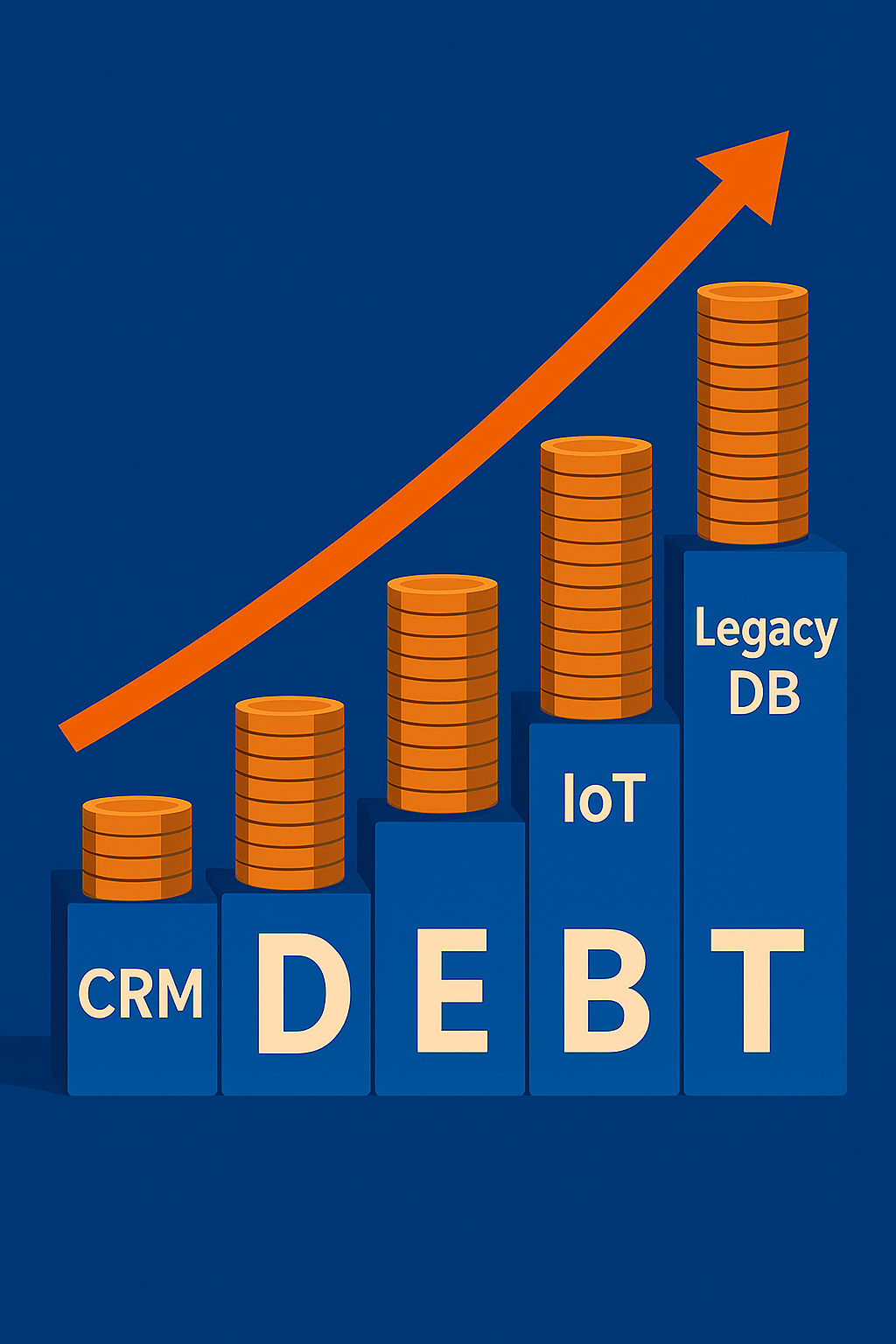
Breaking the Cycle of Data Debt:
6 Steps to a Healthier Data Foundation
Breaking the Cycle of Data Debt:
6 Steps to a Healthier Data Foundation
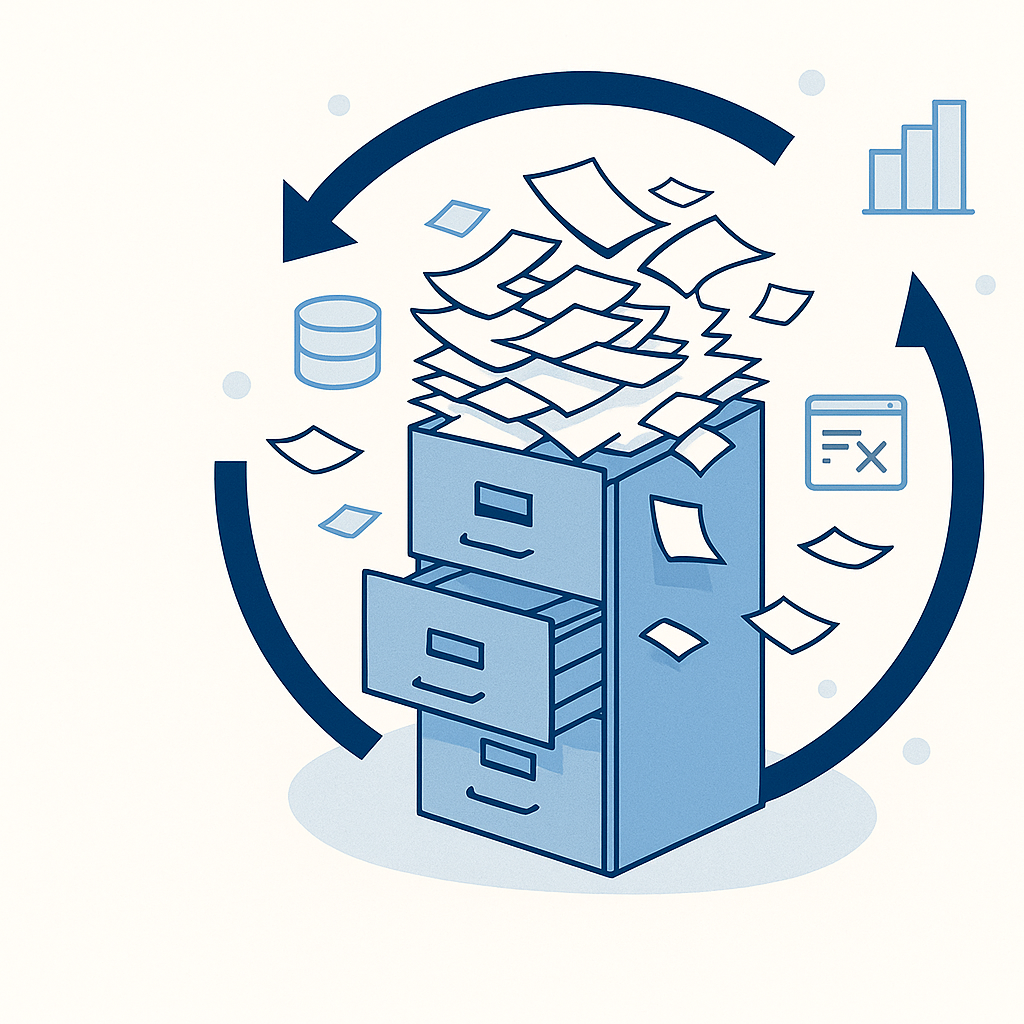
Credit: Artificially Digital
“Companies that effectively manage their data are 23 times more likely to acquire customers, 6 times more likely to retain them, and 19 times more likely to be profitable.” — McKinsey & Company
TL;DR (Too Long; Didn’t Read)
- Audit what you have
- Focus where it matters
- Define practical standards
- Build quality into the workflow
- Design feedback loops
- Make it cultural, not optional
In our last article, we explored the quiet threat of data debt — the cost of messy, inconsistent, and outdated data that quietly sabotages your business decisions and AI outcomes.
“On average, businesses lose 15–25% of revenue due to poor data quality.” — Experian, 2022 Global Data Management Report
Now, it’s time to talk about solutions.
First, a Reminder: What Is Data Debt?
Data debt is like plaque in your data system “arteries” — it silently builds up, choking the flow of information through your organization. One or two issues might be manageable, but over time it compounds, dragging down performance, trust, and innovation.
You can’t afford to ignore it. But the good news? You can reverse it — with the right habits and mindset.
Step 1: Inventory What You Have
Start with a data audit. You can’t fix what you can’t see:
- Where does your data live? (Systems, spreadsheets, shadows?)
- Who owns it — and who uses it?
- How clean, complete, and timely is it?
That’s not just a tech issue — it’s a revenue leak. And it gets worse the longer it’s ignored.
Step 2: Prioritize What Moves the Needle
Not all data is equal. Focus your efforts on:
- High-impact data tied to customer experience, revenue, or compliance
- High-usage data across departments
- High-risk data (think PII or regulated fields)
Data strategy is about ROI, not perfection. Clean what counts.
Step 3: Define What “Good Enough” Looks Like
Perfection is expensive and unnecessary. Define fit-for-purpose standards:
- Is it accurate enough to make this decision?
- Is weekly refresh good enough — or do we need real-time?
- Can we trust it?
Set practical thresholds tied to business goals — not technical ideals.
Step 4: Embed Quality in the Flow
Governance can’t be a tax. Instead, bake it into the process:
- Auto-tag fields at point of entry
- Use dropdowns and validations to reduce errors
- Add change logs, version controls, and role-based access
Make the right thing the easiest thing to do.
One company reduced reporting time by 40% just by standardizing 12 fields in their CRM. Small fix — big impact.
Step 5: Design for Self-Healing
Stop thinking of data cleanup as a one-time project. Instead, close the loop:
- Flag bad inputs in real time
- Learn from user corrections
- Retrain models as new data patterns emerge
Great data systems are self-healing, not static.
Step 6: Make It Everyone’s Job
Data debt isn’t just IT’s problem. Everyone who touches data shares the responsibility.
Build a culture where:
- People are trained on what good data looks like
- Metrics are tied to data-driven outcomes
- Teams are rewarded for using clean, trusted data
Make data quality part of onboarding, roadmaps, and performance reviews.
Let’s Get You Out of Debt
Data debt won’t fix itself. But with small, consistent action, you can turn your data from a liability into a long-term asset.
Let’s talk (info@artificiallydigital.com) if you’re ready to build smarter habits, faster decisions, and a data foundation that scales with you.
Let’s keep the conversation going.
Follow or connect with me on LinkedIn for future articles in this series, practical insights, and tools to help you lead AI transformation with clarity and confidence.
🖋️About the Author(s)
Ronald (Ron) Berry is Co-Founder of Artificially Digital. With a global perspective and a history of successful digital transformations in both B2B and B2C sectors, Ron has driven impactful change across a wide range of organizations, from emerging startups to Fortune 100 enterprises. His academic foundation includes a Bachelor’s in Industrial Engineering from Stanford University and an MBA from the Wharton School.
메타데이터
- post_id
- ae7dcfe73dd5
- slug
- breaking-the-cycle-of-data-debt-ae7dcfe73dd5
- url
- https://medium.com/@rberry19/breaking-the-cycle-of-data-debt-ae7dcfe73dd5
- canonical_url
- https://medium.com/@rberry19/breaking-the-cycle-of-data-debt-ae7dcfe73dd5
- author_url
- https://medium.com/@rberry19
- status
- ok
- fetched_at
- 2026-07-15 05:17:59