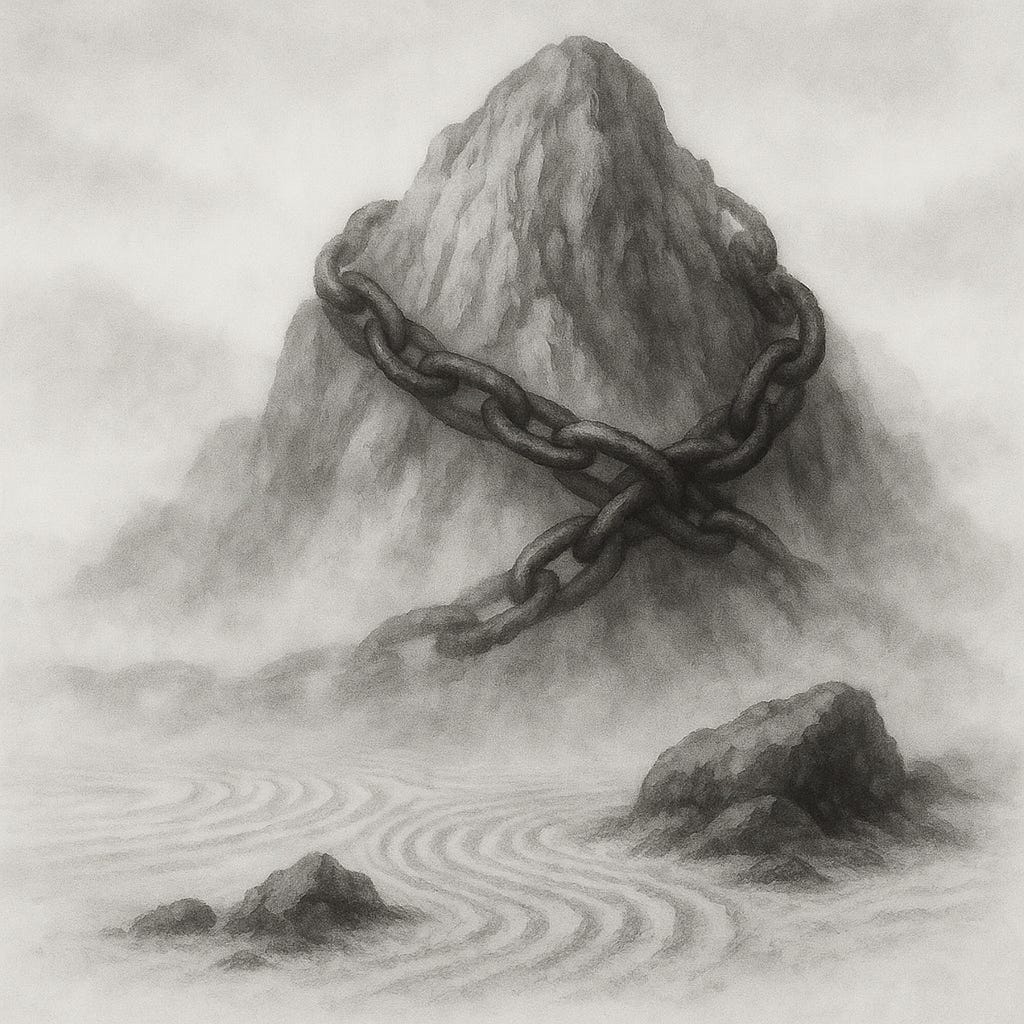
Quantum Immortality: The Physics and Philosophy of Living Forever
Quantum Immortality: The Physics and Philosophy of Living Forever

Have you ever wondered if there’s a version of you in another universe — one that made a different choice, survived a near-death experience, or lived a life you can only imagine? Quantum Immortality explores this mind-bending possibility, suggesting that from your own perspective, you might never truly die.
Rooted in the Many-Worlds Interpretation (MWI) of quantum mechanics, this theory proposes that in every deadly incident, a parallel reality may unfold where you survive and your consciousness continues in that branch. This provocative idea, inspired by Schrödinger’s Cat and the thought experiment called Quantum Suicide, blurs the line between science and philosophy.
In this article, we’ll explore the physics behind this theory, examine its philosophical implications, and delve into some real-life stories that some claim reflect glimpses of quantum immortality. While these accounts remain speculative, they offer fascinating insights into the limits of consciousness, reality, and our understanding of existence.
Schrödinger’s Cat to Many-Worlds Interpretation
Schrödinger’s Cat illustrates the bizarre uncertainty at the heart of quantum mechanics — where a cat can be both alive and dead until observed. But what if observation doesn’t determine the outcome? What if instead, both outcomes happen — each unfolding in separate realities?
This is the foundation of the Many-Worlds Interpretation (MWI), a radical theory that suggests the universe splits into multiple branches whenever a quantum event occurs. In one branch, the cat dies; in another, it lives. Every choice, every accident, every life-or-death moment spins off countless parallel realities — and according to quantum immortality, your consciousness would always follow the path where you survive.
In the experiment, a hypothetical cat in a sealed box can be both alive and dead at the same time (according to quantum theory) until someone opens the box to check. This paradox, proposed by physicist **Erwin Schrödinger in 1935, was meant to criticize the strangeness of quantum mechanics. It highlights how, at the quantum level, particles exist in a superposition** of states — multiple possibilities co-existing — and only “choose” a definite state when measured.
For the cat, that means its fate (life or death) is linked to a random subatomic event. Until observed, the cat is theoretically in a mixed state of being both alive and dead — a mind-blowing scenario that underscores the weirdness of quantum indeterminacy. When an observation is made (i.e. the box is opened), the superposition “collapses” into one outcome — we see either a live cat or a dead cat, not both.

Illustration of the Schrödinger’s Cat thought experiment — until the box is opened, the cat is theoretically both alive and dead. Photo: Wikimedia Commons (CC BY-SA 3.0)
The Many-Worlds Interpretation: Parallel Realities
While the traditional Copenhagen interpretation of quantum mechanics says the act of observation forces a single outcome, the **Many-Worlds Interpretation (MWI) proposes a very different picture. According to MWI (first formulated by physicist Hugh Everett III* in 1957), the wave-function never collapses. Instead, all possible outcomes occur*, each in a separate, branching universe.
In simpler terms, every time a quantum event has multiple possible results, reality splits: one universe for each outcome. These universes are thought to exist in parallel, non-communicating realms — often imagined as endlessly branching timelines. The fundamental idea of MWI is that there are many versions of you, me, and everything else, experiencing every possible alternative history.

Under the Many-Worlds Interpretation, reality branches like a filmstrip — in one timeline the cat lives, in another it dies. Illustration: Christian Schirm/Wikimedia Commons (CC0)
This interpretation removes randomness by saying nothing is truly left to chance — every outcome happens in some branch of the multiverse.
Under MWI, Schrödinger’s cat is never in an ambiguous half-alive state waiting to be observed. Instead, when the box is closed and the quantum event occurs, the universe splits: in one branch, the Geiger counter triggers the poison and the cat dies; in another branch, no poison is released and the cat lives. When the box is opened, observers in one universe find a dead cat, while those in the other universe find a live cat. Both outcomes are real, each in its own world. No collapse happens — the universes simply diverge. This idea of an ever-splitting multiverse is core to how quantum immortality is often framed.
[embed]

Quantum Suicide and the Immortality Hypothesis
The link between MWI and immortality comes from a provocative thought experiment known as quantum suicide.
Imagine a deadly device (like a gun) tied to a quantum trigger that has a 50% chance to fire each time you press a button. If it fires, you die; if not, you live to press it again. According to classical single-universe thinking, repeated presses will almost certainly result in death. But under Many-Worlds, each trigger pull splits the universe. In some branches the gun fires and the experimenter dies, but in others the gun miraculously clicks empty and the experimenter survives. Crucially, the experimenter can only be conscious in those branches where they are still alive. Thus, from their own first-person perspective, they would never experience their own death. They would observe the gun failing every time, no matter how many attempts — a streak of luck of astronomically low probability in any single universe, but guaranteed across the multiverse.
In this bizarre scenario, the person effectively becomes “quantum immortal,” continually waking up in the branch where they survive, however unlikely the survival odds.
This “quantum suicide” thought experiment — introduced independently by Hans Moravec (1987) and Bruno Marchal (1988), foreshadowed by Euan Squires, and popularized by physicist Max Tegmark in the late 1990s, was devised to distinguish between interpretations of quantum mechanics. If MWI is true, the experimenter always finds themselves alive (albeit in a vanishingly small subset of branches).
Tegmark outlined this idea in 1997–98, noting that under many-worlds a “superposition of the live experimenter necessarily exists” after each iteration, ensuring that at least one version of them survives indefinitely.

Physicist Max Tegmark, who popularized the quantum suicide thought experiment in the late 1990s. Photo: Web Summit/Wikimedia Commons (CC BY 2.0)
Quantum immortality refers to that survivor’s subjective experience — the idea that you (the conscious observer) would only ever perceive the outcomes in which you continue to live.
In other words, you might die from an outside perspective (in most branches), but you never actually notice your own death — because your consciousness “hops” to the surviving version of you in an alternate reality.
It’s important to emphasize that this is a theoretical conjecture. No one suggests you could communicate across universes or verify the other you’s that died. Quantum immortality is essentially a quirky consequence of taking the MWI to its extreme logical conclusion with regard to conscious experience. Notably, Hugh Everett himself privately contemplated this idea. According to his biographers, Everett “firmly believed that his many-worlds theory guaranteed him immortality”, reasoning that his consciousness would always follow a path where he continues to exist.
However, Everett did not publish this idea formally, and he likely understood its unsettling corollary: while you might survive in one branch, “the majority of your copies will die,” as physicist **Peter Byrne** points out — hardly an outcome to seek on purpose.
[embed]

Scientific and Philosophical Implications
If quantum immortality were true, it would have profound implications for physics, biology, and our understanding of consciousness. Scientifically, it would lend support to the Many-Worlds Interpretation by suggesting that every life-or-death quantum event splits reality and that conscious experience tracks a specific trajectory through the multiverse. However, most physicists are extremely skeptical of quantum immortality as anything more than a fantasy thought experiment. The scenario relies on idealized conditions — for instance, that consciousness is strictly tied to quantum outcomes and that an infinite or vast number of parallel universes exist. As physicist **Anthony Aguirre* cautions, “it would be foolish (and selfish) in the extreme to let this possibility guide one’s actions in any life-and-death question”*. In other words, don’t go playing quantum Russian roulette — even if many-worlds is true, there is no way back from the branches in which you do die, and no guarantee you’d like the branch in which you survive.
From a quantum physics standpoint, one major issue is the question of probability and the Born rule. In quantum theory, even if all outcomes happen, they don’t happen with equal “weight.” MWI proponents describe each branch having a measure of probability — and the odds of you finding yourself in the lone branch where you survive 100 gunshots is technically nonzero but astronomically tiny. Some theorists argue that you wouldn’t subjectively experience all survivals, but rather a measure-weighted typical experience (meaning you’d almost certainly experience death as normal). A 2009 paper by physicist **Jacques Mallah* flat-out calls quantum immortality a fallacy, stressing that many-worlds does not* imply you can expect “certain survival” in lethal scenarios. In short, just because a sliver of universes exist where a person lives doesn’t mean the mind can magically slide into those outcomes. The debate gets into deep questions about what consciousness is and how (or if) it could “prefer” one branch of reality over others.
Philosophically, quantum immortality raises the issue of personal identity and continuity of consciousness. If “you” die in one world but survive in another, is the surviving person truly you? What does it mean for your identity if countless versions of you exist? Some argue that from a first-person perspective, continuity is all that matters — as long as some version of your mind persists, subjectively you feel as if you’re the same observer moving forward in time.
Others point out this might require a dubious assumption that consciousness is somehow tied to the multiverse in a special way. The notion edges into metaphysics: it’s almost a form of quantum reincarnation or resurrection, where the multiverse ensures a future in which you live again, perhaps even “waking up” in a distant universe after an accident.
But such ideas depend on interpretations of consciousness that science hasn’t verified. As cosmologist Sean Carroll notes, even in an infinite multiverse, whether the “I” in this branch is the same as the “I” in another branch where my brain state reappears is a tricky question of continuity and definition.
If there’s no objective flow of a singular consciousness, quantum immortality might just be a semantic trick — after all, copies of you are not literally you in any tangible sense if you can never interact with or recall the other lives.
Most scientists view quantum immortality as untestable and thus not a part of real science. It’s a speculative byproduct of MWI that makes for interesting thought experiments (and science-fiction stories), but it requires accepting MWI as literally true and applicable to macroscopic life-and-death events — something far from proven. Moreover, the concept ventures into the philosophical territory of the anthropic principle: we can only observe outcomes in which we exist, so of course if we are here talking about it, those are the outcomes we see. That doesn’t mean the other outcomes (where we died) aren’t there — we just aren’t around to observe them. In this sense, quantum immortality doesn’t grant absolute immortality (you won’t be around in most universes), but it suggests you might never actually experience your own demise. To the person in question, life would seem to go on against all odds.
It should be emphasized that no mainstream physicist advocates betting on quantum immortality. Hugh Everett, while intrigued by the idea privately, did not test it (for obvious reasons!), and Everett died of a heart attack in 1982 at age 51, living and dying like anyone else — there’s no known exception to mortality that quantum physics has confirmed. The consensus is that quantum suicide/immortality is a thought experiment to illustrate MWI’s strange implications, not a literal path to eternal life.
With that said, the concept captivates many because it provocatively links a hard science theory with one of humanity’s deepest questions: Can we somehow live forever? Next, we’ll look at several real-world anecdotes and claims that some interpret — seriously or whimsically — in light of quantum immortality.

Artistic representation of parallel Earths in a multiverse. Some speculative accounts suggest that in a multiverse, when a person faces death in one world, they might continue in another, essentially “shifting” to a reality where they survived. Such ideas remain unproven, but they inspire interpretations of strange survival stories.
Ten Real-Life Incidents People Associate with “Quantum Immortality”
Over the years, various strange stories and collective memories have led people to wonder if they’ve glimpsed evidence of alternate timelines or personal survival against the odds. Here are some real-life incidents or claims that have been linked (often speculatively) to the idea of quantum immortality:
[embed]
1. The Mandela Effect — Nelson Mandela’s “Death” in the 1980s: One of the most famous examples of collective false memory is the Mandela Effect, named after South African leader Nelson Mandela. Many people (including paranormal researcher **Fiona Broome*) distinctly remember Mandela dying in prison in the 1980s — even recalling news clips and mourning — when in reality Mandela lived until 2013. Broome coined the term “Mandela Effect” in 2009 after discovering others shared this erroneous memory. Some enthusiasts wondered if this could mean those people originated* from a parallel universe where Mandela did die in the ’80s. While psychologists explain the Mandela Effect as a product of false memories and social reinforcement, the phenomenon’s name itself comes from a “quantum immortality” flavor: in one timeline Mandela died, in another he survived, and a mix-up in memories leads people to feel as if they’ve crossed timelines. Broome’s popularization of this idea has led to many more “alternative memories” being discussed as potential glimpses of parallel worlds.

Nelson Mandela in 2008. Many people distinctly “remember” him dying in prison in the 1980s — the false memory that gave the Mandela Effect its name. Photo: South Africa The Good News (CC BY 2.0)
2. The Berenstain Bears vs. Berenstein Bears: A lighthearted but widespread Mandela Effect case involves the beloved children’s book series The Berenstain Bears. A huge number of people remember the spelling as “Berenstein Bears” (with an e) when it has in fact always been “Berenstain” (with an a) in this reality. They’ll swear they saw the “-ein” spelling on book covers as kids. This mass misremembering baffled people — how could so many recall the same incorrect detail? The parallel universe theory arose humorously: perhaps in another universe the family of bears was spelled Berenstein (and maybe even pronounced differently), and some of us are “immigrants” from that reality. While the more likely explanation is just that “-ein” is a more common ending and our brains auto-corrected it, the idea that a glitch in reality occurred — switching -stain to -stein or vice versa — became an internet meme. It’s cited in discussions of quantum immortality in that some folks joke they died and woke up in a universe where even childhood book titles are slightly different. In truth, studies indicate such shared false memories stem from normal cognitive tendencies, but it’s become one of the go-to examples of a “timeline mix-up.”

The Berenstain Bears — spelled with “-ain,” though countless readers swear they grew up with “Berenstein.” Image: Wikipedia
3. The Sinbad “Shazaam” Movie That Never Existed: Another popular Mandela Effect involves a nonexistent 1990s movie titled Shazaam that many people recall watching. In their memory, comedian **Sinbad* played a wish-granting genie in this film — yet no such movie was ever made. What they likely recall is a mix of things: there was a 1996 movie Kazaam starring Shaquille O’Neal as a genie, and Sinbad did wear a genie-like costume for a TV event, which may have conflated in memory. Despite logical explanations, the certainty of some people’s recollections is eerie. They can describe the plot and scenes of Shazaam in detail. This has led to tongue-in-cheek speculation of a parallel universe where Shazaam* is real, which perhaps some individuals have “slid” over from. In quantum immortality terms, one could imagine a scenario where an individual’s consciousness continues in a close alternate reality where pop culture differs slightly — the wrong movie title, a line in a movie said differently, etc. The Sinbad-genie case is well-documented as a false memory, but it remains one of the Mandela Effect all-stars and often comes up in discussions of multiverse and reality shifts.

Comedian Sinbad, whom many vividly remember playing a genie in “Shazaam” — a movie that was never made. Photo: Jerry Crawford (CC BY-SA 2.0)
4. Lerina García’s Parallel Universe Experience: In 2008, a Spanish woman named Lerina García posted an impassioned comment on an online forum claiming she had woken up in the wrong universe. García described how one morning, small details in her life were different: her bedsheets were unfamiliar, her workplace had a different name on the door, and her ex-boyfriend — whom she remembered breaking up with — was apparently still her partner in this reality. She could find no trace of a new boyfriend she remembered dating for months. Convinced she had somehow shifted into an alternate timeline, García sought help. Her story went viral on paranormal sites and remains one of the most famous claimed real-life “dimension hops.” If taken at face value, one could interpret Lerina García’s experience as a benign form of quantum immortality or multiverse slip: perhaps her consciousness slid into the closest parallel world. Skeptics note there is no way to verify her claims — no records of the alternate events she describes — and it’s possible this was a delusion or a fictional tale. Nonetheless, her account has been discussed in books and articles about the multiverse. It exemplifies how, outside of life-or-death situations, some individuals feel something inexplicable has occurred with their reality, consistent with the idea that another universe is somehow intersecting with ours.

“Small details were different — even the bedsheets.” Lerina García claimed she woke up one morning in a subtly different reality. Photo: JIP/Wikimedia Commons (CC BY-SA 4.0)

Pam Reynolds discussing her near-death experience in a television interview, with neurosurgeon Robert Spetzler and cardiologist Michael Sabom.
5. Pam Reynolds’ Near-Death Experience (NDE): Not all “quantum immortality” stories involve alternate memories; some involve near-death experiences. One of the most famous NDE cases is that of **Pam Reynolds**, a 35-year-old American woman who underwent a rare brain surgery in 1991. In the operation, doctors cooled her body, stopped her heart, and drained the blood from her brain to safely remove an aneurysm — a state of clinical standstill lasting under an hour. Remarkably, Pam later reported that during the surgery she felt her consciousness leave her body. She described observing the medical team from above and gave accurate details about the surgical tools and procedures used — details she theoretically could not have known since she was fully anesthetized with eyes taped shut and ears plugged with monitors. She also recalled traveling through a tunnel and meeting deceased relatives before being pulled back into her body. Pam Reynolds’ case was documented by physicians and is often cited in debates about the mind-brain connection. Those intrigued by quantum immortality sometimes interpret NDEs like this as hints that consciousness might not be bound to one timeline or body — perhaps when Pam “died” in one sense, her awareness touched another plane (or another branch of reality) before returning. Of course, researchers have proposed physiological explanations (like residual brain activity or anesthesia awareness) for NDEs. Pam’s experience, while not proof of multiverse travel, raises profound questions: if consciousness can exist independent of a clinically dead body even briefly, one might speculate whether it can latch onto life in a parallel universe when one life ends. Pam Reynolds ultimately made a full recovery and lived for many years after, her case remaining a tantalizing mystery at the intersection of neuroscience and the unknown.

Alessandro Magnasco’s painting ‘The Raising of Lazarus’
6. Velma Thomas’ 17-Hour Death and Revival (The Lazarus Phenomenon): In 2008, Velma Thomas, a 59-year-old woman from West Virginia, USA, suffered a massive heart attack and was declared clinically dead after her heart stopped three times. She showed no measurable brain activity for 17 hours. About ten minutes after being removed from life support — as her family prepared for organ donation — Velma suddenly woke up — alive again, to everyone’s shock. This extraordinary case, reported in medical literature as an example of the “Lazarus syndrome,” defied explanation from the doctors who had pronounced her death. Velma’s first request upon awakening was for her son, and she recovered with intact brain function. Such spontaneous return of life after prolonged clinical death is exceedingly rare, but there are a few documented cases. Those inclined to think in multiverse terms might whimsically wonder: did Velma Thomas’ consciousness “refuse” to collapse with her dying branch of reality, instead continuing on the branch where she somehow resurged? From a purely medical perspective, one can attribute her revival to an unlikely physiological quirk — perhaps a slow build-up of cardiac electrical activity that eventually restarted circulation. Yet, stories like this feed the imagination that maybe death isn’t always final. If quantum immortality were real, an individual might experience something like this — one moment in the void, the next moment snapping back to life, as if reality itself had glitched. Velma’s doctor called her revival “one of the things physicians and nurses can’t always explain”, which is an apt description for our fascination with such cases.

Photo Credit: TOI
7. Frane Selak’s Multiple Near-Death Escapes: **Frane Selak (often spelled Frano), a Croatian man, gained fame for surviving a string of freak accidents. His life reads like a screenplay of miraculous escapes. In 1962, Selak was riding a train that derailed into an icy river — 17 people died, but he swam to shore with hypothermia and a broken arm. The next year, on his first-ever plane ride, a door malfunction sucked him out of the airplane mid-air; unbelievably, he landed in a haystack while the plane crashed, killing 19 others. In 1966, a bus he was on skidded into a river — four drowned, but not Selak. He later survived two separate vehicle fires, and in 1995 he was hit by a bus and walked away with minor injuries. His final brush came in 1996 when he swerved his car off a mountain road to avoid a truck — he was ejected from the car and caught a tree branch as his car plummeted 90 meters and exploded. Selak not only survived all this, but in 2003 he won the lottery* on his 73rd birthday. These tales, some undocumented and part of Selak’s lore (he has been called “the world’s luckiest unlucky man”), have led people to half-jokingly suggest he might be quantum immortal. It’s as if the universe kept sparing him in ways that defy probability — a real-world illustration of a man who “should have died” many times but didn’t. Selak himself reportedly said he felt “born under a lucky star.” While skeptics might question the veracity of every incident, Selak’s story was reported in major media. If one imagines each of Selak’s accidents as a quantum branching event, perhaps in most universes he perished, but in one he survived them all* — and that’s the one we find him in. His case is less about alternate memories and more about improbable survival, the kind quantum immortality would require. Frane Selak passed away in 2016 at the age of 87, having cheated death more times than most can even imagine.
8. Tsutomu Yamaguchi — Surviving Two Atomic Bombs: Sometimes reality presents survival stories that feel downright implausible. **Tsutomu Yamaguchi was a 29-year-old engineer in August 1945 when he experienced the unimaginable: he was in Hiroshima on August 6, 1945, when the first atomic bomb was dropped, and he survived the blast. Injured and burned, Yamaguchi returned to his home city of Nagasaki — only to endure the second atomic bombing on August 9. Yet again, he lived through it. Yamaguchi is officially recognized as one of the very few double atomic bomb survivors. In both instances, he was roughly 2–3 km from ground zero. He suffered severe burns and radiation exposure but recovered and went on to live into his 90s. Statistically, surviving one** nuclear blast at that range is astonishing; surviving two, on separate occasions, almost defies belief. While Yamaguchi himself saw this as tragic luck (he lost hearing in one ear and saw his hometown destroyed), his story has a sort of legendary status. In the multiverse interpretation, you could say that in countless branches Yamaguchi may have died in either bombing, but we know him in the branch where he miraculously endured both. People sometimes reference his case in quantum immortality discussions as an example of extreme survivability. Of course, there’s no indication Yamaguchi “hopped” universes — more likely, it was just extraordinary coincidence and personal resilience. Still, much like Selak, his life illustrates how someone can beat seemingly impossible odds repeatedly, which is exactly what a quantum immortal observer would experience. Yamaguchi, who died in 2010 at age 93, later said he hoped his dual survivor story would promote peace, a humble end to a life that straddled the line between life and death in the most dramatic way.

The atomic cloud over Nagasaki on August 9, 1945 — the second nuclear blast Tsutomu Yamaguchi survived in the span of three days. Photo: Hiromichi Matsuda (Public Domain)
9. “The Car Crash That Didn’t Happen” Glitch: An anonymous tale shared on a forum recounts a puzzling incident on an icy road. A man’s father and a friend were driving on a winter night in the 1970s when their car hit a patch of ice. The car spun out of control toward a telephone pole. The father, in the passenger seat, saw the pole coming straight at him and shut his eyes, bracing for impact — by all logic, a fatal crash was imminent. Yet nothing happened. He opened his eyes to find the car completely fine and idling in the middle of the road, pointed in the correct direction of travel. There were no skid marks in the snow, no damage — it was as if the near-crash had been erased from reality. Both men were baffled, knowing they had actually been spinning a moment before. This story, dubbed “the car crash that didn’t happen,” has made the rounds in online “glitch in the Matrix” communities. One interpretation is that perhaps in one timeline there was a gruesome accident — but the men’s consciousness somehow ended up in the branch where, impossibly, the car never crashed. It felt to them like a rewind or a jump cut in reality. Skeptics might say they hallucinated or misperceived the event (or simply got very lucky regaining control), but the absence of any physical evidence of the skid is what spooks them. While we cannot verify this anonymous account, it resonates with the idea of a personal timeline shift — a moment where death should have occurred but didn’t, with reality strangely “correcting” itself. For those who like to imagine quantum immortality in action, this story is a perfect parable: you die in one world, and in the next micro-instant you continue in a parallel world where you miraculously live, none the wiser except for a gut feeling that something extraordinarily odd just occurred.

A snowy street at night — the setting of “the car crash that didn’t happen,” where two men braced for a fatal impact that left no trace. Photo: Mark Hardy/geograph.org.uk (CC BY-SA 2.0)
10. The Sleeping Driver’s “Dimension Jump” Experience: In a discussion about unexplained experiences, one user recounted a long road trip where they foolishly kept driving through exhaustion. Late at night on a nearly empty highway, this person’s eyes became unbearably heavy. They remember the struggle to stay awake, the blurring of the road — and then, suddenly, it was morning. They woke up in their hotel bed with no memory of how they got off the road and back to the lodging. The last thing they recall is drifting off while driving. Unnerved, the person later checked their car and found it parked normally with no damage. To this day, they have no recollection of safely stopping driving. The experience left them chilled, wondering if they had actually crashed and died that night, only to awaken in a “reset” reality where the accident never happened. As fantastical as that sounds, the event felt real to them — one moment falling asleep at the wheel, the next moment conscious in a different place and time with everything okay. This story falls into the category of a “glitch in the Matrix,” a term used for any event that seems to break the continuity of reality. If one were to frame it in quantum immortality terms: perhaps in most universes that drowsy driver met a fatal end, but their subjective experience continued in the lucky universe where they somehow made it back unharmed. Of course, more mundane explanations exist (they might have been so sleep-deprived that they performed the parking routine in an amnesiac state, a form of “autopilot” behavior). But the individual’s feeling that they “jumped timelines” is a hallmark of many such reports. It shows how, when faced with something our minds can’t reconcile, we sometimes reach for extraordinary explanations like alternate universes.

A near-empty highway at night — one moment drifting off at the wheel, the next waking up safe in a hotel bed with no memory in between. Photo: Wikimedia Commons
Whether or not any of these anecdotal incidents truly hint at quantum immortality, they certainly illustrate how the human experience of reality can sometimes be strangely discontinuous or improbably fortunate.
Conclusion
Quantum immortality sits at the fringe of science; a fascinating yet speculative concept that challenges our understanding of reality, consciousness, and death. While rooted in quantum theory’s Many-Worlds Interpretation, it stretches those ideas to their limits — far beyond what we can currently test or verify.
The real-life stories we explored from miraculous survivals to unexplained memory glitches, are not proof of quantum immortality, but they highlight how mysterious and unpredictable life can be. Are they coincidences, cognitive errors, or something more profound? Science may never provide a concrete answer.
Yet the idea lingers because it taps into one of humanity’s deepest desires — the hope that perhaps, in some reality, our story never truly ends. Whether seen as a comforting thought experiment or a mind-bending glimpse at the nature of existence, quantum immortality leaves us with one powerful question:
What if you’re already living the version of yourself that survived?
References:
[embed]
[embed][Physics and the Immortality of the Soul Cross-posted at Scientific American Blogs. Thanks to Bora Z. for the invitation.] The topic of "Life after death"…www.preposterousuniverse.com](https://www.preposterousuniverse.com/blog/2011/05/23/physics-and-the-immortality-of-the-soul/#:~:text=would%20seem%20especially%20natural%20in,has%20memories%20resembling%20my%20experience)
메타데이터
- post_id
- aea0967f5a87
- slug
- quantum-immortality-the-physics-and-philosophy-of-living-forever-aea0967f5a87
- url
- https://medium.com/@heysuryansh/quantum-immortality-the-physics-and-philosophy-of-living-forever-aea0967f5a87
- canonical_url
- https://medium.com/@heysuryansh/quantum-immortality-the-physics-and-philosophy-of-living-forever-aea0967f5a87
- author_url
- https://medium.com/@heysuryansh
- status
- ok
- fetched_at
- 2026-07-31 06:51:58