Finding Myself in the Story of Kahlil Gibran
Reflections on Immigration, Identity, and Our Shared Humanity
Finding Myself in the Story of Kahlil Gibran
Reflections on Immigration, Identity, and Our Shared Humanity
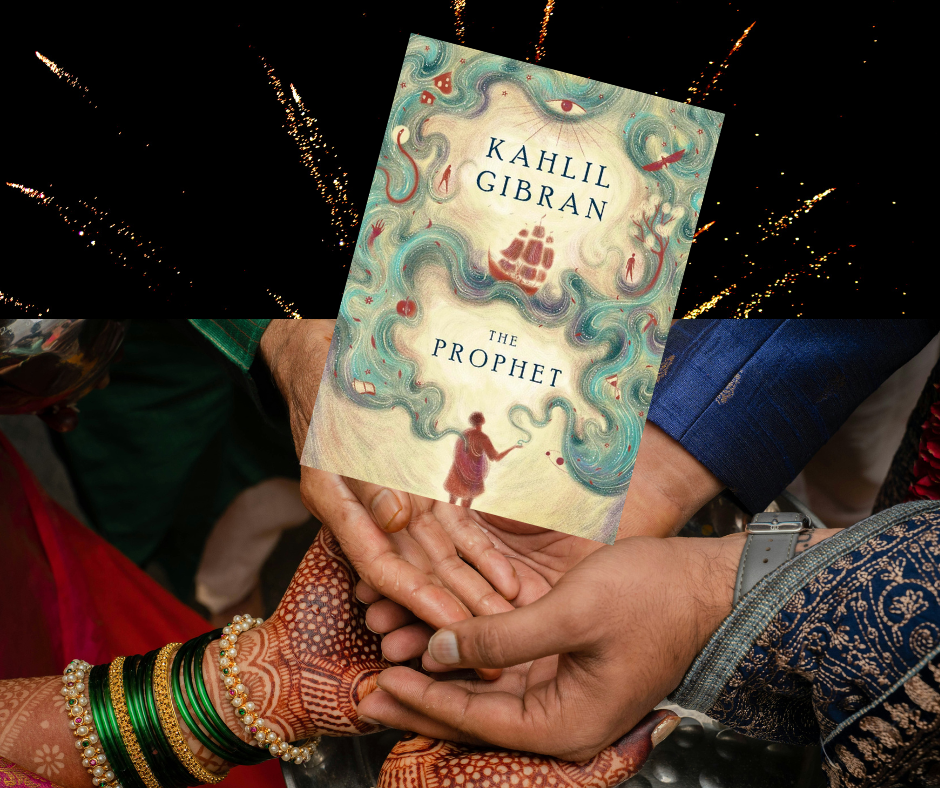
I have loved Gibran’s writing for years, yet I knew very little about the man himself. Reading a recent Facebook post about Kahlil Gibran’s life stirred something deeply personal in me.
Gibran has long been one of my favourite writers. Like many readers of The Prophet, I was drawn to the beauty and universality of his words. As I learned about his journey from Lebanon to America as a young immigrant, I found myself reflecting on my own journey.
I was born in British Guiana, now Guyana, a country shaped by colonial history. At nineteen, I immigrated to Canada carrying my own hopes, uncertainties, and inherited stories. Although our backgrounds are very different, I recognize something familiar in the experience of living between worlds.
Immigration is more than moving from one place to another. It is the gradual process of weaving together multiple identities, histories, and ways of seeing. We leave one home behind while learning to belong in another.
Over the years, I have come to see that our deepest connections transcend nationality, race, religion, and culture. Raised as a Christian, and later embracing many teachings of Buddhism, I have found myself increasingly drawn to the idea that we are all interconnected. Beneath our different histories and appearances lies a shared human experience of love, loss, hope, struggle, and growth.
Perhaps that is why Gibran’s words continue to resonate across generations and cultures. He was writing not only about one people or one religion but about what it means to be human.
His story reminded me that many immigrants, and many children of colonial histories, carry within them more than one world. The challenge is not choosing between them. The challenge is learning how to honour them both.
As I reflected on Gibran’s life, I realized that what resonates most with me is not simply that he was an immigrant. It is that he seemed to understand something fundamental about the human condition.
Like many people, I grew up with assumptions about who “we” were and who “they” were. We inherit beliefs from our families, our cultures, our religions, our nations, and the historical circumstances into which we are born. Much of this conditioning is invisible to us when we are young.
Over time, however, life has a way of expanding our vision.
Moving from Guyana to Canada at nineteen exposed me to people from different cultures, backgrounds, and ways of thinking. My spiritual journey also broadened my perspective.
What I have come to believe is that most people are not inherently bad. More often, they are conditioned by their experiences, shaped by their fears, influenced by their environments, and limited by what they have not yet had the opportunity to understand.
I include myself in that observation.
There are beliefs I once held that I no longer hold. There are assumptions I once made that experience taught me to question. There are people I once misunderstood because I had not yet learned to see the world through their eyes.
Perhaps this is one of the great purposes of life: to grow in awareness. To move from judgment to understanding. From separation to connection. From certainty to curiosity.
The older I become, the more I see humanity not as a collection of competing groups but as a family still learning how to live together. We may differ in race, religion, nationality, language, gender, or culture, but beneath these differences we share the same hopes and fears. We all seek love, meaning, belonging, and peace.
His life reminds me that when we look beyond labels and categories, we begin to recognize ourselves in one another.
And perhaps that recognition is where wisdom begins.
I don’t claim to have answers. But I am increasingly convinced that our task is not to become more divided by our differences but more awake to our shared humanity.
In that sense, Gibran’s journey is not only his story. It is, in many ways, the story of all of us who have crossed borders — geographical, cultural, or spiritual — in search of a larger understanding of what it means to be human.
The older I become, the less interested I am in the labels that divide us and the more interested I am in the experiences that unite us.
We all know longing.
We all know loss.
We all seek meaning.
We all hope to be seen, understood, and loved.
Perhaps wisdom begins when we recognize ourselves in one another.
Perhaps that is what Gibran saw.
And perhaps that is what so many of us who have crossed oceans, cultures, and beliefs eventually discover for ourselves.
“We recognize the stranger’s longing only when we have looked closely at the exile within ourselves.”

메타데이터
- post_id
- aeb07b9587ff
- slug
- finding-myself-in-the-story-of-kahlil-gibran-aeb07b9587ff
- url
- https://medium.com/@jeanjanki/finding-myself-in-the-story-of-kahlil-gibran-aeb07b9587ff
- canonical_url
- https://medium.com/@jeanjanki/finding-myself-in-the-story-of-kahlil-gibran-aeb07b9587ff
- author_url
- https://medium.com/@jeanjanki
- status
- ok
- fetched_at
- 2026-07-07 19:29:44





