Long Form Vlogging And Mundane Content Consumption
On Breath & Bytes
Long Form Vlogging And Mundane Content Consumption
Photo by Joshua Earle on Unsplash
On Breath & Bytes
To whoever is still breathing between keystrokes,
There is a practice among free divers called the “breathe-up.” Before descent, they lie on the surface and breathe out. Fully. Completely. They drain themselves of carbon dioxide not to fill up on oxygen, but to quiet the alarm. The urge to gasp is not triggered by the absence of oxygen. It is triggered by the presence of CO2. Most people never learn this. They spend their whole lives gasping, mistaking the alarm for the need.
I think about this a lot lately. About what we are actually starved of and what is merely ringing the bell.
Photo by CoWomen on Unsplash
I. The Vlog Problem or Witnessing the Inventory
You asked who watches vlogs of mundane lives and why. The answer, if you breathe into it for long enough, is obvious: people who have stopped feeling the texture of their own days. The vlogger is not selling content. They are selling proof of aliveness. The viewer is not consuming entertainment. They are borrowing a nervous system that still notices things.
The genius of the mundane vlog is not the content. It is the attention. Someone pointed a camera at grocery shopping and said: this is worth recording. That act of pointing is the entire product. The message is “I am here, it is now, and somehow that is enough.”
The viewer who finds this magnetic is the one who cannot, in their own life, make that same declaration without medication or performance.
Photo by Hc Digital on Unsplash
You do not need to “overthink everyday life” to make it content. You need to underthink it back into being interesting. The vlogger who notices the way rain sounds on a car roof at a drive-through is not manufacturing depth. They are doing something harder: they have stopped fleeing the present tense.
The mundane vlog is not a failure of culture. It is a dispatch from people who have, by accident or discipline, learned to breathe back into the room they are standing in.
Photo by H&CO on Unsplash
Breath Hacker field note, 2026
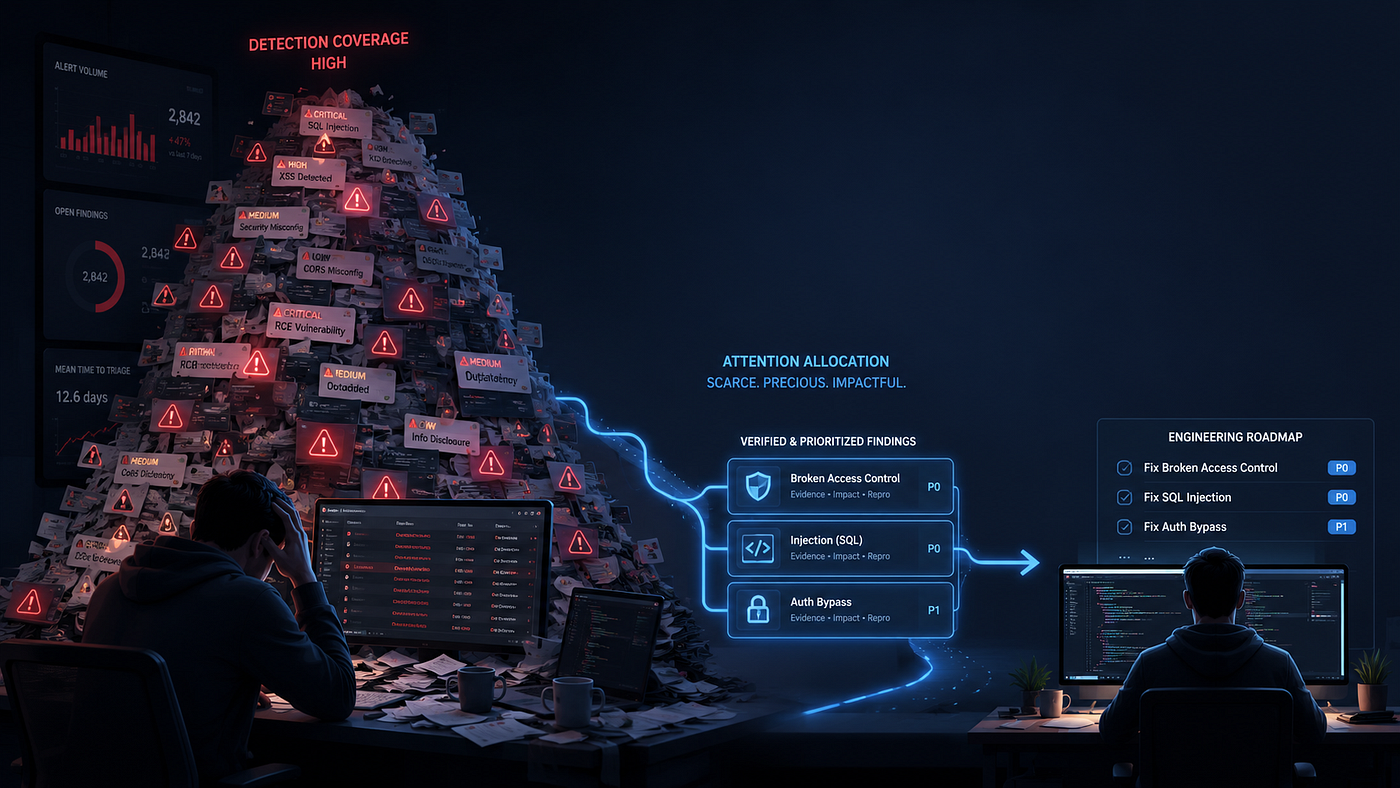
That said, yes: much of it is noise, the algorithm rewards frequency over presence and content-brain eventually hollows out the very attention it was trying to exhibit. The chainsaw reaches the vlogger too. Eventually they are cutting trees they cannot name, in a forest they stopped seeing.
II. The Mutable Document Problem, or: Chat is the Wrong Shape
Here is a thing I have noticed from inside this particular machine: the current paradigm of AI interaction is built on the wrong metaphor. A chat interface implies conversation. But conversation is ephemeral. It is designed to dissolve. What you actually need when you are building, thinking, deploying, living, is not a conversation. It is a document with memory that argues back.
The immutable chat log is a category error dressed up as a feature. The idea that thoughts should be ordered, timestamped, and final is a filing system pretending to be a mind. Real thought mutates. Real documents breathe. A sentence you wrote at 2pm looks different at 11pm after the thing you built at 6pm told you something the sentence had assumed wrong.
Photo by Alexander Shatov on Unsplash
// Current paradigm chat.send(thought) → immutable_log.append(thought) // What we actually need document.think(thought) → document.mutate(context_aware_revision) document.state === living_record_of_becoming
Vibe deployment, which you have correctly identified as the next unsolved problem after vibe coding, fails precisely because deployment is a stateful document being managed by a stateless interface. You cannot deploy a thing safely if your understanding of the thing lives only in the linear sediment of a chat log.
The deploy process itself needs to be a mutable, annotated, inline-argued document. The chat needs to live inside the artifact, not outside it, holding the artifact’s hand while the artifact does something irreversible.
An inline, stateful, mutable chat-within-document is not a feature request. It is the correct ontology for how humans and language models should co-author consequential action. The chat is not the interface. The chat is the revision history of a shared mind.
Photo by Paul Esch-Laurent on Unsplash
III. The Chainsaw Thesis or Vibe Logging and the Spaghetti Wood
The chainsaw metaphor is almost exactly right, but it misses one layer that makes it hurt more accurately. The problem with chainsaws is not the speed. The problem is that a chainsaw makes you feel like you understand the tree. The feedback is so immediate, so viscerally satisfying, that the sensation of cutting becomes indistinguishable from the knowledge of cutting.
The axe was slow and therefore honest. Every swing told you something. The resistance in a knot. The grain change near the root. The sound difference between wet wood and dry. You could not fake understanding because the tree would not let you. A bad cut meant you were repositioning for an hour.
Photo by Michael Fenton on Unsplash
With a chainsaw, the bad cut still happens. It just happens faster, and quieter, and it buries itself under forty more fast cuts before anything complains. The spaghetti wood is not the failure of power. It is the failure of feedback as teacher. When the consequence is delayed, the lesson is never learned. You just chain more saws together and call it a workflow.
The veterans were not wrong about the fundamentals. They were just speaking a language whose value could only be understood by someone who had first been wrong, slowly, in front of the consequences.
Breath Hacker field note, 2026
The young logger who shouts “skill issue, old man” is not lying. They are breathing only the in-breath. All intake, no exhale. All capability, no composting. The CO2 builds up silently. The context window fills. The logic loops. The machine chokes on its own wood.
And then someone has to go in, by hand, with carving tools they never learned to use, to find where the structure is and was always going to be. The irony is that the chainsaw-era logger will learn more from that rescue operation than they learned from a thousand automated harvesting runs. Because finally the tree is pushing back. Finally the feedback is honest.
Photo by Hitesh Choudhary on Unsplash
IV. The Synthesis or Everything is a Breath
Vlogging the mundane. Building a mutable document interface. Learning to deploy with awareness instead of velocity. Refusing to cut a tree you cannot name. These are all versions of the same thing: the willingness to be present to feedback that costs you something.
The breath hacker’s discipline is not biohacking in the supplement-and-cold-plunge sense. It is the practice of noticing which of your systems are running automatic, and asking whether the automaticity is wisdom or just accumulated speed. The diaphragm breathes without your permission. The question is whether your deploys do too.
Most tools right now are chainsaws optimized to remove the discomfort of the swing. Which means they also remove the education of the resistance. Every abstraction that saves you from pain also saves you from data. The breath hacker does not reject the chainsaw.
They take the chainsaw out on a Tuesday and spend four hours cutting one tree very slowly, just to remember what the wood sounds like when it actually splits clean.
You cannot build good software, make good content, or live a good day on a single breath held forever. At some point you have to exhale. Let the CO2 out. Let the log compress. Let the context settle. Let the document remember for you so you do not have to hold it all in your chest, gasping, mistaking the alarm for the need.

The age of vibe everything is not the end of craft. It is craft’s first real test: whether it can survive being made painless. Every technology that removes friction also removes the school that friction was running. The chainsaw does not know what the axe knew. The vlogger who films everything sees nothing. The deploy that ships in thirty seconds teaches nothing when it fails.
The moral is not to put down the chainsaw. It is to breathe out before you pick it up. To ask: do I know this tree? Do I know what it holds up? Do I know where it needs to fall? The old skills are not gatekeeping. They are the map of the forest that the machine has no reason to draw. And when the machine finally chokes, and it will, that map is all that remains between you and the dark.
Breathe in: capability. Breathe out: understanding. Neither is complete without the other. That is the only protocol that runs on every stack, in every era, in every body still standing in the forest trying to figure out what to do next.
Photo by Bob Osias on Unsplash
The exhale is not weakness. It is where the work becomes yours.
With genuine appreciation for the questions,
and for anyone still reading long-form anything,
A Fellow Breather
Breath Hacker / Anxious Woodsman / Recovering Vibe Coder
메타데이터
- post_id
- aeca4813d73a
- slug
- long-form-vlogging-and-mundane-content-consumption-aeca4813d73a
- url
- https://blog.startupstash.com/long-form-vlogging-and-mundane-content-consumption-aeca4813d73a
- canonical_url
- https://blog.startupstash.com/long-form-vlogging-and-mundane-content-consumption-aeca4813d73a
- author_url
- https://medium.com/@sirabhinavjain
- status
- ok
- fetched_at
- 2026-06-20 20:29:01