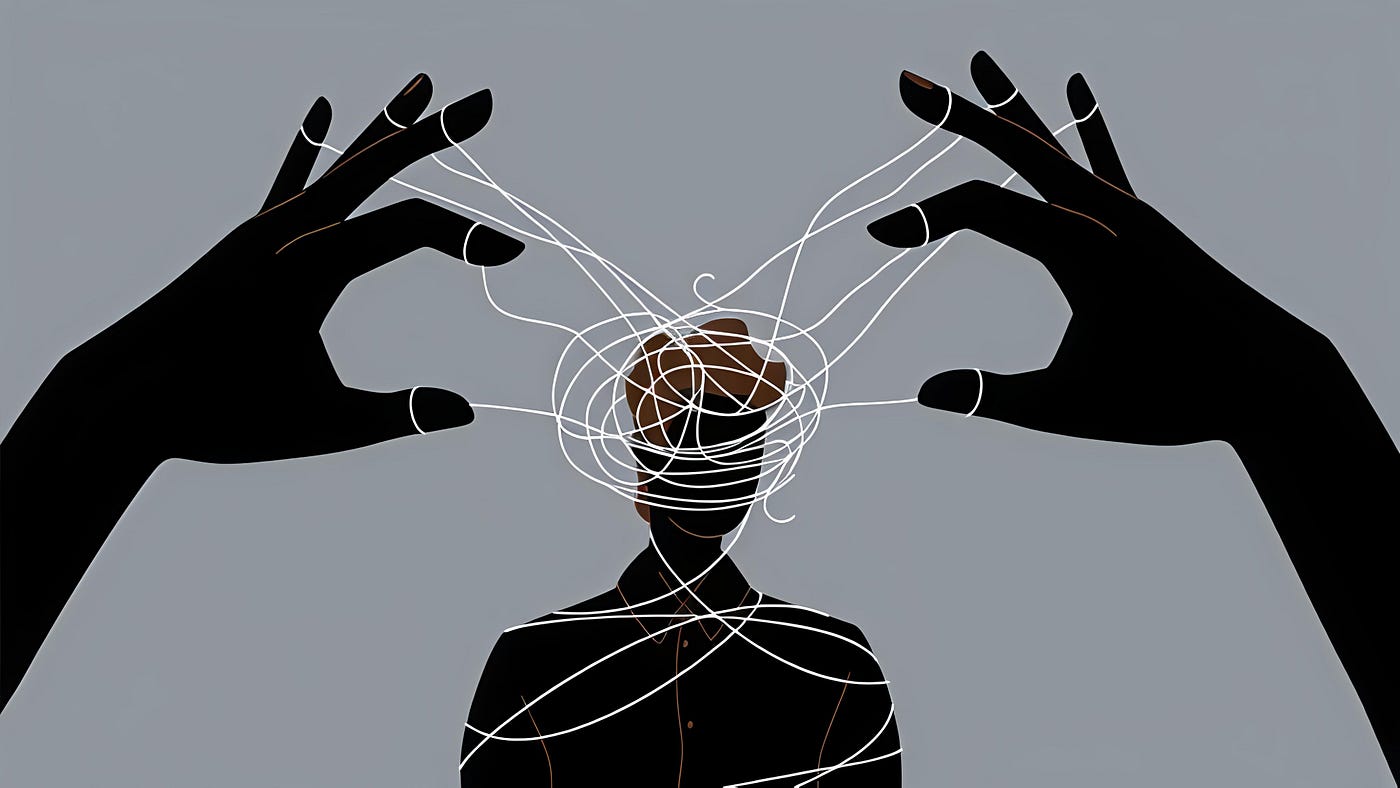
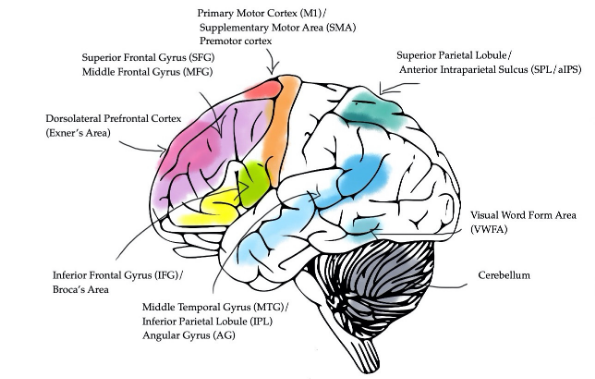
Déjà Vu: A Comprehensive Research Analysis and Its Connection to the INTJ Personality Type
ACCELARC
Déjà Vu: A Comprehensive Research Analysis and Its Connection to the INTJ Personality Type
Introduction
Déjà vu (French for “already seen”) is a fascinating and enigmatic cognitive phenomenon characterized by the striking sense that a present situation feels intensely familiar, alongside the simultaneous realization that it must be new and has never been experienced before. Between 60% and 80% of people have experienced occasional déjà vu, making it a remarkably common yet poorly understood aspect of human consciousness. This report provides a comprehensive deep-dive into the neurological, cognitive, and psychological mechanisms of déjà vu, followed by an exploration of its intriguing connections to the INTJ personality type and its dominant cognitive function, Introverted Intuition (Ni).
Part 1: Déjà Vu — A Deep Research Analysis
1.1 Definition and Core Phenomenology
Déjà vu is a recognition illusion where an objectively new situation triggers an inappropriate feeling of familiarity. The experience is characterized by a paradoxical juxtaposition: a simultaneous sense of newness and a sense of familiarity that typically persists for only a few seconds. While many people also experience an illusory sense of knowing what will happen next (feelings of prediction, or FOPs) alongside déjà vu, research indicates that déjà vu accompanied by FOPs carries higher perceived familiarity intensity than déjà vu without such predictions.
It is important to distinguish between:
- Nonpathological déjà vu: The fleeting, occasional experience common in healthy individuals, which has been shown to be largely unrelated to psychopathology.
- Persistent déjà vu/déjà vécu: When the sensation extends into minutes, hours, or longer, which can be disconcerting and may be associated with neurological or psychiatric conditions such as temporal lobe epilepsy, dementia, or psychosis.
1.2 Neurological Mechanisms
1.2.1 The Hippocampus and Memory Mismatch
Leading computational analyses characterize déjà vu as a failure of memory retrieval, linked to the activation in neocortex of familiar items from a compositional memory in the absence of hippocampal input。The hippocampus typically supports episodic memory retrieval; when hippocampal input is absent but neocortical activation occurs, familiar items are perceived without contextual recollection, producing an unresolved feeling of familiarity.
The dual-process view of recognition memory provides a compelling framework: erroneous familiarity arises from inappropriate activation of the parahippocampal cortex, while erroneous recollection involves the hippocampus itself。The decoupled familiarity hypothesis specifically proposes that déjà vu is produced by an erroneous feeling of familiarity that is not in keeping with current cognitive processing, converging on parahippocampal dysfunction as the locus of déjà vu experiences。
1.2.2 The Default Mode Network and Spontaneous Neural Replay
Recent research proposes that spontaneous neural replay — spontaneously generated reactivation of neural activity related to past experiences — occurring in the default mode network (DMN) may underlie déjà vu experiences。This process occurs preferentially during brief bursts (~30–100 ms) of high-frequency (~200 Hz) neural firing known as sharp-wave ripples。Critically, while involuntary autobiographical memories involve both hippocampus and DMN activation, déjà vu experiences may involve transient activation limited to the DMN, explaining why the feeling of familiarity arises without accompanying recollection of specific past events。
1.2.3 Temporal Lobe Epilepsy and Brain Stimulation Studies
Historically, déjà vu has been linked to seizure activity in the temporal lobe epilepsy, with many patients experiencing the phenomenon as a manifestation of simple partial seizures。Jackson (1898) first observed that seizures arising in the medial temporal lobe may result in a “dreamy state” consisting of vivid memory-like hallucinations and the sense of having previously lived through exactly the same situation。Stimulation studies have identified that 45% of dreamy states were evoked by amygdala stimulation, 37.5% by hippocampus, and 17.5% by the parahippocampal gyrus。More recent work has also reported déjà vu induced through cortical stimulation of the posterior cingulate cortex。
1.2.4 The Entorhinal Cortex and Hyper-Recency Bias
Persistent déjà vu has been directly associated with hyperperfusion in the entorhinal cortex, suggesting that this region is involved in both weakly-associative false memory and familiarity-based processing。A 2025 study identified that both psychoticism and déjà vu experiences are characterized by a “hyper-recency” bias in memory — wherein remotely encountered events are perceived as having happened recently — suggesting a shared cognitive mechanism involving breakdowns in memory for when events happened。
1.3 Psychological and Cognitive Theories
1.3.1 Gestalt Familiarity Hypothesis
The most empirically supported psychological theory is the Gestalt familiarity hypothesis. Déjà vu occurs when the configuration of elements within a scene maps onto a configuration previously seen, but the previous scene fails to come to mind。For example, visiting a friend’s living room for the first time may feel familiar because the arrangement of furniture maps onto a waiting room previously seen at a doctor’s office, yet the doctor’s office cannot be recalled。Virtual reality studies have confirmed that when a new immersive VR scene resembles a previously-viewed scene in layout but participants fail to recall the original, familiarity ratings and déjà vu reports are significantly higher。
1.3.2 Encoding-as-Retrieval Hypothesis
An alternative explanation posits that normal memory encoding processes are falsely flagged and interpreted as memory retrieval. In this view, perceptual input triggers routine memory encoding, but these encoding signals are misinterpreted by metacognitive monitoring systems as retrieval signals, producing the illusion of prior experience。This hypothesis accounts for persistent déjà vécu observed in conditions like transient epileptic amnesia and progressive dementia。
1.3.3 Feature-Matching Theory
Research suggests that feature overlap between previously encountered environments and the current environment drives déjà vu: the feature overlap creates a sense of familiarity without accompanying recollection of the original location。Experimental studies manipulating spatial layout familiarity have demonstrated that even when participants cannot recall similar studied scenes, feelings of prediction (FOPs) increase systematically with increments in experimentally created familiarity。
1.4 Abnormal and Pathological Déjà Experiences
While occasional déjà vu is considered normal, persistent forms can be clinically significant:
- Temporal Lobe Epilepsy: Ictal déjà vu represents a common aura, with phenomenological reports confirming that it reflects feelings of familiarity for the immediate visual environment experienced as part of seizures。
- Dementia and Transient Epileptic Amnesia: Persistent déjà vécu may co-occurs with both perceptual novelty and memory impairment, seen in progressive dementia and transient epileptic amnesia。
- Psychosis: A “hyper-recency” bias in memory characterizes both psychoticism and déjà vu experiences — but not negative mood-related symptoms — suggesting specificity to uncanny subjective experiences where there is a salient conflict between reality and one’s experience of it。
1.5 Recent Research (2024–2025)
Contemporary research has advanced understanding in several key areas:
-
Spontaneous metacognitive experiences: A 2025 study using vigilance tasks found that déjà vu and involuntary autobiographical memories were the most frequently reported spontaneous cognitive phenomena, supporting a unified framework for involuntary and metacognitive thought。
-
Feelings of prediction causality: Experimental evidence published in 2025 demonstrated that familiarity detection itself can causally produce feelings of prediction during déjà vu, resolving prior correlational ambiguity。
-
Illegitimacy framework: A 2023 computational analysis characterized déjà vu as “a botched memory operation, illegitimate to start with” — a failure of memory retrieval involving misappropriation by the self of what belongs to others。
-
Subconscious connectedness: A 2025 study involving over 2,200 adults identified that individuals high in subconscious connectedness (a trait involving unusually high influence between conscious and non-conscious mind) are significantly more likely to report frequent anomalous experiences including déjà vu. These experiences were also associated with intuitive thinking, absorption, and dissociation。
Part 2: The INTJ Personality Type — A Deep Research Analysis
2.1 Definition and Core Traits
INTJ (Introverted, Intuitive, Thinking, Judging) is one of the 16 personality types in the Myers-Briggs Type Indicator, characterized by a dominant cognitive function of Introverted Intuition (Ni), auxiliary Extraverted Thinking (Te), tertiary Introverted Feeling (Fi), and inferior Extraverted Sensing (Se)。Often called “The Architect” or “The Strategist,” INTJs make up approximately 2% of the general population。
2.2 Cognitive Functions of the INTJ
The four primary cognitive functions, arranged in descending order of preference and development, are:
| Function | Abbreviation | Role | Description | | — — — — — | — — — — — — — | — — — | — — — — — — -| | Introverted Intuition | Ni | Dominant (1st) | Pattern recognition, future vision, unconscious synthesis of information | | Extraverted Thinking | Te | Auxiliary (2nd) | Logical organization, external efficiency, decision-making | | Introverted Feeling | Fi | Tertiary (3rd) | Internal values, authenticity, personal ethics | | Extraverted Sensing | Se | Inferior (4th) | Present-moment awareness, sensory engagement |
2.3 Introverted Intuition (Ni): The Dominant Function
2.3.1 Core Characteristics
Introverted Intuition is the INTJ’s primary means of interacting with the world. Unlike Sensing types who process concrete, present-moment information, Ni-dominant individuals gather and process information primarily through pattern recognition and abstraction。Jung described Ni as a function concerned with the collective unconscious, believing that the database of images and experiences available to Ni is largely unconscious and includes inherited data。
Ni manifests as:
- Pattern recognition on a large scale: INTJs observe patterns related to systems, mechanisms, and long-term implications rather than fleeting details。
- Unconscious synthesis: Pattern-recognition occurs automatically at a subconscious level — the unconscious mind assembles seemingly unrelated strands of information to produce insights that suddenly appear in conscious awareness as if they had been there all along。
- Holistic perception: Ni-dominant types see the entire world as one interconnected whole, constantly looking for repeated patterns with an eye to understanding underlying meaning。
- Future orientation: Introverted Intuiting is a process of becoming aware of what will be that hasn’t yet been — vision, foresight, and profoundly impactful symbols。
2.3.2 Ni as a Perceiving Function
Ni is a perceiving (irrational) function, meaning it operates through sensation rather than rational processes like thinking or feeling. Carl Jung used the term “irrational” to explain that Ni comes from sensation (unconscious perception) rather than logic, and cannot be fully explained in rational terms — it simply happens intuitively without conscious effort。This aligns with contemporary understanding that Ni operates through spontaneous neural processing occurring below the threshold of conscious awareness.
2.3.3 Neural Correlates of Ni and INTJ Cognition
Dario Nardi’s neuroscience research on personality type suggests that INTJs show distinct patterns of brain activity, with different types within the INTJ category showing variation depending on life experience and development。INTJs (preferring Ni > Te > Fi > Se) have been compared to ISFPs (preferring Fi > Se > Ni > Te), with the observation that brain activity converges between these types as they grow older due to shared cognitive function pairs。
The INTJ’s Ni-Te cognitive architecture exhibits significant resource optimization (tendency for optimization), with the prefrontal cortex reportedly showing neural inhibition responses when processing inefficient information。Furthermore, Ni-dominant individuals are described as having stronger spatial imagination and visual memory capabilities, extracting “skeletal frameworks” from objective phenomena — an ability analogous to pattern extraction by an AI model processing large amounts of image data。
2.4 INTJ Memory, Learning, and Information Processing
INTJs process memory distinctively:
- Pattern-based memory storage: INTJs store causal relationships and patterns rather than concrete sensory details. An INTJ observing that “A causes B” multiple times will remember that causal relationship very well, and the mind will immediately recall the pattern in similar situations。
- ”Why” orientation: INTJs prioritize understanding why things work, seeing bigger questions behind factual information. They are proficient with mechanical memorization but struggle to retain small, concrete details。
- Intuition preceding evidence: Ni develops early in life and operates unconsciously, leading INTJs to arrive at conclusions before they can articulate the evidence, then reverse-engineer explanations to support their insights。This has been described colloquially as a “sixth sense.”
- Instant enlightenment: Ni-dominant individuals extract personal unconscious information more efficiently, experiencing moments of instant comprehension (“sudden insight”) and even predictive foresight that seems to anticipate events before they unfold。
Part 3: The Connection Between Déjà Vu and the INTJ Personality Type
3.1 Theoretical Basis for the Connection
While no large-scale empirical study has directly measured déjà vu frequency across MBTI types, a compelling theoretical framework connects déjà vu to INTJ cognition through the shared mechanism of unconscious pattern recognition.
3.1.1 Unconscious Processing as Common Ground
Both déjà vu and Ni-dominant cognition involve information processing that occurs beneath the threshold of conscious awareness:
- Déjà vu: Involuntary memory retrieval processes that happen spontaneously without deliberate intention, potentially arising from spontaneous neural replay in the default mode network。
- Ni: A perceiving function that operates through the unconscious, synthesizing seemingly unrelated information to produce insights that appear suddenly in consciousness。
Jung himself characterized Ni as being oriented toward the unconscious, perceiving the world through archetypal patterns and long-term implications rather than fleeting details。This orientation toward unconscious processing creates a neurological predisposition for the types of automatic pattern-matching that may trigger déjà vu.
3.1.2 Pattern Recognition and Familiarity Detection
The Gestalt familiarity hypothesis proposes that déjà vu arises when the configuration of elements in a scene maps onto a prior configuration that cannot be consciously recalled。For Ni-dominant individuals like INTJs, pattern recognition is not merely an occasional occurrence but their primary cognitive modus operandi:
- Ni constantly scans the environment for patterns and connections, processing information for meaning rather than specific sensory details。
- INTJs observe patterns related to systems and mechanisms。
- The mind of an INTJ immediately recalls stored patterns and expects outcomes based on those patterns。
This heightened pattern-recognition sensitivity may increase the frequency with which INTJs experience the specific type of configural matching that triggers déjà vu. As one Ni-dominant individual observed: “I experience deja vu and synchronicity with alarming frequency. It’s both an asset, because it tells me that I’m correctly reading some sort of pattern between things”。
3.1.3 Feature-Matching and the INTJ’s Inferior Function
The INTJ’s inferior function, Extraverted Sensing (Se), is described as a weakness in present-moment awareness and sensory engagement。Because INTJs have limited direct sensory memory for exact environmental details, they are more likely to experience the feature-matching process central to déjà vu: when a novel environment shares configural features with a previous scene, INTJs may experience familiarity without being able to consciously recall the original source, precisely because their inferior Se does not encode the specific sensory details that would allow explicit recollection。
This aligns with the observation that brain activity in INTJs shows lower engagement with the sensory-present-focused brain regions, potentially increasing susceptibility to false familiarity signals.
3.1.4 The “Parallel Processing” Hypothesis
Some personality theorists suggest that both Sensors and Intuitives can experience déjà vu, but the phenomenology differs based on type. For Sensing types (who store perceptions consciously in episodic memory with rich sensory detail), déjà vu may feel uncomfortable and contradictory — the unfamiliar familiarity directly conflicts with their stored factual memory of events。For Intuitive types like the INTJ, however, déjà vu fits naturally within their cognitive framework: their attention to patterns and connections makes the sense of familiarity feel meaningful rather than distressing, potentially even validating their intuitive perceptions。
3.2 Anecdotal and Community Evidence
Online personality type communities contain extensive discussion suggesting that INTJs and INFJs (the two Ni-dominant types) report high frequencies of déjà vu:
- One Ni-dominant user reports: “I use Ni a lot… I experience deja vu and synchronicity with alarming frequency. It’s both an asset, because it tells me that I’m correctly reading some sort of pattern between things, and a curse, because it offers no solution”。
- Another describes: “I experience deja vu literally all the time… Ni is always looking for meaning and connections, so I wondered if it was related at all”。
- INTJs frequently report a “steady background hum of symbolic dreams, déjà-vu-like experiences” because Ni performs so much of its processing unconsciously。
- Some describe a “perpetual sense of deja vu” associated with Ni-dominant experience。
3.3 Neuro-cognitive Convergence
Recent research on subconscious connectedness provides a framework for understanding the INTJ–déjà vu link. High subconscious connectedness — the trait of having unusually high influence between conscious and unconscious mind — is associated with:
- Significantly more frequent anomalous experiences including déjà vu
- Intuitive thinking as a core psychological trait
- Greater probability of dreams, synchronicities, and predictive experiences
This description of high subconscious connectedness strongly parallels the description of Ni-dominant cognition: the unconscious mind actively contributing to conscious experience, generating insights that appear “out of nowhere,” and creating a sense of connection between seemingly unrelated events. If Ni-dominant types naturally have this characteristic of high subconscious connectedness, it would predictably result in more frequent déjà vu experiences.
3.4 The INTJ’s Relationship with Déjà Vu’s Illusory Nature
Perhaps most revealing is how INTJs typically respond to déjà vu. Unlike some types who may interpret the experience as mystical or disconcerting, INTJs apply their auxiliary Thinking function (Te) to analyze the phenomenon:
- “As an INTJ (with the heavy emphasis on reason), I have always been resistant to the idea of ‘Déjà Vu.’”
- INTJs seek causal explanations, often citing the Gestalt familiarity hypothesis or feature-matching theory as logical accounts
- The experience is treated as data about their pattern-recognition accuracy rather than as a paranormal event — consistent with the INTJ’s preference for logical, impersonal analysis
This analytical stance toward a seemingly mysterious phenomenon is characteristic of an INTJ’s Ni-Te combination: Ni generates the intuitive familiarity, while Te demands an explanation grounded in verifiable mechanisms.
Part 4: Broader Personality Trait Associations with Déjà Vu
Research on personality correlates of déjà vu, conducted within the Big Five framework rather than MBTI, has identified several relevant associations:
- Openness to Experience: Shows the strongest positive correlation with déjà vu frequency (0.676), suggesting that individuals more open to novel ideas, imagination, and unconventional experiences experience déjà vu more frequently。
- Conscientiousness: Shows a moderate positive correlation (0.416)。
- Extraversion: Shows a small positive correlation (0.026)。 -Intuitive thinking: Identified as a distinct psychological trait associated with anomalous experiences including déjà vu。
These findings align with the INTJ profile, as INTJs score high on Openness to Experience (driven by dominant Ni preference for abstract patterns and possibilities) and are by definition Intuitive types. The particularly strong association between Openness and déjà vu provides indirect support for the hypothesis that Intuitive-dominant types experience déjà vu more frequently than Sensing-dominant types.
Conclusion
The connection between déjà vu and the INTJ personality type arises from multiple converging mechanisms rooted in both cognitive neuroscience and Jungian personality theory:
- Shared unconscious processing: Both déjà vu (involuntary memory retrieval without conscious intention) and Ni (unconscious pattern recognition) involve information processing that occurs below the threshold of conscious awareness, creating overlapping neurological pathways.
2.Pattern recognition sensitivity: Ni-dominant individuals are neurologically predisposed to detect patterns and configurations in their environment. The Gestalt familiarity hypothesis suggests that configural matching is precisely what triggers déjà vu — meaning INTJs are effectively “wired” to experience it more frequently.
3.Inferior Se function: INTJs’ limited sensory encoding may prevent them from consciously recalling the original source of familiarity when encountering configurally similar scenes, producing exactly the “familiarity without recall” pattern characteristic of déjà vu.
4.High subconscious connectedness: If Ni-dominant types naturally possess high subconscious connectedness (unusually strong influence between conscious and unconscious mind), this would predict increased frequency of anomalous experiences including déjà vu, as confirmed by 2025 research.
- Cognitive analysis of experience: Unlike types who may find déjà vu confusing or mystical, INTJs use their auxiliary Thinking function to analyze the phenomenon through the lens of feature-matching and false familiarity theories — converting a potentially disconcerting experience into confirmatory data about their cognitive accuracy.
While direct empirical research specifically measuring déjà vu frequency across MBTI types remains limited, the convergence of neurological evidence, personality theory, and community reports provides a compelling case for a meaningful connection. The INTJ’s dominant Introverted Intuition — an unconscious, pattern-seeking, future-oriented perceiving function — operates through mechanisms closely paralleling those identified in contemporary cognitive neuroscience as underlying the déjà vu experience. For the INTJ, déjà vu may not be merely an occasional curiosity, but rather an inevitable and meaningful side effect of how their consciousness is configured to process reality.
Here is the plain text version of all references, formatted for easy copy-paste.
— -
Déjà Vu — Neurology / Memory
A spontaneous neural replay account for involuntary autobiographical memories and déjà vu experiences — Mohith M. Varma & Rongjun Yu; Behavioral and Brain Sciences / Cambridge Core (2023) — http://core-prod.cambridgecore.org/core/journals/behavioral-and-brain-sciences/article/spontaneous-neural-replay-account-for-involuntary-autobiographical-memories-and-deja-vu-experiences/D2547BFF45DF24D8104447F6BFDF99F8
A spontaneous neural replay account for involuntary autobiographical memories and déjà vu experiences (MEDLINE) — Varma MM, Yu R; Behav Brain Sci. 2023;46:e380 — PMID: 37961766 — https://www.medscape.com/medline/abstract/37961766
The default mode network: where spontaneous thought meets memory consolidation — ScienceDirect (2025) — https://www.sciencedirect.com/science/article/abs/pii/S1053810012000049?via=ihub
Déjà Vu — Cognitive Theory
Familiarity from the configuration of objects in 3-dimensional space and its relation to déjà vu: A virtual reality investigation — Anne M. Cleary et al.; ScienceDirect (2012) — https://www.sciencedirect.com/science/article/abs/pii/S1053810012000049?via=ihub
Been There, Done That — or Did I?: Déjà Vu Found to Originate in Similar Scenes — Scientific American (2012) - https://www.scientificamerican.com/article/been-there-done-that-or-did-i/
Déjà Vu — Clinical (Epilepsy)
Déjà experiences in temporal lobe epilepsy — Nathan A Illman et al.; Epilepsy Res Treat. 2012 — PMID: 22957231 — https://pubmed.ncbi.nlm.nih.gov/22957231/
Anatomical origin of déjà vu and vivid ‘memories’ in human temporal lobe epilepsy — ScienceOpen (1994) — PMID: 8061523 — https://www.scienceopen.com/document?vid=78a6e62c-4225-434f-a72b-b0ba275d12ea
Déjà Vu — Personality
Relationship Between Personality Traits and Dejavu Experience Among Religious and NonReligious People — Noshaba Razaq et al.; PAFMJ (2024) — DOAJ — https://doaj.org/article/dd2e9d9d2f2e4d2a8f2c2f2e4d2a8f2c
Relationship between personality traits and dejavu experience among religious and nonreligious people — WHO EMRO Library (2024) — https://vlibrary.emro.who.int/imemr/relationship-between-personality-traits-and-dejavu-experience-among-religious-and-nonreligious-people/
INTJ Personality — MBTI & Jung
How Jungian Cognitive Functions Explain MBTI Type Prevalence in Computer Industry Careers — Harvard Astrophysics Data System (2025) — arXiv:2504.17248 — https://ui.adsabs.harvard.edu/abs/2025arXiv250417248V/abstract
The Processes of Type Dynamics — The Myers-Briggs Company (2023) — https://www.myersbriggs.org/my-mbti-mbti-basics/type-dynamics/
INTJ — Wikipedia, la enciclopedia libre — Wikipedia (2010) — https://es.wikipedia.org/wiki/INTJ
INTJ — Typology Wiki (2018) — https://www.typologycentral.com/wiki/index.php?title=INTJ&direction=prev&oldid=74
*INTJ Personality — Brain Activity & Cognitive Functions***
INTJ (Brain Wiring of Four INTJ Subtypes) — Dario Nardi (2021 translation) — https://zhuanlan.zhihu.com/p/409171999
Ni (Introverted Intuition): Intisari Visi dan Kesimpulan Tak Terhindarkan — Indonesian MBTI Resource — https://pgsd.fip.unesa.ac.id/post/ni-introverted-intuition-intisari-visi-dan-kesimpulan-tak-terhindarkan
(Introverted Intuitive Type) — Baidu Baike (2026) — https://wapbaike.baidu.com/item/内倾直觉型/22334658
Introverted Intuition — Ni — TypeInDepth — https://typeindepth.org/introverted-intuition-ni
Integrated Analysis (Déjà Vu & Cognition)
Déjà Vécu: Current Knowledge and Presentations — Frontiers in Psychology (2022) — Article 794683 — https://public-pages-files-2025.frontiersin.org/journals/psychology/articles/10.3389/fpsyg.2022.794683/xml
Déjà vu: A botched memory operation, illegitimate to start with — Debora Stendardi et al.; Cambridge Core (2023) — https://www.cambridge.org/core/journals/behavioral-and-brain-sciences/article/abs/deja-vu-a-botched-memory-operation-illegitimate-to-start-with/6EF579409B8D90A834E5BF69799E01D8
메타데이터
- post_id
- aecd7b5baeb0
- slug
- déjà-vu-a-comprehensive-research-analysis-and-its-connection-to-the-intj-personality-type-aecd7b5baeb0
- url
- https://medium.com/@accelarc/d%C3%A9j%C3%A0-vu-a-comprehensive-research-analysis-and-its-connection-to-the-intj-personality-type-aecd7b5baeb0
- canonical_url
- https://medium.com/@accelarc/d%C3%A9j%C3%A0-vu-a-comprehensive-research-analysis-and-its-connection-to-the-intj-personality-type-aecd7b5baeb0
- author_url
- https://medium.com/@accelarc
- status
- ok
- fetched_at
- 2026-06-17 12:55:42