AI’s Massive Memory Demand Creates a New “Memory Wall”
The rapid growth of artificial intelligence is reshaping the semiconductor industry and exposing new limitations in traditional memory…
AI’s Massive Memory Demand Creates a New “Memory Wall”

AI’s Massive Memory Demand Creates a New “Memory Wall”
The rapid growth of artificial intelligence is reshaping the semiconductor industry and exposing new limitations in traditional memory architectures. While the term “memory wall” was originally coined in the early 1990s to describe the widening performance gap between processors and memory, the AI era has given the concept a new meaning.
For decades, DRAM technology has supported increasing computing demands through innovations such as cache hierarchies, prefetching, and memory interleaving. These techniques helped improve performance scalability but did little to address long-term capacity challenges. Today, the explosive growth of large language models (LLMs) and AI inference workloads is pushing conventional memory technologies to their limits.
As AI models expand from billions to trillions of parameters, memory requirements are growing at an unprecedented pace. Beyond model weights, AI inference applications increasingly rely on large key-value (KV) caches driven by retrieval-augmented generation (RAG), chain-of-thought reasoning, personalized user data, and complex prompts. In many cases, these KV caches require more memory capacity than the AI model itself.
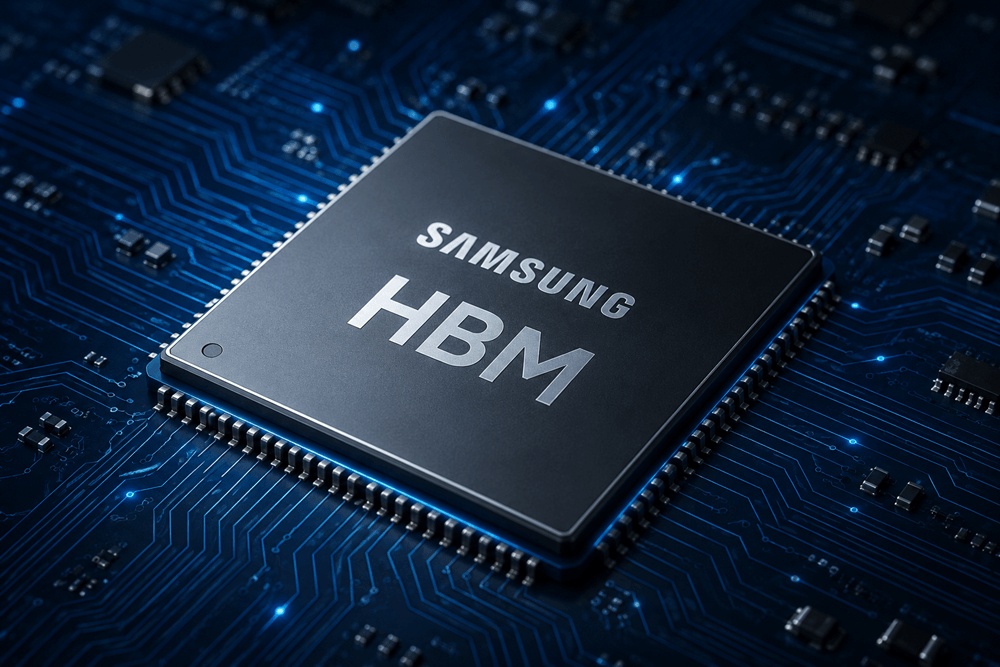
Traditional DRAM-based memory systems, including High Bandwidth Memory (HBM) and Graphics Double Data Rate (GDDR) memory, were designed primarily for high-speed access. However, AI inference workloads are largely read-intensive, exhibit predictable access patterns, and are often more tolerant of latency. This reduces the importance of traditional caching strategies while increasing the need for greater memory capacity and sustained bandwidth.
Industry experts note that the costs associated with DRAM and HBM development continue to rise, while power consumption, thermal management challenges, and scalability constraints become increasingly difficult to overcome. As a result, memory architecture innovation is becoming a critical factor in the future of AI infrastructure.
Rather than relying solely on higher bandwidth through expensive accelerator hardware, next-generation AI systems are expected to focus on optimizing how and when data is retrieved. This shift is driving interest in alternative memory technologies specifically designed for large-capacity storage and sequential data access.
One emerging solution is high-bandwidth flash memory. Leveraging the density advantages of NAND flash and advanced manufacturing technologies such as wafer bonding and CMOS Bonded Array (CBA) architectures, these solutions offer significantly greater storage capacity than conventional HBM.
Although flash memory typically has higher latency than DRAM, AI inference workloads are increasingly constrained by bandwidth and capacity rather than latency. High-bandwidth flash architectures are designed to provide parallel access across multiple storage arrays, enabling efficient large-block data retrieval that aligns well with the needs of LLM inference.
In addition to higher density, NAND-based high-bandwidth flash offers advantages in power efficiency, thermal stability, and non-volatility. These characteristics make it suitable for storing persistent KV cache data, potentially enabling AI systems to maintain long-term memory-like functionality while reducing operational costs.
Historically, data centers have addressed memory limitations by distributing AI workloads across multiple accelerators, often resulting in underutilized compute resources. While this approach can be justified in large-scale environments serving massive user bases, it becomes less efficient for smaller enterprises and diverse inference workloads where batching opportunities are limited.
As AI computing continues to evolve, industry observers believe that relying exclusively on DRAM and HBM may constrain future innovation. High-bandwidth flash memory is emerging as a scalable and cost-effective alternative capable of meeting the growing demands of both data center and edge AI deployments.
In the next phase of AI infrastructure development, performance may no longer be determined solely by latency. Instead, success will increasingly depend on the efficiency of data orchestration and memory architecture, redefining the industry’s approach to the modern memory wall.
메타데이터
- post_id
- aecde4cd4a48
- slug
- ais-massive-memory-demand-creates-a-new-memory-wall-aecde4cd4a48
- url
- https://medium.com/@avaq-ic/ais-massive-memory-demand-creates-a-new-memory-wall-aecde4cd4a48
- canonical_url
- https://medium.com/@avaq-ic/ais-massive-memory-demand-creates-a-new-memory-wall-aecde4cd4a48
- author_url
- https://medium.com/@avaq-ic
- status
- ok
- fetched_at
- 2026-06-21 22:26:41