Saved vocabulary needs source sentences, not word lists
When learners only study polished example sentences, they may recognize words in a controlled setting but still struggle on the open web…
Saved vocabulary needs source sentences, not word lists
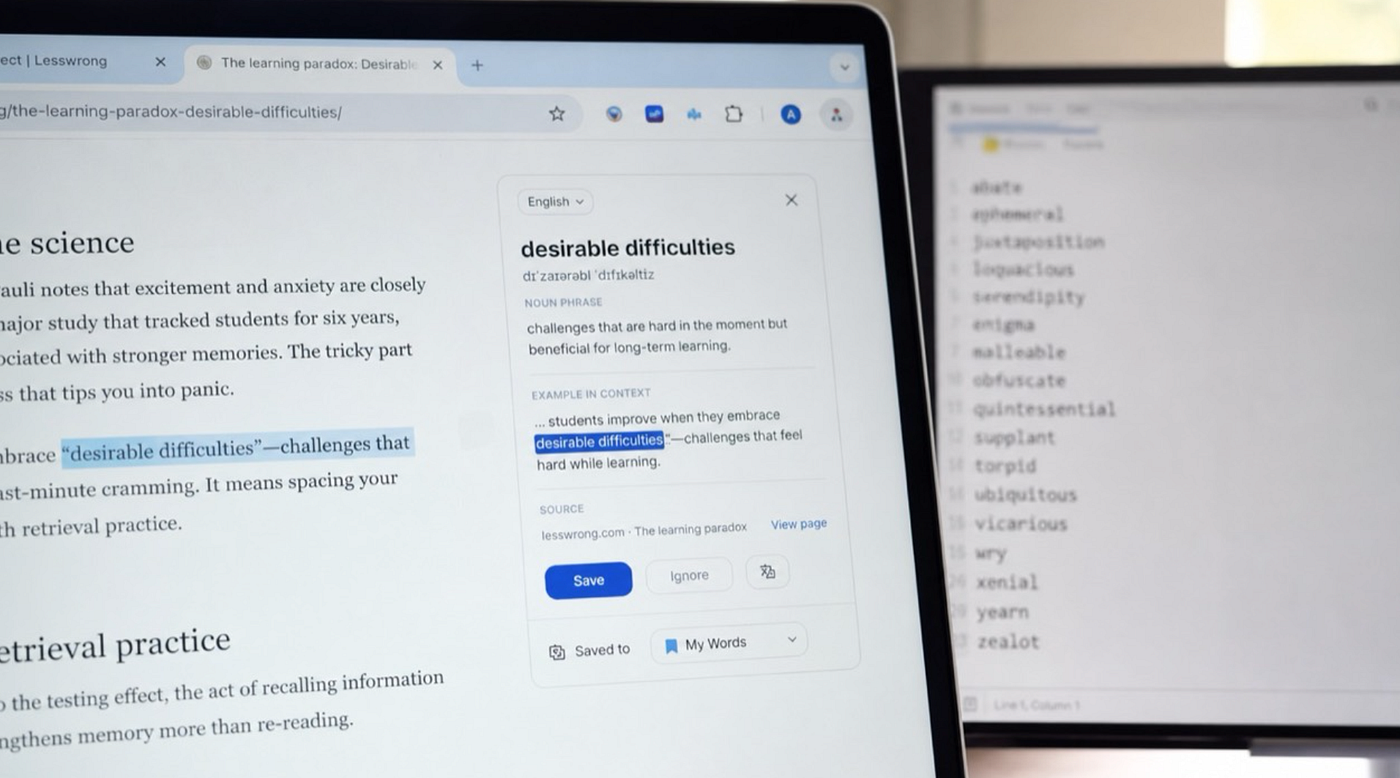
When learners only study polished example sentences, they may recognize words in a controlled setting but still struggle on the open web. Real pages force language to appear in its working environment. They show how people explain, argue, describe, sell, warn, compare, and instruct.
A vocabulary system for real pages should therefore keep more than the word. It should keep the language environment that made the word worth saving.
This is the direction behind
UseLingo’s browser-based vocabulary workflow. The product starts from the reading moment because that is where the most useful signal is.
A simple test for any vocabulary workflow
Before choosing a vocabulary workflow, ask what the saved item will look like in seven days.
Can you still see the original sentence?
Can you tell which page it came from?
Can you remember why the word was worth saving?
Can you return to the source if you need more context?

If the answer is mostly no, the workflow may be fast at capture but expensive at review. The time was not removed. It was moved into the future.
If the answer is yes, the saved word has a better chance of staying connected to real reading.
The product principle: keep the path back
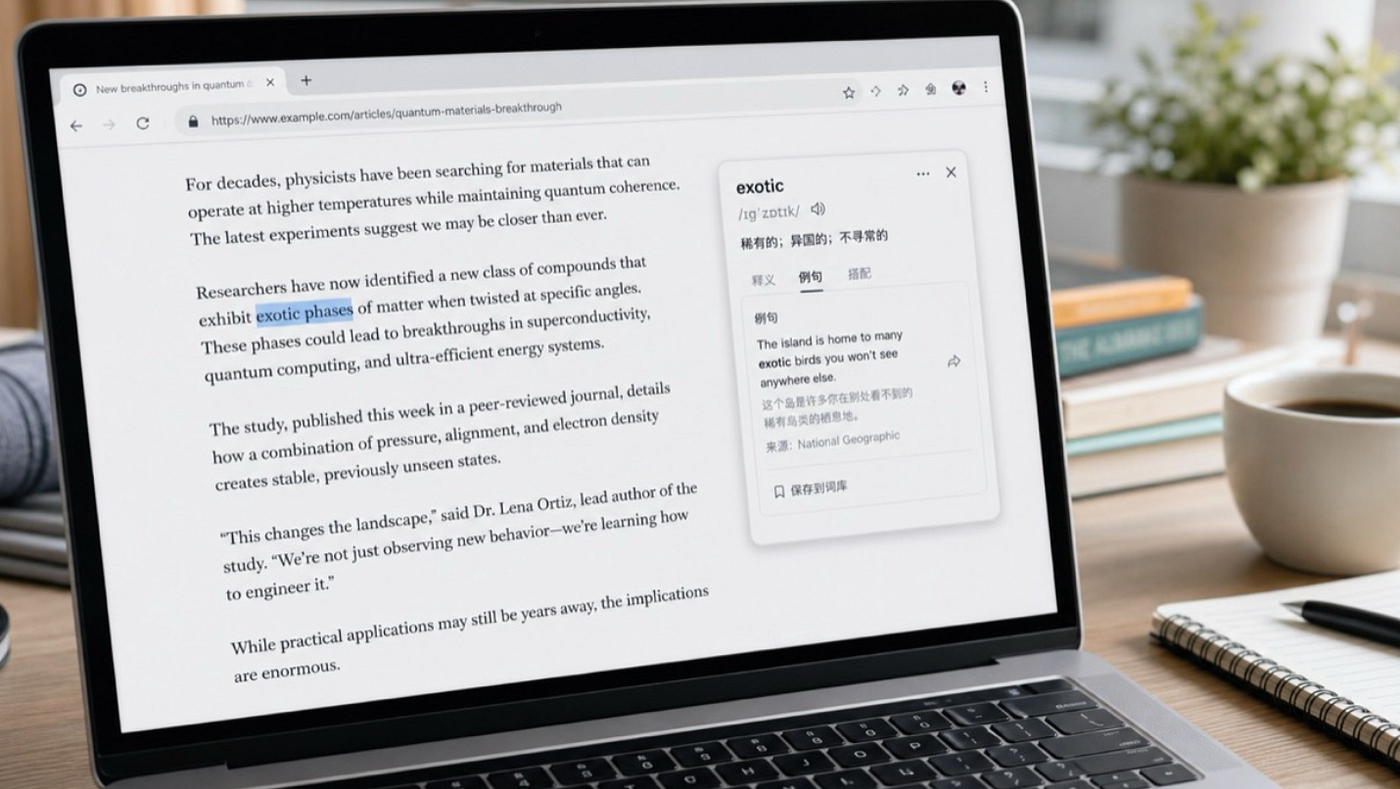
Vocabulary learning does not need more complicated rituals. Most readers do not want to maintain a perfect system. They want to understand the page in front of them and remember the words that will help with the next one.
That is why we keep coming back to one product principle:
Every saved word should keep a visible path back to the reading moment.
The path does not need to be dramatic. A source sentence, page title, and clean review card can be enough. What matters is continuity. The word should not become an orphan the moment the tab closes.
Word lists are useful for storage. Source sentences are useful for memory.
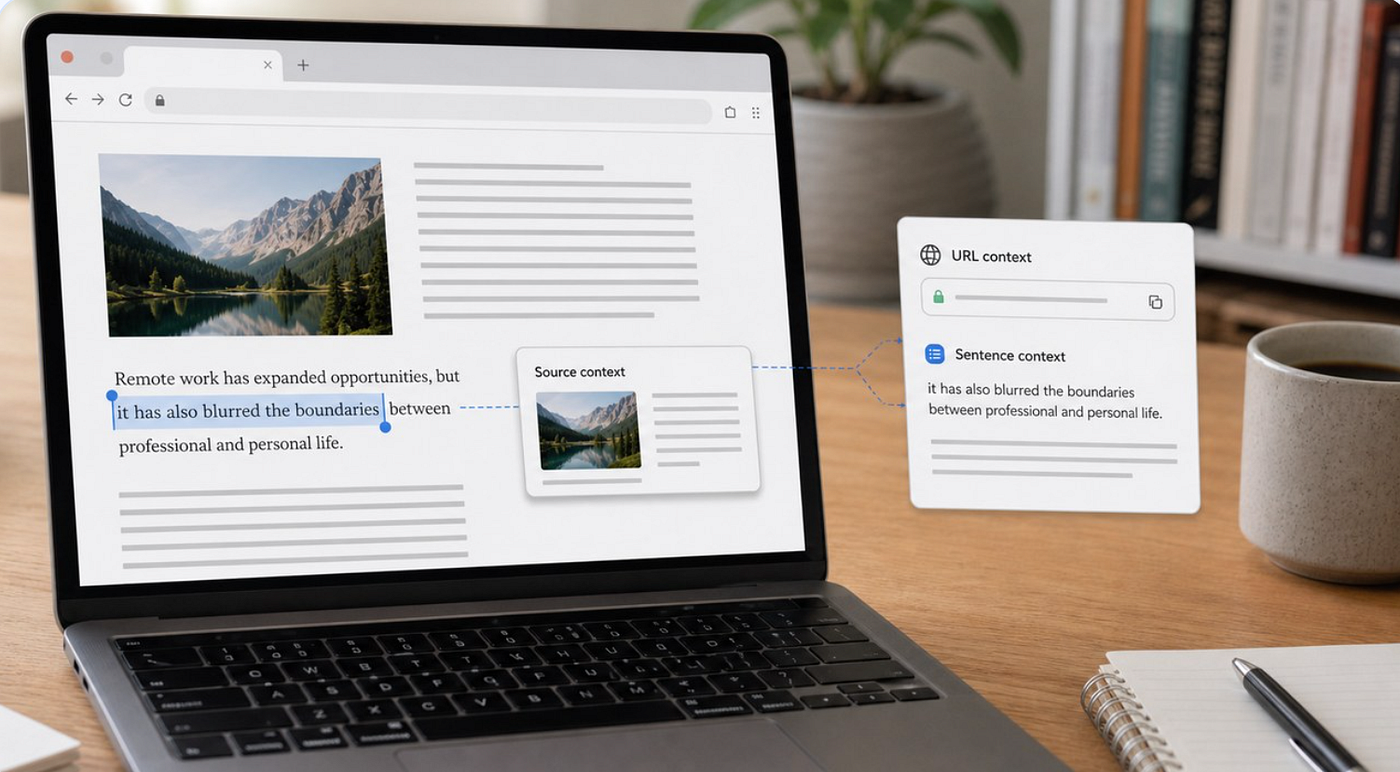
For language learners reading the real web, that difference matters.
Optional Medium kicker:
UseLingo is building a browser-first vocabulary workflow for learners who read real web pages. You can try it at:https://uselingo.io/
Suggested canonical/source line if you want transparency without duplicate risk:
This article expands on a UseLingo product note about vocabulary, source sentences, and reading context.
Source article:https://uselingo.io/blog/why-browser-context-beats-copy-paste-vocabulary/
메타데이터
- post_id
- aee37d3dbffb
- slug
- saved-vocabulary-needs-source-sentences-not-word-lists-aee37d3dbffb
- url
- https://medium.com/@hellouselingo/saved-vocabulary-needs-source-sentences-not-word-lists-aee37d3dbffb
- canonical_url
- https://medium.com/@hellouselingo/saved-vocabulary-needs-source-sentences-not-word-lists-aee37d3dbffb
- author_url
- https://medium.com/@hellouselingo
- status
- ok
- fetched_at
- 2026-06-09 15:37:30





