The One Mistake That Ruins Roasted Tomatillo Sauce (And How to Fix It Before You Start)
I’ve been making roasted tomatillo sauce in professional kitchens since the mid-1980s. I’ve watched line cooks, culinary students, and…
The One Mistake That Ruins Roasted Tomatillo Sauce (And How to Fix It Before You Start)
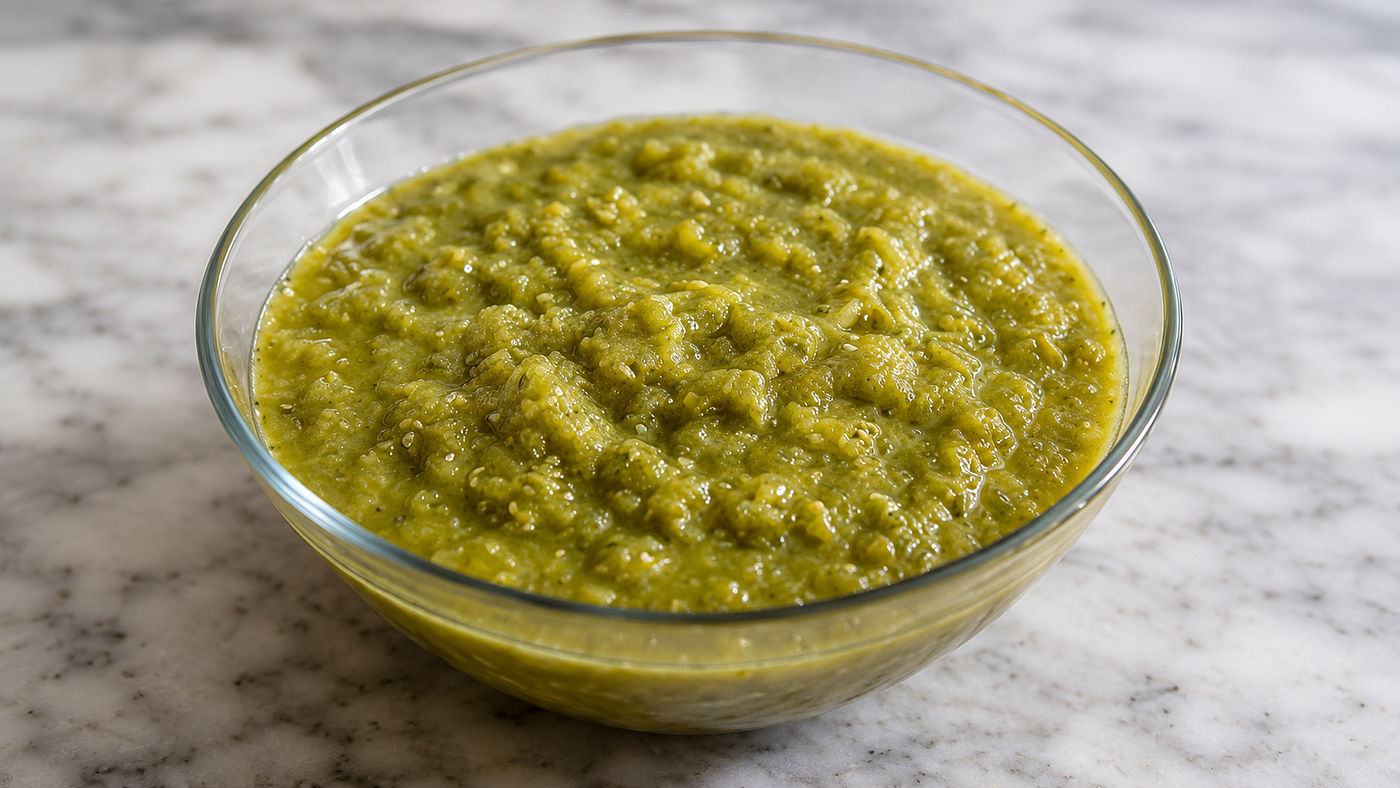
I’ve been making roasted tomatillo sauce in professional kitchens since the mid-1980s. I’ve watched line cooks, culinary students, and confident home cooks all make the same mistake — they pull the tomatillos out of the oven too early. The tomatillos are still bright green, still firm, still sharp. They blend them anyway. The sauce comes out sour and flat and they can’t figure out why.
That single error — under-roasting — is the difference between a green sauce that tastes alive and one that tastes like raw vegetable water. In this piece I’m going to show you exactly what correct roasting looks like, why it changes the tomatillo at a chemical level, and how to build a sauce from scratch that you can use over enchiladas, as a braise, or straight off a spoon.
I cover the full step-by-step technique with ingredient notes and troubleshooting at tomatillorecipes.com. What I want to do here is give you the context behind the method — the professional kitchen reasoning that most recipes skip entirely.
By the end of this you’ll know how to read a tomatillo, how to roast it correctly, and why this particular green sauce behaves differently from anything else in a Mexican kitchen.
What a Tomatillo Actually Is (And Why It Matters)
Most American home cooks know tomatillos as “the green things in the husks.” That’s fair. But understanding what’s inside that husk changes how you cook with them.
A tomatillo is not an unripe tomato. It’s a separate fruit — Physalis philadelphica — with a flavor profile that sits somewhere between green apple, lime zest, and savory herbs. Its acidity is higher than a tomato’s, registering around pH 3.6 to 3.8 when raw. That acidity is what gives it range: it can function as the acid element in a braise, the brightness in a sauce, and the structural backbone of an enchilada topping all at once.
But that same acidity is what makes raw tomatillo taste sharp and one-dimensional. It needs heat to open up. Specifically, it needs dry heat — oven heat at high temperature — to do three things: drive off excess moisture, caramelize its natural sugars, and shift the pH upward toward a more balanced range.
When those three things happen together, the tomatillo stops tasting aggressive and starts tasting complex. That’s what this sauce is built around.
The Roasting Method: What’s Actually Happening in the Oven
Set the oven to 425°F. That’s not a suggestion — it’s a structural requirement for this sauce.
Halve your tomatillos through the equator and place them cut-side down on a dry, rimmed baking sheet. That orientation is everything. The cut surface is where moisture escapes. It’s where the caramelization happens. Flip them cut-side up and you trap the steam, you prevent the browning, and you produce a stewed result that blends into something watery and sour.
You’ll roast them alongside a poblano, two jalapeños, quartered white onion, and four unpeeled garlic cloves. Everything goes on the same sheet, same temperature, same time — about 20 to 25 minutes.
You’ll know they’re done when:
- The cut surfaces have browned edges — visibly caramelized, slightly sticky against the pan
- The skins have blistered and pulled away from the flesh
- The flesh looks collapsed, not firm
- The color has shifted from bright, neon green to a muted, army green
That last point matters. If the tomatillos are still bright green when you pull them, they’re not done. Bright green means raw acidity is still intact. Army green means the heat has done its work.
After roasting, rest everything for 10 minutes, then peel the pepper skins, remove the seeds, squeeze the garlic out of the skins, and collect every drop of pan juice. Those pan juices are concentrated tomatillo flavor. They go into the blender with everything else.
What 40 Years in Professional Kitchens Taught Me About Green Sauce
There’s a sentence I’ve repeated to every cook I’ve trained on this sauce: the cook-down after blending is where the sauce is actually made.
Most home cooks treat the blender as the final step. They blend it smooth and serve it immediately. The sauce is technically correct but it’s missing something — depth, body, the quality that makes it coat food rather than run off it.
Here’s what’s happening when you reduce the blended sauce in a hot pan: the tomatillo’s pectin — released from the cell walls during roasting — tightens as the sauce heats. The remaining volatile acids cook off. The roasted flavors from the peppers and onion integrate with the tomatillo’s now-mellowed character. Eight to twelve minutes of steady simmering converts a good blended sauce into something that tastes like it took considerably more effort than it did.
The test I use: drag a spoon through the sauce on the back of a ladle. It should hold a clean line for two to three seconds before the edges start to drift back together. Too fast means more time. Too slow means it’s already slightly over-reduced — thin with warm stock a tablespoon at a time.
I also always add the lime juice and the fresh cilantro after the sauce comes off the heat. Lime is volatile. Cilantro’s aromatic compounds evaporate within seconds in a hot pan. Both belong at the end, not the beginning, and that small adjustment makes the finished sauce taste noticeably fresher and brighter than versions where they go in earlier.
One more thing I’ve never skipped in forty years: tasting for salt after the cook-down, not during the blend. The reduction concentrates everything — including the salt. What tasted correctly seasoned in the blender often needs nothing extra after ten minutes on the stove.
When You Can’t Find Fresh Tomatillos (And What to Do Instead)
Fresh tomatillos aren’t always easy to find depending on where you live and what season it is. I’ve had this problem in smaller markets and certain parts of the country where the produce section just doesn’t stock them consistently.
Here’s what works and what doesn’t.
Canned tomatillos are the closest substitute. Drain them well and skip the oven step — they’re already soft and won’t develop char on a baking sheet. The sauce you produce will be usable and have the right flavor direction, but it’ll be softer in body and noticeably flatter in depth. For a weeknight table sauce, that’s fine. For enchiladas where the sauce is center stage, the difference is more apparent.
Jarred salsa verde can work as a shortcut base. Pour it into a saucepan, add a squeeze of fresh lime, a handful of cilantro, and reduce it by about 25%. What you’re doing is recreating the cook-down step the jar skipped. The result won’t have the smoky roasted quality, but it produces a functional enchilada sauce in under 15 minutes.
What doesn’t work: green bell pepper or green tomatoes as a direct swap. The acidity structure is completely different. Green tomatoes are starchier and lack the pectin content that gives tomatillo sauce its body. Green bell pepper has no meaningful acid contribution. Neither produces a sauce that behaves like tomatillo under heat.
If you find yourself regularly having trouble sourcing fresh tomatillos, check Latin grocery stores — they carry them year-round and at significantly lower prices than most supermarkets. My tomatillo salsa verde recipe uses the same fruit in a looser, less cooked-down format that works beautifully as a quick table sauce when you want something faster than this.
Why This Sauce Stores and Reheats Better Than Most Green Sauces
This is something I didn’t fully understand until I started making large batches for restaurant service: roasted tomatillo sauce is genuinely better on day two.
The acid in tomatillos — even after roasting brings the pH up slightly — remains high enough to inhibit bacterial growth and slow oxidation. That’s why this sauce holds in the refrigerator for five days without the flavor degrading, and why it freezes cleanly for up to three months without the color shift you see in lower-acid sauces.
But the flavor improvement isn’t just about safety. It’s about integration. The roasted pepper compounds, the mellowed tomatillo acids, and the herbal notes from the cilantro need time to settle into each other. Fresh out of the pan, the sauce is correct. The next day, it’s noticeably more cohesive — the edges have softened, the heat from the jalapeños has distributed evenly through the sauce rather than sitting concentrated in certain bites.
For make-ahead purposes: this sauce is one of the few things I actively encourage people to prepare a day before they need it. Make it Sunday afternoon, use it Monday night for enchiladas, and you’ll get a noticeably better result than if you made it and used it the same evening.
To reheat, add two tablespoons of warm stock to a saucepan over medium-low heat and stir continuously until it reaches a simmer. The stock restores the consistency lost during refrigeration without diluting the flavor. Avoid the microwave for anything you care about — it heats unevenly and tends to break the sauce’s body.
If you want to take this sauce all the way to a complete baked enchilada dish, I walk through the full process at Chicken Enchiladas with Tomatillo Sauce — same sauce, same method, carried through to a finished dinner.
The Recipe: Roasted Tomatillo Sauce
Makes approximately 3 cups | Prep: 10 min | Cook: 25 min | Total: 45 min
Ingredients
- 1½ lbs (680g) fresh tomatillos, husked, rinsed, halved
- 1 large poblano pepper, halved lengthwise
- 2 medium jalapeño peppers, halved lengthwise
- 1 medium white onion, quartered
- 4 garlic cloves, unpeeled
- 2 tablespoons extra-virgin olive oil
- 1 teaspoon kosher salt, plus more to taste
- ½ cup loosely packed fresh cilantro, leaves and tender stems
- 2 tablespoons fresh lime juice (about 1 large lime)
- ¼ cup chicken or vegetable stock
- ½ teaspoon ground cumin
- Freshly ground black pepper to taste
Instructions
Step 1 — Roast the base. Preheat the oven to 425°F (220°C). Place the halved tomatillos cut-side down on a large rimmed baking sheet. Add the poblano and jalapeños (halved, seeds in), quartered onion, and unpeeled garlic cloves. Drizzle with olive oil, season with salt and pepper, and arrange in a single layer. Roast 20 to 25 minutes until tomatillo skins blister, flesh collapses, and cut surfaces show visible browning. Color should shift from bright green to army green.
Step 2 — Rest and prep. Remove from the oven and rest 10 minutes. Peel the pepper skins, remove all seeds from the jalapeños and poblano, and squeeze the garlic from its skins. Collect everything including pan juices.
Step 3 — Blend. Add all roasted vegetables, pan juices, cilantro, lime juice, and cumin to a blender. Blend on high for 30 to 45 seconds until smooth with slight body. Add stock if needed to help the blender move. Taste and note the salt and acid balance before the cook-down.
Step 4 — Cook down. Heat a medium saucepan over medium-high heat with a small drizzle of olive oil. Pour in the blended sauce. Simmer uncovered for 8 to 12 minutes, stirring occasionally, until the sauce reduces by roughly 20 to 25% and coats a spoon. Taste, adjust salt and lime, and remove from heat.
Closing Thoughts: The Most Underestimated Ingredient in American Kitchens
I’ve spent the better part of four decades arguing that tomatillos deserve more attention in American home cooking than they get.
Tomatoes have entire cookbooks. Tomatillos get a paragraph in the salsa section. That imbalance doesn’t reflect the range of what the fruit can actually do — braise, sauce, brighten, thicken, store beautifully, improve over time. In Mexican kitchens, the tomatillo is foundational in a way that most American cooks simply haven’t had the chance to experience.
What I hope this article gives you isn’t just a recipe. It’s a framework. Once you understand why the roasting step matters — what it does to the acid, the sugars, the pectin — you can adapt from there. You can adjust the heat level, the pepper ratio, the cilantro. You can use it for chicken or pork or eggs. You can make it on Sunday and use it all week.
The full recipe with ingredient notes, substitutions, troubleshooting, and storage instructions lives at tomatillorecipes.com/roasted-tomatillo-sauce. Everything I’ve written here is built on top of that foundation.
I’ve been cooking with tomatillos since they were genuinely difficult to find in most American supermarkets. That’s changed significantly in the last twenty years, and I think the cooking is catching up slowly.
What about you? Have you worked with tomatillos before, or is this your first time? And if you have — what’s the dish that made you take them seriously? Tell me in the comments. I read every one.
메타데이터
- post_id
- aee478cd606e
- slug
- the-one-mistake-that-ruins-roasted-tomatillo-sauce-and-how-to-fix-it-before-you-start-aee478cd606e
- url
- https://medium.com/@tomatillorecipes/the-one-mistake-that-ruins-roasted-tomatillo-sauce-and-how-to-fix-it-before-you-start-aee478cd606e
- canonical_url
- https://medium.com/@tomatillorecipes/the-one-mistake-that-ruins-roasted-tomatillo-sauce-and-how-to-fix-it-before-you-start-aee478cd606e
- author_url
- https://medium.com/@tomatillorecipes
- status
- ok
- fetched_at
- 2026-06-09 15:37:30




