The Anime Art Explosion: How Pop Culture Turned Millions of Fans into Illustrators
From casual social media fan art to independent merchandise brands — here is how the anime ecosystem democratized the visual arts.
The Anime Art Explosion: How Pop Culture Turned Millions of Fans into Illustrators
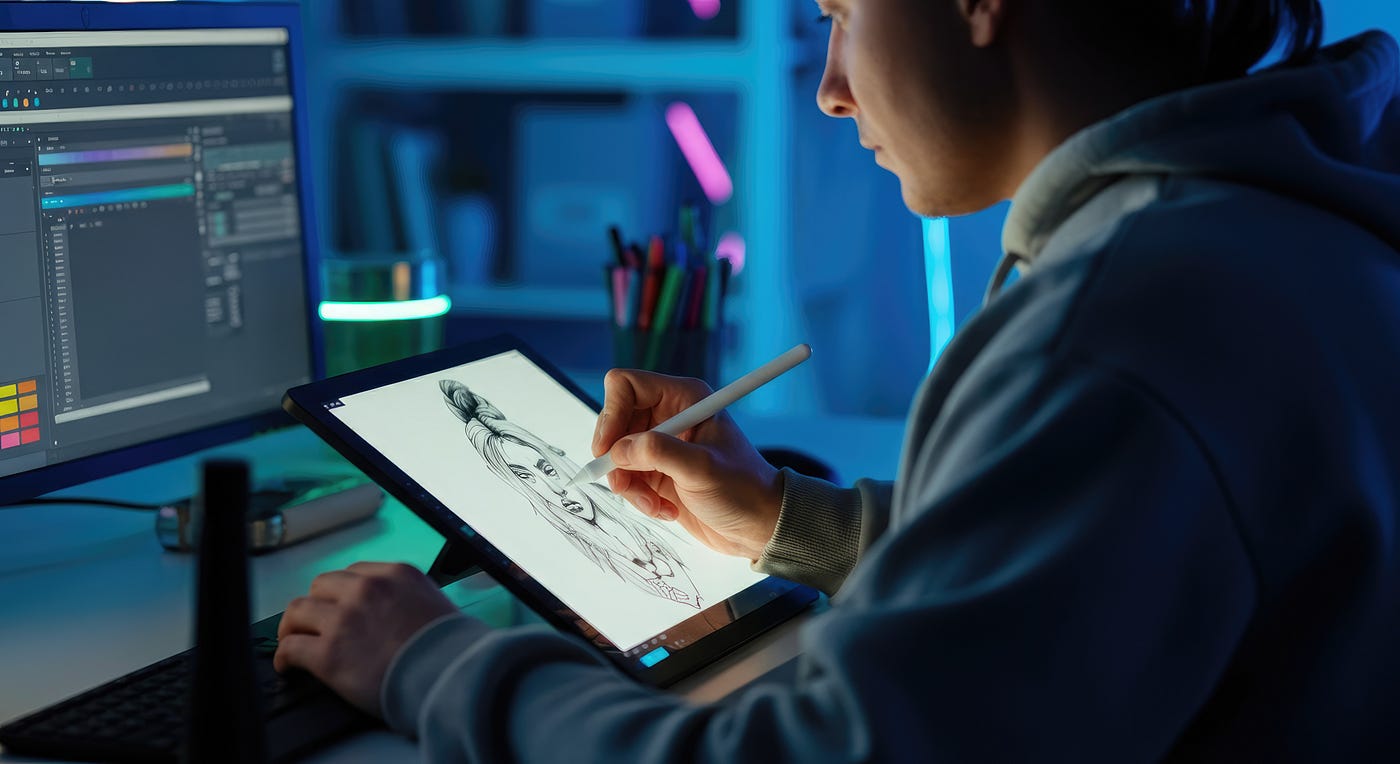
From casual social media fan art to independent merchandise brands — here is how the anime ecosystem democratized the visual arts.
Scroll through X, Instagram, or Facebook today, and you’ll instantly drown in an ocean of breathtaking digital art. If we focus on Japanese pop culture, anime-style visuals — ranging from raw, expressive sketches to high-resolution masterpieces with cinematic lighting — are absolutely dominating our feeds. But here’s the mind-blowing part: the vast majority of these works aren’t produced by seasoned animators in fancy studios. They’re created by independent artists working right out of their bedrooms.
Pop culture (especially Japanese anime and manga) isn’t just a one-way entertainment street anymore. A 2023 report by Grand View Research values the global anime market at over $28 billion, and it’s growing fast. But the real magic isn’t in the licensing sales. It’s in how this medium has accidentally birthed millions of new digital artists.
So, how does a fictional story encourage someone to pick up a stylus and start drawing?
The Birth of Participatory Culture
Traditionally, the dynamic between media and its audience was pretty straightforward: creators produce, and audiences consume. But as media scholar Henry Jenkins pointed out in his book Convergence Culture, modern fans don’t just sit back and watch. They actively respond to and reconstruct the media they love. We call this participatory culture.
Think about it. Pop culture characters are deliberately engineered to have striking visual identities and magnetic personalities. Whether it’s a fierce soldier wrapped in a red scarf in a post-apocalyptic world, or a socially awkward, introverted female bassist trying to survive in a rock band — their designs hook our imagination. Drawing fan art becomes a way to participate, fill in narrative gaps, and talk to the community. Lawrence Lessig famously called this Remix Culture: a world where amateur artists borrow elements from existing pop culture to create derivative works that carry their own unique emotional and aesthetic weight.
Shattering the Art Monopoly
Back in the day, becoming a visual artist took serious cash. You needed physical paints, canvases, and ideally, an expensive formal art school tuition. Today, technology has completely bulldozed those financial walls.
Pen tablets are incredibly affordable now. Pair that with professional-grade software like Clip Studio Paint, Krita, or Procreate, and almost anyone can set up a digital studio. Even better, learning is no longer gatekept by universities. As anthropologist Mizuko Ito noted in her study of otaku culture, the internet has sparked a massive wave of peer-to-peer learning. Millions of aspiring illustrators are mastering anatomy, color theory, and composition through free YouTube tutorials. They swap feedback on Discord servers and dissect techniques with a global community — all for zero dollars.
The Copyright Paradox: A Win-Win Solution
Now, you might be wondering: doesn’t fan art technically violate copyright laws? Well, yes. But in the real world, as Ian Condry explains in The Soul of Anime, the Japanese animation industry reached its global dominance precisely because of “collaborative creativity.”
Major studios implicitly tolerate — and often quietly encourage — the independent doujin (fan-made) ecosystem and fan artists. Why? Because it’s brilliant! Free marketing. A viral piece of fan art on social media can keep a character relevant and culturally alive long after their show has finished airing on TV (a phenomenon supported by researcher Fabienne Darling-Wolf).
From Hobby to Hustle: The Micro-Economy
The craziest part of this digital canvas explosion is the economic shift. Digital artists aren’t just drawing for “likes” or retweets anymore. They’ve evolved their skills into highly functional business models.
It usually starts small with art commissions. But as these illustrators level up their craft, many pivot to launching their own creative merchandise brands. Through local conventions (like Comiket in Japan), these digital artists design and produce their own physical product lines — streetwear apparel, tote bags, art prints, and high-resolution acrylic keychains. They’re suddenly blending illustration skills with micro-supply chain management, creating a whole new entrepreneurial ecosystem where passion and business walk hand-in-hand.
And honestly? I know exactly how this feels, because I am one of the millions of illustrators born out of this exact trend.
The Human Touch in the Age of AI
Of course, we have to talk about the elephant in the room: Generative AI. With machines now able to spit out anime-style illustrations from a text prompt in seconds, is this the end for independent human artists?
Not quite. In today’s world, the true value of an illustrator isn’t just in making a “pretty picture.” It’s in authentic connection and storytelling. Fans buy merchandise and art because they deeply value the artist’s personal take on a character, along with the social bonds they’ve built online. A machine can generate flawless pixels, but it completely lacks the human touch and cultural empathy that makes art actually feel alive. Plus, every human artist has a distinct “style” that AI simply struggles to genuinely replicate.
Conclusion
This explosion of digital artists isn’t a passing fad. It’s a full-blown revolution showing that the modern generation absolutely refuses to be passive consumers.
Armed with a digital canvas and an internet connection, they’ve torn down the walls of traditional art institutions, remixed the pop culture they love, and built their own creative businesses from scratch. It’s living proof that when you give people the right tools and a supportive community, creativity becomes an unstoppable economic and cultural force.
References:
- Condry, I. (2013). The Soul of Anime: Collaborative Creativity and Japan’s Media Success Story. Duke University Press.
- Darling-Wolf, F. (2015). Imagining the Global: Transnational Media and Popular Culture Beyond East and West. University of Michigan Press.
- Grand View Research. (2023). Anime Market Size, Share & Trends Analysis Report By Type, By Genre, By Region, And Segment Forecasts, 2023–2030.
- Ito, M. (2012). Fandom Unbound: Otaku Culture in a Connected World. Yale University Press.
- Jenkins, H. (2006). Convergence Culture: Where Old and New Media Collide. New York University Press.
- Lessig, L. (2008). Remix: Making Art and Commerce Thrive in the Hybrid Economy. Penguin Press.
메타데이터
- post_id
- aef2655ff5c1
- slug
- theanime-art-explosion-how-pop-culture-turned-millions-of-fans-into-illustrators-aef2655ff5c1
- url
- https://medium.com/@muhammadraydifathi/theanime-art-explosion-how-pop-culture-turned-millions-of-fans-into-illustrators-aef2655ff5c1
- canonical_url
- https://medium.com/@muhammadraydifathi/theanime-art-explosion-how-pop-culture-turned-millions-of-fans-into-illustrators-aef2655ff5c1
- author_url
- https://medium.com/@muhammadraydifathi
- status
- ok
- fetched_at
- 2026-06-09 15:37:30