The battle for consensus
The in-group consensus is the key to legitimacy, and extremists will stop at nothing to contest it.
The battle for consensus
The in-group consensus is the key to legitimacy, and extremists will stop at nothing to contest it.
If it be true that all governments rest on opinion, it is no less true that the strength of opinion in each individual, and its practical influence on his conduct, depend much on the number which he supposes to have entertained the same opinion.
— James Madison, Federalist 49**[i]**
The theory of social construction holds that knowledge and reality proceed from consensus, or more specifically that they are built and negotiated in dialogue among members of a group.
Social identity theory identified the key group for any given person as their in-group — a group to which the person belongs. The in-group consensus makes rulings on the veracity of history, values, practices and more. When members of the in-group encounter an out-group that holds a different consensus, trouble often follows, and those troubles sometimes escalate into extremism.
The in-group consensus shapes everything from the mundane — what kind of food we like to eat, and the style of clothes we wear — to the momentous — what do our gods demand of us, and what sort of activities will lead the in-group to punish or even kill us.
While we can tolerate significant amounts of nonconformity, extremism holds that our most cherished daily rituals and sacred norms are in imminent danger of being forcibly overturned by an out-group. Little surprise then that extremist groups so often escalate their crisis narratives to apocalyptic dimensions. An assault on consensus reality can alter our lives at every level great and small. Nothing could be more consequential or cosmic in scale.
Given the literally existential nature of the in-group consensus, extremists often prioritize internecine threats over threats from an out-group, since only in-group members have the power to directly overturn the in-group consensus.
Even out-group threats can be centered on in-group composition. One of the most consistent extremist crisis narratives pertains to the purity of the in-group — perceived threats such as race-mixing (as in James Mason’s *Siege) or Judaizing (as in John Chrysostom’s [Against the Jews](https://www.middlebury.edu/institute/sites/default/files/2024-09/CTEC%20%2724-John%20Chrysostom-Architect%20of%20Antisemitism%2012.pdf?fv=1C41nW8u)*) describe outsiders infiltrating and corrupting the in-group, and thus taking control of its consensus. The almost ubiquitous extremist obsession with in-group purity may be motivated entirely by sublimated concerns about who controls the in-group consensus.[ii]
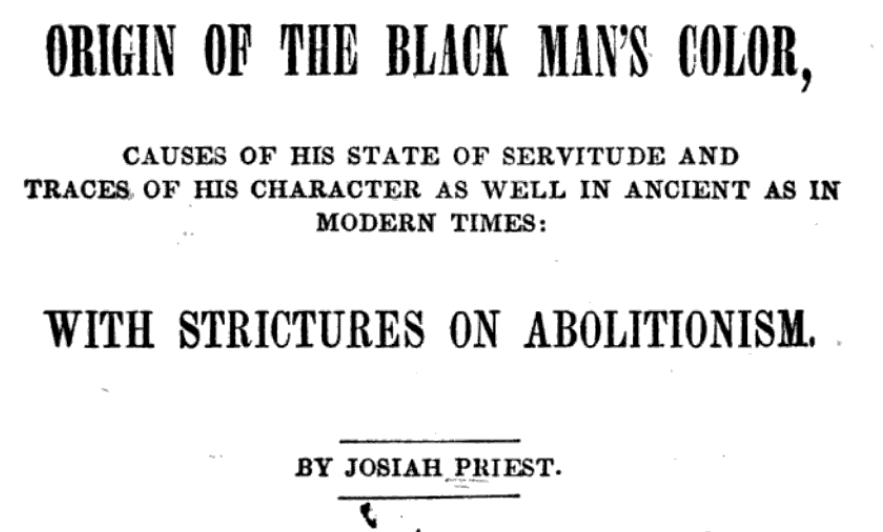
When extremist ideologists feel comfortably dominant, they tend to focus more on denigrating out-groups than critiquing in-groups, but the in-group consensus is never more than an arm’s length away. Consider the Dred Scott Decision, an 1856 decision by the U.S. Supreme Court on slavery. The decision, written by Chief Justice Roger Taney, answered a legitimacy challenge from anti-slavery forces by stripping all Black people of all rights, escalating the hostile action against the out-group, instead of merely preserving the status quo.
Although the text of the majority opinion is overwhelmingly focused on constructing an out-group identity, correspondence uncovered in subsequent historical investigations definitively prove that the opinion was explicitly intended to “decide & settle a controversy which has so long and seriously agitated the country” — in other words, to resolve an in-group consensus dispute that presented an increasingly existential threat to the unity of the United States. [iii]
In its broadest context, legitimacy is a measurement of how closely aligned any given in-group subset is with the overall eligible in-group consensus as that consensus is perceived and understood, wherein lies the rub. All groups and subgroups assume that they are the seat of legitimacy and typically believe any misalignment with another group is the other group’s problem.
For instance, as seen in the Christian separation from Judaism in classical antiquity, an emergent in-group will pronounce itself legitimate and may seek to delegitimize its parent group (the “prime” group) through argumentation. In other cases, such as the reified Christian orthodoxy of late antiquity, in-group leaders convince group members to understand legitimacy as a quality that can only bestowed or denied by a power hierarchy in a formal process.
Legitimacy does not exist in the absence of misalignment. If there is no misalignment — no conflict — the question of legitimacy will never come up. There is only “the way things are.”
Misalignment can only be solved by changing the in-group consensus or changing the ways that people perceive and define the in-group consensus. According to Peter Berger (no relation) and Thomas Luckmann, social construction empowers groups to address misalignment through therapy (healing conflicting consensuses through persuasion) and nihilation (establishing in-group legitimacy by denigrating and dehumanizing a subgroup or out-group).
Therapy and nihilation are not mutually exclusive, and either can be used by extremists. An extremist movement usually defines thresholds at which therapy must give way to nihilation, or it may push both approaches tactically as a good cop/bad cop strategy of persuasion. Extremist or emergent in-groups seeking to remedy a gap with their eligible or prime in-group consensus usually rely on some combination of the following four strategies:
Therapy:
— Deny the existence of a gap.
— Reduce the gap by changing the eligible in-group’s views (or, more rarely, its own) to improve the alignment.
Nihilation:
— Explain the gap by alleging that the eligible in-group consensus has become corrupted.
— Blame the eligible in-group for abandoning a purportedly correct in-group consensus that existed in some nostalgically remembered past.
Denial helps potential extremist adherents rationalize their beliefs, especially those who are already very close to committing to a new ideology. Denialists may stipulate that everyone secretly agrees with them but won’t say so out loud (a strategy notably employed by Donald Trump). This simplistic tactic is surprisingly common and seemingly effective.[iv] White supremacist preacher Wesley Swift, for instance, told his congregation that “people feel like you do [about race] even though they are afraid to say anything.”[v] Neo-Nazi George Lincoln Rockwell used similar tactics in a 1966 speech at Brown University. “I’ll get letters from Brown University starting tomorrow, telling me ‘I didn’t dare say anything but I’m with you,’” Rockwell said. “Every time I speak this happens, but you’re all scared to come up as a body and say I think you’re right.”[vi]
Obviously, this tactic is especially effective at persuading people who are scared to say what they think, but it also makes the in-group consensus tacit instead of explicit. If audiences accept the premise of a “silent majority,” they can be convinced to accept any number of evidence-sparse assertions about the contents of the in-group consensus.
The second therapy strategy involves trying to change the minds of the eligible in-group through persuasion. For Abdullah Azzam, this required an emphasis on correct (as he saw it) Islamic education and effective proselytization. “Mature propagators (of the faith) are still the talk of the hour in the Islamic jihad of Afghanistan,” he wrote, “and the subject of pressing necessity and glaring need.”[vii]
“Against Heresies,” by Irenaeus (source)
Early Christian Church father and theological gatekeeper Irenaeus of Lyons emphasized the need to educate heretics and convince them of their errors, but he also warned that such efforts should not continue indefinitely. If a heretic could not be convinced, they should be shunned, in order to avoid contaminating the in-group consensus.
The extremist in-group must turn to nihilation when the gap with the eligible in-group is too wide or the sides are too entrenched to reconcile.
The first and arguably most important nihilation strategy is to characterize the eligible in-group consensus as corrupted by out-group influences or infiltration. This is the primary theme in Against the Jews, with John Chrysostom’s insistence that any contact at all with the out-group was fatally compromising in-group unity of thought.
Racial extremists like James Mason talk endlessly about the many ways that Jewish out-groups corrupt the in-group consensus, including by controlling the media and the economy. Miscegenation, the perennial obsession of racial extremists of all sorts, is perceived as the greatest of all threats because it represents the out-group’s tangible encroachment on in-group boundaries.
Weaker extremist movements that cannot close the gap with the modern eligible in-group consensus often seek to contextualize themselves against a remembered or imagined in-group consensus that is framed as historical. The need to reframe the in-group consensus helps explain why nostalgia is so frequently found in extremist narratives, invoking a vision of the past that is, to a greater or lesser extent, fictitious.[viii]
When extremist ideologists cannot find legitimacy within the current eligible in-group consensus, they seek it in the past, as Abdullah Azzam and Wesley Swift do with vague citations of religious scholars and historians. While arguably in a stronger position, Irenaeus similarly centered his defense of the proto-orthodox consensus on claims that his views had been passed down from the apostles. Rampant dissent in the contemporary consensus was dismissed in favor of a narrative about a once-unified church that was questionable at best.
The tactical deployment of nostalgia at the ideological level is further encouraged by what nostalgia does at the personal level — increase feelings of well-being, social connectedness and personal meaning.[ix] Nostalgia helps people who are struggling to find their place in the world — people who are already vulnerable to extremism. By linking the positive psychological effects of nostalgia to an imagined past in-group consensus, extremist ideologists gain a powerful tool to attract and retain adherents.
This article is adapted from The Social Construction of Extremism, by J.M. Berger, available in full here.
Notes
[i] Madison, J. (1996). Federalist 49. The Federalist, ed. Benjamin F. Wright. New York: Barnes & Noble Books.
[ii] Berger. Extremism. Op. cit. pp. 66–67; Lux, J., & Jordan, J. D. (2019). Alt-Right ‘cultural purity’, ideology and mainstream social policy discourse: towards a political anthropology of ‘mainstremeist’ ideology. In Social Policy Review 31 (pp. 151–176). Policy Press; Koca, M. (2023). Juxtaposing violent extremism and critical radicalism in Europe: the role of reflexive awareness in pursuit of religious purity and cultural essence. Politics, religion & ideology, 24(3), 352–376.
[iii] Eschner, K. (2017, February 28). President James Buchanan directly influenced the outcome of the Dred Scott decision. Smithsonian Magazine. https://www.smithsonianmag.com/smart-news/president-james-buchanan-directly-influenced-outcome-dred-scott-decision-180962329/, retrieved August 29, 2023; Berger, J.M. “Lawful Extremism: Extremist ideology and the Dred Scott decision.” Op. cit.
[iv] Herman, T., & Oswald, S. (2021). Everybody knows that there is something odd about ad populum arguments. The Language of Argumentation, 305–323.
[v] Swift, W.A. (1968). “From Everlasting To Everlasting.” Sermon. October 21, 1968
[vi] Rockwell, G.L. (1966). Speech at Brown University, Providence, Rhode Island. https://www.youtube.com/watch?v=2ikjbUVEdyM, retrieved May 27, 2024.
[vii] Azzam. Join the Caravan. Op. cit.
[viii] For a good discussion of broader questions around nostalgia: Boym, S. (2007). Nostalgia and its discontents. The Hedgehog Review, 9(2), 7–19.
[ix] Routledge, C., Wildschut, T., Sedikides, C., & Juhl, J. (2013). Nostalgia as a resource for psychological health and well‐being. Social and Personality Psychology Compass, 7(11), 808–818.
메타데이터
- post_id
- aefbcde80bd0
- slug
- the-battle-for-consensus-aefbcde80bd0
- url
- https://medium.com/the-berger-dispatch/the-battle-for-consensus-aefbcde80bd0
- canonical_url
- https://medium.com/the-berger-dispatch/the-battle-for-consensus-aefbcde80bd0
- author_url
- https://medium.com/@jmbergerauthor
- status
- ok
- fetched_at
- 2026-07-09 17:12:49