How to Treat Palm Trees for Spear Pull and Spring Fungus Prevention
A simple spring treatment routine for cold-climate palm growers
How to Treat Palm Trees for Spear Pull and Spring Fungus Prevention
A simple spring treatment routine for cold-climate palm growers
Adapted from
[embed]
Growing palms in colder climates comes with challenges that tropical gardeners rarely face. One of the most common problems after winter is spear pull — a condition where the newest emerging leaf can be easily pulled from the center of the palm. In many cases, the damage begins long before any visible symptoms appear.
If you’re growing palms in Zones 5, 6, or 7, understanding how winter damage leads to fungal problems can help you protect your palms before serious rot develops.
TNTropics copper guide pdf https://drive.google.com/file/d/1bbfEoabIR7YFc8uhdYoTqWBnNmqXo1OY/view
Why Spear Pull Happens After Winter
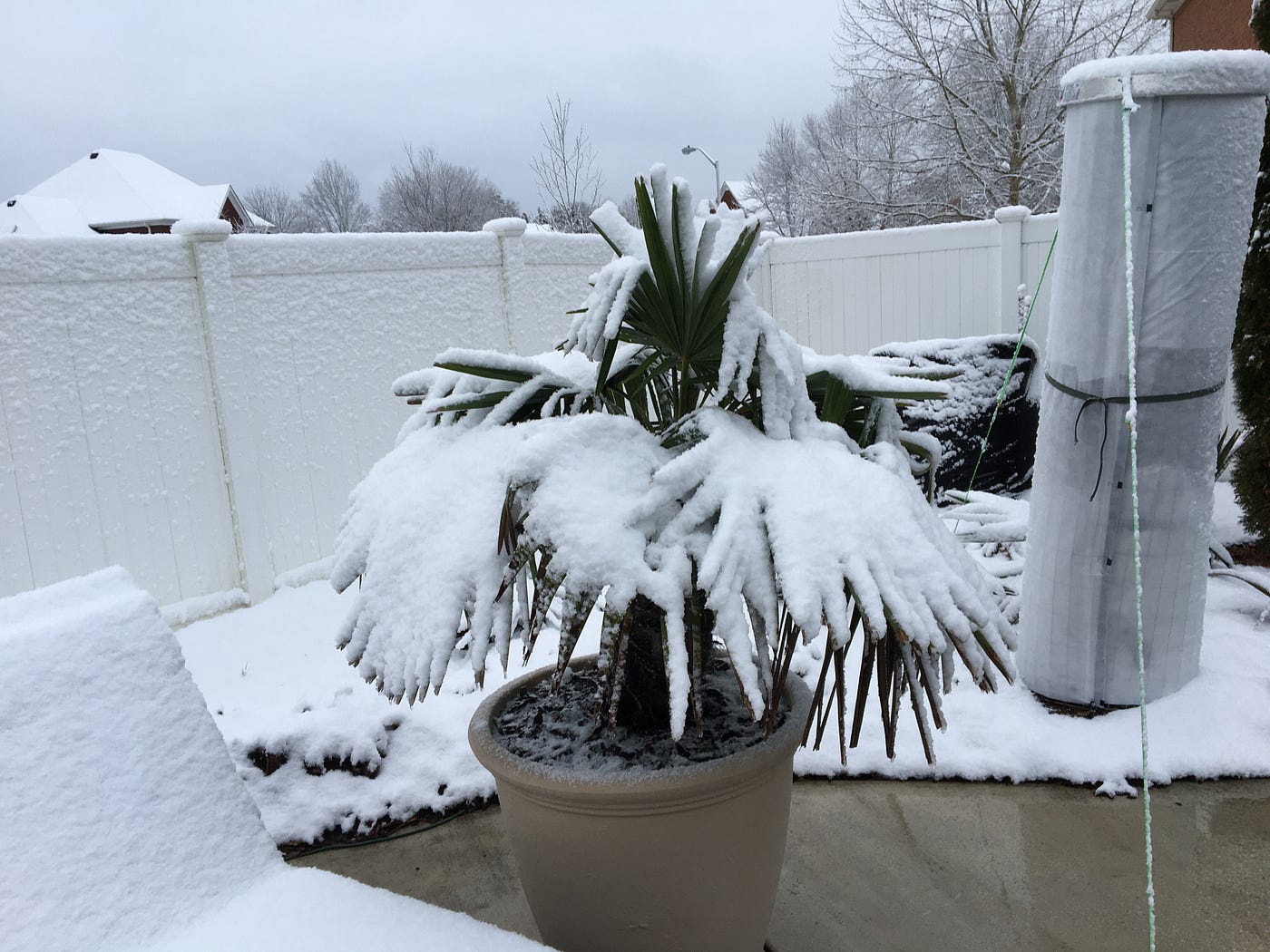
During winter, freezing rain, sleet, and ice often collect in the crown of a palm. Water settles into the spear area — the center of the palm where new growth emerges — and freezes during cold weather.
When that ice forms, it can damage the growing point deep inside the palm. Once tissue is damaged, fungi have an opportunity to establish themselves.
The problem is that fungal growth often begins long before any visible symptoms appear. By the time a spear pulls, the infection may have been developing for weeks.
Cold damage creates the opening that allows fungal problems to begin.
For growers in Zones 5–7, this is one of the most common spring issues to watch for.
The Critical Temperature Window
Fungal activity becomes much more aggressive once temperatures begin warming.
A good rule of thumb is to start treatments when temperatures consistently reach 60°F (15.5°C) following a significant cold event.
While fungi can become active at lower temperatures, warmer conditions allow them to spread much faster.
Treating palms early in spring is often more effective than waiting for visible signs of damage.
Many growers don’t realize there’s a problem until the spear pulls weeks later.
“By the time a spear pulls, the fungus may have already been growing inside the palm for weeks.”
Treatment Option #1: Hydrogen Peroxide for Active Spear Rot
If a palm already has spear pull or obvious rot, a simple bottle of 3% hydrogen peroxide can be used as an immediate treatment.
The standard 3% solution found at grocery stores, pharmacies, and big-box retailers works well for this purpose.
How to Apply It
- Use undiluted 3% hydrogen peroxide.
- Pour it directly into the spear cavity.
- Allow it to penetrate into the damaged area.
- Listen for fizzing, which indicates contact with decaying material.
- Repeat every few days to once per week as needed.
The peroxide acts as a quick-contact treatment for the affected tissue.
Best Conditions for Use
Apply hydrogen peroxide when:
- Temperatures are warm
- Conditions are dry
- Several dry days are expected afterward
Avoid application when:
- Freezing temperatures are expected overnight
- Rain is imminent
- The palm will remain wet afterward
Dry, warm weather improves treatment effectiveness and reduces additional stress on the palm.
Treatment Option #2: Copper Fungicide for Prevention and Ongoing Protection
While hydrogen peroxide is useful after spear pull occurs, copper fungicide serves both as a preventative measure and a treatment option.
Many palm growers apply copper fungicide in spring after periods of cold, icy weather.
Copper fungicides are commonly labeled for:
- Ornamentals
- Vegetables
- Fruits
- Citrus
- Turf grass
Although palms may not always be specifically listed, copper fungicide is widely used on ornamental plants.
Mixing the Solution
Always follow the product label.
For the product demonstrated, the mixing rate was:
- 10–20 milliliters per gallon of water
A garden sprayer works well for larger applications, while a handheld sprayer is sufficient for a small number of palms.
When to Spray Copper Fungicide
Timing matters.
Apply copper fungicide when:
- Temperatures are 60°F or higher
- Conditions are dry
- Wind and sunlight allow foliage to dry quickly
- Applications can be made during the morning
Avoid spraying late in the day when plants may stay wet overnight.
Keeping palms dry overnight helps reduce conditions that favor fungal growth.
How to Spray a Palm Properly
When applying copper fungicide, focus on the areas most vulnerable to infection.
Key Areas to Treat
- The spear area
- Upper trunk
- Damaged fronds
- Areas showing signs of stress
- Root zone (if freezing damage is suspected)
For small palms, spraying the entire trunk is practical.
For larger palms, concentrating on the upper portion of the trunk and the crown area is usually sufficient.
Pay special attention to getting fungicide deep into the spear area, where fungal problems often begin.
Spring Palm Fungus Prevention Checklist
After a winter freeze or ice event:
✅ Inspect palms for spear movement or softness
✅ Wait for temperatures to reach approximately 60°F
✅ Apply copper fungicide as a preventative treatment
✅ Treat active spear pull with undiluted 3% hydrogen peroxide
✅ Choose warm, dry weather for all applications
✅ Avoid leaving palms wet overnight
✅ Continue monitoring palms for several weeks after winter
Key Takeaways
- Winter ice and freezing precipitation can damage a palm’s growing point.
- Fungal problems often begin before visible symptoms appear.
- Hydrogen peroxide is useful for treating active spear rot and spear pull.
- Copper fungicide works as both a preventative and treatment option.
- Applications should be made during warm, dry weather, ideally above 60°F.
Conclusion
Spring is one of the most important times of year for cold-climate palm growers. Winter damage may not always be obvious, but fungal problems can develop quickly once temperatures begin warming.
By inspecting palms early, treating active spear pull with hydrogen peroxide, and applying copper fungicide as a preventative measure, growers can significantly improve the chances of healthy recovery after winter weather.
If you grow palms in Zones 5–7, make spring fungicide treatments part of your annual maintenance routine and monitor palms closely after every major freeze event.
메타데이터
- post_id
- af13fafcda67
- slug
- how-to-treat-palm-trees-for-spear-pull-and-spring-fungus-prevention-af13fafcda67
- url
- https://medium.com/@allensvisions/how-to-treat-palm-trees-for-spear-pull-and-spring-fungus-prevention-af13fafcda67
- canonical_url
- https://medium.com/@allensvisions/how-to-treat-palm-trees-for-spear-pull-and-spring-fungus-prevention-af13fafcda67
- author_url
- https://medium.com/@allensvisions
- status
- ok
- fetched_at
- 2026-06-29 01:02:39