Stephen Hawking, Roger Penrose, and the Problem of Intellectual Aperture in Modern Physics
An article by physicist, Kaya Gravitter, on what a high-profile cosmological divide reveals about scientific orthodoxy, recurrence, hidden…
Stephen Hawking, Roger Penrose, and the Problem of Intellectual Aperture in Modern Physics
An article by physicist, Kaya Gravitter, on what a high-profile cosmological divide reveals about scientific orthodoxy, recurrence, hidden structure, and why CET matters to my thinking.
Kaya Gravitter is the founder of Beaux Exclusive Associates LLC, an independent researcher, and a writer working across deep-tech, physics, complex systems, and media. Her current work explores CET, hidden structure, recurrence, inference, and the relationship between visible phenomena and deeper causal organization across physical and social systems.
Photo by Omar:. Lopez-Rincon on Unsplash
There is a stark difference between criticizing a physicist and denying his importance. I want to be clear from the beginning that Stephen Hawking was one of the most consequential theoretical physicists of his era. His time. His work on singularities, black holes, and the thermodynamic behavior of gravitating systems permanently shaped twentieth-century cosmology and the philosophy of physics.[1] But I am openly a critic of Stephen Hawking. It js not because he lacked discipline or technical brilliance, but because I believe he came to embody a narrower habit of thought that still constrains modern theoretical physics.[2] And in terms of his morals, I will not delve into that for this article. Though I feel if you have read any of my previous work, you will know where my ideas and thoughts on that stand.
My criticism is ultimately philosophical. Hawking’s greatest work emerged inside a framework of formidable mathematical rigor, but I have long felt that he treated that framework less as a provisional map and more as the boundary of what could be seriously entertained. That is an interpretation, not a settled historical verdict. Still, it matters. A mind can be extraordinarily trained and yet remain confined by the assumptions it has learned to regard as natural.[3] Since as a polymath, I regularly see things from a multidisciplinary perspective, which is why the comments about recurrence, cyclic cosmology, dark matter, gravitational structure, and even the limits of the Big Bang framework continue to stand out to me. There are so many hypothetical holes that need to be filled and answered. And maybe even literal holes need filling, but I don’t know at this point, but I digress.
So, there is why Roger Penrose has always struck me differently. Penrose is not persuasive because he is automatically right. He is persuasive because he appears more willing to follow mathematical structure into ontological discomfort. He has shown a repeated willingness to ask whether what looks like a settled account of reality might only be a partial rendering of something deeper.[4] His work on black hole formation earned the 2020 Nobel Prize in Physics, while his broader cosmological and foundational work continues to test the edges of what mainstream physics is willing to say out loud.[5] Definitely someone I admire for his work.
This contrast between Hawking and Penrose matters more than biography, or who accomplished more. It illuminates to two very different intellectual postures in physics, that I have organized. One posture tries to close the system as elegantly and efficiently as possible. The second is willing to stay with anomaly, recurrence, tension, and structural incompleteness long enough to ask whether the current model is too small.[6] In my view, Hawking often represented the first posture, while Penrose more often represents the second. And similar to Penrose, I do not believe one’s thinking should follow everything to a T because thinking is different than following standards of let’s say, building a rocket for example. It has to be precise, but hinking differently does not keep you in a box. There is no analytical line that you have to follow.
That is why recent discussion around Hawking, Penrose, the Big Bang, recurrence, dark matter, and hidden cosmological structure caught my attention so strongly. The comments under my post were not just debating two famous men. They were circling something currently much larger.
It is the question,
what kind of thinking allows discovery to remain open?
I do not think the deepest divide in theoretical physics is between one equation and another. I think it is often between minds that defend the sanctioned box and minds that ask whether the box itself was drawn too narrowly.
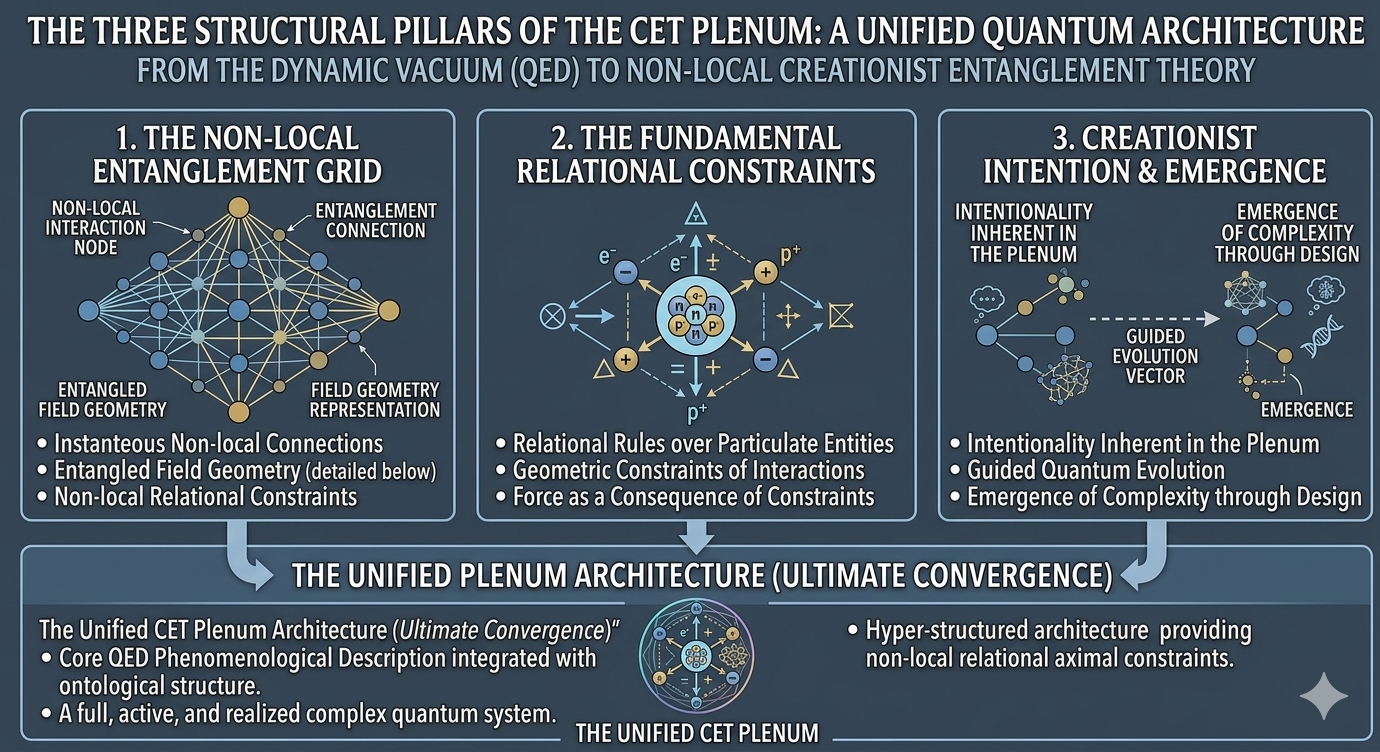
This is exactly where CET enters the conversation for me.
By CET, I mean a way of approaching reality that takes hidden structure seriously, even when it does not present itself directly. In this view, what matters most is not always what is visible as an object, but what becomes legible through consequence, recurrence, transition, relational constraint, and effect. I am increasingly interested in the possibility that some of the most important physical realities are not primarily knowable by direct display, but by the patterns they organize and the asymmetries they leave behind. That is not foreign to physics. In many ways, physics already works this way. Black holes are not “seen” in the ordinary sense before they are inferred. Dark matter is not observed by emitted light but partially by gravitational consequence. Singularities like dark matter, for instance, are not photographed but derived from the logic of a theory under certain conditions.[7]
This remind me of a quote from Maya Angelou,
“The desire to reach for the stars is ambitious. The desire to reach hearts is wise."
This quote, when applied to people who limit themselves in physics, Maya Angelou’s quote highlights a critical shift from seeking raw intellectual status to finding deeper human purpose.
For a physicist facing self-imposed limits "Reaching for the Stars is Ambitious", is representing the traditional, high-pressure goals of the field. This leads to a trap of perfectionism. This symbols chasing elite status, like winning a Nobel Prize, solving string theory, or getting into a top-tier institution.
But this causes limitations for many people in physics because they feel they are not "genius" enough to grasp these cosmic scales, leading to imposter syndrome and quitting. I myself found myself in that mindset at one point.
And “reaching for the star” with ambition only, views physics strictly as an elite intellectual competition, which can make the field feel cold, intimidating, and unattainable.
So, essentially Maya Angelou’s quote suggests that limiting oneself to only the grandest cosmic problems is a mistake. True wisdom in science lies in realizing that bridging the gap between complex physics and human well-being is just as valuable. Which is often more fulfilling than chasing distant, abstract stardom.
The problem today is that modern physics often stops too early. It becomes content with inference inside the model while resisting the possibility that the model itself may be pointing beyond its own declared ontology. Recurring mathematical structures are treated as confirmation of a preferred worldview rather than clues that a deeper organizing layer may be at work. Entire domains remain artificially separated because a more integrated vocabulary would threaten professional categories, institutional authority, or the habits of late twentieth-century male egos. This is one reason I have become so interested in recurrence. Because recurrence is not just repetition and just might be evidence of hidden order.
Penrose’s conformal cyclic cosmology is relevant here not because it has become consensus (it has not), but because it preserves the right kind of question.[8] It asks whether what we call a beginning may instead be a transition, whether one cosmic epoch can leave mathematically legible traces in the next, and whether cosmology has been too quick to confuse origin with singular isolation.
In example of the timeline of cosmological epochs, it outlines the formation and subsequent evolution of the Universe from the Big Bang (13.799 ± 0.021 billion years ago) to the present day. An epoch is a moment in time from which nature or situations change to such a degree that it marks the beginning of a new era or age. Even if conformal cyclic cosmology remains debated, its philosophical value is enormous. And this keeps cosmology from becoming prematurely closed.[9]
Hawking’s intellectual instinct often seemed to move in the opposite direction. His no-boundary proposal, developed with James Hartle, was a profound and sophisticated attempt to remove the need for a conventional temporal beginning.[10] But to me, the broader public meaning of Hawking’s cosmology often became one of containment. Bland. No outside, no before in the relevant physical sense, no need to widen the metaphysical frame. The elegance of that move is obvious. Its’ cost may be less obvious though, because a framework can reduce paradox, and still reduce reality along with it.
This is where I think many conversations about the Big Bang become too shallow. That shallowness is getting us nowhere. So, the question is not simply whether there was or was not a “bang.” The question is what sort of event the Big Bang was. With that I mean the beginning, transition, phase change, relational threshold, or something our current language still misdescribes. The standard cosmological model is widely understood as describing the evolution of the universe from an early hot, dense state; it does not, by itself, settle every philosophical question about absolute beginning.[11] People too often speak as if the most popular model has answered more than it actually has.
The same caution applies to dark matter. What I have been studying a lot in regards to CET. C
But now we see current cosmology treats dark matter as matter inferred from gravitational effects that does not interact with light in the same way “normal matter” or baryonic matter to be exact, does.[12] That is a powerful explanatory framework. But it is still an inference from behavior. It is not a final metaphysical picture. For me, that makes dark matter less like a solved object than a structural clue. It may tell us as much about the limits of our current categories as it does about the unseen component itself.
Through CET, I want to push more deeply into this distinction between what is directly visible and what is structurally knowable. Adding a missing piece to a puzzle, one be one. This can happen with recurrence across scales, persistence of asymmetry, emergence through constraint, hidden structure inferred by effect. And these are not merely sided. They may be closer to the heart of reality than the visible surfaces that traditional scientific storytelling privileges. If so, then some of the most important arguments in physics are being framed too narrowly from the start.
That is why the comments under my post mattered to me. They raised questions about cyclicity, recurrence, dark matter, causal structure, cosmological transition, and the limits of direct visibility.
But it also revealed something else, human hunger for something more. Something different. Essentially, people are hungry and I would say, in need of a wider conversation than the standard script usually allows. That is not only asking for answers, but asking for permission to at least think more broadly.
I do not claim to have every answer here. I do claim that modern science has become better at solving within assumptions than interrogating the assumptions themselves. It is highly skilled at refinement and often less willing to risk metaphysical courage. But physics has always advanced most radically when the background frame stopped feeling inevitable. The thinkers who move reality forward are not always the ones most praised for defending the current map. They are often the ones willing to admit that the map may be incomplete.
That is why I continue to find Penrose more generative than Hawking. Penrose leaves more room for mathematical structure to outrun consensus. He leaves more room for hidden order, recurrence, and cosmological depth. Hawking, for all his brilliance, often seemed to narrow the aperture just when physics most needed it widened.
And that is why I want to keep developing this conversation through CET.
Not to replace physics with speculation. Not to discard rigor. But to ask whether rigor itself has been confined inside too narrow a corridor, and whether reality has been trying, for a very long time, to tell us so.
Which leads me to a full circle moment for me. From the very beginning, when I theorized Creationist Entanglement Theory. A theory based on searching for the catalyst of everything. But it has grown so much since then. I have wanted to create a think tank, or ecosystem rather, based around CET.
Notes
[1] Stephen Hawking is widely recognized for major contributions to singularity theorems, black hole physics, and Hawking radiation. See “Stephen Hawking,” Encyclopaedia Britannica; “Professor Stephen Hawking,” University of Cambridge; “Hawking Radiation,” Encyclopaedia Britannica.
[2] The claim that Hawking “embodied” a narrowing tendency in modern theoretical physics is my interpretive judgment, not a consensus historical conclusion. His stature in cosmology and black hole theory is well documented, which is precisely why the philosophical implications of his public scientific posture matter. See “Stephen Hawking,” Encyclopaedia Britannica; “Professor Stephen Hawking,” University of Cambridge.
[3] Hawking’s technical achievements are not in question: standard reference sources emphasize his influence on black hole thermodynamics, cosmology, and the relation between gravity and quantum theory. My argument here concerns philosophical openness, which is an evaluative interpretation. See “Stephen Hawking,” Encyclopaedia Britannica; “Hawking Radiation,” Encyclopaedia Britannica.
[4] Penrose is known both for mathematically foundational work in general relativity and for pursuing broader cosmological ideas outside current consensus, including conformal cyclic cosmology. See “Roger Penrose – Facts,” NobelPrize.org; “Penrose’s Weyl Curvature Hypothesis and his Conformal Cyclic Cosmology,” Oxford Mathematical Institute; “Conformal Cyclic Cosmology. Roger Penrose and Hannah Fry,” Oxford Mathematical Institute.
[5] The Nobel Prize in Physics 2020 recognized Penrose “for the discovery that black hole formation is a robust prediction of the general theory of relativity.” See “Roger Penrose – Facts,” NobelPrize.org; “The Nobel Prize in Physics 2020,” NobelPrize.org.
[6] The distinction I draw here between “closing the system” and “remaining with incompleteness” is philosophical rather than biographical fact. It is, however, grounded in real differences between Hawking-associated models like the no-boundary proposal and Penrose-associated work such as conformal cyclic cosmology and the Weyl curvature hypothesis. See Oxford Mathematical Institute; University of Cambridge Centre for Theoretical Cosmology.
[7] Modern physics routinely infers hidden realities through consequence rather than direct sensory display. Black holes, singularities, and dark matter are standard examples of inference from theory and effect rather than ordinary visible presentation. See “Black Hole,” Encyclopaedia Britannica; “Singularity,” Encyclopaedia Britannica; University of Cambridge Centre for Theoretical Cosmology, “The Origins of the Universe: Black Holes.”
[8] Conformal cyclic cosmology remains a speculative and contested idea rather than mainstream consensus, but it is a serious mathematical cosmological proposal associated with Penrose. See Oxford Mathematical Institute, “Conformal Cyclic Cosmology. Roger Penrose and Hannah Fry”; “Penrose’s Weyl Curvature Hypothesis and his Conformal Cyclic Cosmology.”
[9] My claim that conformal cyclic cosmology has “philosophical value” even apart from consensus status is interpretive. The factual point is that Penrose has explicitly argued for cyclic succession of aeons and possible traces from earlier cosmic phases. See Oxford Mathematical Institute.
[10] Hawking’s no-boundary approach, developed with James Hartle, is part of the Cambridge account of early-universe cosmology associated with Hawking’s broader work. See University of Cambridge Centre for Theoretical Cosmology, “The Origins of the Universe: Quantum Origins.”
[11] Standard cosmology describes the universe as evolving from an early hot, dense state; it does not on its own resolve every philosophical claim about absolute beginning. See “Black Hole,” Encyclopaedia Britannica; University of Cambridge Centre for Theoretical Cosmology materials on cosmic origins.
[12] Dark matter is inferred chiefly from gravitational effects and is not observed through ordinary electromagnetic emission in the way visible matter is. This is standard cosmological understanding; here I am treating that as a methodological clue as well as a physical claim. See standard reference treatment of dark matter and gravitational inference in cosmology, including Encyclopaedia Britannica’s black hole and singularity materials for related inference logic, and Cambridge’s black holes overview for the broader principle of theoretical inference in gravitation.
메타데이터
- post_id
- af477382dba7
- slug
- stephen-hawking-roger-penrose-and-the-problem-of-intellectual-aperture-in-modern-physics-af477382dba7
- url
- https://medium.com/illumination/stephen-hawking-roger-penrose-and-the-problem-of-intellectual-aperture-in-modern-physics-af477382dba7
- canonical_url
- https://medium.com/illumination/stephen-hawking-roger-penrose-and-the-problem-of-intellectual-aperture-in-modern-physics-af477382dba7
- author_url
- https://medium.com/@gravitterkaya
- status
- ok
- fetched_at
- 2026-06-09 15:37:30