Saving Public Housing in New York City: A Realistic Roadmap
Public housing in New York City stands at a pivotal moment. Decades of deferred maintenance, chronic federal underfunding, and mounting…
Saving Public Housing in New York City: A Realistic Roadmap
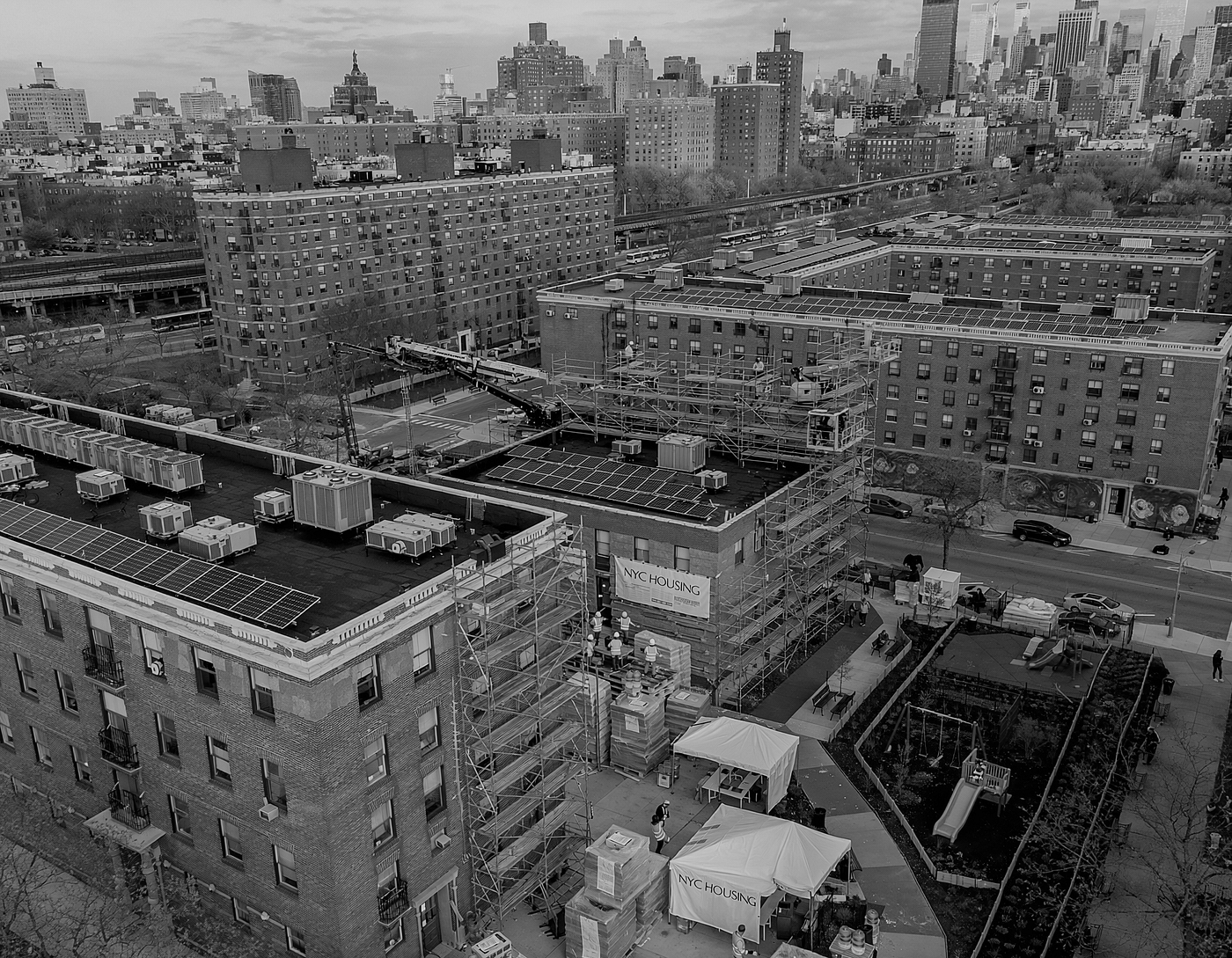
Public housing in New York City stands at a pivotal moment. Decades of deferred maintenance, chronic federal underfunding, and mounting housing demand have left the system strained and, in many developments, physically deteriorating. Elevators fail, heating systems falter, roofs leak, and residents endure conditions that no major city should accept as normal. Yet the crisis is not inevitable. It is the result of policy choices — and can be addressed through new ones.
Saving and expanding public housing will require more than emergency repairs or piecemeal subsidies. It demands a comprehensive strategy that combines durable revenue, capital investment, land use reform, and institutional modernization. The scale of the challenge is large, but so too is the capacity of New York’s economy. What is required now is alignment between fiscal tools and public purpose.
The Structural Problem: A Funding Gap Decades in the Making
The New York City Housing Authority (NYCHA) is the largest public housing authority in the United States, housing hundreds of thousands of residents across hundreds of developments. Many of its buildings date to the mid-twentieth century. Designed for durability, they nonetheless require periodic modernization — mechanical systems, façades, plumbing, and environmental remediation cannot last indefinitely.
Over time, however, federal capital funding failed to keep pace with need. Operating subsidies stagnated. Repairs were deferred. Costs compounded. Today, NYCHA faces capital needs measured in the tens of billions of dollars, alongside persistent operating shortfalls.
Traditional funding sources — federal appropriations, tenant rents (capped at 30 percent of income), and periodic city or state support — are no longer sufficient. Short-term loans and asset conversions may offer temporary relief, but they do not provide the long-term fiscal foundation necessary for stability or expansion.
To move from crisis management to structural renewal, New York must identify predictable and scalable revenue streams.
Reconsidering the Stock Transfer Tax
One proposal that has resurfaced in recent years is reinstating the state’s stock transfer tax (STT). The tax technically remains on the books, but since 1981 its revenues have been rebated, effectively nullifying its fiscal impact. Trades conducted through institutions such as the New York Stock Exchange are subject to the tax in statute, yet the rebate ensures that no meaningful revenue reaches public coffers.
Why the STT Attracts Attention
The appeal of reinstating the STT rests on three factors:
- Scale of Potential Revenue. Given the immense volume of securities transactions processed in New York, even a modest levy could generate billions annually under favorable assumptions.
- Administrative Infrastructure. Because the tax already exists legally, proponents argue that reinstatement is simpler than designing an entirely new revenue mechanism.
- Progressive Framing. Taxing financial transactions aligns with an “ability to pay” principle and directs revenue from high-value market activity toward public goods.
For a housing authority facing extraordinary capital needs, the possibility of large, recurring revenue is compelling.
Risks and Design Considerations
However, a stock transfer tax is not without risk. Transaction volumes fluctuate with market conditions, raising concerns about volatility. Behavioral responses — such as shifts in trading practices or geographic relocation — could reduce expected yield. Policymakers would also need to ensure that pension funds and small investors are shielded from unintended consequences.
For these reasons, while the STT could serve as a central component of a housing finance strategy, it is unlikely to be sufficient — or prudent — as a standalone solution. Its greatest strength may lie in supporting a diversified funding architecture rather than replacing one.
Leveraging Capital Through Housing Bonds
Given the magnitude of NYCHA’s capital backlog, time is critical. Buildings continue to age regardless of budget cycles. One effective tool for accelerating repairs is the issuance of long-term housing bonds backed by dedicated revenue.
Bond financing offers several advantages:
- Immediate access to capital for large-scale rehabilitation.
- Cost distribution over time, aligning repayment with the useful life of improvements.
- Lower borrowing costs, given New York’s strong credit position.
A reinstated or partial STT could provide a revenue stream to back such bonds. Alternatively, dedicated portions of existing taxes or modest surcharges could serve the same purpose. The essential principle is diversification: pairing bonds with reliable revenue reduces risk and increases fiscal resilience.
Targeted Real Estate Measures
Real estate-based levies offer another complementary approach. While unlikely to close the full funding gap, they can generate meaningful supplemental revenue while promoting more efficient housing use.
Examples include:
- Enhanced transfer taxes on high-value property sales.
- Vacancy taxes on units left unoccupied for extended periods.
- Pied-à-terre surcharges on second homes owned by non-residents.
These measures align revenue generation with housing market dynamics and may face less systemic opposition than broader financial transaction taxes. Properly structured, they can support housing investment while reinforcing fairness within the property market.
Land Use Reform and Public Land Strategy
Revenue alone will not resolve New York’s housing challenges. Long-term affordability requires increasing supply and making more effective use of land.
Reforms might include:
- Allowing greater residential density near transit corridors.
- Streamlining permitting and environmental review processes.
- Expanding inclusionary zoning requirements.
- Prioritizing publicly owned land for mixed-income or public housing development.
New York City controls substantial land assets. Strategic deployment of these assets — in partnership with sound financing — could expand affordable housing capacity without excessive new land acquisition costs.
Strengthening NYCHA’s Institutional Capacity
Fiscal reform must be matched by operational reform. Ensuring that new funds translate into tangible improvements requires institutional efficiency and transparency.
Key priorities include:
- Large-scale energy efficiency retrofits to reduce long-term utility costs.
- Modernized procurement systems to prevent cost overruns.
- Performance-based maintenance contracts.
- Transparent financial reporting and public accountability mechanisms.
These measures do not substitute for funding, but they increase the return on every dollar invested.
Toward a Blended Strategy
No single policy instrument can rescue public housing at the scale required. A realistic roadmap integrates multiple components:
- A calibrated stock transfer tax or other progressive revenue stream.
- Long-term housing bonds to accelerate capital repairs.
- Targeted real estate levies for supplemental funding.
- Land use reform to expand overall housing supply.
- Institutional modernization to ensure fiscal responsibility.
Together, these measures balance equity, stability, and practicality. Diversification reduces reliance on any single volatile source while maximizing financial capacity.
Conclusion: A Question of Choice
The deterioration of public housing in New York City is not the result of economic incapacity. It is the cumulative outcome of deferred political decisions. The city and state possess the fiscal tools, economic scale, and institutional knowledge necessary to restore and expand public housing. What remains is the willingness to align them.
With sustained commitment, diversified revenue, and structural reform, public housing can shift from crisis management to renewal. The issue before policymakers is not whether resources exist. It is whether those resources will be mobilized in service of housing as a public good.
Saving public housing in New York City is less a question of feasibility than of resolve.
메타데이터
- post_id
- af5f16e46dde
- slug
- saving-public-housing-in-new-york-city-a-realistic-roadmap-af5f16e46dde
- url
- https://medium.com/@anarchitect_97989/saving-public-housing-in-new-york-city-a-realistic-roadmap-af5f16e46dde
- canonical_url
- https://medium.com/@anarchitect_97989/saving-public-housing-in-new-york-city-a-realistic-roadmap-af5f16e46dde
- author_url
- https://medium.com/@anarchitect_97989
- status
- ok
- fetched_at
- 2026-06-26 21:52:29




