Why Are Industrial-Grade microSD Cards More Expensive Than Consumer Cards?
When many customers first encounter industrial-grade microSD cards, they usually ask the same question:
Why Are Industrial-Grade microSD Cards More Expensive Than Consumer Cards?
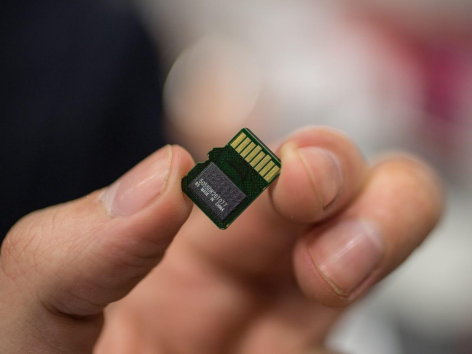
When many customers first encounter industrial-grade microSD cards, they usually ask the same question:
“Why can two microSD cards that look almost identical differ in price by several times?”
Especially in industries such as GPS trackers, dash cameras, industrial cameras, medical equipment, smart retail, and self-service terminals, many companies initially prioritize low-cost storage solutions. However, after products are deployed in the real market, storage failures often create much higher long-term costs.
In reality, the higher price of industrial-grade microSD cards is not simply about material cost. It reflects long-term stability, extreme-environment reliability, and data protection capabilities.
For enterprise customers:
Cheap cards save money when purchasing.
Reliable cards save money during operation.
— -
1. Flash Quality Differences: The Core Factor Behind Storage Lifespan
The most critical component inside a microSD card is the NAND Flash memory.
Different grades of Flash can have huge differences in lifespan and reliability.
Common Consumer-Grade Solutions
Most standard consumer microSD cards use:
-
TLC NAND (Triple-Level Cell)
-
QLC NAND (Quad-Level Cell)
Advantages:
-
Lower cost
-
Larger capacities
-
Suitable for smartphones, cameras, and entertainment devices
However, the disadvantages are also significant:
-
Limited write endurance
-
Speed drops during continuous writing
-
Reduced stability under high temperatures
-
Higher risk of bad block accumulation
In some low-cost QLC solutions, the theoretical P/E (Program/Erase) cycle count may even be below 1,000 cycles.
— -
Flash Standards in Industrial-Grade Solutions
Industrial-grade microSD cards are more likely to use:
-
High-Endurance TLC
-
pSLC (Pseudo-SLC) mode
-
Industrial-grade MLC NAND
For example, pSLC technology simulates SLC write behavior, significantly extending endurance.
Typical endurance comparison:
-
QLC: approximately 300–1,000 P/E cycles
-
TLC: approximately 1,000–3,000 P/E cycles
-
Industrial MLC: approximately 3,000–10,000 P/E cycles
-
pSLC: up to 20,000–60,000 P/E cycles
This is why industrial applications involving continuous recording, cyclic writing, and edge data caching rely more heavily on industrial-grade storage.
— -
2. Controller Differences: The “Brain” That Determines Stability
Many people focus only on Flash memory while overlooking the controller.
In reality, the controller is the “brain” of the microSD card.
It is responsible for:
-
Bad block management
-
ECC error correction
-
Wear leveling
-
Data scheduling
-
Power-loss protection logic
-
Garbage collection
— -
Why Do Consumer Cards Fail Suddenly?
Low-cost consumer cards often use:
-
Simplified controllers
-
Weaker ECC algorithms
-
Basic wear leveling
Problems commonly appear in scenarios such as:
-
24/7 loop recording
-
High-frequency overwrite operations
-
Sudden power loss
-
High-temperature operation
-
Frequent insertion and removal
Typical results include:
-
File system corruption
-
Card suddenly becoming unreadable
-
Severe write-speed drops
-
Data loss
— -
Key Features of Industrial Controllers
Industrial-grade microSD cards often strengthen the following:
1. LDPC ECC Error Correction
Compared with traditional BCH ECC, LDPC significantly improves data recovery capability.
2. Advanced Wear Leveling
Distributes wear more evenly across storage blocks, preventing certain areas from wearing out prematurely.
3. Power-Loss Protection
Reduces the risk of FTL (Flash Translation Layer) corruption during sudden power interruptions.
This is especially critical for:
-
Vehicle DVR systems
-
GPS trackers
-
Industrial control devices
-
Security recording systems
— -
3. Testing Procedures: Why Industrial Products Require Longer Validation
Most consumer cards are designed mainly for:
-
Smartphones
-
Cameras
-
Daily-use electronics
Therefore, testing standards are generally focused on:
-
Short-term performance
-
Normal environments
Industrial devices, however, often require:
24/7 continuous operation.
— -
Common Industrial-Grade Testing Procedures
High and Low Temperature Cycling Tests
Typical range:
- -40°C to 85°C
Used to verify:
-
Startup stability
-
Data retention capability
-
Write reliability
Long-Term Burn-In Testing
Continuous full-load writing for:
-
72 hours
-
168 hours
-
Or even longer
This simulates real industrial operating conditions.
Power Interruption Testing
Repeated simulations of:
-
Sudden power outages
-
Reboots
-
Voltage fluctuations
Vibration and Shock Testing
Widely used in:
-
Vehicle systems
-
Marine equipment
-
Drones
-
Outdoor devices
— -
Why Are These Tests Important?
Because the real enterprise cost is not the price of the card itself.
The real cost comes from failures after deployment.
— -
4. Wide-Temperature Design: Industrial Environments Are Harsher Than Expected

Many people underestimate how strongly temperature affects storage devices.
In reality, Flash memory is highly sensitive to temperature.
— -
Typical Consumer Card Operating Temperature
Usually:
- 0°C to 70°C
This is acceptable in laboratory or consumer environments.
However, real-world scenarios may include:
-
Vehicles exposed to summer heat
-
Desert deployments
-
Cold-chain transportation
-
Outdoor surveillance systems
-
Marine equipment
Temperatures in these environments can easily exceed consumer-grade limits.
— -
Industrial Wide-Temperature Design
Industrial-grade microSD cards typically support:
- -40°C to 85°C
Some solutions support even wider ranges.
This requires:
-
Industrial-grade PCB materials
-
More stable power designs
-
High-temperature-resistant packaging
-
Specialized firmware optimization
— -
What Happens Under Extreme Temperatures?
High temperatures may cause:
-
Reduced data retention
-
Increased write errors
-
Accelerated NAND aging
Low temperatures may cause:
-
Startup failures
-
Write instability
-
Increased response latency
This is why failure rates often rise significantly during extreme summer or winter conditions.
— -
5. Lifespan Differences: Maintenance Cost Is the Real Concern
Many customers initially compare only the purchase price.
But after real deployment, they realize:
The hidden cost of storage failures is far higher than the cost of the card itself.
— -
A Real Enterprise Cost Example
Suppose a GPS tracker company deploys:
-
10,000 devices
-
Each using low-cost consumer microSD cards
-
Saving only $3 per card
The apparent savings:
Approximately $30,000.
However, after one year, if the company experiences:
-
A 5% failure rate
-
Repair labor costs
-
Return logistics
-
Device downtime
-
Customer complaints
The actual losses could easily exceed:
$100,000.
Even worse, brand reputation may be damaged.
— -
Where Industrial Cards Truly Save Money
The value of industrial-grade solutions is not that they “never fail.”
Their real value lies in:
-
Lower failure rates
-
Longer maintenance intervals
-
Fewer on-site replacements
-
Higher device uptime
-
Better customer experience
For enterprise customers, stability is often more important than raw specifications.
— -
6. The Value of ASIR Industrial Storage Solutions

As a professional storage manufacturer with years of industry experience, ASIR continues to provide industrial-grade microSD and embedded storage solutions for multiple industries.
Applications include:
-
GPS trackers
-
Vehicle DVR systems
-
Security surveillance
-
Industrial automation
-
Medical equipment
-
Smart retail
-
Edge computing terminals
— -
Core Advantages of ASIR Industrial Solutions
Industrial-Grade NAND Flash
Selected for high stability and reliability.
Wide-Temperature Support
Designed for complex outdoor environments.
High-Endurance Write Optimization
Suitable for:
-
Loop recording
-
Long-term log writing
-
Data caching
Strict Compatibility Testing
Improves:
-
Controller compatibility
-
Long-term operational stability
OEM / ODM Support
Supports:
-
Capacity customization
-
Firmware optimization
-
Label customization
-
Industry-specific solution development
— -
Conclusion: Industrial-Grade “Higher Cost” Means Long-Term Reliability
At first glance, consumer and industrial-grade microSD cards may look very similar.
But the true value difference lies not in appearance.
It lies in whether the storage can:
-
Operate reliably for years
-
Survive extreme environments
-
Reduce enterprise after-sales costs
-
Protect critical data
For industrial devices, storage is not just an accessory.
It is the foundation of system stability.
In many cases, what enterprises are really purchasing is not simply a memory card.
They are investing in:
Lower failure rates, longer operational lifespan, and more controllable long-term operating costs.
메타데이터
- post_id
- af7532c0d5c8
- slug
- why-are-industrial-grade-microsd-cards-more-expensive-than-consumer-cards-af7532c0d5c8
- url
- https://medium.com/@couchpotato0425/why-are-industrial-grade-microsd-cards-more-expensive-than-consumer-cards-af7532c0d5c8
- canonical_url
- https://medium.com/@couchpotato0425/why-are-industrial-grade-microsd-cards-more-expensive-than-consumer-cards-af7532c0d5c8
- author_url
- https://medium.com/@couchpotato0425
- status
- ok
- fetched_at
- 2026-07-09 20:42:47