Mothers Of The Believers
Restoring the Legacy: Why Our Children Need the Mothers of the Believers
Mothers Of The Believers
Restoring the Legacy: Why Our Children Need the Mothers of the Believers
Photo by Mohamed Nohassi on Unsplash
There is a crisis of confidence stretching across the landscape of Muslim youth. Raised in a digital age where information is instant but nuance is rare, our children are constantly bombarded with narratives designed to make them doubt their identity. When it comes to Islamic history, few topics are as aggressively targeted, misunderstood, or unfortunately, hidden out of embarrassment, as the marriages of the Prophet Muhammad ﷺ.
Because of external criticism regarding the number of his wives, many parents and educators take a defensive, hushed approach. We skip over these chapters. We mention them in passing, or worse, we internalize a sense of apology.
But by hiding our history, we rob our children of their mothers.
The Quran does not apologize for these extraordinary women; it elevates them to a status of supreme intimacy and honor. Allah declares:
“The Prophet is closer to the believers than their own selves, and his wives are their mothers.” (Quran 33:6)
Furthermore, the Prophet ﷺ himself explicitly affirmed this deep, familial bond, reminding his companions of his own role in their lives. He said:
“Indeed, I am to you like a father, teaching you.”}
(Sunan Abi Dawud, 8 — Authenticated by Al-Albani)
If the Prophet ﷺ is a father to the Ummah, then his wives are our mothers, the Ummahat al-Mu’minin. They are not historical footnotes to be defended with anxiety; they are foundational pillars of our faith, dynamic role models, and an immense blessing. It is time to rewrite the negative narrative. By giving our youth deep, uncompromising knowledge of their mothers, we replace defensive embarrassment with unshakeable pride and confidence.
Moving Beyond One-Dimensional Caricatures
When we do teach our children about the Prophet’s wives, we often reduce them to flat, one-dimensional titles. We teach Khadijah as “the businesswoman” or Aisha as “the young one.” This superficial teaching does them a profound disservice.
Each Mother of the Believers offered distinct lived experiences, unique trials, and invaluable lessons that our children desperately need to navigate their own modern struggles.
The Pillars of Support and Comfort
- Khadijah bint Khuwaylid: She was not just a successful entrepreneur; she was the first believer. When revelation first descended and the Prophet ﷺ returned home trembling, vulnerable, and enveloped in fear, it was Khadijah who wrapped him in a blanket and anchored his soul. She gave everything, her wealth, her status, and her life, to shield the establishment of Islam.
- Sawdah bint Zam’ah: Often overlooked, Sawdah was a healing balm in a time of profound bereavement. Entering the Prophet’s home after the devastating passing of Khadijah, she brought warmth, joy, and light back to a grieving household, stepping up with immense grace to mother his young children.
The Keepers of Sacred Knowledge
- Ayesha bint Abi Bakr: She was a brilliant student who transformed into an intellectual powerhouse. Her sharp mind and meticulous memory captured the intimate, daily sunnah of the Prophet ﷺ, and her subsequent lessons permeated all fields of fiqh (Islamic jurisprudence). She proved to every young Muslim girl that scholarship, critical thinking, and spiritual authority belong at the very center of Islam.
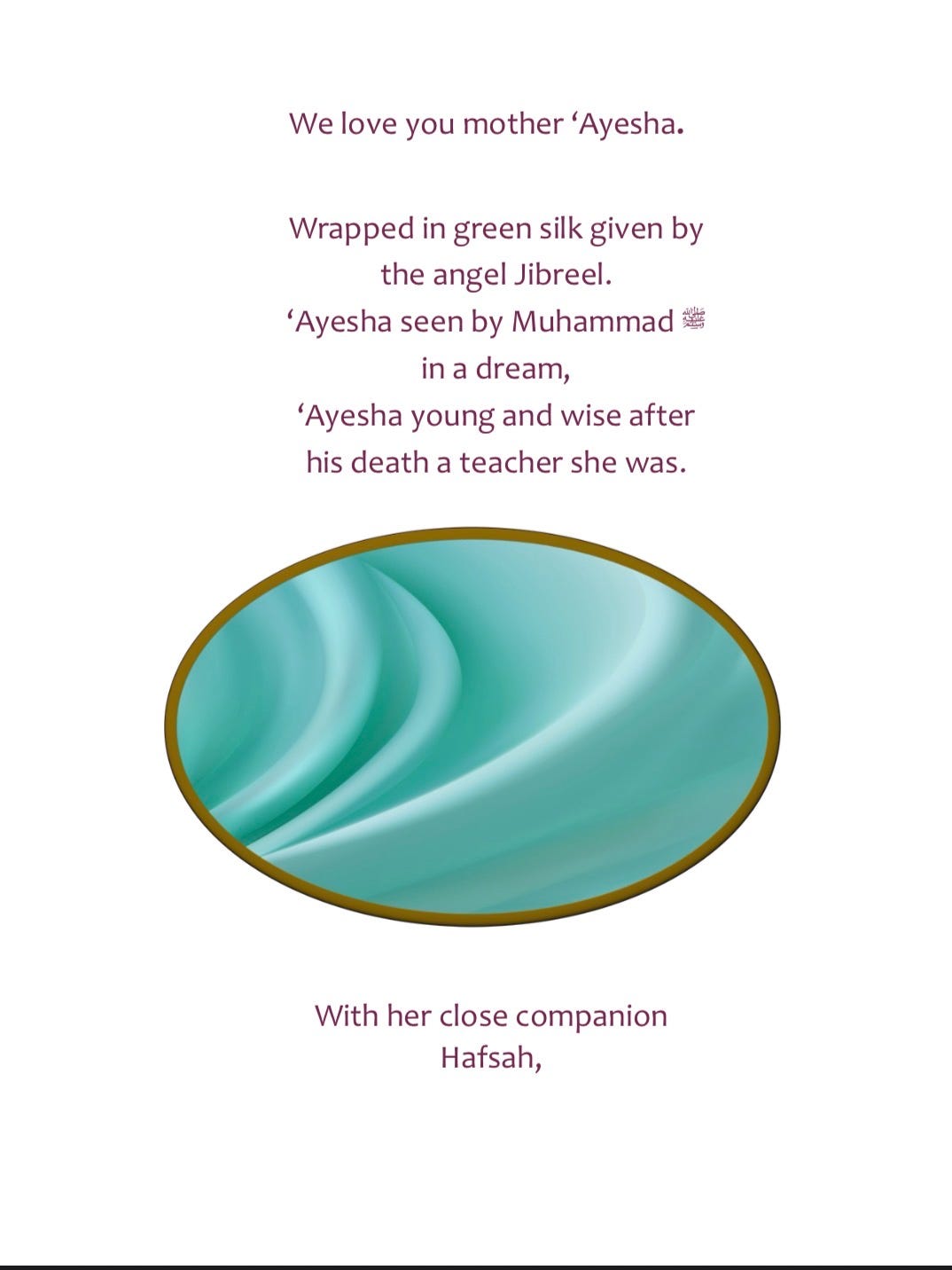
Ummat-ul-Mo’mineen, Mothers of the Believers A Read Aloud Book by Um Yuunus
- Hafsa bint Umar: Known for her literacy and deep devotion, Hafsa was a guardian of the divine text. When the first comprehensive, written compilation of the Quran was assembled, it was entrusted to Hafsa’s custody. She was a woman of depth, trusted with the preserve of revelation itself.
Icons of Strength, Generosity, and Resilience
- Zainab bint Khuzaymah: Known as the “Mother of the Poor,” her life was a masterclass in swift, radical generosity. Though her time with the Prophet ﷺ was brief, her legacy of relentless charity left an indelible mark on Medina.
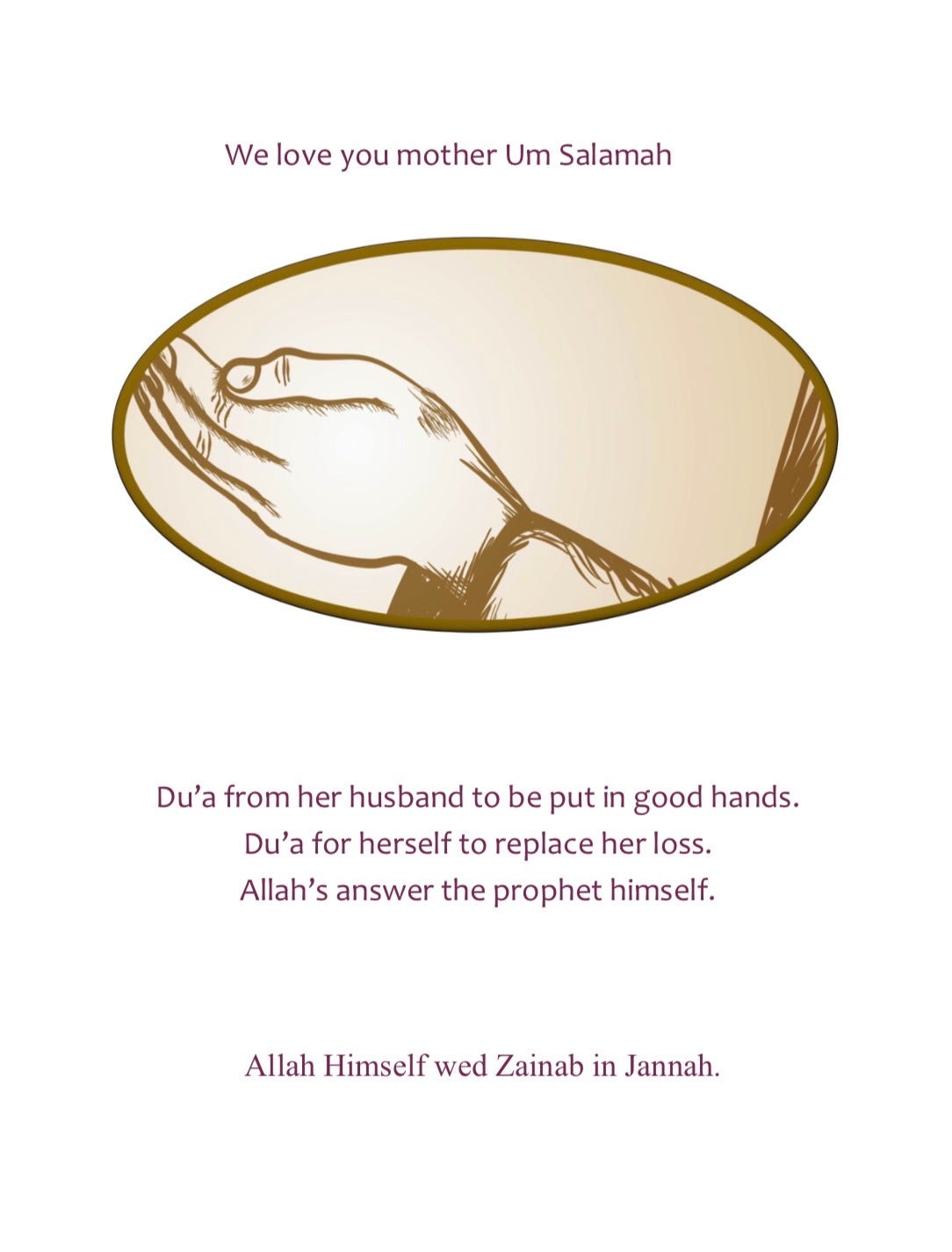
Ummat-ul-Mo’mineen, Mothers of the Believers A Read Aloud Book by Um Yuunus
- Umm Salamah (Hind bint Abi Umayyah): Her life speaks to the absolute power of dua (supplication) and political wisdom. After losing her beloved husband in battle, her heartbroken prayers were answered with the hand of the Prophet ﷺ. Later, at the treaty of Hudaybiyyah, her sharp counsel saved the companions from spiritual disaster, proving the weight of female intellect in state matters.
- Zainab bint Jahsh: Her marriage shattered entrenched social stigmas, serving as a living lesson in the restructuring of legal adoption laws and the invalidation of classist pride. She was an independent artisan who tanned hides and sewed, using her own funds for her massive charitable works.
Leaders, Converts, and the Vulnerable
- Juwayriyah bint al-Harith: A captive of war turned Queen, Juwayriyah leveraged her marriage to secure the immediate release of one hundred families from her tribe. She single-handedly led her entire nation from captivity to physical and spiritual salvation.
- Safiyyah bint Huyayy: Coming from a prominent Jewish tribe, Safiyyah faced isolation and quiet prejudice from some within Medina. The Prophet ﷺ personally comforted her, validating her lineage and teaching her to embrace her history with pride. She stands as a profound comfort to all modern converts, illustrating true self-acceptance and belonging.
- Ramlah bint Abi Sufyan (Umm Habibah): Isolated in Abyssinia after her husband abandoned Islam, Ramlah was abused, neglected, and stranded in a foreign land. Her story offers fierce hope and validation for any woman suffering through isolation or a broken marriage, demonstrating that Allah sees the lonely believer.
- Maymunah bint al-Harith: Wise, strong, and deeply protective of family ties, she was a peacemaker whose marriage unified warring factions and brought hearts together under the shade of Islam.
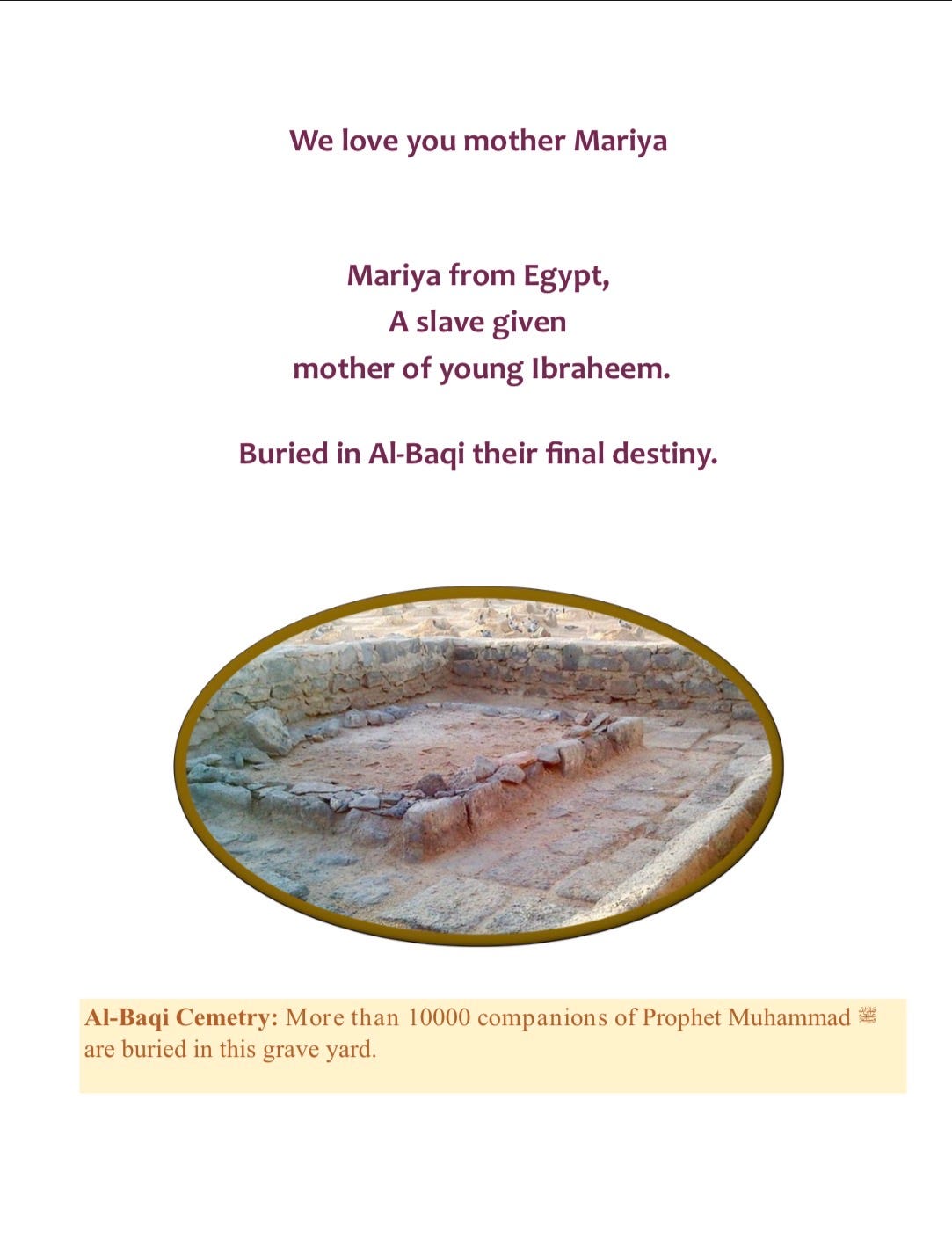
Ummat-ul-Mo’mineen, Mothers of the Believers A Read Aloud Book by Um Yuunus
- Mariya al-Qibtiyya: Coming from Egypt, her presence in the prophetic household sent a clear, unshakeable message: equality matters. Her lineage and her status as the mother of the Prophet’s son Ibrahim shattered regional and racial hierarchies, cementing the universal brotherhood of the faith.
Equipping the Next Generation
Our youth do not need a sanitized, fearful version of history. They need the raw, beautiful, and diverse realities of their mothers.
When a young Muslim girl faces loneliness or exclusion, she should look to Safiyyah. When a young boy seeks to understand the balance of strength and vulnerability, he should look to how the Prophet ﷺ leaned on Khadijah. When our youth are challenged about why the Prophet ﷺ had multiple wives, they should be equipped to answer not with a defensive stutter, but with an expansive explanation of how these marriages formed a multi-faceted tapestry of legal, social, political, and educational precedents.
By rewriting the negative narrative and actively teaching the lives of the Ummahat al-Mu’minin, we provide our children with a rich mirror for their own lived trials. Let us stop hiding their legacies out of an anxiety born from external criticism. Let us lift their names, tell their stories, and build an unshakeable pride in the hearts of our youth through the profound knowledge of our mothers.
Whether you are a parent, a grandparent, or a teacher, I invite you to share these stories.
메타데이터
- post_id
- af8c1781578f
- slug
- mothers-of-the-believers-af8c1781578f
- url
- https://medium.com/the-muslims-inn/mothers-of-the-believers-af8c1781578f
- canonical_url
- https://medium.com/the-muslims-inn/mothers-of-the-believers-af8c1781578f
- author_url
- https://medium.com/@umyuunus
- status
- ok
- fetched_at
- 2026-06-27 23:56:40