Kenya’s Police Oversight is Broken
Time for a Radical Overhaul
Kenya’s Police Oversight is Broken
Time for a Radical Overhaul
Kenya’s police oversight mechanisms — the Internal Affairs Unit (IAU) and the Independent Policing Oversight Authority (IPOA) — are failing spectacularly. As abductions surge, with at least 82 cases since June 2024 linked to Gen-Z protests, these bodies have proven impotent against their mandates, leaving citizens defenseless against a rogue National Police Service (NPS) from my social consciousness theorist lens.

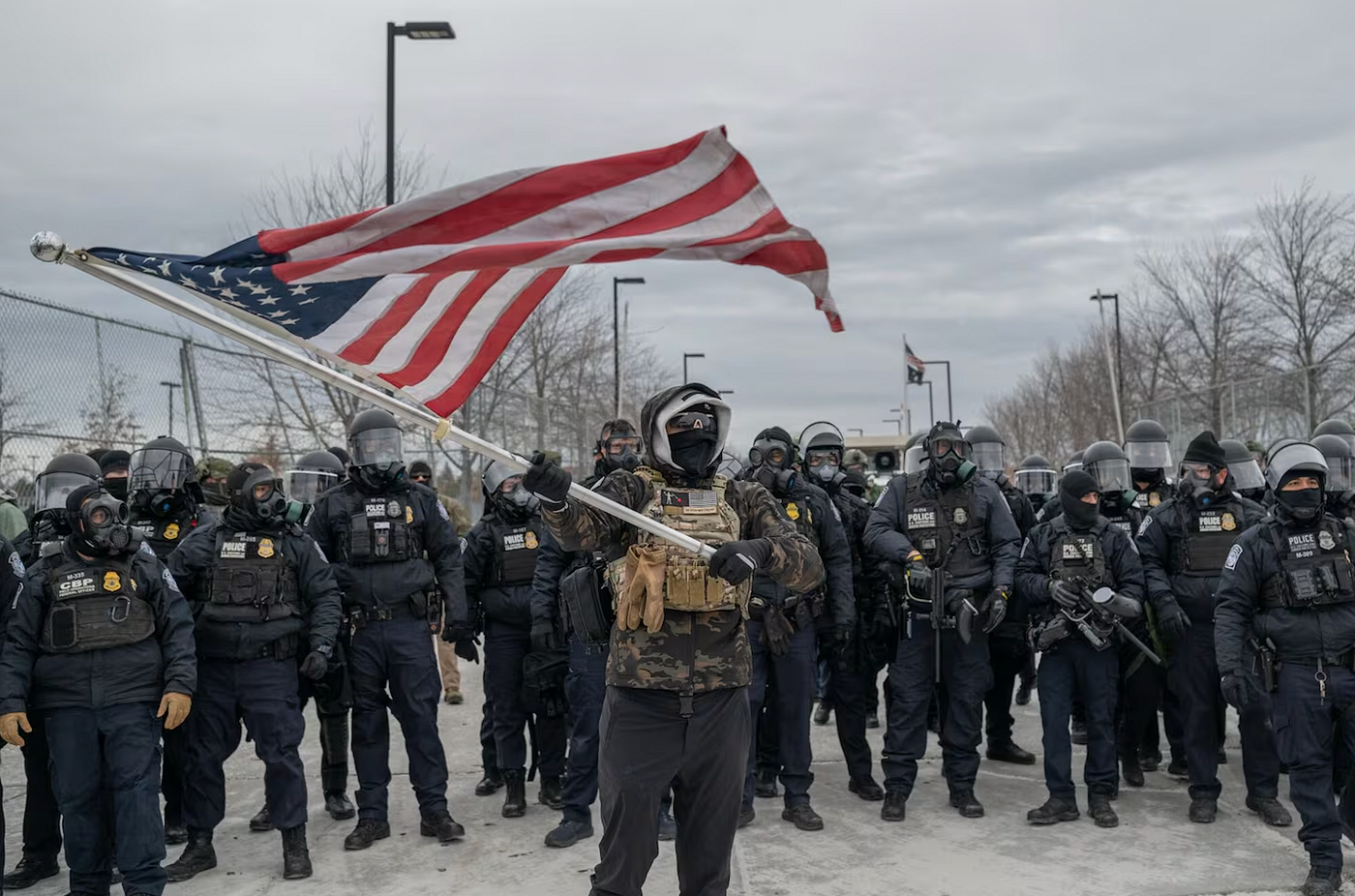
The need for a Police Oversight Commission -image courtesy of The Star Newspaper
The IAU, meant to self-regulate the police, is a toothless relic, while IPOA, despite its grand name, is a neutered state puppet. Both have prioritized lesser investigations over the abduction crisis gripping the nation, a misstep that betrays public trust. It’s time to disband IPOA, reform the IAU with global best practices, and establish a civilian-led Police Oversight Commission (POC) to salvage accountability from this wreckage.
IPOA and IAU: Mandates Betrayed.
The IAU, under Section 87 of the National Police Service Act of 2011, is tasked with investigating internal police misconduct and reporting to the Inspector General (IG). Its mandate demands swift, impartial action against officers abusing power — think abductions, extrajudicial killings, or brutality. Yet, it’s a ghost in the machine — the concept of the mind existing alongside and separate from the body.
Where are the IAU’s reports on the 82 abductions? Where are the disciplined officers or public disclosures of its work? Silence. Subordinated to the IG, who oversees the very force it’s meant to check, the IAU is a structural farce — incapable of confronting the NPS’s shadowy abductors, hooded figures in police vehicles snatching citizens under cover of night. It has not proven effective once in holding the NPS accountable on these counts, a failure laid bare by its invisibility amid Kenya’s most pressing security crisis.
IPOA fares no better. Created in 2011 to independently investigate police abuses, monitor operations, and recommend prosecutions, its mandate is clear: protect Kenyans from NPS excesses. But look at the evidence — 82 abductions, 57 protest deaths, 197 injuries since June 2024, and IPOA’s response? A pitiful 17 active probes and a January 2025 admission from Chairperson Issack Hassan that it lacks capacity.
With only 77 investigators out of an approved 1,300 staff, IPOA is overstretched, underfunded, and outmatched. It submits files to the DPP — 19 abduction cases in 2024 — but convictions are a mirage. The NPS denies involvement, claiming hooded abductors aren’t theirs, and IPOA shrugs, unable to compel answers, only calling for a media address to outline its incapacity. This isn’t oversight; it’s resignation.
Misplaced Priorities Amid a National Crisis.
What infuriates affected citizens the most is the prioritization of other investigations over abductions, an issue every Kenyan knows about. Gen-Z has borne the brunt — disappeared for daring to protest the Finance Bill or criticize Ruto’s regime. Social media buzzed with #EndAbductionsKE, yet IPOA dithers on 57 protest deaths and 197 injuries from 2023, cases that, while serious, lack the immediacy of lives vanishing daily.
The IAU, meanwhile, is nowhere to be seen — perhaps twiddling thumbs over petty officer disputes while citizens are snatched. Why not redirect every resource to abductions, the issue screaming for action?
IPOA’s 77 investigators could focus solely on the 82 cases, roughly two per person — a manageable load — yet they juggle a broader mandate, diluting impact. This isn’t strategy; it’s cowardice or incompetence. Kenyans deserve an oversight body that mirrors their urgency, not one chasing bureaucratic checklists.
IPOA’s “Independence”: A Cruel Fallacy.
IPOA’s biggest sin is its name. “Independent”? Hardly. As a state-funded body under the Interior Ministry’s oversight, its autonomy is a lie. The ministry, led by a Cabinet Secretary under the Presidency — implicated in abduction critiques — controls IPOA’s purse strings. In 2024/2025, IPOA begged for KSh 2.1 billion but got KSh 896 million, a deliberate chokehold. This isn’t underfunding by accident; it’s control by design. The same ministry defends the NPS, creating a grotesque conflict where IPOA’s survival depends on the goodwill of those it’s meant to police. Contrast this with the Judiciary, funded directly from the Consolidated Fund — IPOA’s tether to the Interior Ministry neuters its ability to bite. The “Independent” label mocks us, a hollow promise from an entity too shackled to challenge state excesses.
Unanswered Questions, Unseen Action.
IPOA’s inertia raises damning questions:
Has IPOA tasked the NPS to explain how hooded individuals, who are not police, use police vehicles? No public evidence suggests it has. Perhaps it fears NPS backlash, lacks the will, or can’t muster the 77 investigators to dig deeper.
Has IPOA asked the NPS to investigate telecom logs from base stations to trace hooded abductors’ communications? Nothing indicates this. Resource constraints or technical incapacity might explain it, but it’s a glaring investigative miss, never mind that the NPS controls the KES 4 billion forensics facility which IPOA recently advocated before Parliament to be a stand-alone lab so it can serve all agencies without interference from police officers.
Can IPOA present demand letters to the NPS for feedback? It could, legally, but hasn’t. Protecting ongoing probes or avoiding embarrassment over NPS defiance might be why — either way, transparency suffers.
These unanswered queries expose IPOA’s paralysis, a body comprised of top professionals brought to its knees by a National Police Service that, among other reasons, contributed to the collapse of the Outstanding Police Service Awards program launched in 2014 and meant to recognize exemplary police performance. If IPOA can’t ask hard questions or seek local or international help, what is its purpose?
Staffing: A Bureaucratic Bloated Mess.
IPOA’s staffing screams misaligned priorities. With 77 investigators out of an approved 1,300, only 5.9 per cent of its potential workforce tackles its core mandate — investigation. In 2022/2023, it had 217 staff, meaning 140 were administrative or support, a 65 per cent skew away from fieldwork. Even if not all 1,300 slots are filled, the design favors bureaucracy over boots on the ground. Compare this to South Africa’s Independent Police Investigative Directorate (IPID), where 60–70 per cent of 600 staff are investigators.
IPOA once aimed for 600 investigators — 46 per cent of 1,300 — yet languishes at 77. This isn’t just underfunding; it’s a choice to bloat support roles while abductions pile up. Each investigator juggles 3–4 cases annually, for instance, 237 complaints in 2023, an impossible load. There’s more administrative fat than ought to be, starving the mandate of muscle.
The Case for a Police Oversight Commission.
IPOA’s failure and the IAU’s irrelevance justify a Police Oversight Commission (POC). Constitutionally entrenched, funded directly from the Consolidated Fund, and wielding prosecutorial powers, a POC could: Break free of the Interior Ministry’s leash, unlike IPOA. Consolidate oversight, absorbing the IAU’s role and ending redundancy. Prioritize investigators — say, 600 of 1,000 staff — to match Kenya’s 100,000+ police force. Restore trust with Gen-Z, delivering justice where IPOA flounders. The POC could prosecute directly, bypassing the DPP’s bottleneck, and compel NPS cooperation with subpoena powers — tools IPOA lacks. It’s not just reform; it’s survival for a system on life support.
Reforming the IAU: Learning from the Best.
Rather than limp along, the IAU should be overhauled using global best practices, answering to the POC.
Independence: Like New York City Police Department’s, Civilian Complaint Review Board (CCRB), a civilian-led IAU, detached from the IG, reporting to POC could probe abductions impartially. Of the 5,542 complaints received in 2023, the CCRB substantiated 764 complaints by the end of 2024, per the publicly available transcript of the review board’s meeting held on February 12, 2025 via video conference.
Resources: Like England and Wales, Independent Office for Police Conduct (IOPC), scaling to 400 investigators with forensic access could yield the IOPC’s over 2,600 investigations completed, with 90 per cent completed within 12 months, compared to 68 per cent in 2018. The improvement in timeliness was acknowledged in the HASC (Home Affairs Select Committee) report into Police Conduct and Complaints, published on 1 March 2022.
Transparency: Like South Australia, Police Complaints and Discipline Unit (PCDU), which resolved 85 per cent of complaints in 90 days using Public dashboards according to a 2022 report, lifting trust to 78 per cent.
Prevention: Like Royal Canadian Mounted Police, External Review Committee (RCMP ERC), audits, for instance, use-of-force incidents and annual ethics training could cut misconduct, pre-empting abductions.
Civilian Input: Like New Zealand’s, Investigative Police Complaints Authority (IPCA), which incorporates community forums resolving 3,000 complaints, with 18 per cent resulting in policy changes, for instance, Taser use guidelines. Public trust in police accountability rose to 71 per cent in 2023 from 58 per cent in 2015, per New Zealand government surveys.
Under a Police Oversight Commission, this reformed IAU would execute fieldwork while the POC sets policy and prosecutes — a synergy IPOA and the current IAU can’t dream of.
Conclusion.
Kenya’s IAU and IPOA are broken — ineffective and impotent against their mandates. Unable to chew gum and walk with regard to ongoing probes over the public’s concern on abductions, IPOA’s faux independence and staffing bloat, and the IAU’s silence are indefensible. A Police Oversight Commission, with a reformed IAU beneath it, is the answer: independent, resourced, and accountable. The 82 abductions since June 2024 demand no less — Gen-Z deserve justice, not excuses. Disband IPOA, remake the IAU, and build a POC. Anything else is complicity in the NPS’ reign of terror, irredeemable shatter culture and colonial backwardness.
Published in **The Star, 09 April 2025**
ENDS
The Author is a Social Consciousness Theorist, a Corporate Trainer & Speaker, an Agronomist consultant for golf courses and sportsfields & Author of “The Gigantomachy of Samaismela” and “The Trouble with Kenya: McKenzian Blueprint”
Samaismela.substack.com ; X (Twitter): @samaismela
메타데이터
- post_id
- af8ea717bdb5
- slug
- kenyas-police-oversight-is-broken-af8ea717bdb5
- url
- https://medium.com/@samaismela/kenyas-police-oversight-is-broken-af8ea717bdb5
- canonical_url
- https://medium.com/@samaismela/kenyas-police-oversight-is-broken-af8ea717bdb5
- author_url
- https://medium.com/@samaismela
- status
- ok
- fetched_at
- 2026-09-03 20:37:31