Making a Difference
The inspiring story of Irena Sendler and the Jewish children of Warsaw
INSPIRE BELIVE GROW CONTRIBUTOR POST
Making a Difference
The inspiring story of Irena Sendler and the Jewish children of Warsaw
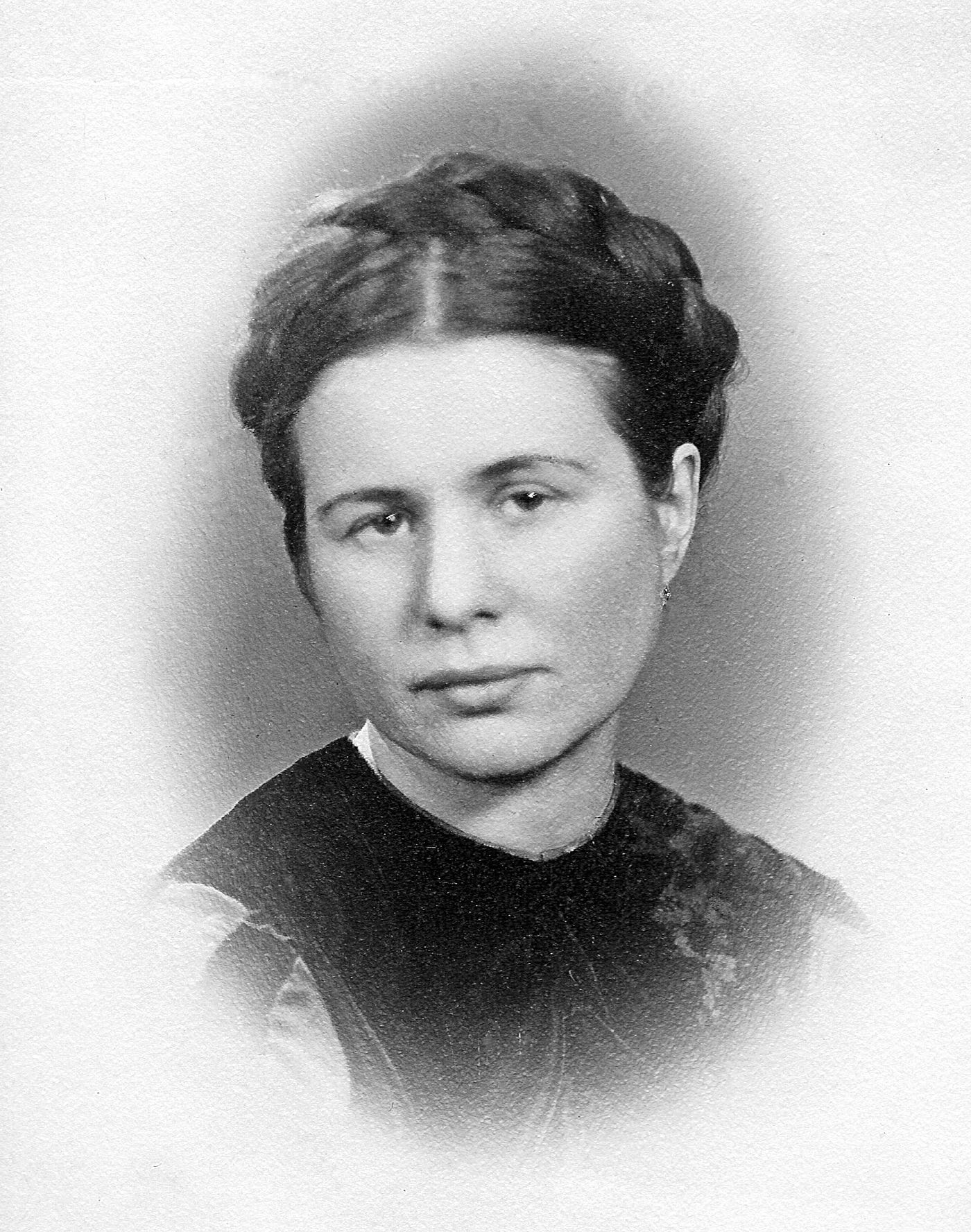
Irena Sendler, 1942. Photo credit: Unknown author, Public domain, via Wikimedia Commons
“I was raised to believe that the question of religion, nation, belonging to — any race is of no importance — it’s a human being that matters!” — Irena Sendler
Born in Warsaw, Poland, in 1910, Irena was the only daughter of Dr. Stanisław Krzyżanowski, a physician, and his wife, Janina. She was baptised in the Catholic Church and spent her childhood in Otwock, a city in east-central Poland, where her father ran a sanatorium. Irena’s father died in 1917 during a typhus epidemic. He contracted the disease whilst caring for the poor, whom no-one else would treat.
After his death, Jewish community leaders offered Janina assistance in paying for Irena’s education. In 1928, she enrolled at Warsaw University, where she joined the Union of Polish Democratic Youth
In the early part of the century, the Jewish population had expanded considerably, with refugees fleeing the Russian Civil War. By the early 1920s, Jewish students formed about a third of university enrolments, causing some backlash amongst the mostly Gentile population of Poland.
Hoping to dissuade Jewish students from enrolling, universities began segregating students, in what was known as getto ławkowe, or Ghetto Benches in English. Jewish students were confined to an area on the left-hand side of the room. Although initially opposed by the Polish government, this later became law.

Warsaw University, 1929–1945. Photo credit: Unknown author, Public domain, via Wikimedia Commons
Irena opposed the system which offended her sense of humanity, defacing her grade card in protest. As a result, she was suspended from the university for three years.
At university, she studied law and Polish studies, neither of which she completed Just before World War II, she prepared her master’s thesis on Polish writer, Eliza Orzeszkowa, which she planned to defend in the autumn of 1939.
In 1931, she married Mieczysław Sendler, then working in the Department of Classical Philology at Warsaw University.
Career Years
A year later, she began her career at the Mother and Child Assistance Division at the Free Polish University. She worked in the legal department, but also as a social worker and psychotherapist. In 1935, the section closed and she found work in the Warsaw Department of Social Welfare and Public Health and was there when war broke out in 1939. From the beginning of the war, Irena helped by providing food and water to Jewish families.
That stopped in November, 1940, when the occupying Germans established the “Jewish Residential District in Warsaw”, now known as the Warsaw Ghetto.
In an area of only of 3.4 km2 (1.3 sq mi) — about the size of New Yor’s Central Park, up to 460000 Jews were confined in close quarters and with only meagre rations. They were kept there before being sent to German concentration camps, where they would be killed.
Ration cards allowed ghetto residents only 300 calories of food daily, a small fraction needed for sustaining health. Many died of diseases (particularly typhus) and starvation.
The situation was dire.

Food smuggling at the Warsaw Ghetto. Photo credit: nieznany/unknown, Public domain, via Wikimedia Commons
Initially operating on her own, Irena Sendler entered the ghetto using a pass issued to her as a social worker and papers from the Contagious Disease Department to enter the Warsaw Ghetto. This enabled her to meet friends in the Ghetto, providing food and medicine.
It is estimated that Irena and her helpers made 3000 false documents to help Jewish families escape the German invaders.
Irena began saving infants from the Ghetto. With others, she devised ways of smuggling the children out, often through the Warsaw Courthouse. They used the following methods:
· using an ambulance, a child could be taken out hidden under a stretcher
· escape through the courthouse at the edge of the Ghetto
· a child could be taken out using the sewer pipes or other secret underground passages
· a trolley could carry out children hiding in a sack, in a trunk, a suitcase or something similar
· if a child could pretend to be sick or was actually ill, it could be legally removed using the ambulance
Joining Żegota
In 1943, she met Julian Grobelny (“Trojan”), Chairman of the “Żegota” Council to Aid Jews. Joining with that Polish-Jewish underground organisation enabled it to combine its efforts with those of the staff of the Social Welfare Department. Irena took on the pseudonym “Jolanta,” passing money onto those in need, seeking new places for them to hide.

Homeless children at the Warsaw Ghetto. Phot credit: nieznany/unknown, Public domain, via Wikimedia Commons
The children were fostered by Polish families or placed in convents under pseudonyms. Irena kept records of each child’s true identity and family, written on tissue paper and sealed in bottles, later buried under an apple tree.
This was dangerous work. Aiding Jews was a capital crime under Nazi rule. People breaking the law could be put to death, as well as their families. We can only admire the bravery of Irena and her co-conspirators in risking everything for the sake of others.
Perhaps inevitably Irena was arrested on October 20, 1943 and confined in the notorious Pawiak Prison, where she was questioned and tortured by the Gestapo.
During the questioning she had her legs and feet broken, but even in her agony, she did not condemn her co-conspirators.
However, the Gestapo had a detailed file on her activities. She received a death sentence and was to be shot. Unknown to her, the Polish resistance group, Żegota had bribed the German executioner who helped her escape.
Nonetheless, the Gestapo announced her execution and put up posters around Warsaw, announcing her death. Irena read them herself.

She changed her identity and went into hiding, but continued working with Żegota. Remaining in hiding until the end of the war, Irena alone knew the hiding places of the rescued children.
After the war, she tried to track down any living parents. Sadly, most had died in the Treblinka war camp. Some were reunited with family, others stayed with their foster families or went to Israel to be adopted.
In 1945, Irena was reunited with her husband, who, as a soldier, had been captured September, 1939 and spent the following years as a prisoner of war. They divorced in 1947.
She then married Stefan Zgrzembski a Jewish friend she had met during the war. They had three children, Janina, Andrzej (who died in infancy), and Adam (who died of heart failure in 1999).
In 1957 Zgrzembski left the family; he died in 1961 and Irena remarried her first husband, Mieczysław Sendler. They divorced again ten years later.
Irena continued her career in social work and activism, later moving to Israel to take a position as a teacher. In 1980 she joined the Solidarity movement in Poland, returning to Warsaw for the close of her life. She died there in 2008, aged 98.
Many thousands of children lived because of the selfless determination of Irena Sendler and her cohort.

Irena Sendler, 2005, Photo credit: Mariusz Kubik, CC BY 3.0 https://creativecommons.org/licenses/by/3.0, via Wikimedia Commons
References
Life in a Jar. (n.d,) The Irena Sender project. https://irenasendler.org/facts-about-irena/
POLIN Museum of the History of Polish Jews. (2016). Irena Sendler’s biography. About the righteous. https://sprawiedliwi.org.pl/en/o-sprawiedliwych/irena-sendlerowa/biografia-ireny-sendlerowej
Wieler, J. (2006). The long path to Irena Sendler- mother of the Holocaust children. https://ejournals.bib.uni-wuppertal.de/index.php/sws/article/view/185/591
William P. Didusch Center for Urologic History. (2022). The hunger disease study in the Warsaw Ghetto. https://www.urologichistory.museum/collections/the-scope-of-urology-newsletter/issue-2-summer-2020/hunger-disease-study
This is a post from one of the valued contributors to Inspire Believe Grow-a new and growing faith-based Medium publication.
If you would like to know more about contributing to this exciting project then check out [the publication guidelines](/inspire-believe-grow/would-you-like-to-write-for-inspire-believe-grow-3caa37e1cc47).
Use the banner below to see more *Inspire Believe Grow* content and follow the publication.

메타데이터
- post_id
- afa562dcc297
- slug
- making-a-difference-afa562dcc297
- url
- https://medium.com/inspire-believe-grow/making-a-difference-afa562dcc297
- canonical_url
- https://medium.com/inspire-believe-grow/making-a-difference-afa562dcc297
- author_url
- https://medium.com/@jacqui_smith
- status
- ok
- fetched_at
- 2026-07-14 23:18:57