You Don’t Have a Phone Problem. You Have an Overstimulation Problem.
The real addiction isn’t to your device. It’s to the relief it provides from a world that never stops demanding your attention.
You Don’t Have a Phone Problem. You Have an Overstimulation Problem.
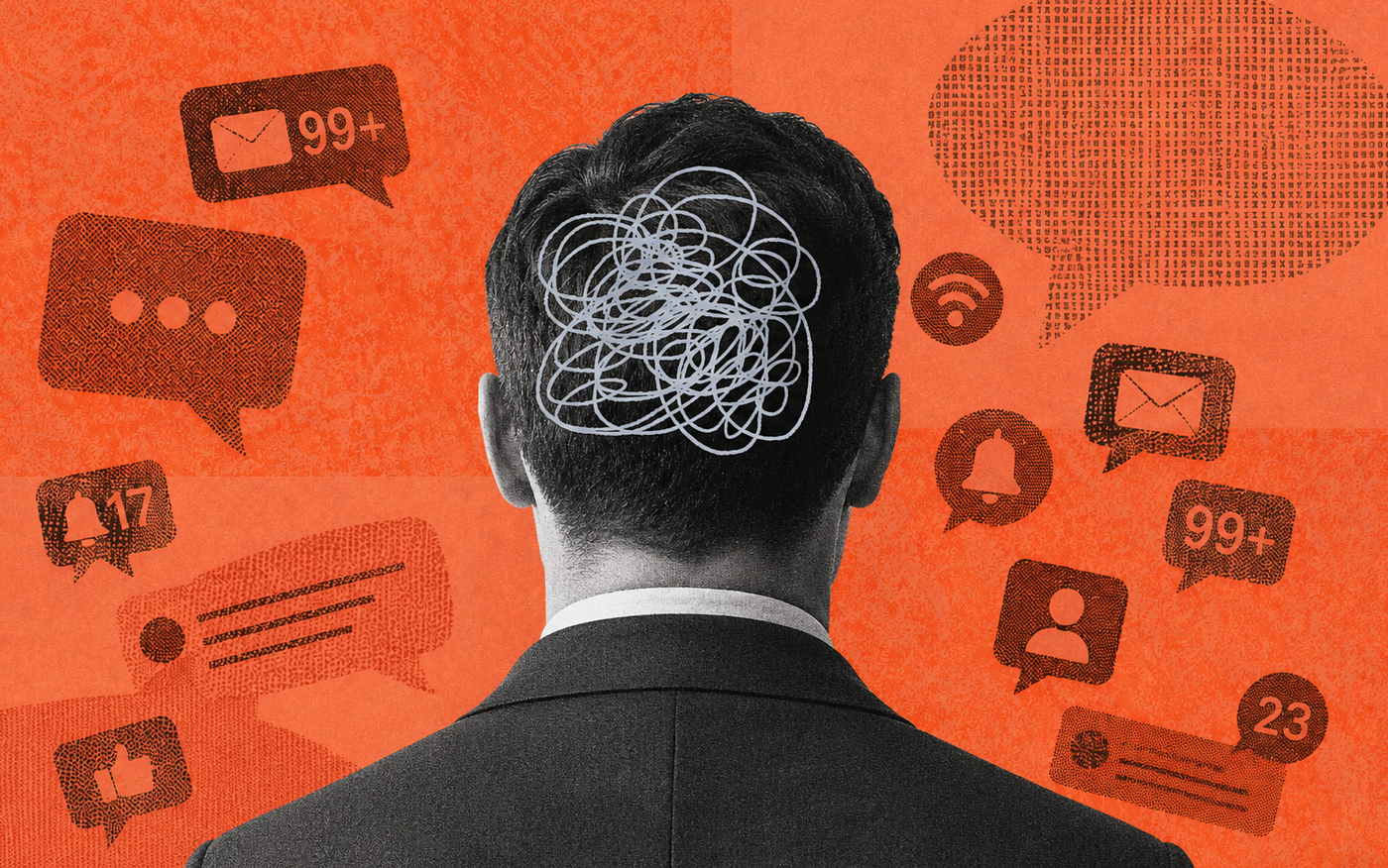
The real addiction isn’t to your device. It’s to the relief it provides from a world that never stops demanding your attention.
It’s 10:47pm. You’re exhausted. You told yourself you’d be in bed by ten. But you’re lying there, scrolling through nothing in particular, not really reading, just moving your thumb on autopilot.
You put the phone down.
Forty seconds later, you pick it back up.
You’ve probably told yourself the same story a hundred times: I have no willpower. I’m addicted to my phone. Something is wrong with me.
Here’s the problem. It’s the wrong story.
The Diagnosis Is Off
“Phone addiction” locates the problem in the device. So the solution becomes: use it less. Delete the apps. Go on a detox.
Most people who try this discover the urge doesn’t disappear when the phone does. It just redirects. Suddenly the TV is on constantly. The laptop gets three extra hours. The compulsive snacking begins.
The phone wasn’t the problem. It was the exit.
What You’re Actually Escaping
Think about what your nervous system is carrying before you ever touch your phone.
Back-to-back meetings. An inbox that refills the moment you empty it. Notifications arriving in parallel streams, each tagging itself as vaguely urgent. A 24-hour news cycle that never resolves. The ambient pressure of being always reachable, always productive, always on.
Your brain was not built for this. It evolved for a much quieter world. By 2pm on a Tuesday, you’ve processed more information than your great-grandparents might have encountered in a week.
So when you reach for your phone, you’re not being weak. You’re looking for relief.
And the phone is extraordinarily good at providing it. Novelty, distraction, a temporary suspension of whatever you were just thinking about. It’s the most efficient discomfort-removal machine ever created.
The problem was never the phone. It’s the load your brain is carrying before you ever touch it.
The Exit Ramp
The compulsive scroll almost always follows the same pattern. Something stressful or uncertain happens, or the absence of stimulation creates a low-level unease, and the phone appears as an obvious and frictionless exit.
It doesn’t fix the stressful thing. It doesn’t resolve the uncertainty. But it briefly suspends your awareness of both. That’s enough.
This is why digital detoxes fail. Removing the exit ramp doesn’t reduce the traffic. The anxious nervous system finds another escape. Or it builds pressure until the exit ramp gets put back.
The real question isn’t “how do I use my phone less?” It’s “what is my nervous system trying to escape, and how do I actually address that?”
The Useful Reframe
When you understand that your phone use is a symptom of overstimulation rather than its own problem, your options expand.
Instead of white-knuckling through the urge to scroll, you can start reducing the underlying load. Instead of treating every phone check as a personal failure, you can treat it as information: my nervous system is overwhelmed and looking for relief.
The intervention shifts from removal to reset. Not taking something away from a stressed brain. Reducing the pressure that was generating the behavior in the first place.
When the baseline shifts, the compulsive reach starts to lose its urgency. Not because you’ve disciplined yourself out of it. Because the conditions that made it feel necessary have changed.
Where to Start
Notice the moment just before you reach for your phone. What were you feeling ten seconds earlier? Bored? Anxious? Avoiding something? That feeling is the signal. The phone is the response. Understand the signal and you can start to change the response.
Then take an honest look at your overall stimulation load. Not just phone use, but everything: the pace of your days, the noise in your environment, how often you’re genuinely resting versus just less stimulated.
Most people, when they actually map this out, realize they haven’t had a truly quiet hour in weeks.
That’s the thing that needs to change.
Nothing here is permanent. The scattered attention, the compulsive checking, the inability to sit quietly: all of it built in response to conditions. All of it can rebuild in response to different ones.
That’s the premise behind **The Attention Reset**. A structured, science-backed program that works on the root cause, not just the symptom. Not a detox. A genuine reset of the conditions making your phone feel necessary.
Your nervous system isn’t broken. It’s been asking for relief in the only direction it knows. There’s another direction.
메타데이터
- post_id
- afc1778f1315
- slug
- you-dont-have-a-phone-problem-you-have-an-overstimulation-problem-afc1778f1315
- url
- https://medium.com/@attn-reset/you-dont-have-a-phone-problem-you-have-an-overstimulation-problem-afc1778f1315
- canonical_url
- https://medium.com/@attn-reset/you-dont-have-a-phone-problem-you-have-an-overstimulation-problem-afc1778f1315
- author_url
- https://medium.com/@attn-reset
- status
- ok
- fetched_at
- 2026-06-09 15:37:30