Timing Your Startup Raise Has Nothing To Do With Your Calendar
For startups looking to raise, timing isn’t just about the calendar — it’s the single biggest factor that determines how long a company…
Timing Your Startup Raise Has Nothing To Do With Your Calendar
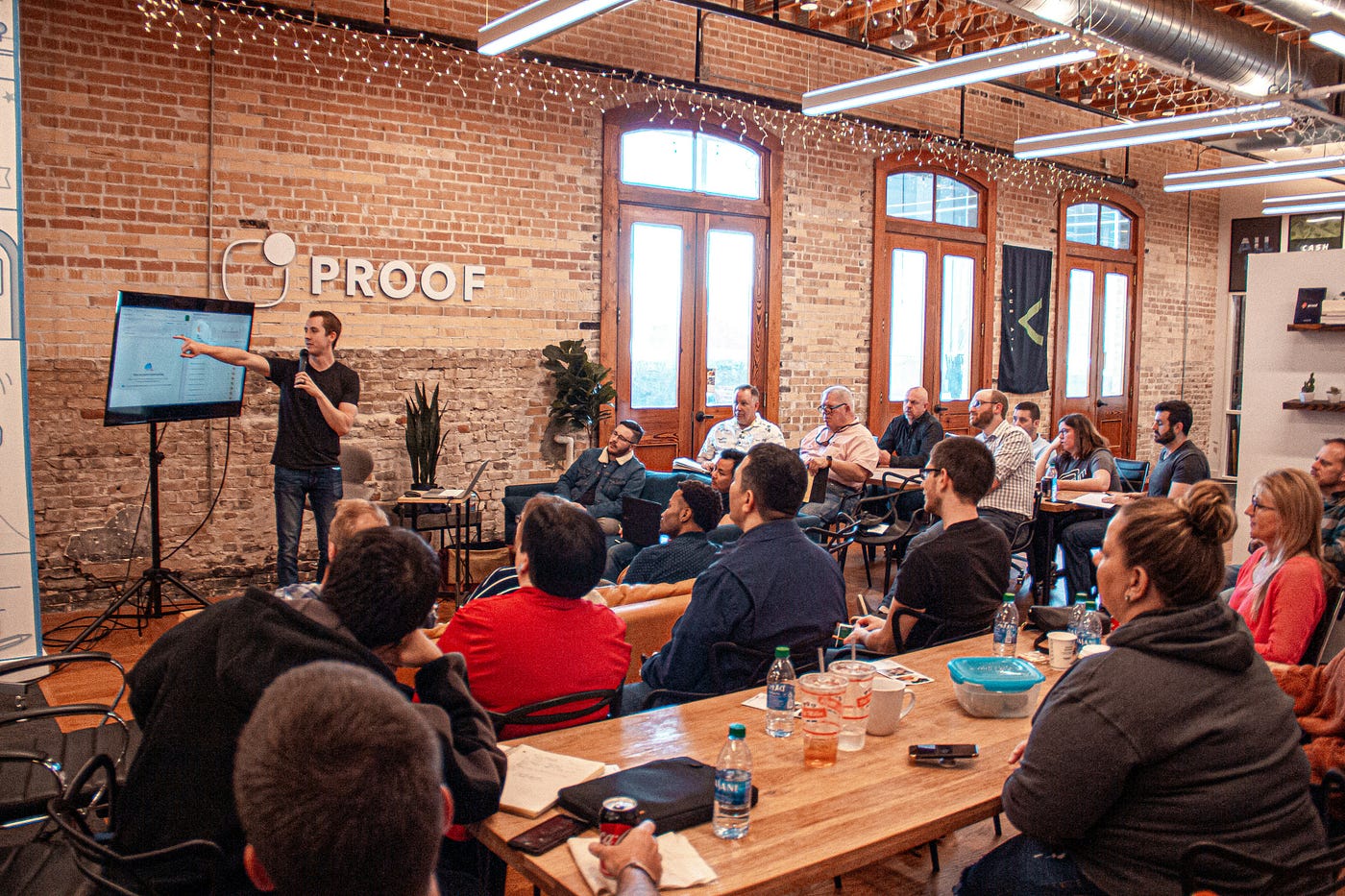
Photo by Gaining Visuals on Unsplash
For startups looking to raise, timing isn’t just about the calendar — it’s the single biggest factor that determines how long a company gets to stay in the game. As an associate at a VC fund in the Southeast, I’ve diligenced hundreds of startups, and the truth is, most of the “right time to raise” advice misses the point. The factors I weigh far more heavily than seasonality are about readiness, not the calendar.
“Timing” gets used loosely in this industry. It can mean the literal calendar — Q4 is slow, summer is dead, everyone raises in January — or it can mean something more important: where the startup actually sits in terms of traction. Get the second one wrong, and the calendar won’t save you. In this piece, I’ll break down the traction signals that matter most when investors are deciding whether — and when — to write a check.
Here’s what I actually look for, in roughly the order it shows up in my diligence:
Sales Cycle and Sales Pipeline
Sales cycle is the time it takes to close an organization — measured in days, number of touches, or both. It ranges wildly: same-day closes exist, but enterprise cycles can run 120 to 360 days. A longer cycle usually means more upfront capital burn before any revenue shows up, which matters a lot when we’re underwriting runway.
Pipeline is different — it’s the qualified list of in-motion conversations, expressed as a dollar figure (e.g., “$2M in pipeline”). Converted revenue almost always comes in at or below that number, and multi-year contract values sometimes get baked into the pipeline figure in ways that inflate it. Know the difference, and know which one you’re actually quoting in your deck.
(I’ll go deeper on these metrics in an upcoming mini-series for founders navigating VC conversations.)
Competitive Moat
A moat is what makes you hard to displace — even by a competitor with infinite capital and infinite talent. Moats take different shapes: network effects, proprietary data, deep technical expertise, a product that’s genuinely hard to replicate, an unconventional go-to-market motion, switching costs. In the AI era, a moat increasingly looks like the system’s ability to learn from user behavior and personalize over time. More on each of these in the founder-focused series.
Regulatory Impact
There’s a delicate relationship between regulation existing and a startup being able to operate within — or because of — it. If you’re first to market and regulation hasn’t caught up yet, that delays customer acquisition, which delays the metrics you need to raise. Existing regulation can cut either way too: it can be a tailwind or a serious headwind, and either way it reshapes the growth signals we’re watching for. Autonomous vehicles are the clearest example right now — a capital-intensive sector where regulation is still being written and modified in real time, and growth has lagged expectations as a result.
Founding Team and Founder-Led Sales
At pre-seed, there’s usually no budget and no headcount for a dedicated sales function. The founders themselves tap their network, find champions from prior roles, and land early adopters through pilots or design partnerships. This is one of the strongest signals we look for — it tells us the founders’ network is real, that they’ve already found people willing to bet on them, and that real market research sits underneath the product, not just a hunch.
ICP and SOM Domination Strategy
This one tends to surface later in diligence, but it carries outsized weight. A founder can nail their ICP and size the market perfectly — and still raise a flag if they can’t articulate a go-to-market motion to actually dominate that ICP and Serviceable Obtainable Market. We believe ICP domination and product-market fit are inseparable. Think of it like pressure-testing a model against a curated dataset under known conditions — if the output matches expectations, the model holds up. Same logic here: if a team can dominate its defined ICP and SOM, that’s a real signal the product — and the team — can scale.
Product-Market Fit
Product-market fit might be the most overused phrase in venture, but it earns the attention. At its core, it answers one question: is the problem real, and is growth in the beachhead market organic? That means looking at how many people are actually experiencing the problem, actively searching for a fix, and adopting the solution post-launch — alongside who else is solving it and whether your approach has a real edge.
Early distribution is usually cheap: pilots, early adopters, design partners who give real feedback in exchange for early access. That channel might be word of mouth, social, or — increasingly — automated outreach powered by AI.
What the Financials Actually Say
Underneath every qualitative signal above sit the numbers, and three matter most in early diligence:
- Runway: cash on hand to sustain operations. Investors typically want to see 6–8 months of runway before a founder even starts fundraising conversations, not after.
- Burn rate :monthly cash outflow across salaries, operations, and marketing. Same 6–8 month benchmark applies here.
- Gross revenue : total income from sales before any deductions (COGS, taxes, refunds, discounts). This is the topline number, and it’s the first real proof point that someone, somewhere, is paying for what you built. But topline alone doesn’t tell the full story — it says nothing about margin, revenue quality, or whether growth is organic or bought through heavy discounting. It is almost always read alongside the burn and runway, not in isolation.
These numbers rarely fail a deal on their own. They fail a deal when they collide with everything else on this list.
I once passed on a startup with a genuinely great product and a first-time founding team that otherwise had decent industry experience. On paper, a lot of the signals above were there. But the go-to-market strategy was still unsettled — there was no clear sales pipeline conversation to point to, no real evidence of how they’d convert interest into revenue. Combine that with a high burn rate and one month of cash left in the bank, and the math simply didn’t work: even a fast close couldn’t have outrun the runway. A great product doesn’t buy you time if the path to revenue is still a question mark and the clock has nearly run out. Although,The founders ended up closing their pre-seed shortly after. It’s one of those deals I still think about — the kind that got away not because the conviction was wrong, but because the timing, on paper, said otherwise.
In Conclusion
All of these signals matter more than the calendar ever will. Yes, summer and the December holidays tend to be slower. But timing has never stopped a strong founder with the right signals from closing a round — good partners are looking for good deals year-round, no matter the season.
Next up in this series: a deep dive into each of the above mentioned signals and more — the specific metrics, the questions VCs ask, and how founders can walk into fundraising conversations prepared for exactly that.
메타데이터
- post_id
- afcf69e08dcd
- slug
- timing-your-startup-raise-has-nothing-to-do-with-you-calendar-afcf69e08dcd
- url
- https://blog.startupstash.com/timing-your-startup-raise-has-nothing-to-do-with-you-calendar-afcf69e08dcd
- canonical_url
- https://blog.startupstash.com/timing-your-startup-raise-has-nothing-to-do-with-you-calendar-afcf69e08dcd
- author_url
- https://medium.com/@lohita.chamarti
- status
- ok
- fetched_at
- 2026-06-23 06:34:20