The War Nobody Can Finish
Russia’s economy is under strain, Ukraine is carrying the fight deep into Russian territory, and Europe is preparing for a future in which…
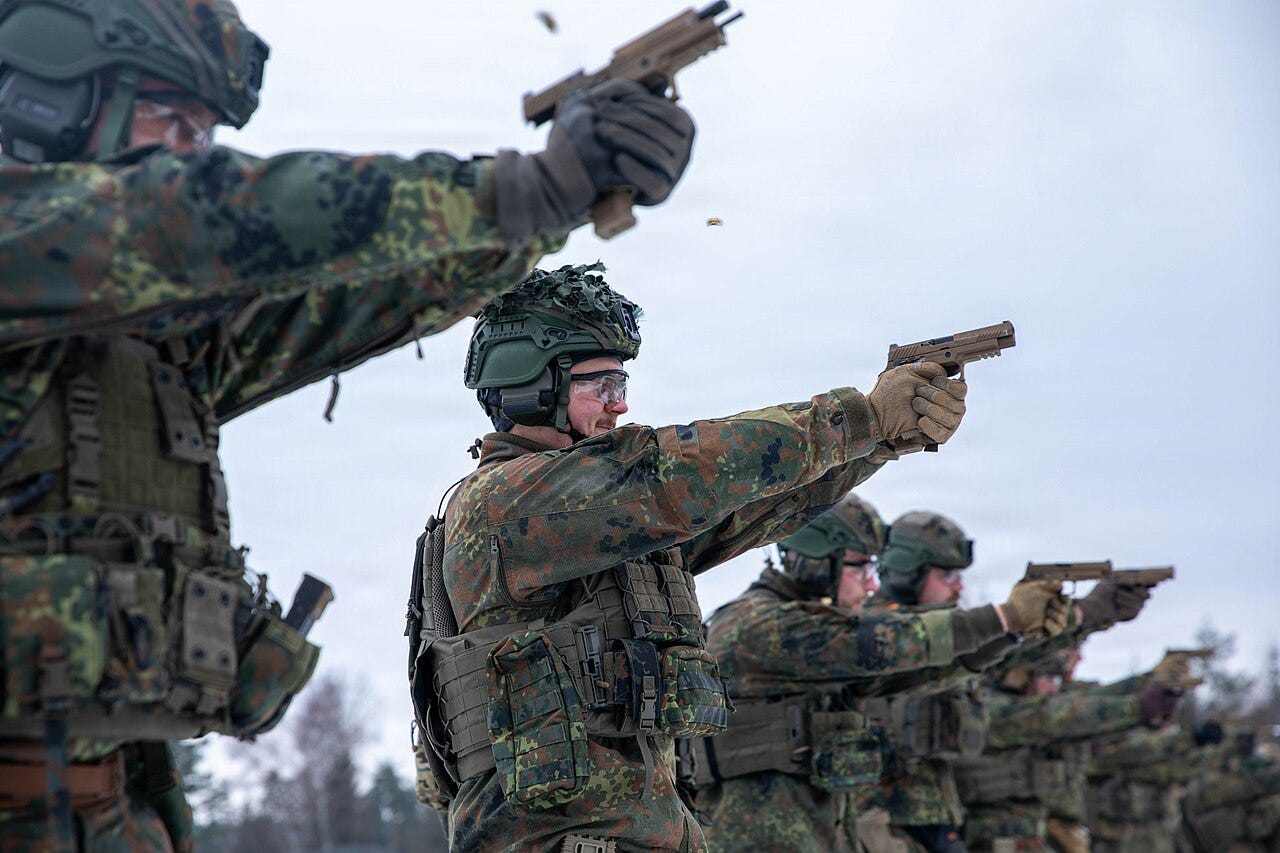
2nd Cavalry Regiment Snipers and Officer-candidates of the University of the Bundeswehr Munich conduct M17 Qualification, at Grafenwoehr Training Area, Feb 10, 2026.
The War Nobody Can Finish
Russia’s economy is under strain, Ukraine is carrying the fight deep into Russian territory, and Europe is preparing for a future in which American security guarantees can no longer be taken for granted
From the front lines of Donetsk to the ornate halls of the St. Petersburg International Economic Forum, a single uncomfortable truth now shapes every political calculation, every military decision, and every diplomatic overture: nobody has a clean way out.
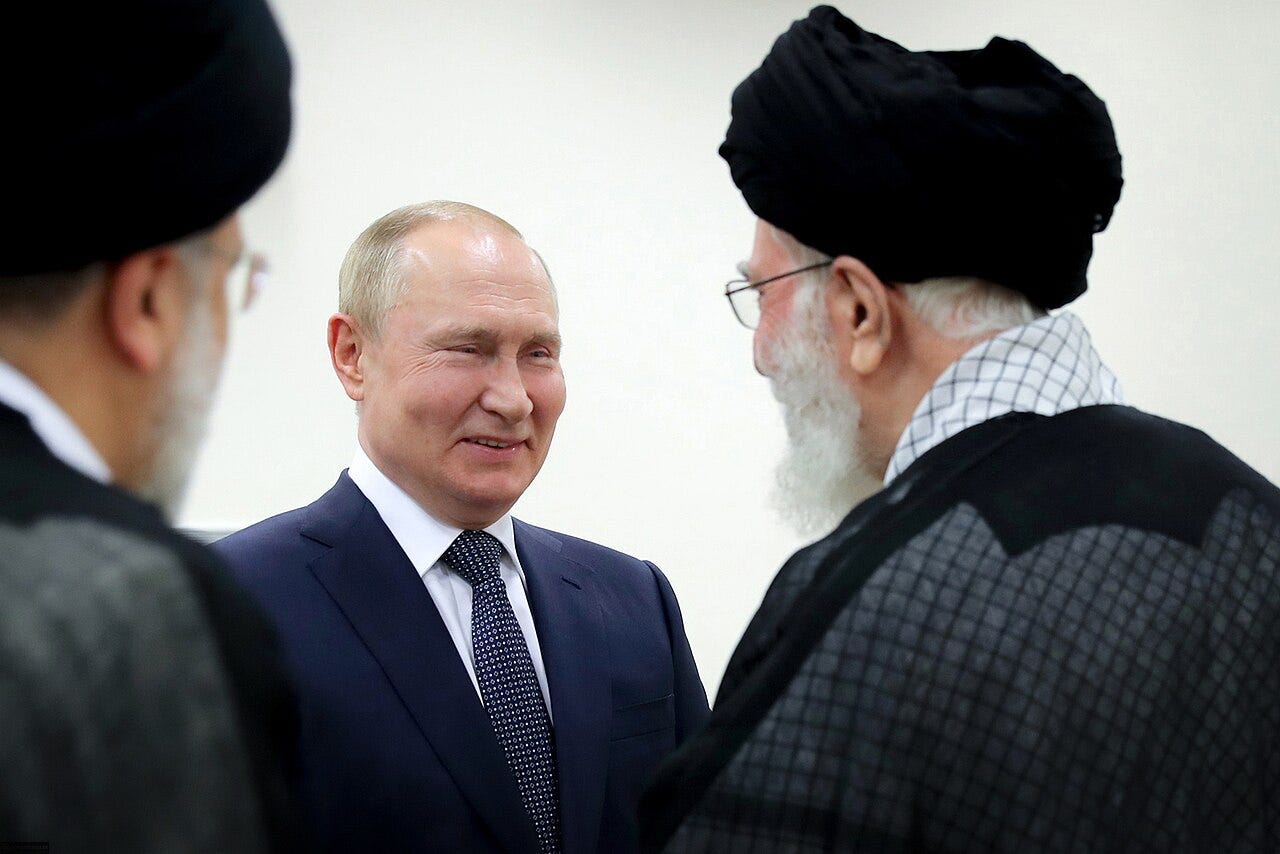
Not Vladimir Putin, who has subordinated an entire civilization to a war it cannot win cleanly and cannot abandon without consequence.
Not the European nations slowly and sometimes reluctantly assuming responsibility for a continent whose security architecture is fracturing under new pressures.
And not an Atlantic alliance straining visibly under the weight of American ambivalence, distracted priorities, and an administration whose commitment to its oldest partnerships has become a matter of genuine and urgent debate.
The conflict that began as what the Kremlin presented as a limited corrective operation — a test of Ukrainian resolve, a reassertion of Russian prerogative — has transformed over four years into something far larger and more consequential: a referendum on the entire architecture of Western security, and the results are coming back deeply unsettling.
To understand where this war is going, it helps to understand where it has already been.
The full-scale invasion of February 2022 was premised on a set of assumptions that collapsed almost immediately: that Ukrainian society lacked the will to resist, that the government in Kyiv would fold within days, that Western solidarity would fracture under the pressure of energy dependence and economic self-interest, and that Russia’s military machine, rebuilt and modernized after the humiliations of earlier decades, would prove overwhelming. None of these assumptions proved correct. Ukraine fought.
The West, against considerable internal odds, cohered. And Russia’s military revealed itself to be a far less formidable instrument than the parades on Red Square had suggested — corrupt in its procurement, brittle in its command structures, and dependent on tactics of mass attrition that consumed its own forces at staggering rates. The war that was supposed to last days has now entered its fifth year, and the equilibrium it has reached is grim, expensive, and sustained at enormous human cost on all sides.
Start with Russia, because Russia started this. Since the full invasion, Putinism has arrived at what might appear, from a certain distance, to be an eerie equilibrium — a country at war that continues to function, to trade, to hold its citizens in a posture of managed normalcy. But on closer reading, that surface calm is not stability. It is a façade concealing accelerating structural decay. Putin has found ways to fund his expensive war, staving off immediate economic collapse through large cash bonuses that continue to attract military recruits, maintaining diplomatic and commercial relationships with much of the non-Western world, and manipulating domestic information to keep the broader population insulated from the full reality of what is being sacrificed. Yet the numbers from inside Russia’s own institutions tell a starker story.
Russia’s Ministry of Finance and Central Bank have warned the Kremlin that the deficit could reach alarming levels given military spending plans, with defense set to represent approximately one third of total budgetary expenditure in 2026. Russia’s economy has begun to contract for the first time since 2023. When the Finance Ministry proposed cutting war spending to restore balance to the public finances, Putin sided with the Defense Ministry and ordered cuts everywhere else. VAT has been raised for the second time in eight years. A radical fiscal reform has been launched against small businesses. Yet by late April, the deficit had not been meaningfully reduced, remaining at the equivalent of roughly two and a half percent of GDP. The liquid portion of Russia’s National Wealth Fund — the sovereign reserve that was meant to provide a buffer against exactly this kind of sustained economic pressure — has shrunk by approximately sixty percent since the beginning of the full-scale invasion. These are not the metrics of a country winning.
The pressures are no longer confined to government spreadsheets. Russia’s inability to break through the military stalemate in Ukraine is becoming so evident that significant voices within the Russian establishment have begun publicly calling for an end to the conflict. This is remarkable not merely because dissent exists — it always has, in whispers and carefully worded private communications — but because of who is dissenting, and in what forums. The calls do not come only from liberal business elites or the cosmopolitan intelligentsia long associated with skepticism of Kremlin adventurism. Some of Russia’s best-known hawks have grown openly doubtful. Oleg Tsaryov, a former Ukrainian lawmaker who fled to Russia in 2014 and was once considered a candidate to head a Kremlin-installed puppet regime in Kyiv, warned publicly that Russian propaganda had created dangerous illusions about inevitable victory. Aleksey Chadaev, a historian and former Kremlin official with hawkish credentials, argued that pursuing the current course of war “is not just a path to non-victory, but to a full-scale defeat,” and called for a pause so that Russia can reorganize for what he envisioned as a future round of confrontation.
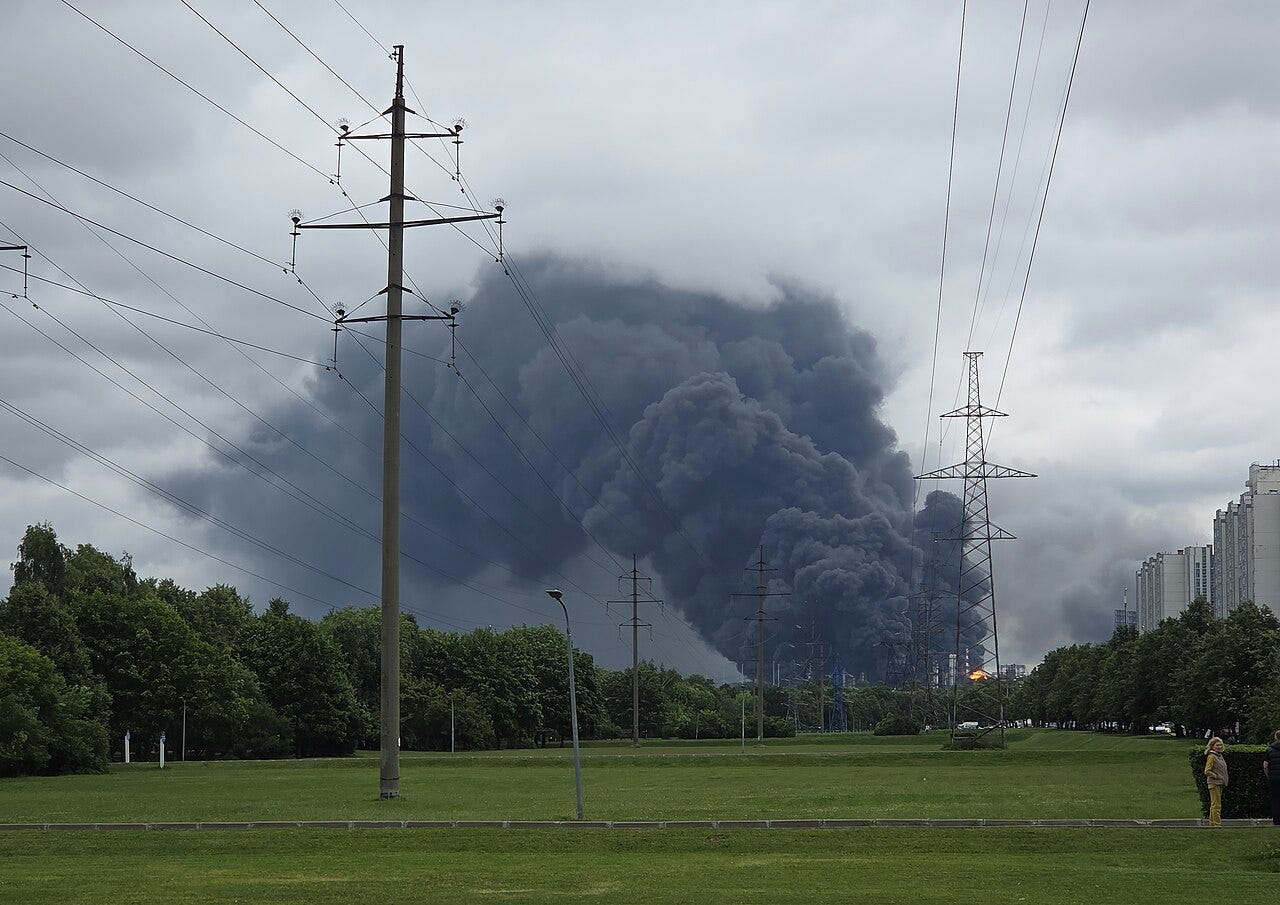
At the St. Petersburg forum itself — the annual gathering Putin uses to project economic confidence and strategic coherence to foreign investors and domestic elites — a former Russian intelligence officer named Andrey Bezrukov offered an assessment of striking candor to an applauding crowd. He acknowledged that Russia would be at war for years, possibly decades, in forms ranging from full-scale conflict to creeping confrontation, and that Russian society needed to learn to live with this reality rather than wait for a decisive resolution. He also acknowledged something Russian officials rarely admit publicly: that Ukrainian drone attacks using Starlink navigation represent a serious problem that Russia was simply not prepared to address. The timing of that admission was pointed in a way that seemed almost theatrical. Ukrainian forces had struck the St. Petersburg oil terminal — one of the largest Russian terminals for oil product transshipment in the Baltic region — that very morning, along with ships and infrastructure at the port of Kronstadt. Ukraine’s drone forces commander reported that his unit had struck the corvette Boyky, a guided missile carrier, in dry dock since February. President Zelensky noted that the oil terminal was approximately 1,100 kilometers from the Ukrainian border — a distance that would have seemed impossible to bridge with drones at the start of the war.
The strikes on St. Petersburg were the latest escalation in a relentless campaign that has brought the war home to Russia in ways Putin spent years trying to prevent. Ukrainian forces have built drones that can reach more than six hundred miles into Russian territory. They have struck oil refineries, export terminals, military bases, and targets inside Moscow itself. In Russian-occupied parts of Ukraine, middle-range strike drones have paralyzed Russian logistics, targeting fuel trucks and military convoys on roads linking Russia to the Crimean Peninsula and to front-line bases. Fuel rationing has been imposed in the occupied territories of Luhansk and Donetsk; supplies have run out in Crimea. The insulation Putin spent four years constructing — the carefully managed buffer between the war and Russian daily life — is being torn away, one refinery and one convoy and one public forum at a time.
The psychological and strategic dimensions of this long-range campaign are inseparable. Each strike on Russian territory forces a confrontation between what the Kremlin tells its population and what Russian citizens can observe with their own senses. Putin himself reportedly spends much of his time in a bunker, acutely concerned about the possibility of assassination by Ukrainian drone. His government has cut mobile internet in Moscow and St. Petersburg. It has moved against Telegram — the messaging application through which Russians communicate with one another about nearly everything — out of fear that it could serve as an organizational spine for social unrest. The Kremlin’s internal polling reflects these anxieties. Putin’s approval rating fell by more than twelve percentage points between late December and late April, reaching its lowest recorded level during the full-scale war, according to Russia’s own state-controlled polling agency. The decline was so sharp that the agency announced it was changing the methodology with which it conducts its measurements — a response that itself communicates something about the sensitivity of the figures it was producing.
Russia’s response to this accumulating pressure — military, economic, and psychological — has been to escalate its air campaign against Ukrainian cities, seeking through mass terror what it cannot achieve through ground advance. In early June, Russia struck cities across Ukraine with hundreds of drones and dozens of missiles in attacks that killed eighteen people and wounded more than a hundred. Kyiv and Dnipro were among the targets. The scale was staggering: Ukraine’s air force reported that Russia had launched 656 drones and 73 missiles, including 33 ballistic missiles and eight Zircon hypersonic weapons — apparently the largest single use of such missiles during the war. The psychological component was deliberate and methodically designed. For days before the strike, Russia launched aircraft in patterns that imitated a large attack, setting off alarms repeatedly and wearing down a population already conditioned to exhaustion. Families slept in subway stations for multiple nights. When the actual strike came before dawn, shelters were overflowing. Then, just after seven in the morning, as some residents were already heading to work, Russia struck again with hypersonic ballistic missiles, giving almost no time to seek cover. Analysts assessed that these attacks were aimed in part at depleting Ukraine’s limited stocks of Patriot interceptor missiles — its only proven defense against Russian ballistic weapons — rather than achieving any specific military objective. Ukraine’s foreign minister called Putin a war criminal and a loser with no cards left to play except terror. That framing, however pointed, captures something real: the ferocity of the air campaign is itself a sign of strategic weakness, not strength.
Putin has few escalatory tools remaining that could meaningfully change the dynamic of the war. Involuntary mobilization would provide a manpower advantage but would be deeply unpopular among Russians who have so far been insulated from direct conscription pressure. Nuclear weapons, of any kind and at any scale, would risk provoking a harsh military response from the United States and Europe, or a fundamental rupture in Russia’s relationship with China — its most important remaining strategic partner and an ally whose continued goodwill is not unconditional. And Putin cannot simply stop. Were Russia to accept a settlement along the current line of contact, he would have little to show for years of sacrificed lives and hundreds of billions of rubles except a narrow strip of territory in southern Ukraine. As a consummate political survivor, he understands that presenting such a result to a Russian public that has lost sons and fathers and brothers would be an implicit admission of the war’s fundamental senselessness. This is the essence of what analyst after analyst now describes as a trap of Putin’s own construction. He has maneuvered himself — and Russia — into a position from which there is no exit that does not carry catastrophic political cost.
Even within the Kremlin’s analytical orbit, the more intellectually honest are beginning to acknowledge this deadlock with unusual directness. Vasily Kashin, a respected Russian strategist, has argued that Ukraine will inevitably remain an anti-Russian, pro-Western country, particularly after hundreds of thousands of Ukrainians have been killed or maimed — and that the goal of installing a friendly regime in Kyiv, one of Putin’s original war objectives, is no longer realistic. Alexander Gabuev of the Carnegie Russia Eurasia Center has noted that in the war’s fifth year, some people within Russian elite circles are beginning to recognize that continuing for another year or two does not materially improve Russia’s negotiating position — that diminishing returns have set in, and that serious elite discussion about ending the war is slowly becoming normalized, even with the mandatory loyalty caveats. But whether Putin himself recognizes that he is in a dead end, and whether that recognition, if it ever comes, would translate into a genuine willingness to negotiate rather than simply a different form of escalation, remains entirely unclear. His recent behavior suggests the opposite instinct.
Ukraine’s battlefield resilience has exceeded nearly every early estimate. The front line remains largely frozen, as drone proliferation has made large-scale armored advance exceptionally costly for both sides, and Russia’s anticipated spring offensive has not materialized in any meaningful form. Ukraine has taken the upper hand in the long-range strike campaign, hitting Russian oil facilities, military infrastructure, and targets in Moscow itself. But the technological contest is shifting rapidly, and maintaining Ukraine’s advantages requires continuous innovation and adaptation. One of the most consequential questions for the war’s next phase concerns armored warfare. Tanks and armored vehicles are rapidly losing their conventional battlefield utility due to the proliferation of cheap and effective drones, particularly fiber-optic models that cannot be jammed electronically. The improvised protective measures — metal cages and lattice structures welded onto tank hulls — have provided some protection but are reaching their physical limits. Ukrainian military commanders are focused on active protection systems capable of detecting and intercepting incoming drones before they reach the vehicle. Without such systems, the maneuverability of armored forces cannot be restored, and the war will continue to be defined by relatively static attrition rather than the kind of decisive operational movement that might change its fundamental character.
Meanwhile, European nations are being forced to reckon with a security landscape they did not choose and are not fully prepared to navigate. The war has clarified, with brutal efficiency, which European commitments are genuine and which are aspirational. European Union members, together with other European countries including Britain, are today responsible for almost all aid flowing to Ukraine. Military integration is advancing. A Franco-British initiative to police a potential ceasefire has been established. Disbursements from a new ninety-billion-euro loan to Ukraine are beginning. Sanctions are growing progressively tighter. But Europe’s assumption of greater responsibility has simultaneously exposed the limits of its strategic imagination. Leaders can agree on what they are against — Russian aggression, impunity, the destruction of the rules-based international order — but struggle to articulate a coherent vision of what they are working toward. Ministers and officials acknowledge that their governments are still groping toward a strategy that goes beyond simply maintaining Ukraine’s survival from one month to the next.
The question of Ukraine’s future relationship with the European Union encapsulates this broader confusion. Should Putin grow willing to compromise — and there are reasons, explored above, to think that pressure is mounting toward that — a ceasefire would likely require Ukraine to accept a loss of territory in the eastern Donbas. Europe’s best mechanism for making such a settlement politically survivable for Kyiv would be to accelerate Ukraine’s path toward EU membership, something Ukrainians have yearned for since the Maidan revolution of 2014 transformed their sense of national identity and geopolitical aspiration. But the practical obstacles are formidable. A 2027 accession date is entirely implausible for a large, partly war-damaged country whose per-capita income sits at roughly one third of Bulgaria’s, and which carries governance challenges that accession negotiations typically take years to address. Officials suggest that Ukraine would be fortunate to join the EU within a decade. Germany’s Chancellor Friedrich Merz proposed an “associate membership” framework as an interim bridge, but it landed badly in Kyiv, with President Zelensky dismissing the concept as an endless waiting room. A new mood of skepticism toward the West is taking hold in Ukraine — not hostility, but a hardening sense that recognition of Ukraine’s contribution has been insufficient. New polling finds that nearly three-quarters of Ukrainians still support EU membership, but that support has been falling most steeply among the young. As Ukraine has taken on a growing share of responsibility for its own defense — including the domestic manufacture of arms and drone technology now sought by partners across the world — it wants acknowledgment of the shifting balance of power. The sentiment has moved from seeing the EU as a savior to insisting on self-reliance and demanding recognition as a peer. “We are protecting you now” is a phrase heard with increasing frequency, and it carries with it a quiet demand that has not yet found an adequate response.
Political changes elsewhere in Europe are complicating the strategic picture in both promising and uncertain ways. Hungary’s new prime minister Peter Magyar has replaced Viktor Orbán, whose years of pro-Russian obstruction repeatedly paralyzed EU decision-making and provided Moscow with a reliable source of diplomatic cover inside European institutions. Magyar has pledged to open a new chapter in Hungarian-Ukrainian relations and end Hungary’s veto on EU measures related to the war. His arrival has been greeted warmly in Berlin and Brussels. But analysts caution against excessive optimism. Magyar has already stated that Hungary will not send soldiers or weapons to Ukraine, and he is likely to remain cautious on Ukrainian EU accession ambitions. The pattern of reform governments promising more than they deliver is familiar enough across the continent that enthusiasm has become appropriately tempered.
Germany itself is undertaking a quiet but significant militarization — a shift whose magnitude would have seemed implausible even five years ago. Confronted with the reality that European defense cannot depend indefinitely on American security guarantees, Berlin has proposed legislation to make its reserve military forces more deployable and less discretionary. The Bundeswehr wants to be able to draw on reservists more often, more quickly, and with fewer bureaucratic complications than current law permits. The proposed changes would allow the military to compel reservists to serve not only in training exercises but to fill operational gaps in active units — a meaningful move away from the purely voluntary model that has defined German military culture since the post-war era. Employers are protesting, warning of disruption when staff disappear for extended periods. The government has offered financial compensation and advance notice requirements as mitigations, but the fundamental shift — from an army built on voluntary service to one with genuine mandatory elements — reflects a serious reassessment of Germany’s security environment and the threats it must prepare to meet.
That reassessment is happening across the continent, but unevenly and without the unified strategic framework that would make it coherent. NATO’s annual Baltic naval exercises began this week with a force roughly a seventh the size of comparable Cold War exercises — twenty ships and six thousand soldiers, compared to the hundred and fifty ships that gathered for similar exercises in 1985. The reduction reflects competing demands: the American military is stretched across the Middle East, the Pacific, the Caribbean, and the Atlantic, and has been rerouting resources accordingly. Several European governments have begun quietly planning how to organize their defense without American leadership, not because they prefer this outcome, but because responsible contingency planning demands it regardless of preference.
NATO Secretary General Mark Rutte’s insistence that the alliance needs no contingency plan in case of American withdrawal is diplomatically motivated — an attempt to manage the relationship with Washington rather than antagonize it — but it has become strategically untenable as a statement of genuine preparedness. The Trump administration has repeatedly questioned its commitment to Article 5, floated the idea of acquiring Greenland from Denmark — a NATO member — announced unexpected troop reductions in Europe, and canceled deployments. America has been postponing weapons deliveries to European partners while restocking systems used in its conflict with Iran. The argument that even discussing a Plan B risks accelerating the very divorce it aims to prevent has some merit — alliance cohesion depends partly on shared confidence, and public acknowledgment of fragility can become self-fulfilling. But the argument for strategic silence has been overtaken by events. Pretending that the transatlantic alliance is as solid as it was in 2019, while American behavior systematically undermines that claim, is not diplomacy. It is denial.
Europe’s options for organizing its defense in a genuinely post-American or semi-American security environment are not appealing, but they are not imaginary. The ten-member Joint Expeditionary Force, led by Britain, provides one existing framework. The coalition of nations that has formed around providing security guarantees to Ukraine provides another. A Europeanized version of NATO’s command structures is a third possibility. None of these is a like-for-like substitute for the integrated transatlantic alliance. American contributions to European security — in intelligence, logistics, nuclear deterrence, and conventional military mass — are not easily replicated, and it would be self-deception to pretend otherwise. But the relevant comparison is not between a Europeanized alliance and a fully committed America. It is between a Europeanized alliance and the increasingly plausible scenario of an America that is present in form but absent in substance — contributing to exercises while declining to contribute to actual defense commitments, maintaining the institutional shell of the alliance while hollowing out its guarantees.
The broader geopolitical context makes action more urgent, not less. Russia’s war has exposed the fragility of assumptions that seemed stable a decade ago — not only about European security, but about Russia’s position in the world. The perception of Russia has shifted significantly even across Central Asia, a region where Moscow long maintained cultural, political, and economic influence as a legacy of the Soviet period. Intellectuals and public figures in countries like Kyrgyzstan are engaging openly with decolonial frameworks for understanding their historical relationship with Russia — frameworks that would have been considered provocative or fringe in earlier decades. Moscow’s soft power, its ability to present itself as a modernizing and stabilizing force in the post-Soviet space, is eroding simultaneously on multiple fronts. The war has made visible what was always true but politely elided: Russian imperial ambitions did not end with the dissolution of the Soviet Union, and the architecture built to manage those ambitions after 1991 was never as robust as it appeared to casual observers.
Inside Russia, the long-term implications of the war are becoming clearer even to those who initially supported it.
Putin has been assiduous about ensuring that Russians maintain low expectations — of prosperity, of openness, of a meaningful future distinct from the one he has built. The promise of a modern Russia, integrated into the global economy and recognized by the world as a normal great power, has faded into complacency, numb acceptance of authoritarian permanence, and what Bezrukov described at St. Petersburg as a multi-generational condition of war.
With each Ukrainian strike on Russian territory, the conflict costs Russian citizens something tangible: disrupted internet, fuel rationing, damaged infrastructure, dead sons returned in unmarked vehicles. The government can manage the narrative for a time, but every strike drags the war closer to home, and in a society where individual self-interest has been the primary organizing principle for three decades, the moment those interests are genuinely threatened, the political calculations can shift quickly and unpredictably.
For now, the equilibrium holds — grimly, expensively, and at enormous human cost. Russia continues to attack Ukrainian cities with a relentlessness that reflects both military doctrine and political desperation.
The massive strike of early June was the third heavy assault on Kyiv in under a month. Ukrainian civilians have adapted with the kind of exhausted stoicism that is itself a form of resistance — a student sweeping glass from the pavement in front of her damaged dormitory says she will not be intimidated; an IT specialist covers his shattered windows with plywood rather than replacing the glass, because next week there will certainly be another attack; a retired woman who had never taken shelter in a parking garage now considers it routine.
Ukraine’s own long-range drone campaign continues to demonstrate the potential for strategic disruption that its forces can bring onto Russian territory, but translating battlefield impact into political change in Moscow — where the authoritarian grip on information and public behavior remains substantial — is a slower and more uncertain process.
The fundamental question of whether this war ends through negotiation, exhaustion, or some form of escalation remains genuinely unanswered. Russian representatives say that talks with the United States continue, and that negotiations with Ukraine remain possible when conditions allow.
European foreign policy leadership is blunter: the peace process has stalled because Russia is waiting for American pressure to deliver what its forces have not achieved militarily — concessions that Ukraine cannot accept and survive as a sovereign state. Europe’s best prospect for an acceptable outcome rests on three conditional hopes: that Ukrainian resolve will not be broken by another winter of infrastructure strikes and depleted air defenses; that the American administration can be persuaded to turn decisively against Russian intransigence rather than reward it; or that Putin can be compelled by internal and external pressures to negotiate in genuine good faith.
None of these is guaranteed. All of them depend on Europe sustaining its support through political cycles that carry their own uncertainties, including elections in France where a nationalist victory could threaten the continent’s commitments.
What is clear is that the old frameworks — a united West, a committed America, a Russia deterred by the prospect of sanctions and diplomatic isolation, a NATO unambiguously prepared to defend every inch of allied territory — have all been placed under pressures they were not designed to withstand. Some have held better than expected. European unity on sanctions and aid to Ukraine has proven more durable than skeptics predicted at the outset.
Ukraine’s military capacity, its innovation in drone warfare, and the tenacity of its population have exceeded nearly every early estimate. Russia’s military machine has proven less formidable, and Russia’s economy more brittle, than the Kremlin’s projections assumed when the invasion began.
But durability is not the same as sufficiency, and time is genuinely short.
Russia is escalating its attacks on Ukrainian cities, and further assaults on power and water infrastructure could make the coming winter even more devastating than the last. Europe is not yet able to provide the anti-ballistic missile capabilities needed to fully protect Ukrainian cities. Zelensky continues to appeal to Washington for additional Patriot interceptors, so far without meaningful response. Advanced Patriots are in increasingly short supply globally, their availability drained by simultaneous conflicts in the Middle East.
The story of this war, seen from any angle, is ultimately a story about the consequences of miscalculation compounding over time. Putin miscalculated Ukraine’s will to fight and the West’s willingness to sustain it across years rather than months.
Europe miscalculated the depth of its own defense commitments and the reliability of American security guarantees it had allowed to become the foundation of its strategic posture. NATO miscalculated how quickly its internal coherence could be tested by a single unpredictable American administration. Ukraine has made calculations of extraordinary courage that have paid off in ways that matter enormously, but at staggering cost in human life and national suffering. And the international community has repeatedly miscalculated the timeline for the war’s resolution, each optimistic projection quietly revised as the fighting continues.
The path to a Russia capable of responsible engagement with its neighbors now appears to require not merely a change in Russian policy, but an unraveling of Putinism itself — a system that has so thoroughly subordinated Russian institutions, information, and civil life to the interests of one man’s political survival that reforming it from within seems nearly impossible. And the less legitimate and effective the current system becomes, the more violent the competition for position that will follow his eventual exit. When it comes, Putin’s departure could well shatter the very stability he sought to impose.
That is a long horizon, and a great deal of destruction lies between the present moment and any future that might be described as genuinely stable.
For Ukraine, for Europe, and for the alliance that has defined Western security for three generations, the challenge is to shape that horizon while managing the present — to build the structures that will be needed once this war finally ends, while sustaining the resolve and the unity and the resources that determine how it ends, and when.
Sources and Further Readings
https://www.nytimes.com/2026/06/02/opinion/putin-russia-war-strength.html
[embed]Russian SVR Officer Shocked Russians The scout gave "advice" to his compatriots.charter97.org
메타데이터
- post_id
- b04a176829f7
- slug
- the-war-nobody-can-finish-b04a176829f7
- url
- https://medium.com/the-geopolitics-report/the-war-nobody-can-finish-b04a176829f7
- canonical_url
- https://medium.com/the-geopolitics-report/the-war-nobody-can-finish-b04a176829f7
- author_url
- https://medium.com/@jens_sorensen_geopol.
- status
- ok
- fetched_at
- 2026-06-15 20:49:13