Beyond the Receipt: Why Financial ‘Recaps’ Won the UX Game in 2025
As we step into 2026, the year-end “Wrapped” phenomenon has officially migrated from our headphones to our wallets. What started as…
Beyond the Receipt: Why Financial ‘Recaps’ Won the UX Game in 2025

Illustration of a person reviewing their finances in 2025, generated by ChatGPT
As we step into 2026, the year-end “Wrapped” phenomenon has officially migrated from our headphones to our wallets. What started as Spotify’s clever way to show us our guilty-pleasure tracks has evolved into a high-stakes strategy for Fintech apps to build trust, drive feature discovery, and humanise data.
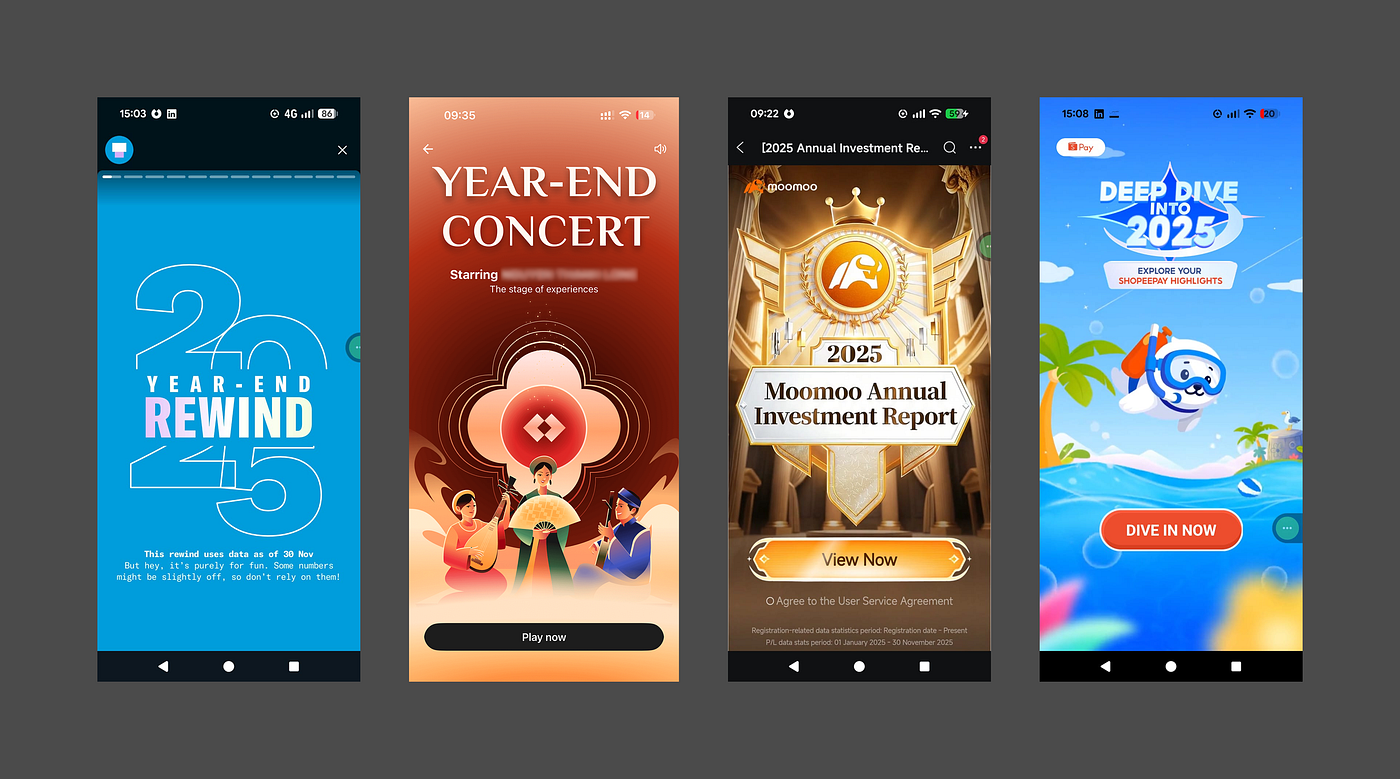
2025 Highlights from various Fintech apps in Asia, featuring Trust bank, Techcombank, Moomoo, ShopeePay
For UX designers and Product Managers, these 2025 recaps aren’t just “nice-to-have” animations — they are masterclasses in data storytelling. Interestingly, the boldest innovations this year didn’t come from the West; they were led by Asia’s Fintech powerhouses, who have perfected the art of making financial data feel like a personal celebration.
The Spotify Blueprint: Data as Identity
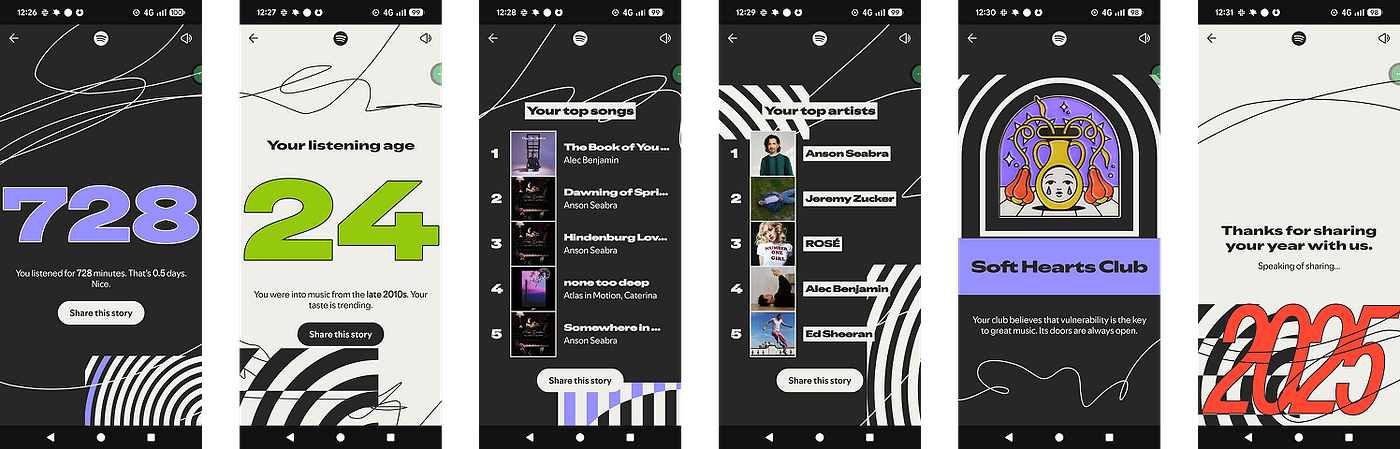
Screenshots from Spotify Wrap 2025
To understand why this works, we have to look at the OG. Spotify doesn’t just show you numbers; they show you who you are.
- The Stats: Total minutes, top songs, and your “listening age.”
- The UX Magic: They take “creepy” tracking data and package it as a gift. By the time you reach your “Listening Club” assignment, you aren’t thinking about data privacy — you’re thinking about your identity.
Fintech is now using this exact playbook to turn “transaction history” into “financial personality.”
Case Study 1: Moomoo’s Investment Gala

Screenshots from Moomoo’s 2025 Annual Investment Report 2025
Moomoo’s “2025 Annual Investment Report” turned cold brokerage data into a celebration of growth.
What they tracked:
- Days invested and annual returns.
- Portfolio diversity (Stocks, Options, Crypto).
- Community interaction: Questions asked to their AI and community engagement.
The Strategic UX Win:
Handling the “Empty State.” For users who didn’t trade much, Moomoo didn’t show a blank screen. They filled the gaps with global community stats. This subtly educated the user on tools they hadn’t used yet (like Moomoo AI) and ended with an “Investment Gala” award, categorizing users into specific investor personas.
Case Study 2: Techcombank’s Cultural Connection
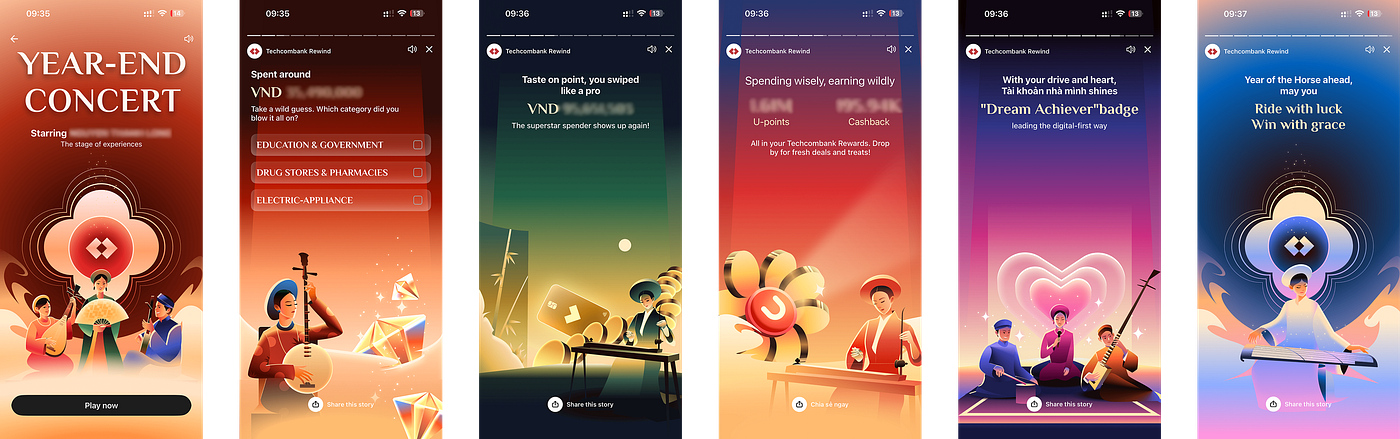
Screenshots from Techcombank Year-end Concert Rewind 2025
Vietnam’s Techcombank took a different route, leaning heavily into emotional design and localisation with their “Year-End Concert.”
What they tracked:
- Highest spending categories and geographic spending patterns.
- Asset growth and cashback earned.
The Strategic UX Win:
Vibrant Storytelling. Instead of standard bar charts, they used custom illustrations reflecting Vietnam’s rich culture in music and dance. By awarding badges and well-wishes for the Year of the Horse, the bank shifted from a utility tool to a cultural companion.
Case Study 3: Trust Bank’s Ecosystem Play
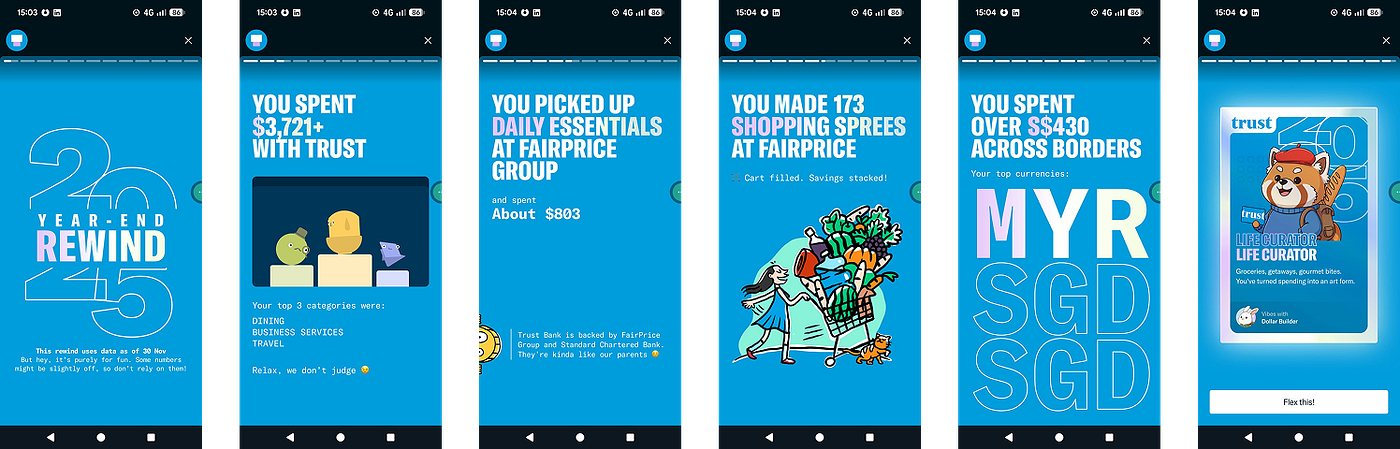
Screenshots from Trust Bank, Singapore 2025 Year-End Rewind
Singapore’s Trust Bank focused on the “Rewind” format to highlight their unique ecosystem.
What they tracked:
- Total yearly spend and the single “biggest” splurge.
- Overseas spending vs. local.
- The Ecosystem Hook: Specific stats on spending at FairPrice Group (their parent/partner group).
The Strategic UX Win:
Gamified Personas. They assigned users an “Animal Buddy” based on their spending. This makes the “boring” parts of banking — like grocery spending — feel like a game, reinforcing the value of their partnership ecosystem without a hard sales pitch.
Case Study 4: ShopeePay’s ‘Deep Dive’

As a wallet embedded within an e-commerce giant, ShopeePay took a slightly different approach with their “Deep Dive into 2025.”
What they tracked (featuring a cute, diving white seal):
- Your very first purchase and total transaction volume on the platform.
- Cultural nuances: Spending highlights during specific festive periods like Chinese New Year, Hari Raya, and Deepavali.
- Your most expensive item bought.
- Voucher usage: Visualizing exactly how much you saved through their discount ecosystem.
The Strategic UX Win:
Behavioral Reinforcement. By ending the recap with a “Certified Adult” award, ShopeePay validates the user’s spending habits. Highlighting voucher savings is a brilliant UX move; it transforms “spending money” into “saving money” in the user’s mind, making them more likely to hunt for the next deal in 2026.
Why This Matters for Product Teams
If you’re a PM or UX Designer planning your 2026 roadmap, here is the “Why” behind the recap trend:
- Financial Awareness as a Service: These stats help users realize their habits (saving vs. spending) in a non-judgmental way. Once they see the data, you can offer tools to optimize it.
- Educational Upselling: Did a user miss out on rewards? Show them. Recaps are the perfect “soft” entry point to introduce features users haven’t touched yet.
- From Transactional to Personal: By showing “what we know about you” through delightful visuals, you build transparency. It shifts the relationship from a “place where I keep money” to a “partner that understands my life.”
- Retention Loops: When a user finds these stats useful or shareable, they are incentivised to engage more with the app in the coming year to “improve their stats” for the next recap.
The Bottom Line
In 2025, the best fintech apps stopped being calculators and started being mirrors. They reflected our habits back to us with colour, humour, and insight.
What “Animal Buddy” or “Investment Award” is your app giving your users next year?
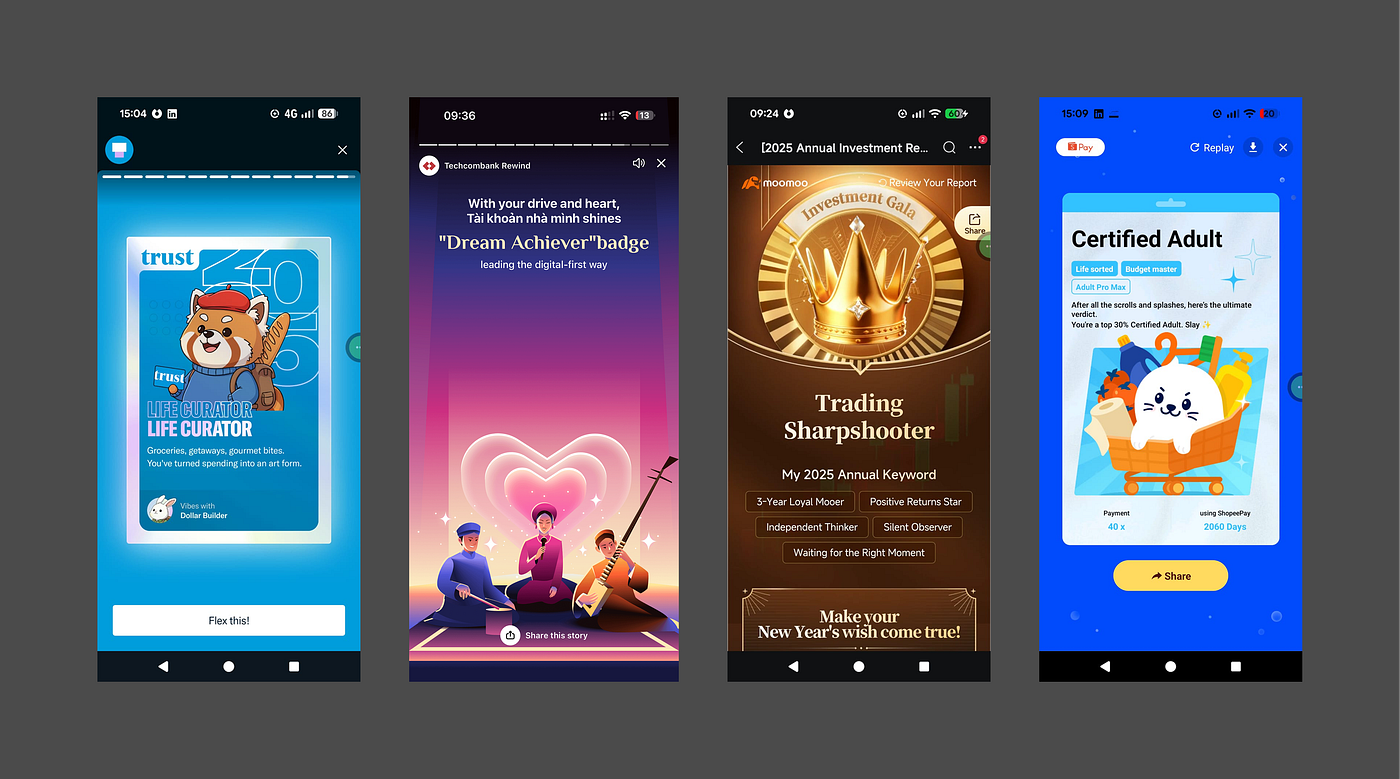
Screenshots of various ‘awards’, ‘badges’, ‘buddies’ from Fintech apps in Asia 2025, featuring Trust bank, Techcombank, Moomoo, ShopeePay
👏 Liked the article? Clap for it to support me! 🤝 Let’s connect on LinkedIn for more insights and discussions. 🚀 Ready to level up your career? Book a personalized career consultations and UX portfolio reviews.
Thanks for reading! Hou Teng, supported by AI
메타데이터
- post_id
- b060ec011fcc
- slug
- fintech-ux-trend-asia-financial-recaps-b060ec011fcc
- url
- https://medium.com/the-uxplorer/fintech-ux-trend-asia-financial-recaps-b060ec011fcc
- canonical_url
- https://medium.com/the-uxplorer/fintech-ux-trend-asia-financial-recaps-b060ec011fcc
- author_url
- https://medium.com/@houteng
- status
- ok
- fetched_at
- 2026-06-12 07:40:50